
Introduction
Talc is a versatile mineral widely used in building materials, ceramics, paints, plastics, and paper industries. Its unique properties—softness, chemical inertness, and high whiteness—make it indispensable in construction applications such as joint compounds, wallboards, and roofing materials. However, producing building material grade talc powder with consistent quality and optimal particle size distribution requires careful selection of milling equipment. With a myriad of mill types available, choosing the right system can significantly impact product quality, energy consumption, and operational costs. This article provides a comprehensive guide to selecting the appropriate milling system for talc powder production, highlighting key factors and featuring two of our advanced solutions: the SCM Series Ultrafine Mill and the MTW Series European Trapezium Mill.
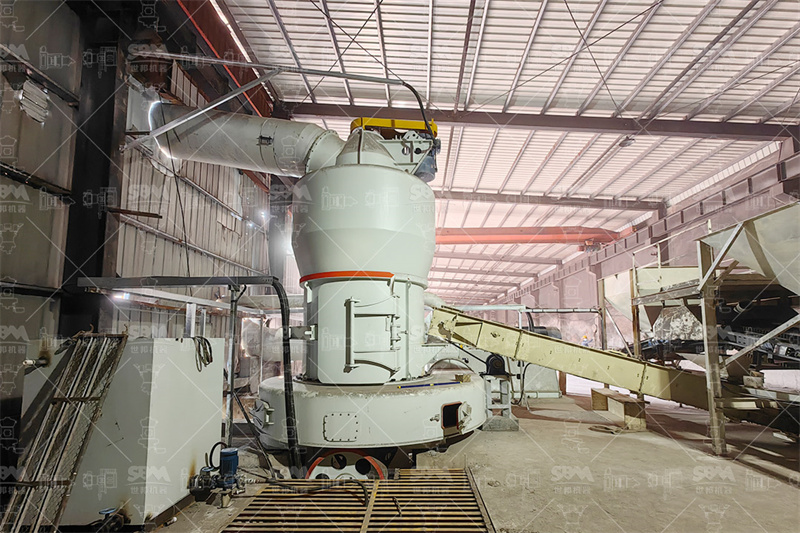
Key Considerations for Talc Milling
Before delving into specific equipment, it is essential to understand the characteristics of talc and the requirements of building material applications. Talc is a hydrated magnesium silicate with a Mohs hardness of 1, making it relatively easy to grind. However, its platelike structure can pose challenges in achieving narrow particle size distributions and avoiding over-grinding. Building material grade talc typically requires fineness ranging from 200 mesh to 325 mesh (75 μm to 45 μm) for applications like joint compounds, while some specialized products may need ultrafine powders down to 1250 mesh or finer. Additionally, production capacity, energy efficiency, and environmental compliance are critical factors.
Fineness Requirements
The required fineness dictates the type of mill. For coarse to medium fine talc (down to 325 mesh), roller mills such as the MTW Series are ideal. For ultrafine talc (325-2500 mesh), ultrafine mills like the SCM Series are necessary. Over-grinding should be avoided to preserve the platelike structure and reduce energy consumption.
Capacity and Scalability
Production scale varies from small to large operations. The selected mill must match the required throughput and allow for future expansion. Models with a wide range of capacities, such as the SCM Series (0.5-25 t/h) and MTW Series (3-45 t/h), offer flexibility.
Energy Efficiency
Grinding is energy-intensive. High-efficiency mills with advanced classification and low energy consumption per ton are preferred. The SCM Series, for instance, consumes 30% less energy than jet mills while doubling capacity.
Product Quality and Consistency
Uniform particle size distribution and minimal coarse particles are crucial for building material performance. Precise classification systems, such as the vertical turbine classifier in the SCM Series, ensure superior quality.
Environmental and Maintenance Aspects
Dust emissions and noise levels must comply with regulations. Mills with integrated dust collection and soundproofing are advantageous. Additionally, wear parts longevity and ease of maintenance reduce downtime and costs.
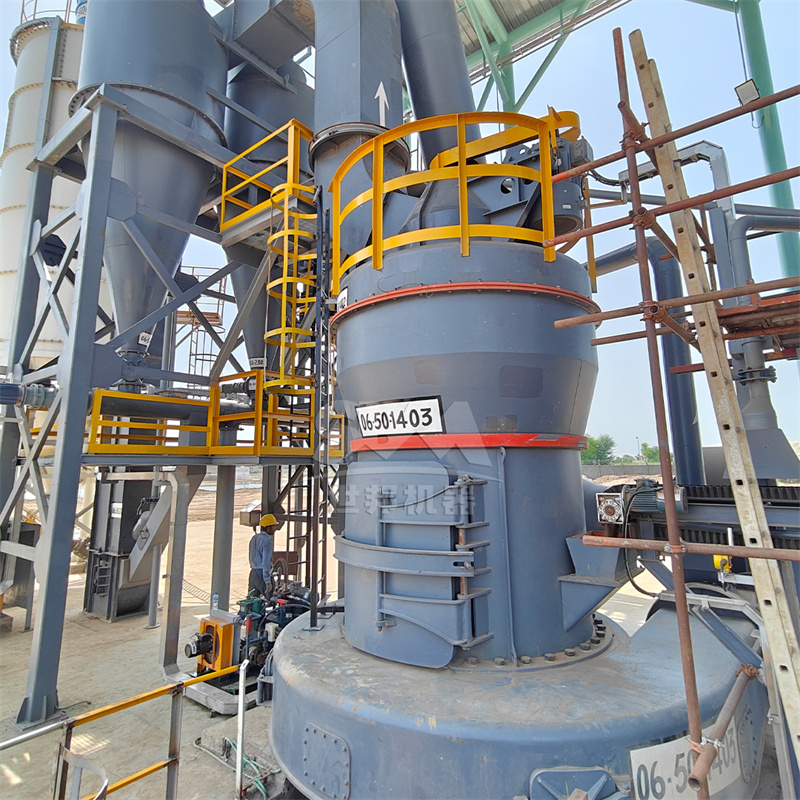
Overview of Milling Technologies for Talc
Several milling technologies are suitable for talc processing, each with distinct advantages and limitations.
Ball Mills
Ball mills are traditional and reliable, capable of grinding talc to fine sizes. However, they are energy-inefficient, noisy, and have a large footprint. They are better suited for coarse grinding or when combined with classifiers.
Hammer Mills
Hammer mills are used for coarse crushing (0-3 mm) and are often employed as pre-grinding equipment. They are not suitable for fine talc powder production alone.
Vertical Roller Mills
Vertical roller mills, such as the LM Series, offer high capacity and energy efficiency for medium-fine grinding. They are ideal for large-scale production but may not achieve ultrafine sizes without additional classification.
Pendulum Mills
Pendulum mills like the MTM Series provide a balance between capacity and fineness, but may struggle with very fine products.
Ultrafine Mills
Ultrafine mills, including the SCM Series and LUM Series, are designed for fine and ultrafine talc production. They incorporate advanced classifiers to achieve narrow particle size distributions and high yields.
For building material grade talc, the most common choices are the MTW Series European Trapezium Mill for medium-fine powders and the SCM Series Ultrafine Mill for high-value ultrafine applications. Both are engineered to deliver superior performance and reliability.
SCM Series Ultrafine Mill: Precision and Efficiency for Ultrafine Talc
The SCM Series Ultrafine Mill is a state-of-the-art solution for producing ultrafine talc powder (325-2500 mesh). Its innovative design combines high efficiency, precise classification, and durable construction, making it ideal for building material applications that demand high whiteness and fineness.
Technical Advantages
High Efficiency & Energy Saving: The SCM Series boasts a capacity twice that of jet mills while consuming 30% less energy. Intelligent control with automatic finished product granularity feedback ensures optimal operation and consistent quality.
High-Precision Classification: The vertical turbine classifier achieves precise particle size cutting, eliminating coarse powder mixing and ensuring uniform finished products. This is critical for building materials where consistency is paramount.
Durable Design: Special material rollers and rings extend service life several times over. The shaftless screw grinding chamber ensures stable operation and reduces maintenance downtime.
Eco-friendly & Low Noise: Pulse dust collection efficiency exceeds international standards, and soundproof room design keeps noise levels low, meeting stringent environmental regulations.
Working Principle
The main motor drives three layers of grinding rings to rotate. Materials are dispersed into the grinding path by centrifugal force, crushed by roller pressure, and ground layer by layer. Finally, powder collection is completed by a cyclone collector and a pulse dust removal system.
Models and Specifications
The SCM Series offers various models to suit different production scales:
- SCM800: Capacity 0.5-4.5 t/h, Main Power 75 kW, Fineness 325-2500 mesh
- SCM900: Capacity 0.8-6.5 t/h, Main Power 90 kW, Fineness 325-2500 mesh
- SCM1000: Capacity 1.0-8.5 t/h, Main Power 132 kW, Fineness 325-2500 mesh
- SCM1250: Capacity 2.5-14 t/h, Main Power 185 kW, Fineness 325-2500 mesh
- SCM1680: Capacity 5.0-25 t/h, Main Power 315 kW, Fineness 325-2500 mesh
With its ability to produce ultrafine talc at high capacities, the SCM Series is the go-to choice for manufacturers aiming to supply high-grade building materials.
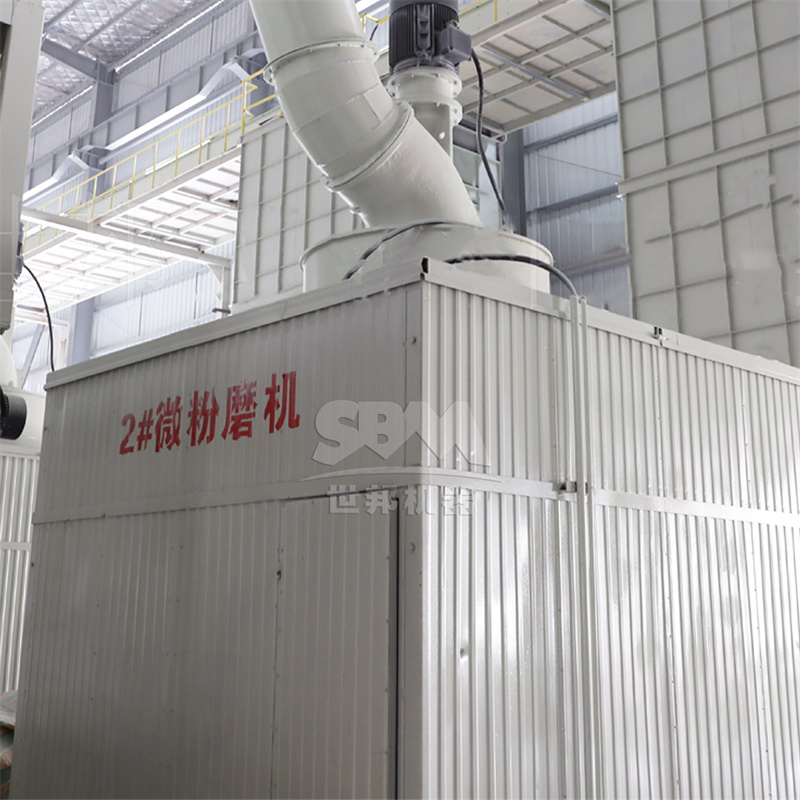
MTW Series European Trapezium Mill: Versatility and Reliability for Medium-Fine Talc
The MTW Series European Trapezium Mill is a robust and versatile grinding system designed for medium-fine talc production (30-325 mesh). Its optimized design ensures high grinding efficiency, low maintenance, and environmental compliance, making it a favorite in the building materials industry.
Technical Advantages
Anti-wear Shovel Design: Combined shovel blades reduce maintenance costs, and the curved design extends grinding roller life, ensuring long-term reliability.
Optimized Arc Air Duct: Reduces airflow energy loss and improves transmission efficiency. High-strength guard plates protect the air duct working surface, enhancing durability.
Integral Bevel Gear Drive: Transmission efficiency up to 98%, saving space and reducing installation costs.
Wear-resistant Volute Structure: Non-resistance flow design improves air selection efficiency, reducing maintenance costs by 30%.
Working Principle
The main motor drives the grinding rollers to revolve around the central axis while self-rotating to generate centrifugal force. Shovels throw materials between the ring and rollers to form a material layer, achieving efficient crushing through extrusion. The classification system precisely controls the finished product size.
Models and Specifications
The MTW Series includes multiple models to accommodate various capacities:
- MTW110: Capacity 3-9 t/h, Main Power 55 kW, Fineness 10-325 mesh
- MTW138Z: Capacity 6-17 t/h, Main Power 90 kW, Fineness 10-325 mesh
- MTW175G: Capacity 9.5-25 t/h, Main Power 160 kW, Fineness 10-325 mesh
- MTW215G: Capacity 15-45 t/h, Main Power 280 kW, Fineness 10-325 mesh
The MTW Series is particularly suited for producing talc for joint compounds, plasters, and other building materials where a consistent medium-fine powder is required. Its rugged construction and low maintenance requirements make it a cost-effective solution for continuous operation.
Comparison and Selection Guide
To aid in the decision-making process, the following table summarizes the key parameters of the SCM and MTW Series:
| Feature | SCM Series Ultrafine Mill | MTW Series European Trapezium Mill |
|---|---|---|
| Fineness Range | 325-2500 mesh (45-5 μm) | 30-325 mesh (600-45 μm) |
| Capacity | 0.5-25 t/h | 3-45 t/h |
| Input Size | ≤20 mm | ≤50 mm |
| Energy Efficiency | High (30% lower than jet mills) | High (optimized airflow) |
| Classification Precision | Vertical turbine classifier, precise | Precise classification system |
| Wear Parts Life | Extended several times | Extended with anti-wear design |
| Environmental | Pulse dust collection, soundproof | Pulse dust removal, low noise |
| Best Suited For | Ultrafine talc for high-end building materials | Medium-fine talc for general building materials |
When selecting a milling system, consider the following:
- Product Fineness: If your building material application requires talc finer than 325 mesh, the SCM Series is the clear choice. For 325 mesh or coarser, the MTW Series offers higher capacity and lower cost per ton.
- Production Capacity: Match the mill’s capacity to your production needs. The MTW Series can handle up to 45 t/h, while the SCM Series up to 25 t/h. For very large-scale ultrafine production, multiple SCM units can be installed.
- Energy Costs: Both series are energy-efficient, but the SCM Series excels in ultrafine grinding where traditional mills consume more power.
- Space and Installation: The MTW Series has a compact footprint due to its integral bevel gear drive, while the SCM Series may require additional space for the classifier and dust collection system.
- Future Expansion: Consider scalability. The modular design of both series allows for capacity upgrades with minimal modifications.
Conclusion
Choosing the right milling system for building material grade talc powder is a critical decision that impacts product quality, operational efficiency, and profitability. The SCM Series Ultrafine Mill and MTW Series European Trapezium Mill represent the pinnacle of grinding technology, each tailored to specific fineness and capacity requirements. By understanding your application’s needs and leveraging the advanced features of these mills, you can achieve optimal results and maintain a competitive edge in the market. For further assistance in selecting the ideal solution, please consult our technical experts who can provide customized recommendations based on your specific production parameters.