
Introduction
Cobalt powder is a critical material in modern industry, widely used in cemented carbides, battery cathodes, superalloys, magnets, and catalysis. Among the various particle size specifications, 100-mesh cobalt powder (approximately 150 μm) serves as an important intermediate product for further processing or direct application in powder metallurgy. Producing high-quality fine cobalt powder efficiently requires careful selection of milling equipment. This article provides a professional guide to choosing the right milling system for 100-mesh cobalt powder production, comparing different technologies and highlighting key selection criteria. We also introduce two of our company’s advanced milling solutions that are particularly well-suited for this application.

Understanding 100-Mesh Cobalt Powder Requirements
100-mesh corresponds to a particle size of about 150 μm. However, in industrial practice, “100-mesh cobalt powder” often implies that the majority of particles pass through a 100-mesh sieve, with a controlled particle size distribution (PSD) to ensure consistent flowability, compressibility, and sintering behavior. Key quality parameters include:
- Particle size distribution: Narrow PSD for uniform properties.
- Purity: Avoid contamination from wear parts (e.g., iron, chromium).
- Morphology: Irregular or spherical particles depending on the application.
- Oxygen content: Low oxygen is critical for metallurgical applications.
- Production capacity: Matching the milling system to the required output.
Cobalt is a relatively hard and abrasive metal, and it tends to work-harden during milling. Therefore, the milling system must be robust, efficient, and capable of precise classification to avoid over-grinding and excessive fines.
Milling Technologies for Fine Cobalt Powder
Several milling technologies can be used to produce 100-mesh cobalt powder. The most common are:
- Ball mills: Traditional, reliable, but energy-intensive and with broad PSD.
- Jet mills: High energy consumption, good for ultrafine but not ideal for 100-mesh.
- Vertical roller mills: Efficient grinding and classification in one unit.
- Trapezium mills: Improved grinding efficiency and classification.
- Hammer mills: For coarse crushing, not suitable for fine grinding.
For 100-mesh cobalt powder, the ideal system should combine efficient grinding with precise classification to achieve the target fineness while minimizing fines and energy use. Vertical roller mills and advanced trapezium mills are often the best choices.
Key Selection Criteria for Cobalt Powder Milling
When selecting a milling system for 100-mesh cobalt powder, consider the following factors:
1. Grinding Mechanism and Efficiency
Cobalt is abrasive and tough. A milling system that uses pressure and attrition (like vertical roller mills) or impact and attrition (like ball mills) can be effective. However, vertical roller mills and trapezium mills offer higher energy efficiency and lower wear rates due to their optimized grinding elements.
2. Classification Precision
To achieve 100-mesh with minimal over-grinding, a dynamic classifier is essential. Modern classifiers with variable speed rotors allow precise control of the cut size, ensuring that only particles finer than the target are collected while coarse particles are returned for further grinding.
3. Contamination Control
Cobalt powder purity is paramount. Wear parts should be made of materials that minimize contamination, such as special alloys or ceramic liners. Additionally, the system should be designed for easy cleaning and have dust collection to prevent cross-contamination.
4. Energy Consumption
Milling is energy-intensive. Systems with high grinding efficiency and low airflow requirements can significantly reduce operating costs. Vertical roller mills typically consume 30-40% less energy than ball mills.
5. Capacity and Scalability
Production scale varies from small batches to large continuous operations. Choose a system with models that match your required capacity and allow for future expansion.
6. Environmental and Safety Aspects
Cobalt powder can be hazardous if inhaled. The milling system should be fully enclosed, with efficient dust collection (e.g., pulse jet filters) and negative pressure operation to protect workers and the environment.
7. Maintenance and Wear Life
Wear parts should have long service life and be easy to replace. Systems with hydraulic or modular designs reduce downtime.
Recommended Milling Systems for 100-Mesh Cobalt Powder
Based on the above criteria, we recommend two of our company’s products that are particularly well-suited for producing 100-mesh cobalt powder: the SCM Series Ultrafine Mill and the MTW Series European Trapezium Mill. Both are designed for efficient fine grinding and precise classification, and they can be configured to meet the specific requirements of cobalt powder production.
SCM Series Ultrafine Mill
The SCM Series Ultrafine Mill is a highly efficient milling system capable of producing powders in the range of 325-2500 mesh. While it is often used for ultrafine powders, it can be easily adjusted to produce 100-mesh (150 μm) cobalt powder with excellent precision. Key advantages include:
- High efficiency and energy saving: Capacity is twice that of jet mills with 30% lower energy consumption.
- High-precision classification: Vertical turbine classifier achieves precise particle size cutting, ensuring uniform finished products with no coarse powder mixing.
- Durable design: Special material rollers and rings extend service life, and the shaftless screw grinding chamber ensures stable operation.
- Eco-friendly and low noise: Pulse dust collection efficiency exceeds international standards, and soundproof room design ensures low noise levels.
For cobalt powder, the SCM mill can be equipped with wear-resistant liners and a closed-loop dust collection system to maintain purity. Its intelligent control system with automatic finished product granularity feedback ensures consistent product quality.
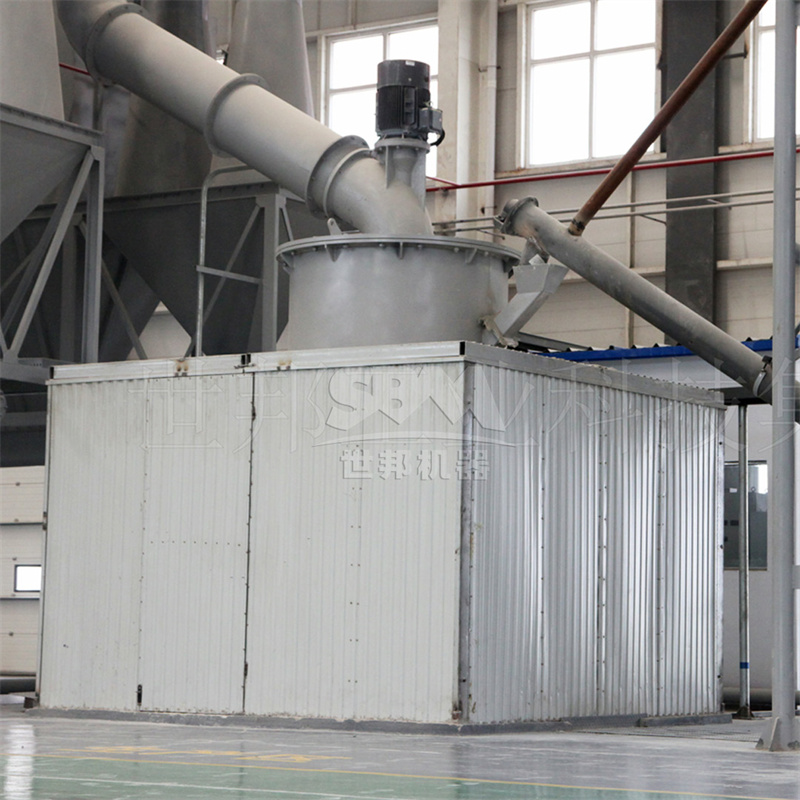
Model specifications for the SCM Series include capacities from 0.5 t/h to 25 t/h, making it suitable for both small and large-scale production. For a typical 100-mesh cobalt powder application, the SCM800 or SCM900 models are ideal for pilot to medium-scale production.
MTW Series European Trapezium Mill
The MTW Series European Trapezium Mill is another excellent choice for 100-mesh cobalt powder. With a fineness range of 30-325 mesh, it is perfectly suited for producing 100-mesh powder. Its technical advantages include:
- Anti-wear shovel design: Combined shovel blades reduce maintenance costs, and the curved design extends grinding roller life.
- Optimized arc air duct: Reduces airflow energy loss and improves transmission efficiency.
- Integral bevel gear drive: Transmission efficiency up to 98%, saving space and reducing installation costs.
- Wear-resistant volute structure: Non-resistance flow design improves air selection efficiency and reduces maintenance costs by 30%.
The MTW mill is particularly effective for cobalt because its grinding mechanism (rollers and ring) can handle abrasive materials. The classification system precisely controls the finished product size, and the system can be equipped with a pulse dust collector for a clean working environment.

Model options range from MTW110 (3-9 t/h) to MTW215G (15-45 t/h), allowing flexibility for different production scales. For a 100-mesh cobalt powder plant with a capacity of 10 t/h, the MTW138Z model (6-17 t/h) is a suitable choice.
Comparison and Selection Guide
To help you decide between the SCM and MTW series, consider the following:
- If you require finer particle sizes in the future (e.g., below 100 mesh), the SCM series offers greater flexibility with its ability to go down to 2500 mesh. However, for strictly 100-mesh, both are capable.
- If energy efficiency and high capacity are priorities, the MTW series offers high throughput with lower power consumption per ton, especially for coarse to medium-fine grinding.
- If precise classification and narrow PSD are critical, the SCM series’ vertical turbine classifier provides excellent cut precision.
- For abrasive cobalt, both series offer wear-resistant components, but the MTW’s anti-wear shovel design and volute structure may reduce maintenance in the long run.
We recommend conducting pilot-scale tests with both mills using your specific cobalt feedstock to determine the optimal configuration. Our engineers can assist in selecting the right model, designing the circuit, and ensuring compliance with safety and environmental regulations.
Conclusion
Choosing the right milling system for 100-mesh cobalt powder production is a decision that impacts product quality, operating costs, and environmental compliance. By understanding the characteristics of cobalt, the requirements of the target powder, and the capabilities of different milling technologies, you can make an informed choice. Our SCM Series Ultrafine Mill and MTW Series European Trapezium Mill are both proven solutions that deliver efficient, precise, and reliable performance for fine cobalt powder production. Contact us today to discuss your specific needs and receive a customized recommendation.