
Introduction
Limestone is one of the most widely used raw materials in the cement industry, serving as the primary source of calcium carbonate (CaCO₃) in cement production. For cement plants, the fineness to which limestone is ground directly influences the reactivity of the raw meal, the energy efficiency of the kiln system, and the overall quality of the finished cement. Among the various target fineness levels, 180 mesh (approximately 80 μm, or 0.080 mm) is a particularly common requirement for limestone cement raw material processing. This fineness strikes a balance between adequate surface area for efficient calcination and reasonable grinding energy consumption.
Selecting the right grinding mill for 180 mesh limestone processing is a critical decision that impacts capital expenditure, operating costs, product quality, and long-term plant profitability. This article provides a comprehensive guide to help cement plant managers, process engineers, and project consultants choose the most suitable grinding equipment for their specific production requirements.
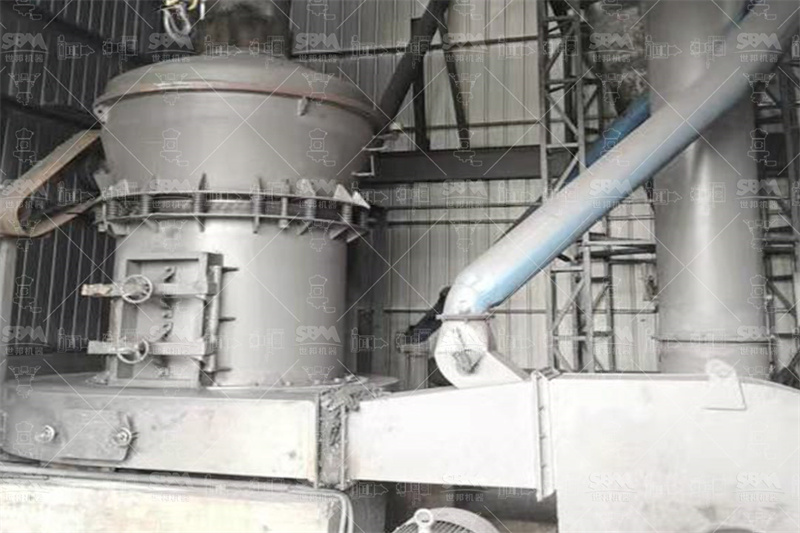
Understanding 180 Mesh Limestone Requirements
What Does 180 Mesh Mean?
Mesh size refers to the number of openings per linear inch in a standard sieve. A 180 mesh screen has 180 openings per inch, corresponding to a particle size of approximately 80 micrometers (μm) or 0.080 mm. In the cement industry, this fineness is often expressed as passing 80 μm sieve, with a typical residue of 10–15% on the 80 μm sieve and 1–2% on the 200 μm sieve.
Why 180 Mesh for Limestone Cement Raw Material?
The choice of 180 mesh as a target fineness for limestone in cement raw meal is based on several technical and economic considerations:
- Reactivity: At 80 μm, limestone particles have sufficient surface area to ensure rapid decomposition of calcium carbonate in the preheater and kiln stages. Finer grinding improves reactivity but increases energy consumption non-linearly.
- Raw Meal Blendability: Limestone must blend uniformly with other raw materials such as clay, shale, and iron ore. A consistent 180 mesh product ensures homogeneous mixing and stable kiln feed chemistry.
- Energy Efficiency: Grinding is one of the most energy-intensive operations in cement production. Optimizing to 180 mesh rather than pursuing ultra-fine grinding can reduce specific power consumption by 15–30%, translating into significant operational savings.
- Kiln Performance: Properly sized limestone particles contribute to stable kiln operation, reduced dust cycling, and lower specific heat consumption.
Key Factors in Selecting a Grinding Mill for 180 Mesh Limestone
1. Capacity Requirements
The required production capacity is the primary driver in mill selection. Cement plants vary widely in scale, from small grinding stations producing 10–30 t/h to large integrated plants requiring 200–500 t/h of raw meal. The selected mill must match the plant’s throughput requirements while providing a margin for future expansion.
2. Feed Material Characteristics
Limestone properties vary significantly by deposit, including:
- Hardness (Bond Work Index): Typically 10–14 kWh/t for limestone
- Moisture Content: Surface moisture can range from 1% to 8%
- Abrasiveness: Influences wear part selection and maintenance intervals
- Feed Size: Maximum lump size determines the need for pre-crushing
These characteristics directly affect mill throughput, power consumption, and wear rates. A comprehensive material test (such as Bond Work Index determination and grindability testing) should precede mill selection.
3. Product Fineness and Consistency
For 180 mesh limestone, the mill must deliver consistent product fineness with minimal variation. Poorly classified product leads to over-grinding (wasting energy) or under-grinding (causing kiln instability). Modern grinding mills with high-efficiency dynamic classifiers can achieve precise 180 mesh cuts with narrow particle size distribution.
4. Energy Consumption
Grinding accounts for approximately 60–70% of the total electrical energy consumed in a cement plant. The choice of grinding technology has a profound impact on specific energy consumption (kWh/t). Vertical roller mills typically consume 30–40% less energy than ball mills for the same product fineness. This difference becomes substantial when processing hundreds of tons per hour.
5. Capital and Operating Costs
While capital cost is important, total cost of ownership (TCO) over a 20–30 year plant life is the more relevant metric. Key cost components include:
- Initial equipment purchase and installation
- Civil works and foundation requirements
- Energy consumption over the equipment lifetime
- Wear part replacement and maintenance labor
- Downtime costs due to unplanned maintenance
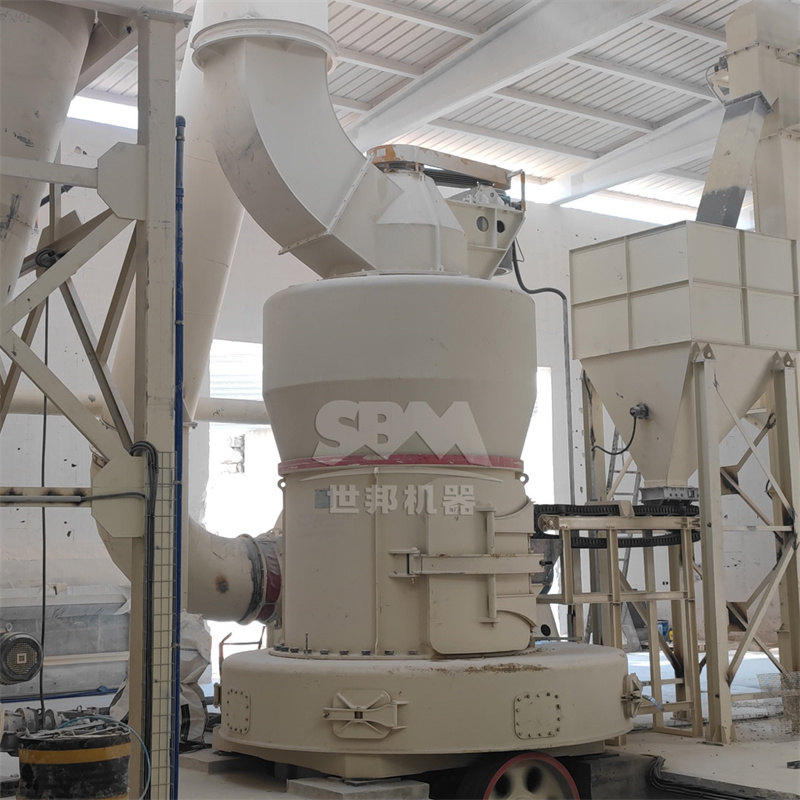
Comparing Grinding Mill Options for 180 Mesh Limestone
1. Ball Mill
Ball mills have been the traditional choice for cement raw material grinding for over a century. They are robust, reliable, and well understood. However, for 180 mesh limestone processing, ball mills have significant drawbacks:
- High specific energy consumption (typically 18–25 kWh/t for 180 mesh)
- Large physical footprint and heavy foundation requirements
- High noise levels (85–100 dB)
- Significant wear part consumption (steel balls and liners)
- Limited flexibility in product fineness adjustment
Ball mills remain viable for smaller capacity plants (under 50 t/h) or where existing infrastructure makes them the practical choice. However, for modern, high-capacity cement plants, alternative technologies offer superior economics.
2. Vertical Roller Mill (VRM)
Vertical roller mills have become the dominant technology for cement raw material grinding since the 1990s. For 180 mesh limestone processing, VRMs offer compelling advantages:
- Energy Efficiency: 30–40% lower specific power consumption compared to ball mills
- Compact Layout: Integrated crushing, grinding, and classification in a single unit; floor space reduced by 50%
- Large Capacity: Single units can process up to 500 t/h and beyond
- Product Flexibility: Easy adjustment of product fineness through classifier speed changes
- Low Wear: Non-contact grinding principle between rollers and table extends wear part life
- Environmental Compliance: Fully sealed negative pressure operation with dust emission below 20 mg/m³
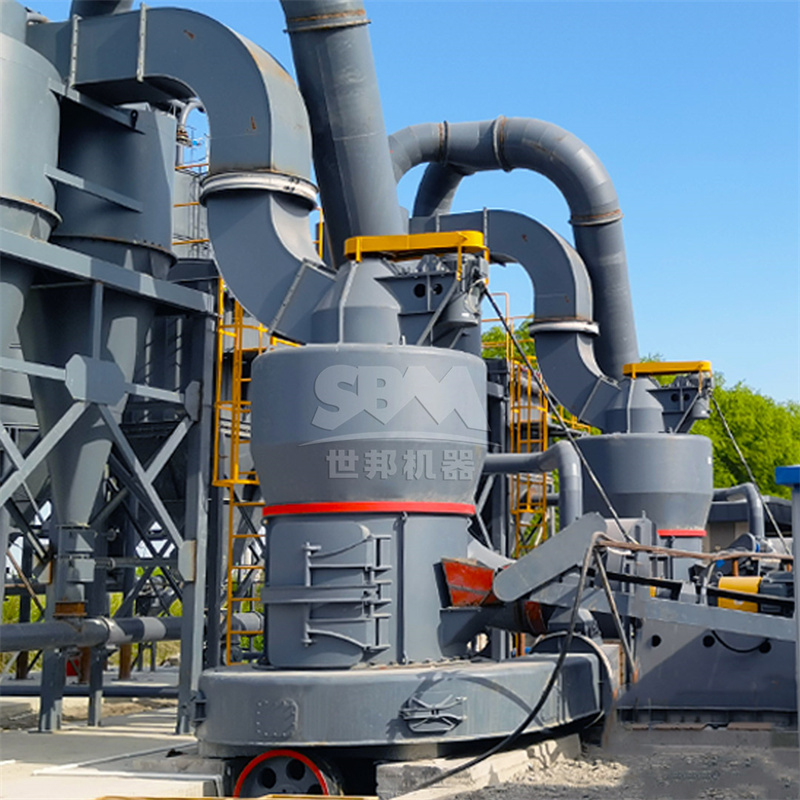
Our company’s LM Series Vertical Roller Mill (600-45μm) is an excellent example of this technology, specifically engineered to handle the demanding requirements of limestone processing for cement raw material. With capacities ranging from 3 to 250 t/h and the ability to produce fineness from 30 to 325 mesh, the LM Series is ideally suited for 180 mesh limestone production.
Key advantages of the LM Series for 180 mesh limestone include:
- Integrated Design: Crushing, grinding, and selection functions are combined in one system, reducing floor space by 50% and infrastructure costs by 40%.
- Low Operating Cost: The non-contact design between grinding rollers and the grinding table increases wear part life by 3x. Energy consumption is 30–40% lower than equivalent ball mill systems.
- Intelligent Control: An expert-level auto-control system supports remote/local switching with real-time parameter monitoring, minimizing manual intervention.
- Environmental Compliance: Fully sealed negative pressure operation ensures dust emissions meet the most stringent international standards, with operating noise significantly reduced.
Available models include the LM130K (10–28 t/h), LM150K (13–38 t/h), LM170K (18–48 t/h), LM190K (23–68 t/h), LM220K (36–105 t/h), and LM280K (50–170 t/h), ensuring there is a model to match virtually any plant capacity requirement.
3. European Trapezium Mill
For medium-capacity applications (3–45 t/h), the MTW Series European Trapezium Mill offers an attractive alternative. This mill features:
- Anti-wear Shovel Design: Combined shovel blades reduce maintenance costs while curved design extends grinding roller life.
- Optimized Arc Air Duct: Reduces airflow energy loss and improves transmission efficiency, protected by high-strength guard plates.
- Integral Bevel Gear Drive: Transmission efficiency up to 98%, saving space and reducing installation costs.
- Wear-resistant Volute Structure: Non-resistance flow design improves air selection efficiency and reduces maintenance costs by 30%.
The MTW Series is available in models from MTW110 (3–9 t/h) to MTW215G (15–45 t/h), with the MRN158 (7–21 t/h), MRN198 (12–33 t/h), and MRN218 (15–45 t/h) models incorporating additional patented technology including internal suction oil lubrication and advanced pulse dust removal. For plants requiring 180 mesh limestone at medium capacities, the MTW or MRN Series provides an excellent balance of performance, efficiency, and investment cost.
4. Ultrafine Mills (for Specialty Applications)
In some cement plants, limestone is ground to finer sizes for specific applications such as limestone filler in blended cements or for special purpose cement formulations. For these applications, the SCM Series Ultrafine Mill (45-5μm) offers the necessary capability with output fineness ranging from 325 to 2500 mesh. However, for standard 180 mesh limestone cement raw material, ultrafine mills are generally not the most economical choice due to over-grinding.
How to Make the Right Choice: A Decision Framework
Step 1: Define Your Requirements
Clearly specify:
- Required capacity (t/h) with a 10–15% margin for future growth
- Target product fineness (180 mesh, 80 μm, or specific residue requirements)
- Feed material characteristics (hardness, moisture, abrasiveness, maximum size)
- Available plant space and layout constraints
- Power supply availability (voltage, capacity)
- Environmental regulations and noise limits
Step 2: Evaluate Technology Options
For 180 mesh limestone at capacities above 50 t/h, vertical roller mills are almost always the most economical choice. For capacities between 10–50 t/h, both VRMs and European trapezium mills can be competitive, and the decision should be based on detailed techno-economic analysis. For capacities under 10 t/h, ball mills or trapezium mills may still be appropriate.
Step 3: Consider Total Cost of Ownership
Prepare a detailed TCO analysis covering the entire equipment lifecycle:
- Capital Cost: Equipment, installation, civil works, and commissioning
- Energy Cost: Based on specific power consumption and local electricity rates over 20 years
- Maintenance Cost: Wear parts, lubricants, and labor based on manufacturer recommendations
- Availability: Uptime percentage and production loss during maintenance
- Product Quality: Consistency and its impact on downstream process efficiency
In many cases, a higher initial investment in a more efficient mill (such as a VRM) is recovered within 2–4 years through energy savings alone, after which the plant enjoys decades of lower operating costs.
Step 4: Assess Supplier Capability
Choose a supplier with:
- Extensive experience in cement raw material grinding
- A proven track record with installations in similar applications
- Comprehensive after-sales support including spare parts availability
- Training and technical assistance for plant operators
- Ongoing research and development to improve product performance
Conclusion
Selecting the right grinding mill for 180 mesh limestone cement raw material processing is a decision that will influence your plant’s performance for decades. While ball mills remain a viable option for smaller capacities, vertical roller mills and advanced trapezium mills offer superior energy efficiency, lower operating costs, and better product quality for most modern cement plants.
Our LM Series Vertical Roller Mill and MTW/ MRN Series European Trapezium Mill represent the state of the art in limestone grinding technology. With capacities ranging from 3 t/h to 250 t/h and the ability to produce consistent 180 mesh product with minimal energy consumption, these mills are engineered to meet the demanding requirements of today’s cement industry. Whether you are building a new plant or upgrading an existing grinding circuit, investing in the right grinding technology will pay dividends in energy savings, product quality, and operational reliability for years to come.
For a personalized recommendation based on your specific limestone characteristics and production requirements, we encourage you to contact our technical team. We will work with you to conduct material testing, prepare a detailed process design, and provide a comprehensive cost-benefit analysis to ensure you select the optimal grinding solution for your plant.