
Introduction: The Critical Role of Limestone Grinding in AAC Production
Autoclaved Aerated Concrete (AAC) has become a cornerstone of modern sustainable construction, prized for its lightweight structure, thermal insulation, and fire resistance. The production of high-quality AAC blocks and panels depends on the precise processing of raw materials, among which limestone plays a vital role. Limestone serves as a key calcium source in the AAC mixture, reacting with silica-rich materials under high-pressure steam to form calcium silicate hydrates—the binding phase that gives AAC its strength and durability.
However, the performance of limestone in AAC production is directly governed by its particle size distribution. If the limestone is too coarse, the hydrothermal reaction will be incomplete, leading to weak blocks and inconsistent density. If it is too fine, the slurry rheology may be adversely affected, causing casting difficulties and increased water demand. Therefore, selecting the right grinding mill for limestone processing is not merely a matter of capacity—it is a strategic decision that impacts product quality, energy consumption, and overall plant profitability.
This article provides a comprehensive guide to choosing the optimal grinding equipment for AAC limestone raw material processing, with a focus on fineness requirements, capacity matching, energy efficiency, and environmental compliance. We will also highlight two proven solutions from our company: the SCM Series Ultrafine Mill and the MTW Series European Trapezium Mill, both of which are widely used in AAC production lines worldwide.
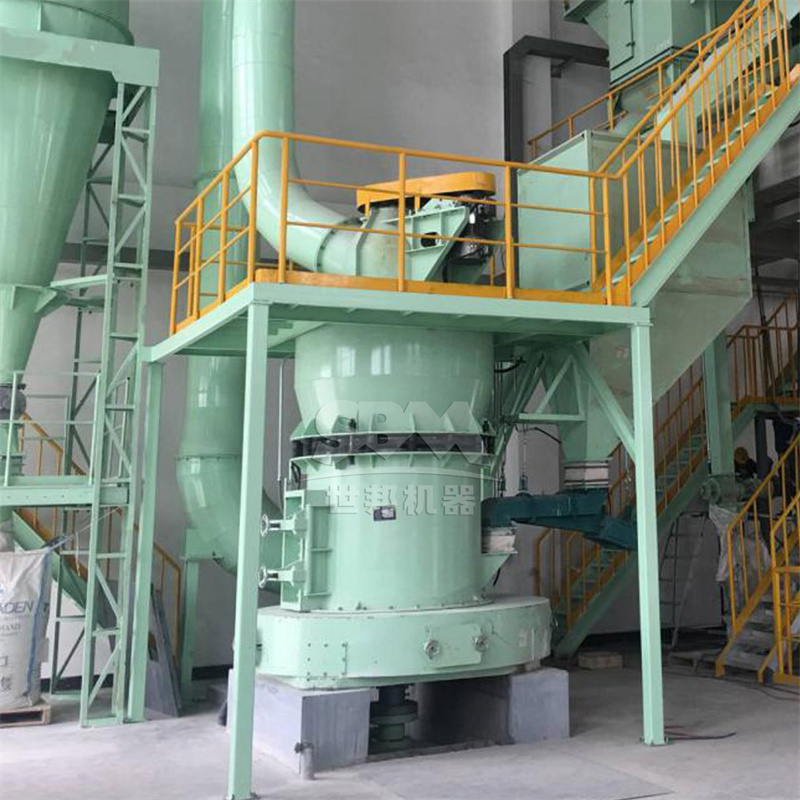
Understanding Limestone’s Role and Fineness Requirements in AAC
In AAC formulations, limestone is typically used in conjunction with quartz sand, fly ash, cement, lime, and gypsum. The limestone powder acts as a filler and a reactive calcium component. The optimal fineness for limestone in AAC production usually falls between 200 and 400 mesh (approximately 75 to 38 microns), although some formulations may require finer or slightly coarser particles depending on the autoclaving regime and the reactivity of the silica source.
Key fineness considerations include:
- Reactivity: Finer particles have a larger surface area, which accelerates the reaction with silica under steam curing. However, excessively fine grinding increases energy consumption and may cause agglomeration.
- Slurry Rheology: The particle size distribution affects the viscosity and flowability of the AAC slurry. A balanced distribution with minimal ultrafine content often yields better casting behavior.
- Autoclave Cycle: Plants with shorter autoclaving cycles may benefit from finer limestone to ensure complete reaction, while longer cycles can tolerate slightly coarser material.
Therefore, the grinding mill must be capable of delivering a consistent and adjustable particle size distribution, typically in the range of 325 to 2500 mesh for ultrafine applications, or 30 to 325 mesh for standard AAC limestone preparation.
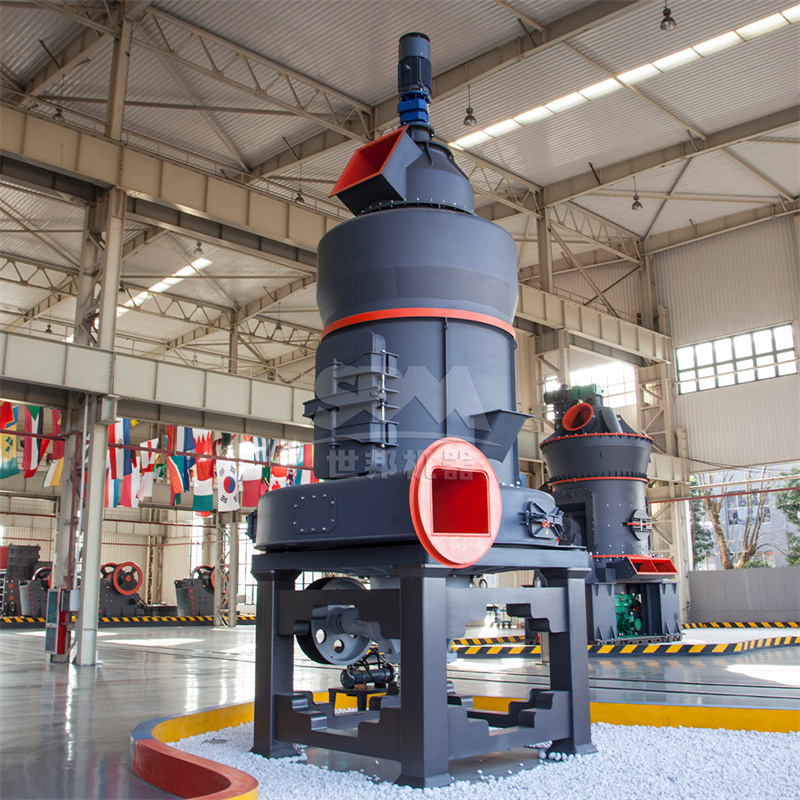
Key Criteria for Selecting a Limestone Grinding Mill for AAC
When choosing a grinding mill for AAC limestone processing, several factors must be carefully evaluated:
1. Capacity Matching
AAC plants vary in scale from small block producers (100 m³/day) to large panel factories (1000 m³/day or more). The grinding mill’s capacity must align with the plant’s limestone consumption rate. For a typical AAC plant producing 300,000 m³/year, the limestone grinding system may need to handle 10 to 30 tons per hour, depending on the recipe and operating hours. The mill should also have some surplus capacity to accommodate future expansion or variations in raw material grindability.
2. Fineness and Adjustability
The mill must achieve the target fineness (e.g., 325 mesh or finer) while allowing easy adjustment. A dynamic classifier or frequency-controlled separator is essential for maintaining consistent product quality. Over-grinding should be avoided, as it wastes energy and can degrade slurry properties.
3. Energy Efficiency
Grinding is one of the most energy-intensive operations in AAC production. The selected mill should have a low specific energy consumption (kWh per ton of product). Advanced mills with optimized grinding curves, high-efficiency classifiers, and intelligent control systems can reduce power consumption by 30% or more compared to traditional ball mills.
4. Wear Resistance and Maintenance
Limestone is moderately abrasive, so wear parts (rollers, rings, liners) must be made from high-chrome or ceramic materials. A design that allows quick replacement of wear components minimizes downtime and maintenance costs. For example, the SCM Series features special material rollers and rings that extend service life several times over, while the MTW Series offers combined shovel blades that reduce maintenance frequency.
5. Environmental Compliance
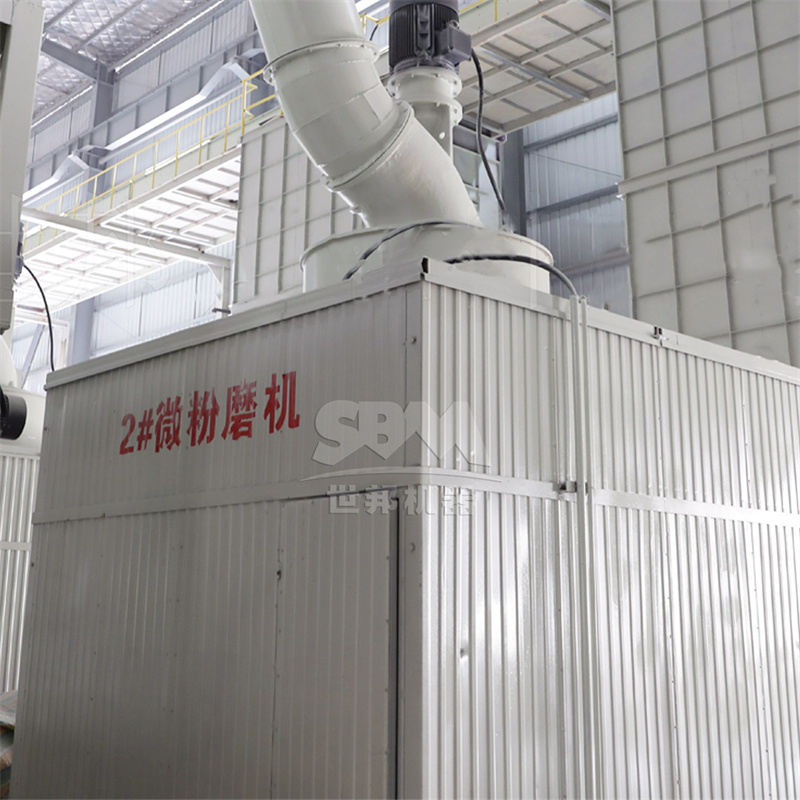
Dust emission and noise are critical concerns for AAC plants located near residential areas. The grinding system should be equipped with high-efficiency pulse dust collectors and soundproof enclosures. Negative pressure operation prevents dust leakage and ensures a clean working environment.
6. Automation and Control
Modern AAC plants increasingly rely on automated process control. The grinding mill should interface seamlessly with the plant’s central control system, providing real-time feedback on fineness, load, and energy consumption. Intelligent control reduces human error and optimizes grinding efficiency.
Recommended Solution 1: SCM Series Ultrafine Mill for Fine Limestone Grinding
For AAC producers requiring ultrafine limestone powder (325–2500 mesh), the SCM Series Ultrafine Mill is an excellent choice. This mill is specifically designed for high-efficiency fine grinding and offers several advantages that align perfectly with AAC production needs.
Core Parameters
- Input Size: ≤20 mm
- Output Fineness: 325–2500 mesh (45–5 μm)
- Capacity: 0.5–25 t/h (depending on model)
Technical Advantages for AAC
- High Efficiency & Energy Saving: The SCM mill delivers twice the capacity of a jet mill with 30% lower energy consumption. Its intelligent control system automatically adjusts to maintain the desired fineness, reducing over-grinding.
- High-Precision Classification: The vertical turbine classifier ensures precise particle size cutting with no coarse powder mixing, resulting in a uniform product—critical for consistent AAC quality.
- Durable Design: Special material rollers and rings extend service life, while the shaftless screw grinding chamber ensures stable operation with minimal vibration.
- Eco-friendly & Low Noise: The pulse dust collection system exceeds international standards, and the soundproof room design keeps noise levels low, making it suitable for urban locations.
With models ranging from SCM800 (0.5–4.5 t/h) to SCM1680 (5–25 t/h), there is a configuration to match virtually any AAC plant capacity. The SCM mill’s ability to produce ultrafine limestone powder makes it ideal for high-performance AAC products where reactivity and strength are paramount.
Recommended Solution 2: MTW Series European Trapezium Mill for Versatile Limestone Processing
For AAC plants that require a balance between capacity and fineness, or that process multiple raw materials (limestone, gypsum, quicklime), the MTW Series European Trapezium Mill offers outstanding versatility and reliability.
Core Parameters
- Input Size: ≤50 mm
- Output Fineness: 30–325 mesh (down to 0.038 mm)
- Capacity: 3–45 t/h (depending on model)
Technical Advantages for AAC
- Anti-wear Shovel Design: Combined shovel blades and curved grinding rollers reduce maintenance costs and extend wear life—ideal for continuous AAC production.
- Optimized Arc Air Duct: Reduces airflow energy loss and improves transmission efficiency, lowering overall power consumption.
- Integral Bevel Gear Drive: Transmission efficiency up to 98%, saving space and reducing installation costs.
- Wear-resistant Volute Structure: Non-resistance flow design improves air selection efficiency and reduces maintenance costs by 30%.
The MTW mill’s ability to grind to 325 mesh with high capacity (up to 45 t/h for the MTW215G model) makes it a robust workhorse for AAC limestone preparation. Its patented internal suction oil lubrication system and advanced pulse dust removal technology ensure long-term, eco-friendly operation.
Comparison and Selection Guidelines
To help decision-makers choose between the SCM and MTW mills, the following table summarizes key differentiators:
| Criteria | SCM Series Ultrafine Mill | MTW Series European Trapezium Mill |
|---|---|---|
| Fineness Range | 325–2500 mesh (ultrafine) | 30–325 mesh (standard to fine) |
| Capacity Range | 0.5–25 t/h | 3–45 t/h |
| Best For | High-reactivity AAC, ultrafine limestone | Versatile grinding, medium-fine limestone |
| Energy Consumption | Very low (30% less than jet mills) | Low (optimized air duct and drive) |
| Footprint | Compact, soundproof design | Moderate, requires foundation |
| Automation | Intelligent feedback control | Advanced control options |
In general, if your AAC formulation demands ultrafine limestone (e.g., for high-strength blocks or thin panels), the SCM Series is the preferred choice. If you need a versatile mill that can handle limestone, gypsum, and other materials with moderate fineness at high capacity, the MTW Series is more suitable. Many large AAC plants actually install both types: an MTW mill for primary grinding and an SCM mill for fine-tuning the particle size distribution.
Integration into AAC Production Lines
Both the SCM and MTW mills can be seamlessly integrated into existing or new AAC production lines. Typical configurations include:
- Material Handling: Limestone is fed from a hopper via a belt feeder or screw conveyor to the mill inlet. Magnetic separators and metal detectors protect the mill from tramp metal.
- Grinding Circuit: The mill operates in closed circuit with a classifier (integral for SCM, external for MTW). Coarse particles are returned for further grinding.
- Product Collection: Fine powder is collected by a pulse dust collector and transferred to a storage silo via air slides or screw conveyors.
- Dust Control: All transfer points are equipped with bag filters to maintain a clean environment.
- Control System: The mill’s PLC interfaces with the plant’s SCADA system for centralized monitoring and adjustment.
Our engineering team can provide customized layout designs, foundation drawings, and commissioning support to ensure a smooth integration.
Case Study: Successful Application in a Chinese AAC Plant
A leading AAC block manufacturer in Jiangsu Province, China, was facing inconsistent block strength due to coarse limestone particles. After auditing their process, we recommended replacing their old ball mill with an SCM1250 ultrafine mill. The results were remarkable:
- Limestone fineness increased from 200 mesh to 800 mesh (average 18 μm).
- Block compressive strength improved by 25%.
- Energy consumption per ton of limestone reduced by 35%.
- Dust emissions dropped to below 10 mg/m³, meeting strict local regulations.
This case demonstrates how the right grinding technology can transform AAC quality and profitability.
Conclusion: Investing in the Right Mill for Long-Term Success
Selecting the right grinding mill for AAC limestone processing is a decision that affects every stage of production—from slurry preparation to autoclaving and final product performance. The SCM Series Ultrafine Mill and MTW Series European Trapezium Mill represent two of the most advanced and reliable solutions available today. Both are backed by our company’s decades of experience in powder processing and our commitment to innovation, quality, and customer service.
We invite AAC producers to consult with our engineers to determine the optimal mill configuration for their specific raw materials, capacity targets, and product specifications. With the right grinding equipment, you can achieve consistent, high-quality AAC products while minimizing energy costs and environmental impact.
For more information or to request a quote, please contact our sales team today.