
Introduction
In the paint manufacturing industry, the quality of barite (barium sulfate) additives directly influences the final product’s density, brightness, chemical resistance, and overall performance. Barite is widely used as a filler and extender in paints to improve consistency, reduce gloss, and enhance durability. To achieve the precise particle size distribution and surface properties required for high-end paints, selecting the right grinding and classification equipment is critical. This article provides a comprehensive guide to advanced barite additives production equipment, covering key machine types, their working principles, technical advantages, and selection criteria for paint manufacturers.
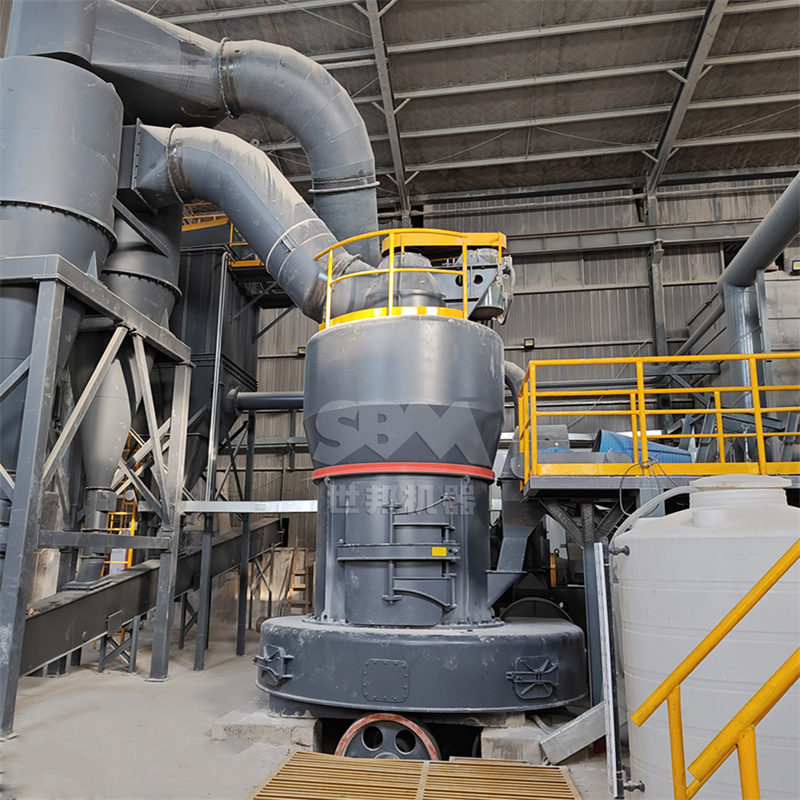
Understanding Barite for Paint Applications
Barite (BaSO4) is valued in paint formulations for its high specific gravity (4.2–4.5 g/cm³), chemical inertness, and ability to provide a smooth, uniform finish. The fineness requirements typically range from 325 mesh (45 μm) to 2500 mesh (5 μm), depending on the paint type—whether it’s architectural coatings, automotive paints, or industrial primers. Ultrafine barite powders with narrow particle size distribution improve hiding power, reduce settling, and enhance gloss control. Therefore, the production line must incorporate high-efficiency mills with precise classification capabilities.
Key Equipment for Barite Additives Production
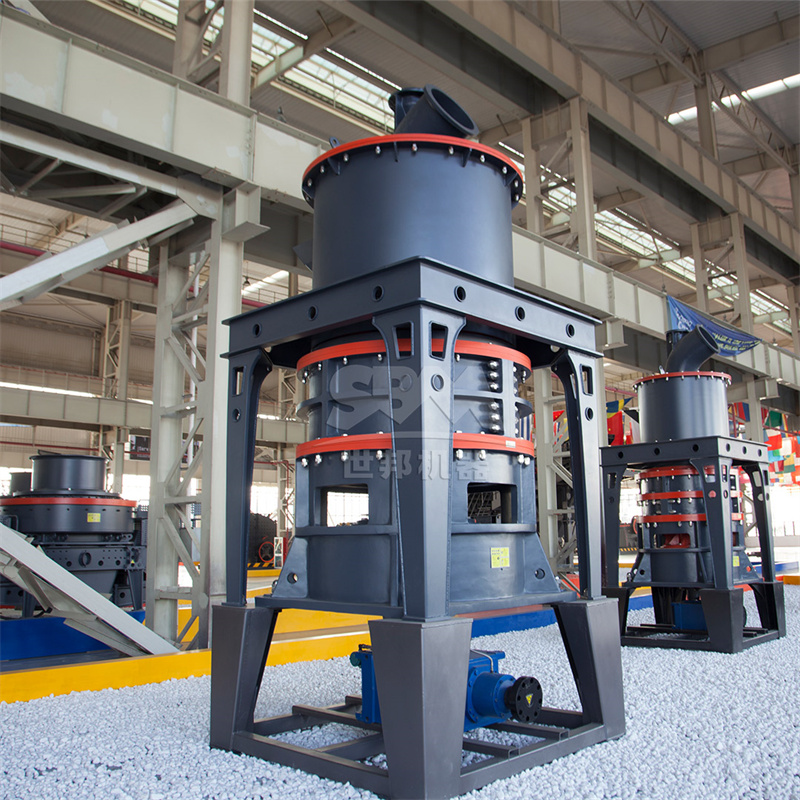
1. Ultrafine Grinding Mills (45–5 μm Output)
For paint applications requiring ultra-fine barite powders, mills capable of producing fineness between 325-2500 mesh are essential. The SCM Series Ultrafine Mill is a flagship solution designed for this exact purpose. With an input size of up to 20mm, it delivers an output fineness of 325-2500 mesh (45-5 μm) and a capacity ranging from 0.5 to 25 tons per hour, depending on the model. Its vertical turbine classifier ensures high-precision particle size cutting without coarse powder mixing, which is vital for consistent paint quality. The intelligent control system automatically adjusts the finished product granularity based on real-time feedback, reducing energy consumption by 30% compared to jet mills while doubling the capacity.
Technical advantages include:
- High efficiency and energy saving: capacity is 2x that of jet mills with 30% lower energy consumption.
- High-precision classification: vertical turbine classifier achieves precise particle size cutting with no coarse powder mixing.
- Durable design: special material rollers and rings extend service life several times; shaftless screw grinding chamber ensures stable operation.
- Eco-friendly and low noise: pulse dust collection efficiency exceeds international standards; soundproof room design ensures noise levels are controlled.
Working principle: The main motor drives three layers of grinding rings to rotate. Materials are dispersed into the grinding path by centrifugal force, crushed by roller pressure, and ground layer by layer. Powder collection is completed by a cyclone collector and a pulse dust removal system.
Available models: SCM800 (0.5-4.5 t/h, 75kW), SCM900 (0.8-6.5 t/h, 90kW), SCM1000 (1.0-8.5 t/h, 132kW), SCM1250 (2.5-14 t/h, 185kW), SCM1680 (5.0-25 t/h, 315kW).
We highly recommend the SCM1250 Ultrafine Mill for medium-scale barite paint additive production, as it offers an optimal balance between capacity (up to 14 t/h) and energy efficiency, making it ideal for manufacturers seeking consistent 1250 mesh output.
2. European Trapezium Mills (600–45 μm Output)
For barite grades used in general-purpose paints where fineness ranges from 30 to 325 mesh, the MTW Series European Trapezium Mill is a robust choice. It accepts feed sizes up to 50mm and delivers capacities from 3 to 45 tons per hour. The integrated bevel gear drive achieves transmission efficiency up to 98%, significantly saving space and reducing installation costs. The optimized arc air duct reduces airflow energy loss, while the anti-wear shovel design with combined shovel blades lowers maintenance costs. This mill is particularly suitable for large-volume production of barite additives with consistent fineness between 10-325 mesh.
Key features: Anti-wear shovel design extends grinding roller life; wear-resistant volute structure reduces maintenance costs by 30%; patented internal suction oil lubrication system and internationally advanced pulse dust removal technology ensure environmental compliance.
Available models: MTW110 (3-9 t/h, 55kW), MTW138Z (6-17 t/h, 90kW), MTW175G (9.5-25 t/h, 160kW), MTW215G (15-45 t/h, 280kW), and MRN series (MRN158: 7-21 t/h, 132kW; MRN198: 12-33 t/h, 220kW; MRN218: 15-45 t/h, 280kW).
For high-capacity barite processing (>20 t/h), the MTW215G European Trapezium Mill is strongly recommended, offering a capacity of 15-45 t/h with 280kW main power and fineness down to 10-325 mesh, making it ideal for large paint manufacturing facilities.
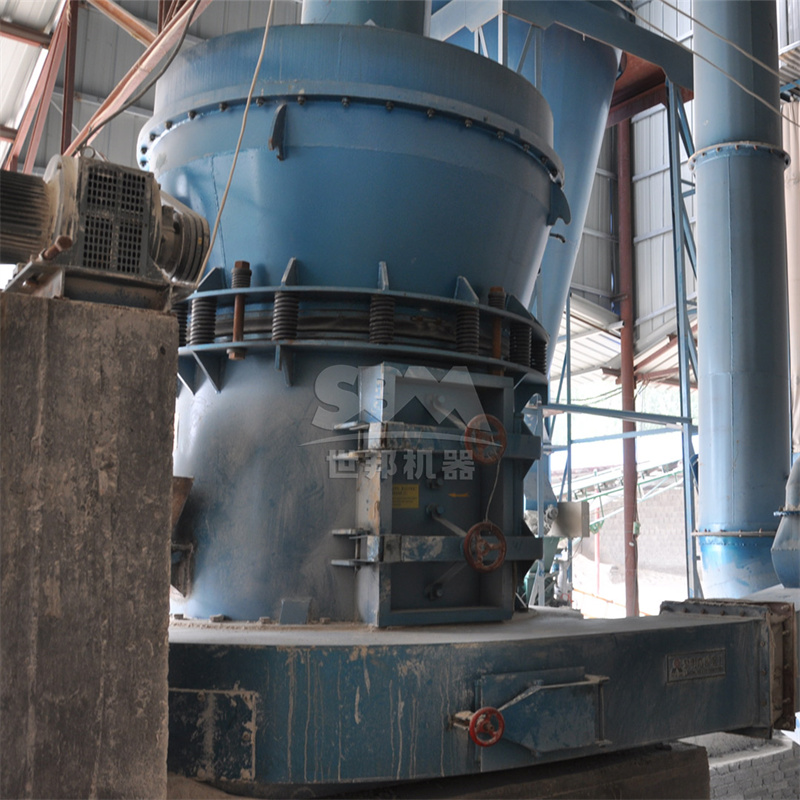
3. Vertical Roller Mills (600–45 μm, up to 250 t/h)
When maximum production capacity is demanded, the LM Series Vertical Roller Mill stands out with capacities ranging from 3 to 250 tons per hour. Its integrated design combines crushing, grinding, and selection in one system, reducing floor space by 50% and infrastructure costs by 40%. The non-contact design between rollers and table increases wear part life by 3 times, while energy consumption is 30-40% lower than ball mill systems. The fully sealed negative pressure operation ensures zero dust emission and low noise, meeting strict environmental standards. For ultrafine barite production, the LM ultra-fine powder mill series (LM130X-GX to LM220X-GX) offers fineness up to 325-600 mesh with capacities of 4-30 t/h.
4. Medium-speed Trapezium Mill (600–45 μm)
The MTM Series Medium-speed Trapezium Mill is ideal for mid-range capacity requirements (3-22 t/h) with feed sizes up to 35mm. Its intelligent pressure regulation system automatically compensates for roller wear, extending roller and ring life by 30%. The damping and noise reduction design, including dual reduction via damping springs and sealing strips, ensures quiet operation. This mill is a cost-effective solution for small to medium paint manufacturers.
5. Ball Mills (0.074–0.8 mm)
For coarser barite additives (0.074-0.8 mm) or pre-grinding stages, ball mills remain a reliable choice with capacities from 0.65 to 450 t/h. They offer a high crushing ratio up to 300:1 and can operate in both dry and wet modes. However, for modern paint production requiring ultrafine powders, ball mills are often used as primary grinders followed by ultrafine mills like the SCM series.
Selection Guide for Barite Additives Production
Choosing the right equipment depends on several critical factors:
- Required Fineness: For paint additives needing 325-2500 mesh (5-45 μm), the SCM Ultrafine Mill or LUM Ultrafine Vertical Roller Mill is essential. For 30-325 mesh (45-600 μm), MTW or MTM mills are more economical.
- Production Capacity: Small-scale (0.5-5 t/h): SCM800 or MTM100. Medium-scale (5-25 t/h): SCM1250, MTW138Z, or LM130K. Large-scale (25+ t/h): MTW215G, LM170K, or LM190K.
- Energy Efficiency: Vertical roller mills (LM series) and ultrafine mills (SCM series) offer the highest energy savings (30-40% vs. ball mills).
- Environmental Compliance: All modern mills from our portfolio feature pulse dust collectors and soundproof designs, ensuring <10mg/Nm³ dust emission and <75dB noise levels.
- Automation Level: Intelligent control systems with real-time monitoring and automatic fineness adjustment are available in SCM, LM, and LUM series, reducing manual intervention.
Case Study: High-Gloss Paint Additive Production
A paint manufacturer required barite powder with 99% passing 1250 mesh (10 μm) for high-gloss automotive paints. They selected the SCM1250 Ultrafine Mill paired with a pulse dust collector. The system consistently produced 2.5-14 t/h of barite powder with D97=10μm, achieving a 30% reduction in energy costs compared to their previous jet mill system. The intelligent feedback system automatically adjusted the classifier speed to maintain consistent fineness despite variations in feed material hardness.
Conclusion
Advanced barite additives production for paint manufacturing requires a careful match between equipment capabilities and product specifications. The SCM Series Ultrafine Mill and MTW Series European Trapezium Mill represent the state-of-the-art in terms of efficiency, precision, and environmental performance. By selecting the appropriate machine based on fineness, capacity, and automation requirements, paint manufacturers can achieve superior quality barite additives that enhance their final products while minimizing operational costs. We invite you to contact our technical team for a customized solution tailored to your specific barite processing needs.