
Introduction to Attapulgite Clay in Detergent Additives
Attapulgite clay, also known as palygorskite, is a unique hydrated magnesium aluminum silicate mineral with a fibrous morphology. Its high surface area, excellent adsorptive capacity, and thixotropic properties make it an indispensable ingredient in modern detergent formulations. As a detergent additive, attapulgite clay enhances cleaning efficiency by adsorbing oils, greases, and other organic contaminants, while also serving as a carrier for surfactants and builders. To fully exploit these benefits, raw attapulgite must undergo precise milling and activation processes. This guide provides a comprehensive overview of the equipment and systems required for processing attapulgite clay into high-performance detergent additives, covering crushing, grinding, activation, and classification. We will also highlight two flagship products from our company that excel in this application: the SCM Series Ultrafine Mill and the MTW Series European Trapezium Mill.
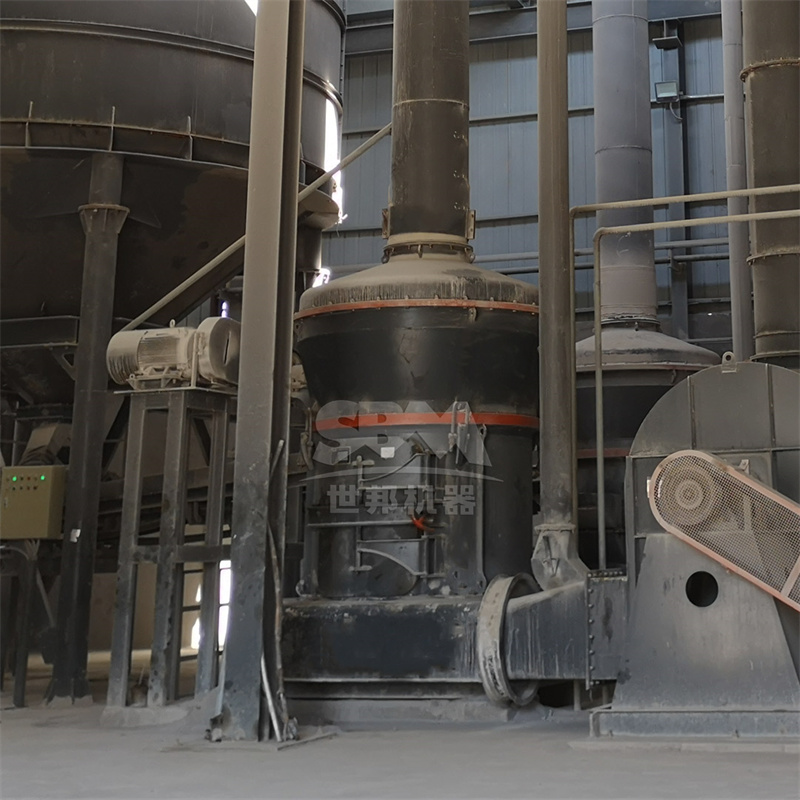
Why Attapulgite Clay Requires Specialized Processing
Attapulgite’s fibrous structure is delicate and can be easily damaged by excessive heat or improper grinding. For detergent additives, the clay must be processed to a specific particle size distribution—typically between 200 and 1250 mesh—to maximize its surface area and adsorption capacity. Additionally, activation is often necessary to remove impurities, increase porosity, and enhance compatibility with detergent ingredients. The activation process may involve thermal treatment, acid activation, or surface modification. Therefore, the selection of milling and activation equipment is critical to achieving consistent product quality and operational efficiency.
Key Processing Stages for Attapulgite Detergent Additives
1. Crushing and Pre-grinding
Raw attapulgite clay is first crushed from large lumps (up to 300 mm) to a manageable feed size of less than 20–50 mm. Hammer mills or jaw crushers are commonly used for this stage. Our Hammer Mill (PC4008-75, PC4012-90, PC4015-132) offers high capacity and a compact structure, reducing material to 0–3 mm, which is ideal for subsequent grinding. Alternatively, for high-capacity operations, the LM-Y Vertical Pre-grinding Roller Mill can process up to 330 TPH with low energy consumption.
2. Fine Grinding and Ultrafine Grinding
The core of attapulgite processing lies in fine grinding. Depending on the desired fineness, different mills are employed:
- For 30–325 mesh (600–45 μm): The MTW Series European Trapezium Mill is an excellent choice. Its optimized arc air duct and anti-wear shovel design ensure efficient grinding with minimal maintenance.
- For 325–2500 mesh (45–5 μm): The SCM Series Ultrafine Mill delivers high-precision classification and energy savings, making it ideal for producing ultrafine attapulgite for premium detergent additives.
- For 325–2500 mesh with reduced noise and dust: The LUM Ultrafine Vertical Roller Mill offers intelligent control and a sealed negative pressure system.
For large-scale production (up to 250 t/h), the LM Series Vertical Roller Mill integrates crushing, grinding, and classification, reducing floor space by 50%.
3. Activation Systems
Activation of attapulgite clay can be performed simultaneously with grinding or as a separate step. Thermal activation (calcination) at 300–400°C removes bound water and increases porosity. Acid activation with mineral acids (e.g., HCl or H2SO4) leaches out impurities and enhances surface acidity. Our mills can be integrated with hot air generators and chemical dosing systems to enable in-line activation. The LM Series Vertical Roller Mill is particularly suitable for combined grinding and thermal activation due to its hot air circulation system. For acid activation, corrosion-resistant materials and precise temperature control are essential; the MTM Series Medium-speed Trapezium Mill with its intelligent pressure regulation and damping design can handle mildly acidic conditions when properly modified.
4. Classification and Collection
Precise classification ensures that the final product meets the stringent particle size requirements for detergent additives. The SCM Series Ultrafine Mill features a vertical turbine classifier that achieves sharp particle size cutting with no coarse powder mixing. The MTW Series uses a high-efficiency classifier with variable frequency control. Dust collection is equally important: pulse dust collectors with efficiency exceeding international standards are standard on all our mills.
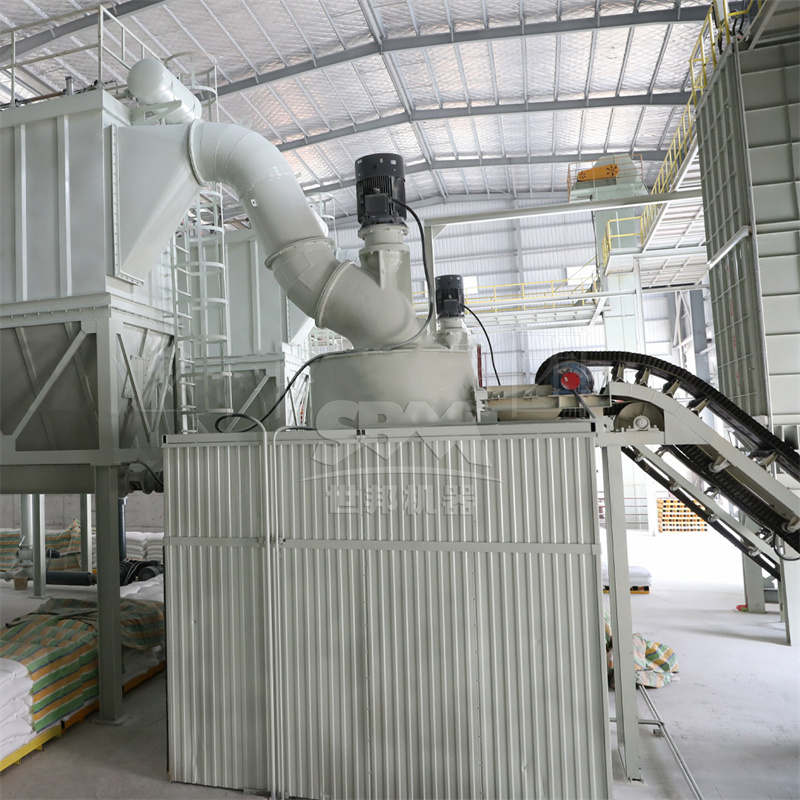
Recommended Equipment: SCM Series Ultrafine Mill
For detergent additive manufacturers requiring ultrafine attapulgite (down to 5 μm), the SCM Series Ultrafine Mill is the ultimate solution. It offers:
- High Efficiency & Energy Saving: Capacity is twice that of jet mills, with 30% lower energy consumption. Intelligent control with automatic finished product granularity feedback ensures consistent quality.
- High-Precision Classification: The vertical turbine classifier achieves precise particle size cutting, eliminating coarse powder contamination.
- Durable Design: Special material rollers and rings extend service life several times over, while the shaftless screw grinding chamber ensures stable operation.
- Eco-friendly & Low Noise: Pulse dust collection efficiency exceeds international standards; soundproof room design ensures noise levels are minimized.
Available models range from SCM800 (0.5–4.5 t/h) to SCM1680 (5–25 t/h), with fineness adjustable from 325 to 2500 mesh. The SCM Series is particularly effective for activation processes that require uniform particle size and high surface area.

Recommended Equipment: MTW Series European Trapezium Mill
For medium-fine grinding (30–325 mesh) of attapulgite clay, the MTW Series European Trapezium Mill is a robust and cost-effective choice. Its technical advantages include:
- Anti-wear Shovel Design: Combined shovel blades reduce maintenance costs; curved design extends grinding roller life.
- Optimized Arc Air Duct: Reduces airflow energy loss and improves transmission efficiency; high-strength guard plates protect the working surface.
- Integral Bevel Gear Drive: Transmission efficiency up to 98%, saving space and reducing installation costs.
- Wear-resistant Volute Structure: Non-resistance flow design improves air selection efficiency; maintenance costs reduced by 30%.
With models from MTW110 (3–9 t/h) to MTW215G (15–45 t/h), the MTW Series can handle feed sizes up to 50 mm and deliver fineness down to 325 mesh. Its patented internal suction oil lubrication system and pulse dust removal technology ensure reliable, eco-friendly operation. For detergent additive producers who need both medium and fine grinding, the MTW Series can be paired with the SCM Series for a complete milling and activation system.
Integrating Milling and Activation: System Design Considerations
A complete attapulgite processing system for detergent additives typically includes:
- Feeding and crushing: Hammer mill or jaw crusher to reduce lumps to <20 mm.
- Grinding and activation: MTW or SCM mill with optional hot air generator or acid dosing unit.
- Classification: Integrated dynamic classifier to control top size.
- Dust collection: Pulse jet bag filter or cyclone collector.
- Product storage and packaging: Silo and valve bag packer.
Our engineers can customize the system layout to accommodate thermal activation (up to 400°C) or acid activation (with corrosion-resistant liners). The LM Series Vertical Roller Mill is ideal for large-scale combined grinding and drying, while the LUM Series Ultrafine Vertical Mill excels in ultrafine grinding with precise classification.
Conclusion
Processing attapulgite clay for detergent additives demands equipment that delivers precise particle size control, high adsorption capacity, and reliable activation. Our SCM Series Ultrafine Mill and MTW Series European Trapezium Mill represent the state of the art in milling technology, offering energy efficiency, durability, and environmental compliance. By selecting the right mill and integrating activation systems, manufacturers can produce superior detergent additives that enhance cleaning performance and meet market demands. For more information or a customized solution, please contact our technical team.