
Introduction: The Critical Role of Attapulgite in Water Treatment
Attapulgite, a naturally occurring hydrated magnesium aluminum silicate clay, has gained significant prominence in the water treatment industry due to its unique colloidal properties, high surface area, and impressive adsorption capacity. Its needle-like crystal structure creates a vast network of channels that can trap impurities, heavy metals, organic pollutants, and even pathogens. As environmental regulations tighten and industrial wastewater volumes grow, the demand for high-quality attapulgite-based adsorbents and flocculants has surged. However, the performance of attapulgite in water treatment is directly governed by its particle size distribution, surface area, and purity—factors that are ultimately determined by the milling solution employed during processing.
Selecting the right milling equipment for attapulgite is not merely a matter of achieving a target fineness. It involves balancing throughput, energy consumption, product quality, and operational cost. This article explores the key considerations for choosing a milling solution for attapulgite processing, with a focus on water treatment applications, and highlights two advanced milling technologies that can deliver superior results.
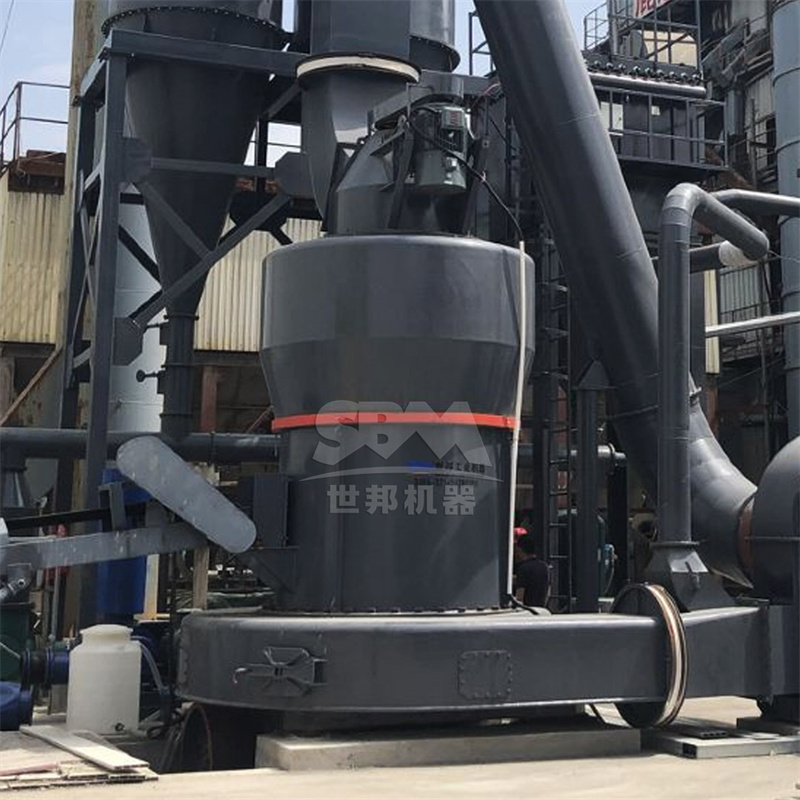
Why Particle Size Matters in Attapulgite Water Treatment
Attapulgite’s effectiveness in water treatment is largely a function of its specific surface area and colloidality. When milled to finer sizes, the clay particles expose more active sites for adsorption. For heavy metal removal (e.g., Pb²⁺, Cd²⁺, Cu²⁺), a median particle size (D50) of 5–20 μm is often optimal. For oil and grease removal or as a flocculant aid, a slightly coarser range of 20–45 μm may suffice. However, over-grinding can destroy the attapulgite’s rod-like crystal structure, reducing its adsorption capacity and making filtration more difficult. Therefore, the milling solution must achieve a precise, controllable particle size distribution without damaging the mineral’s inherent properties.
Additionally, water treatment applications demand consistent product quality. Variations in fineness can lead to unpredictable dosing and reduced treatment efficiency. This is where advanced classification and grinding technologies become indispensable.
Key Criteria for Choosing an Attapulgite Milling Solution
When evaluating milling equipment for attapulgite destined for water treatment, consider the following criteria:
- Target Fineness and Distribution: Can the mill achieve the required D50 and D90 consistently? Is the particle size distribution narrow?
- Capacity and Scalability: Does the mill’s throughput match your production scale, from pilot to full-scale?
- Energy Efficiency: Attapulgite is relatively soft (Mohs hardness 2–2.5), but grinding still consumes significant energy. Solutions that minimize kWh per ton are preferable.
- Product Purity and Contamination: Wear parts should not introduce iron or other contaminants that could leach into treated water.
- System Integration: Dust collection, classification, and feeding systems must be robust and environmentally compliant.
- Maintenance and Wear Life: Attapulgite can be abrasive when dry. Long-lasting rollers and liners reduce downtime and cost.
Two milling solutions from our portfolio stand out for attapulgite processing: the SCM Series Ultrafine Mill and the MTW Series European Trapezium Mill. Each offers distinct advantages depending on the desired final product.
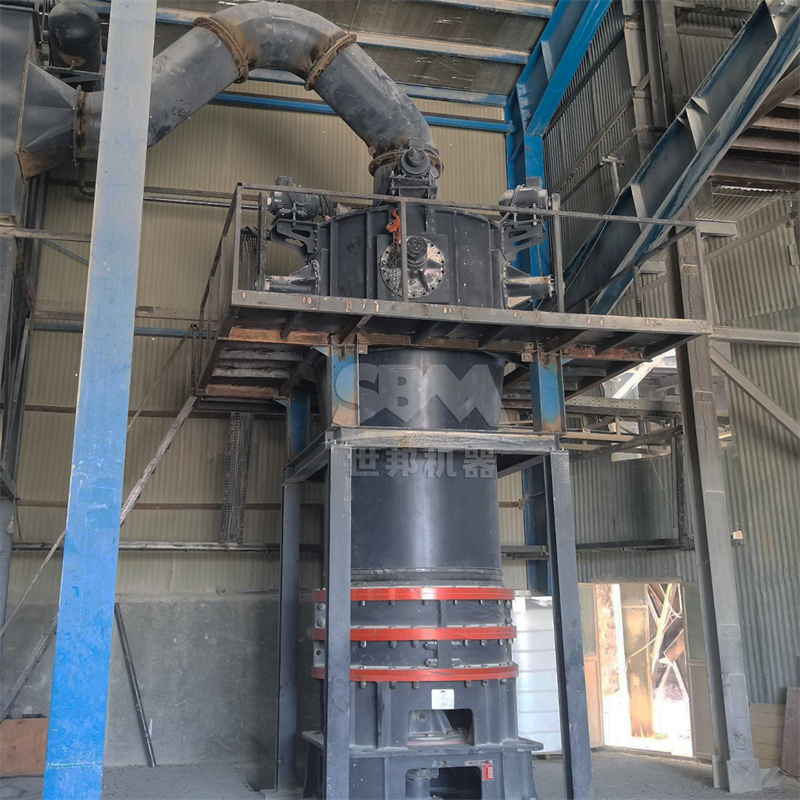
SCM Series Ultrafine Mill: Precision Grinding for High-Performance Adsorbents
For water treatment applications requiring ultrafine attapulgite (e.g., 325–2500 mesh or 45–5 μm), the SCM Series Ultrafine Mill is an ideal choice. Its vertical turbine classifier ensures precise particle size cutting, eliminating coarse powder mixing and guaranteeing a uniform finished product. This is critical for adsorption applications where consistency is paramount.
The SCM mill’s capacity is twice that of a jet mill, while energy consumption is 30% lower. Its intelligent control system provides automatic feedback on finished product granularity, allowing operators to maintain tight specifications with minimal manual intervention. The durable design features special material rollers and rings that extend service life several times over, and the shaftless screw grinding chamber ensures stable operation even with varying feed moisture. For water treatment plants producing attapulgite-based adsorbents, the SCM800 model (0.5–4.5 t/h, 75 kW) or the SCM1250 (2.5–14 t/h, 185 kW) offer excellent scalability. The pulse dust collection system exceeds international standards, and the soundproof room design keeps noise levels low—an important consideration for urban or semi-urban facilities.
In summary, if your water treatment product requires attapulgite with a high specific surface area and tight particle size control, the SCM Series is a compelling solution.
MTW Series European Trapezium Mill: Versatile and Cost-Effective for Medium-Fine Grinding
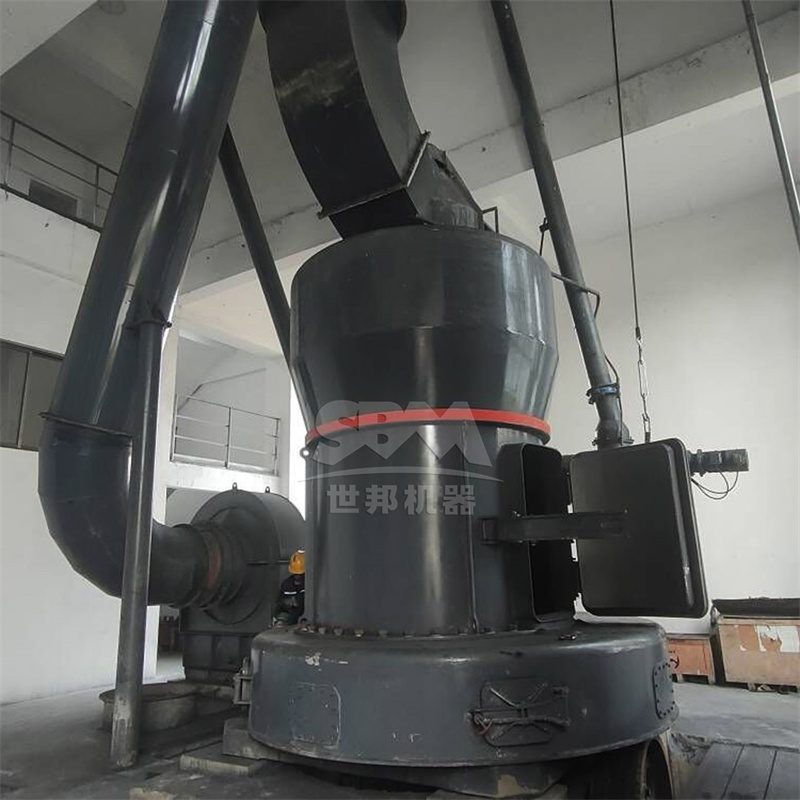
Not all attapulgite water treatment applications require ultrafine grinding. For uses such as wastewater clarification, phosphorus removal, or as a filter aid, a fineness of 30–325 mesh (down to 0.038 mm) is often sufficient. Here, the MTW Series European Trapezium Mill excels. Its optimized arc air duct reduces airflow energy loss, and the integral bevel gear drive achieves 98% transmission efficiency. The anti-wear shovel design and curved grinding rollers extend maintenance intervals, while the wear-resistant volute structure reduces maintenance costs by up to 30%.
The MTW mill is available in models ranging from MTW110 (3–9 t/h, 55 kW) to MTW215G (15–45 t/h, 280 kW), making it suitable for both small-scale and large-scale attapulgite processing. Its classification system precisely controls the finished product size, and the patented internal suction oil lubrication system ensures reliable operation. For water treatment facilities that need a robust, high-capacity mill with moderate fineness, the MTW Series offers an excellent balance of performance and cost.
Comparing the Options: Which Mill Fits Your Water Treatment Application?
The choice between the SCM and MTW series depends on your specific product requirements:
- For ultrafine adsorbents (D50 < 10 μm): Choose the SCM Series Ultrafine Mill. It delivers the highest surface area and purity, essential for heavy metal and organic pollutant removal.
- For medium-fine products (D50 15–45 μm): Choose the MTW Series European Trapezium Mill. It provides higher throughput per horsepower and lower maintenance costs for applications where ultrafine grinding is not necessary.
- For large-scale production (up to 45 t/h): The MTW215G or SCM1680 (5–25 t/h) can meet high-volume demands.
- For energy-sensitive operations: Both mills are energy-efficient, but the SCM’s 30% lower energy consumption compared to jet mills makes it particularly attractive for ultrafine grinding.
It is also worth noting that attapulgite’s moisture content can vary. Both mills handle feed sizes up to 20 mm (SCM) or 50 mm (MTW), but pre-drying may be required if moisture exceeds 5–8%. The MTW’s optimized air duct and the SCM’s pulse dust collection system both contribute to efficient moisture management.
Conclusion: Partnering for Optimal Attapulgite Processing
Selecting the right milling solution for attapulgite water treatment is a strategic decision that impacts product performance, operational cost, and environmental compliance. The SCM Series Ultrafine Mill and MTW Series European Trapezium Mill represent two proven, high-performance options from our company. By carefully evaluating your target fineness, capacity needs, and budget, you can choose the mill that delivers the best return on investment.
We invite you to consult with our engineers to conduct laboratory tests on your specific attapulgite ore. With our extensive experience in clay processing and water treatment applications, we can help you configure the optimal milling system—complete with feeding, grinding, classification, and dust collection—to produce high-quality attapulgite products that meet the stringent demands of modern water treatment.
For more information on the SCM Series Ultrafine Mill or MTW Series European Trapezium Mill, please contact our sales team today.