
Introduction
Barite (barium sulfate, BaSO₄) is a critical industrial mineral used in drilling fluids, paints, plastics, rubber, and medical applications. Its high specific gravity, chemical inertness, and radiopacity make it indispensable in many sectors. However, raw barite ore must undergo beneficiation and grinding to meet the stringent specifications of end-users. Selecting the right processing equipment is paramount to achieving desired product fineness, capacity, and operational efficiency. This article provides a comprehensive guide to choosing machinery for a barite processing plant, with a focus on crushing, grinding, and classification equipment. We will also highlight two of our advanced mills—the SCM Series Ultrafine Mill and the MTW Series European Trapezium Mill—that are particularly suited for barite processing.
Understanding Barite Ore and Its Beneficiation
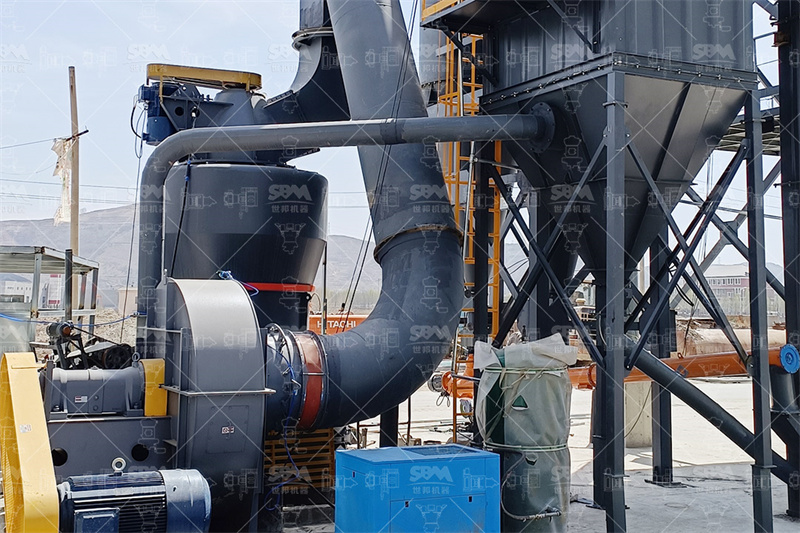
Barite ore is commonly associated with gangue minerals such as quartz, calcite, dolomite, and iron oxides. Beneficiation involves crushing, washing, screening, and grinding to remove impurities and achieve a product with high barium sulfate content and specific particle size distribution. The choice of equipment depends on the ore’s physical properties, moisture content, and the desired final product specifications. Key factors include hardness (Mohs 3–3.5), brittleness, and the need to avoid contamination.
Key Equipment in a Barite Processing Plant
1. Crushing Equipment
Primary crushing reduces run-of-mine ore to a manageable size for grinding. Jaw crushers or hammer mills are typically used. For barite, a hammer mill (e.g., PC Series) can efficiently crush to 0–3 mm, preparing the material for the grinding stage. Our Hammer Mill offers high capacity and a compact structure, ideal for primary crushing.
2. Grinding Equipment
Grinding is the heart of barite processing. The required fineness varies by application: drilling fluid barite typically requires 95% passing 200 mesh (75 μm), while paint and pharmaceutical grades may need 325 mesh (45 μm) or finer. Common grinding mills include ball mills, Raymond mills, vertical roller mills, and ultrafine mills. The selection hinges on capacity, energy consumption, product fineness, and system integration.
3. Classification and Separation
Air classifiers or screens ensure precise particle size distribution. For ultrafine products, dynamic classifiers integrated with mills are preferred. Our SCM and MTW mills feature high-precision classification systems.
4. Auxiliary Equipment
Feeders, conveyors, dust collectors, and packaging systems complete the plant. Environmental compliance is crucial; pulse-jet dust collectors are standard.
Selection Criteria for Barite Grinding Mills
When choosing a grinding mill, consider:
- Product Fineness: Required mesh size determines the mill type. Ultrafine grinding (325–2500 mesh) demands specialized mills like the SCM Series.
- Capacity: Match mill capacity to plant throughput, accounting for availability and peak loads.
- Energy Efficiency: Grinding is energy-intensive; mills with lower power consumption per ton are preferable.
- Contamination Control: For high-purity barite, mills with minimal wear and contamination are essential.
- System Integration: Integrated crushing, grinding, and classification reduce footprint and operating costs.
- Maintenance and Wear Parts: Easy maintenance and long-wear parts reduce downtime.
- Environmental Impact: Dust and noise emissions must comply with regulations.
Recommended Equipment: SCM Series Ultrafine Mill
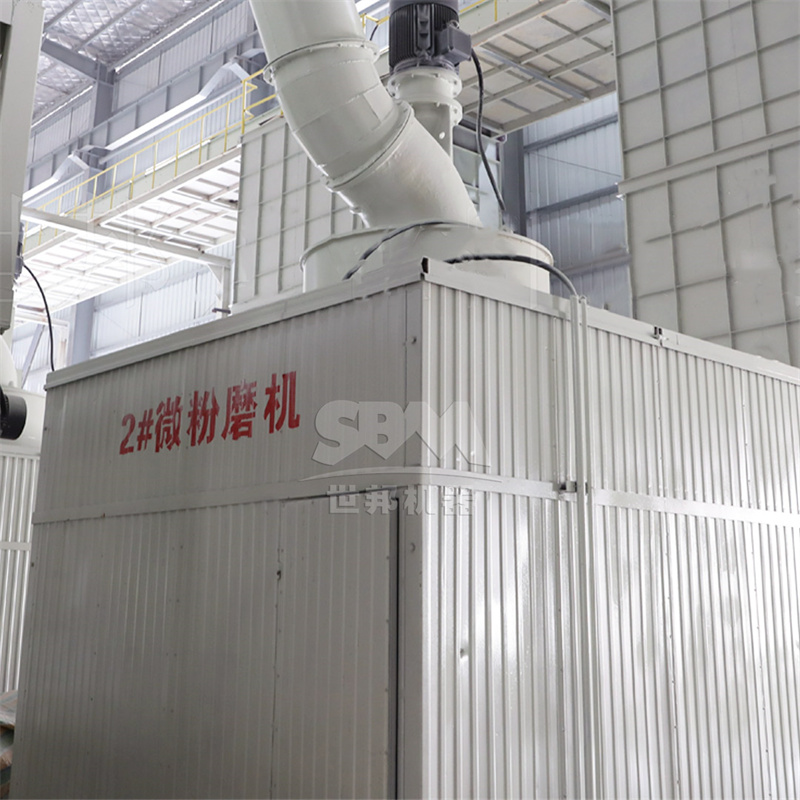
For ultrafine barite powder (325–2500 mesh), the SCM Series Ultrafine Mill is an excellent choice. It offers:
- High Efficiency & Energy Saving: Capacity is twice that of jet mills with 30% lower energy consumption.
- High-Precision Classification: Vertical turbine classifier ensures precise particle size cutting, no coarse powder mixing.
- Durable Design: Special material rollers and rings extend service life several times over; shaftless screw grinding chamber ensures stable operation.
- Eco-friendly & Low Noise: Pulse dust collection exceeds international standards; soundproof room design ensures low noise.
With models from SCM800 (0.5–4.5 t/h) to SCM1680 (5–25 t/h), the SCM Series can meet various capacity requirements. Its intelligent control with automatic finished product granularity feedback ensures consistent quality.
Recommended Equipment: MTW Series European Trapezium Mill
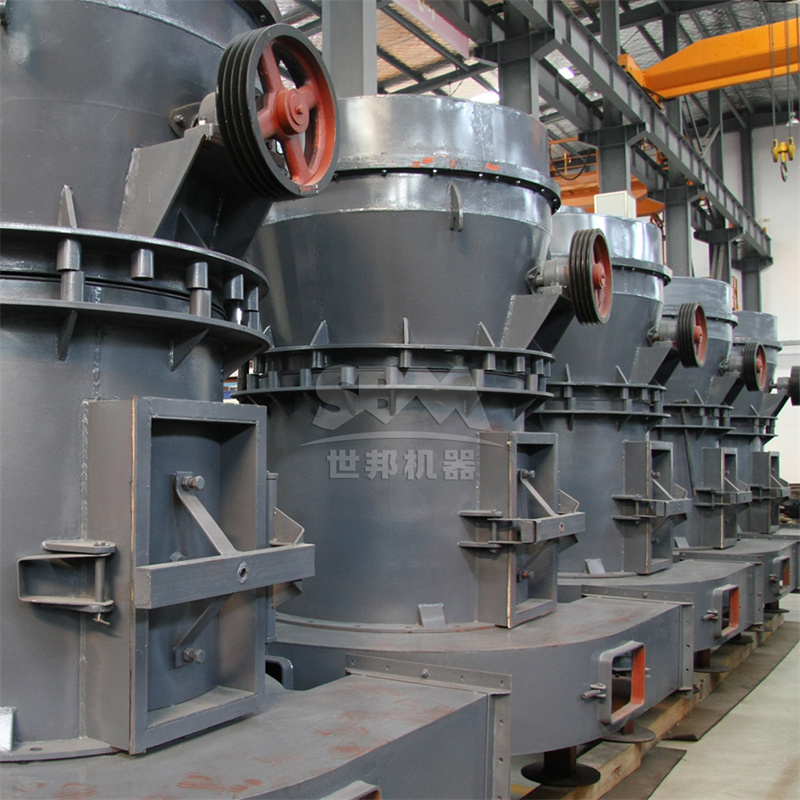
For medium to fine grinding (30–325 mesh), the MTW Series European Trapezium Mill is a versatile and efficient solution. Key advantages include:
- Anti-wear Shovel Design: Combined shovel blades reduce maintenance costs; curved design extends grinding roller life.
- Optimized Arc Air Duct: Reduces airflow energy loss and improves transmission efficiency.
- Integral Bevel Gear Drive: Transmission efficiency up to 98%, saves space and reduces installation costs.
- Wear-resistant Volute Structure: Non-resistance flow design improves air selection efficiency; maintenance costs reduced by 30%.
The MTW Series ranges from MTW110 (3–9 t/h) to MTW215G (15–45 t/h), with fineness adjustable from 10 to 325 mesh. Its patented technology, including internal suction oil lubrication and pulse dust removal, ensures reliable operation and environmental compliance.
Integrating Equipment into a Barite Processing Plant
A typical barite processing plant flowsheet includes:
- Crushing: Jaw crusher or hammer mill to reduce ore to <30 mm.
- Grinding: SCM or MTW mill to achieve desired fineness.
- Classification: Integrated dynamic classifier or separate air classifier.
- Collection: Cyclone and pulse-jet dust collector.
- Storage and Packaging: Silo and bagging system.
For high-capacity plants, the LM Series Vertical Roller Mill (up to 250 t/h) can be considered for coarse grinding, followed by SCM for ultrafine. However, for most barite applications, the MTW and SCM mills offer a balanced solution.
Case Study: Barite Grinding Plant in Mexico
A customer in Mexico needed to process barite ore to 200 mesh for drilling fluid, with a capacity of 10 t/h. After testing, we recommended the MTW138Z mill, which delivers 6–17 t/h at 200 mesh. The plant operates with low noise and dust emissions, and the client reported a 30% reduction in maintenance costs compared to their previous ball mill.
Conclusion
Choosing the right machinery for barite processing requires careful consideration of fineness, capacity, energy efficiency, and environmental factors. Our SCM Series Ultrafine Mill and MTW Series European Trapezium Mill are engineered to meet these challenges, offering high efficiency, precise classification, and durable design. By selecting the appropriate equipment and integrating it into a well-designed plant, operators can achieve optimal productivity and product quality. For further assistance in configuring your barite processing plant, please contact our technical team.