
Introduction: The Critical Role of Grinding Mills in Chemical Coal Powder Production
In the rapidly evolving chemical industry, coal powder production has become an essential process for manufacturing activated carbon, coal-based chemicals, carbon materials, and various industrial intermediates. The quality of the final coal powder product—its particle size distribution, fineness, uniformity, and purity—directly determines its performance in downstream applications such as combustion, gasification, carbonization, and chemical synthesis. At the heart of any coal processing line lies the grinding mill, a piece of equipment that transforms raw coal into fine powder with precisely controlled specifications. Choosing the right grinding mill is not merely a matter of equipment selection; it is a strategic decision that impacts production efficiency, energy consumption, product quality, operational costs, and environmental compliance. With numerous types of grinding mills available on the market—each with distinct working principles, capacity ranges, and fineness capabilities—selecting the optimal solution requires a thorough understanding of your production requirements and the technical characteristics of available equipment.
Understanding Your Coal Processing Requirements
Before selecting a grinding mill, it is imperative to clearly define your production requirements. The first and most critical parameter is the desired output fineness. Chemical coal powder applications typically demand fineness ranging from 80 mesh (180 μm) to 2500 mesh (5 μm), depending on the end use. For instance, pulverized coal for combustion in boilers generally requires 200 mesh (75 μm) passing rates of 70-80%, whereas activated carbon production may require ultrafine powders below 325 mesh (45 μm) or even down to 2500 mesh. The second consideration is production capacity. Chemical coal powder lines can range from small-scale operations processing a few tons per hour to large industrial facilities requiring hundreds of tons per hour. Accurately estimating your required hourly output—considering peak demand periods and future expansion—is essential to avoid under-sizing or over-sizing your grinding equipment. The third factor is the raw coal characteristics. Coal varies significantly in hardness (HGI index), moisture content, volatility, and grindability. High-moisture coal may require integrated drying during grinding, while high-hardness coal demands wear-resistant grinding elements. Additionally, you must consider the chemical composition of the coal, as certain elements may react with grinding equipment materials or pose safety risks such as spontaneous combustion or dust explosions.
Key Criteria for Evaluating Grinding Mill Options
When evaluating grinding mills for chemical coal powder production, several key criteria should guide your decision-making process. Grinding efficiency and energy consumption are paramount. The grinding process typically accounts for 40-60% of total energy consumption in a coal powder production line. Therefore, selecting a mill with high grinding efficiency and low specific energy consumption (kWh per ton of product) can significantly reduce operating costs. Modern advanced mills, such as vertical roller mills and ultrafine mills, offer substantial energy savings compared to traditional ball mills. Product fineness and particle size distribution are equally critical. The mill must be capable of achieving your target fineness consistently while producing a narrow particle size distribution with minimal coarse particles. A high-precision classifier integrated into the mill system ensures uniform product quality and eliminates the need for secondary classification. Capacity and scalability must align with your production targets. The mill should be capable of meeting your required output without excessive wear or performance degradation over time. Additionally, consider whether the equipment can be easily scaled up or configured with multiple units to accommodate future capacity increases. Wear resistance and maintenance costs represent a significant portion of long-term operational expenses. Grinding elements—rollers, rings, balls, and liners—are subject to constant abrasion. Selecting a mill with wear-resistant materials and a design that minimizes downtime for maintenance can dramatically reduce total cost of ownership. Environmental compliance and safety are non-negotiable in modern chemical production. The mill system must incorporate effective dust collection, noise reduction, and safety features to prevent coal dust explosions. Compliance with local environmental regulations and workplace safety standards is mandatory.
Types of Grinding Mills Suitable for Chemical Coal Powder Production
Several types of grinding mills are commonly employed in chemical coal powder production, each with unique advantages and limitations. Ball mills are traditional workhorses in the industry, capable of grinding coal to fineness levels between 0.074 mm and 0.8 mm. They are robust, reliable, and suitable for both dry and wet grinding. However, ball mills are energy-intensive, noisy, and relatively inefficient for ultrafine grinding. They are best suited for large-scale operations where moderate fineness is acceptable and where capital cost is a primary consideration. Vertical roller mills (VRMs) have gained widespread adoption in recent decades due to their superior energy efficiency—consuming 30-40% less energy than ball mills—and their ability to handle high moisture content through integrated drying. VRMs are ideal for medium to fine grinding (30-325 mesh) and are available in capacities ranging from 3 to over 250 tons per hour. Their compact design and ability to operate outdoors reduce civil construction costs. Trapezium mills, such as the MTW series, offer an excellent balance between capacity and fineness, producing powders from 30 to 325 mesh with capacities up to 45 tons per hour. Their optimized airflow design and wear-resistant components make them suitable for medium-scale chemical coal powder production. Ultrafine mills, such as the SCM series, are the go-to choice when extremely fine powders are required. These mills can produce products from 325 to 2500 mesh with capacities ranging from 0.5 to 25 tons per hour, making them indispensable for high-value chemical applications such as activated carbon and carbon black production. Hammer mills are typically used as preliminary crushers in the coal processing line, reducing raw coal from 0-40 mm to 0-3 mm before fine grinding. They are simple, compact, and cost-effective but do not achieve the fine particle sizes required for most chemical applications on their own.
Recommended Products for Chemical Coal Powder Production
SCM Series Ultrafine Mill: Precision Grinding for High-Value Chemical Coal Powder
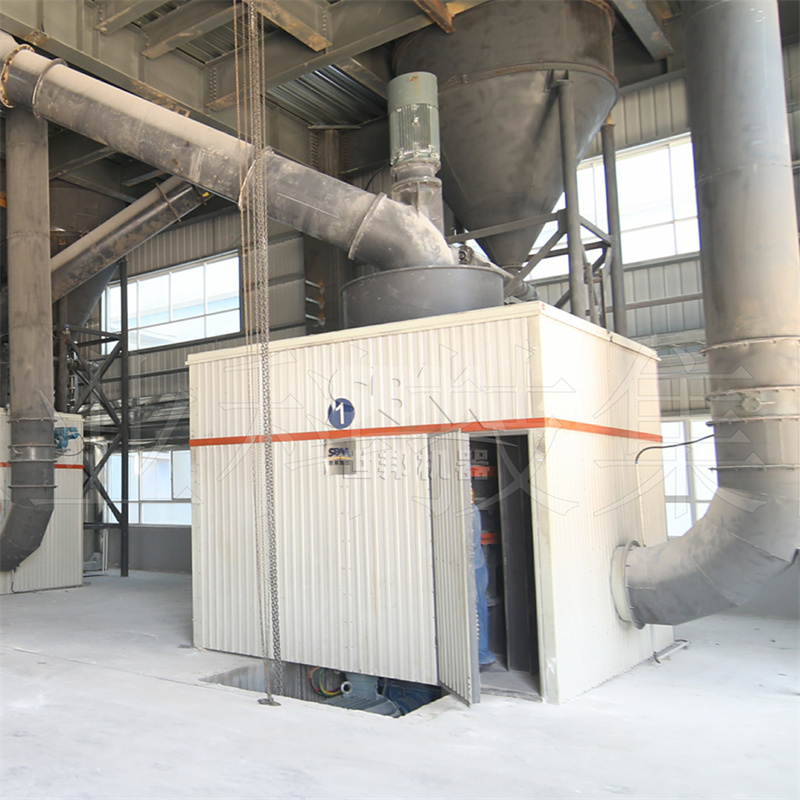
When your chemical coal powder production demands exceptional fineness and uniformity, the SCM Series Ultrafine Mill stands as the optimal choice. Designed to produce powders ranging from 325 to 2500 mesh (45-5 μm), this advanced mill is particularly suited for manufacturing high-grade activated carbon, ultrafine coal powder for specialty chemicals, and carbon-based materials requiring precise particle size control. The SCM Series features a vertical turbine classifier that achieves high-precision particle size cutting, ensuring no coarse powder mixing and delivering uniform finished products—a critical requirement for chemical applications where consistency directly impacts reactivity and performance. With a capacity range of 0.5 to 25 tons per hour depending on the model (SCM800 through SCM1680), it can accommodate both pilot-scale and industrial-scale production. The mill’s intelligent control system provides automatic finished product granularity feedback, allowing real-time adjustments to maintain product specifications without manual intervention. Energy efficiency is another standout feature: the SCM Series delivers twice the capacity of jet mills while consuming 30% less energy, translating into substantial operational savings over the equipment’s lifespan. Durability is ensured through special material rollers and rings that extend service life several times over, while the shaftless screw grinding chamber ensures stable operation with minimal vibration. For chemical plants prioritizing environmental compliance, the SCM Series incorporates pulse dust collection with efficiency exceeding international standards and a soundproof room design that keeps noise levels well within regulatory limits. Whether you are producing ultrafine coal powder for lithium battery anode materials, high-purity carbon for chemical synthesis, or specialty carbon fillers, the SCM Series Ultrafine Mill delivers the precision, reliability, and efficiency your chemical coal powder production line demands.
LM Series Vertical Roller Mill: High-Capacity Solution for Large-Scale Coal Powder Production
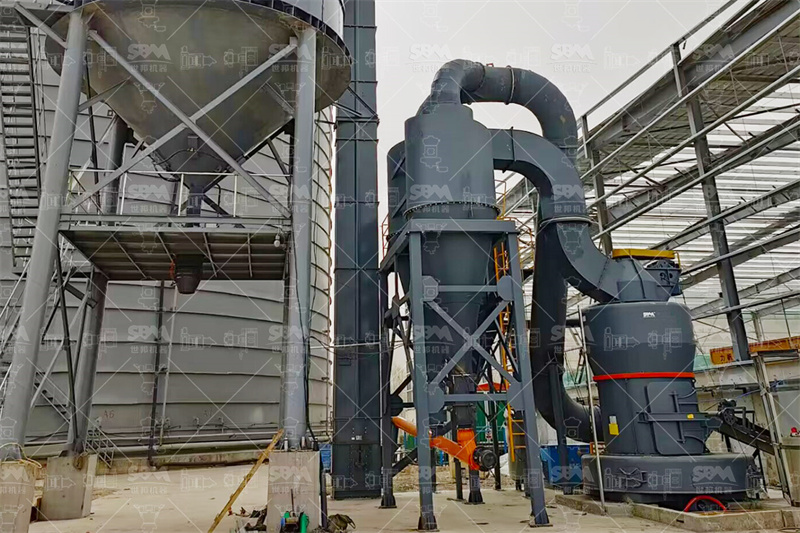
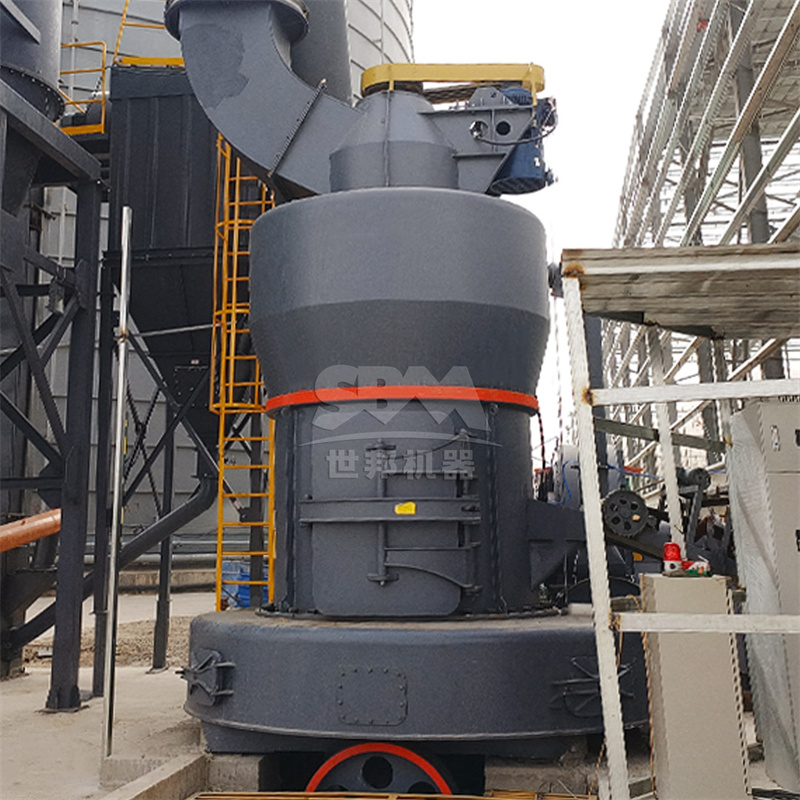
For large-scale chemical coal powder production where capacity and energy efficiency are top priorities, the LM Series Vertical Roller Mill offers an unbeatable combination of performance and cost-effectiveness. With models ranging from LM130K to LM280K, this mill can process 10 to 170 tons per hour (and up to 250 tons per hour for specialized coal mill configurations), making it ideal for supplying pulverized coal to gasification plants, large combustion systems, and chemical reactors. The LM Series employs an integrated design that combines crushing, grinding, and classification into a single compact unit, reducing floor space by 50% compared to traditional systems. This integration also allows for outdoor installation, cutting infrastructure costs by 40%. The non-contact design between grinding rollers and the grinding table minimizes wear, extending wear part life by up to three times compared to conventional mills. Energy consumption is 30-40% lower than ball mill systems, a significant advantage given the high throughput of these mills. The LM Series is equipped with an expert-level auto-control system that supports remote and local switching, real-time parameter monitoring, and minimal manual intervention, ensuring stable and optimized operation around the clock. For coal grinding specifically, the LM coal mill series (LM80M to LM280M) is designed to handle pulverized coal with fineness ranging from 5% to 20% residue on 90 μm, with capacities from 3 to 90 tons per hour and main power from 55 to 900 kW. The fully sealed negative pressure operation ensures dust emission is virtually zero, and operating noise is minimized, meeting the most stringent environmental and workplace safety standards. If your chemical coal powder production line requires high capacity, low operating costs, and exceptional reliability, the LM Series Vertical Roller Mill is the definitive choice.
Conclusion: Making the Right Choice for Your Chemical Coal Processing Line
Selecting the right grinding mill for your chemical coal powder production line is a multifaceted decision that hinges on a clear understanding of your production requirements and the technical merits of available equipment. For ultrafine, high-value chemical coal powder applications requiring fineness up to 2500 mesh and exceptional particle uniformity, the SCM Series Ultrafine Mill is the superior choice. For large-scale operations prioritizing capacity, energy efficiency, and low operating costs, the LM Series Vertical Roller Mill delivers unmatched performance. In many chemical coal processing lines, a combination of equipment—such as a hammer mill for preliminary crushing, followed by an LM Series mill for medium grinding, and an SCM Series mill for ultrafine finishing—may provide the most optimized and flexible solution. Regardless of your specific needs, investing in high-quality, technologically advanced grinding equipment from a reputable manufacturer ensures that your chemical coal powder production line operates at peak efficiency, meets product quality specifications consistently, and remains compliant with environmental and safety regulations for years to come.