
Introduction: The Role of Dolomite in Modern Water Purification
Dolomite, a naturally occurring double carbonate of calcium and magnesium (CaMg(CO₃)₂), has emerged as one of the most versatile and cost-effective filtration media in the water treatment industry. Its unique physicochemical properties—alkaline buffering capacity, high surface area, ion-exchange potential, and excellent mechanical stability—make it indispensable for removing heavy metals, neutralizing acidic wastewater, and polishing drinking water supplies. However, the performance of dolomite filtration media is not solely determined by the raw mineral itself. The particle size distribution, specific surface area, and structural uniformity of the finished dolomite powder play a decisive role in filtration efficiency, hydraulic conductivity, and long-term operational stability. Consequently, selecting the appropriate dolomite processing equipment—particularly the milling solution—is a critical engineering decision that directly impacts both water quality outcomes and total cost of ownership.
This article provides a professional overview of dolomite processing for water purification applications, examines the key requirements of filtration-grade dolomite, and offers practical guidance on choosing the right milling solution. We also highlight two of our company’s flagship products, the SCM Series Ultrafine Mill and the MTW Series European Trapezium Mill, which are particularly well-suited to producing high-quality dolomite filtration media.
Why Dolomite is Preferred as a Filtration Medium
Dolomite offers several advantages over conventional filtration media such as silica sand, activated carbon, and zeolites. First, its alkaline nature (pH typically between 8.0 and 9.5 in aqueous suspension) enables effective neutralization of acidic industrial effluents, making it ideal for treating mining drainage, electroplating wastewater, and acid rain-affected surface waters. Second, dolomite exhibits a strong affinity for heavy metal ions including lead, cadmium, copper, and zinc through a combination of surface complexation, precipitation, and isomorphic substitution mechanisms. Third, the mineral’s moderate hardness (3.5–4.0 on the Mohs scale) ensures that filtration beds maintain structural integrity under repeated backwashing cycles, avoiding the fines generation and bed compaction problems associated with softer media.
Fourth, dolomite is abundant, environmentally benign, and can be regenerated through appropriate chemical treatment, making it a sustainable choice for large-scale water treatment facilities. Finally, when properly milled and classified, dolomite powder can be engineered to precise particle size specifications—typically between 100 and 600 mesh (25–150 μm) for granular filtration beds, or finer than 800 mesh for slurry-phase adsorption applications. Achieving these specifications consistently requires advanced milling equipment with precise classification capabilities.
Key Requirements for Filtration-Grade Dolomite Powder
Not all dolomite powders are created equal. For water purification applications, the following quality parameters are paramount:
1. Particle Size Distribution (PSD)
A narrow PSD is essential to ensure uniform flow distribution through the filter bed and to prevent channeling or premature breakthrough. Coarse particles (e.g., 8–20 mesh) are typically used as support layers, while finer fractions (100–325 mesh) serve as the active adsorption and neutralization medium. Overly broad PSDs lead to reduced porosity and increased pressure drop.
2. Specific Surface Area
Higher specific surface area enhances contaminant removal kinetics. Ultrafine grinding to 325 mesh or finer (≤45 μm) can increase the surface area by an order of magnitude compared to conventional granular media, significantly improving adsorption capacity for heavy metals and organic micropollutants.
3. Chemical Purity
The dolomite should contain minimal impurities such as quartz, clay minerals, and iron oxides, which can leach into treated water or interfere with adsorption mechanisms. Processing equipment must therefore minimize contamination from wear parts.
4. Mechanical Strength
Filtration media must withstand hydraulic shear forces during backwashing and prolonged immersion. The milling process should avoid creating microcracks or excessively angular particles that are prone to attrition.
5. Consistent Quality
Municipal and industrial water treatment plants require reliable, batch-to-batch consistency. Intelligent control systems and precise classification are therefore essential features of any milling solution intended for this market.
Choosing the Right Milling Solution: Key Selection Criteria
When selecting a mill for dolomite processing for water purification, engineers should consider the following factors:
1. Target Fineness and Capacity
Filtration applications typically require fineness in the range of 100–2500 mesh (5–150 μm), depending on whether the product is used as a granular bed, a powdered adsorbent, or a slurry reagent. Production capacities range from a few tons per hour for specialized applications to 25+ tons per hour for large municipal facilities.
2. Energy Efficiency
Grinding is an energy-intensive operation. Mills that combine high capacity with low specific energy consumption (kWh/t) offer substantial operational savings over the equipment’s lifecycle.
3. Classification Precision
The ability to cut particles at a precise size without coarse contamination is critical for consistent filtration performance. Advanced dynamic classifiers with vertical turbine rotors or multi-rotor designs are preferred.
4. Contamination Control
Wear parts should be manufactured from materials that minimize iron and other metallic contamination. Ceramic or special alloy liners and rollers are advantageous.
5. Environmental Performance
Dust collection efficiency, noise levels, and compliance with local emissions regulations are essential considerations, particularly for facilities located near residential areas.
6. Automation and Control
Intelligent control systems with automatic feedback on finished product fineness reduce operator intervention and ensure consistent quality.
Recommended Solutions from Our Product Portfolio
Based on the criteria outlined above, we recommend two of our company’s milling solutions that are particularly well-suited to producing high-quality dolomite filtration media.
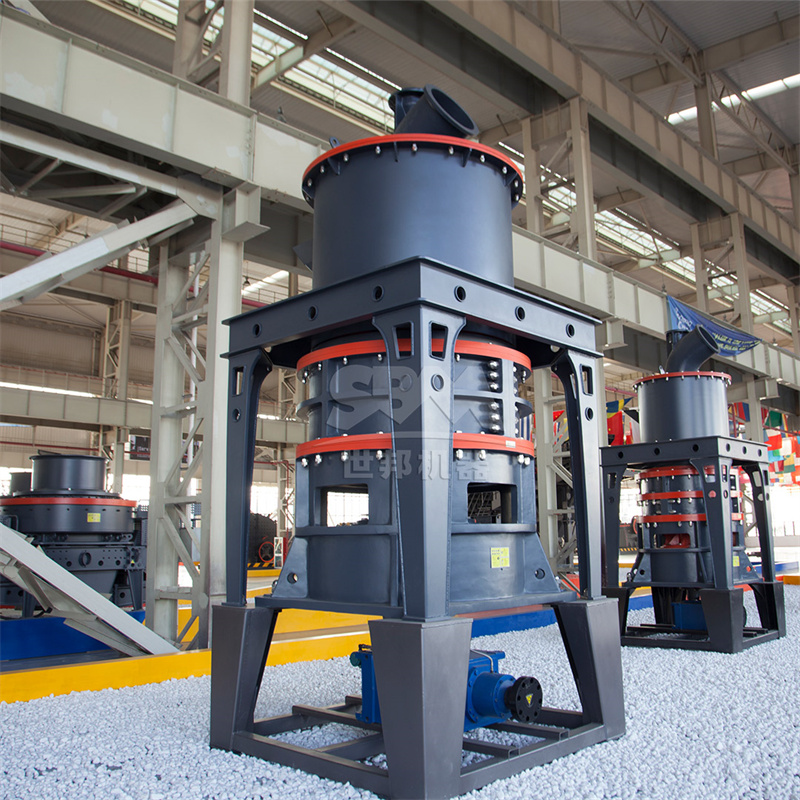
SCM Series Ultrafine Mill (45–5 μm)
The SCM Series Ultrafine Mill is an ideal choice for producing ultrafine dolomite powder for high-performance adsorption applications. With an output fineness range of 325–2500 mesh and capacities from 0.5 to 25 t/h depending on the model, the SCM Series offers exceptional versatility. Its vertical turbine classifier achieves precise particle size cutting without coarse powder mixing, ensuring uniform finished products—a critical requirement for filtration media. The mill’s capacity is twice that of conventional jet mills, while energy consumption is 30% lower. Intelligent control with automatic finished product granularity feedback further enhances operational reliability. The SCM Series also features special material rollers and rings that extend service life several times over, and a pulse dust collection system that exceeds international standards for dust removal efficiency. For water treatment plants requiring ultrafine dolomite for enhanced heavy metal adsorption, the SCM800 or SCM900 models offer an excellent balance of capacity and fineness.
MTW Series European Trapezium Mill (600–45 μm)
For applications requiring coarser filtration media in the 100–325 mesh range, the MTW Series European Trapezium Mill is a robust and cost-effective solution. With capacities from 3 to 45 t/h and fineness adjustable from 10 to 325 mesh, the MTW Series is well-suited to producing granular dolomite filtration beds. Its anti-wear shovel design and curved grinding roller profile extend maintenance intervals, while the integral bevel gear drive achieves transmission efficiency of up to 98%. The optimized arc air duct reduces airflow energy loss, and the wear-resistant volute structure improves air selection efficiency while reducing maintenance costs by 30%. The MTW110 and MTW138Z models are particularly popular for medium-scale water treatment facilities seeking reliable, consistent production of filtration-grade dolomite.
Conclusion
Dolomite is a highly effective and economical filtration medium for water purification, but its performance depends critically on the quality of the milling process. By selecting equipment with precise classification, high energy efficiency, robust wear protection, and intelligent control—such as our SCM Series Ultrafine Mill or MTW Series European Trapezium Mill—water treatment operators can ensure consistent, high-performance dolomite filtration media that meets the most demanding specifications. Investing in the right milling solution is not merely a capital expenditure; it is a strategic decision that underpins the long-term reliability and effectiveness of any dolomite-based water purification system.