
Introduction to Modern Talc Processing
Talc, a naturally occurring mineral known for its softness and chemical inertness, is a critical raw material in industries ranging from cosmetics and paper to ceramics and paint. The production of high-quality talc powder demands precision, efficiency, and reliability from the milling equipment. As global market standards rise, manufacturers must adopt advanced technologies that not only increase throughput but also guarantee a consistent particle size distribution and purity. This article explores the key machinery essential for talc processing and highlights the technical innovations that drive superior output. By integrating state-of-the-art grinding, classifying, and dust collection systems, modern talc production lines achieve unprecedented levels of productivity while minimizing operational costs and environmental impact.
The Foundation: Primary Crushing and Feeding
Before fine grinding, raw talc ore must be reduced to a manageable feed size. This initial stage typically employs robust hammer mills or jaw crushers. For instance, our Hammer Mill series (PC4008-75 to PC4015-132) is capable of reducing feed material up to 40mm down to a fine 0-3mm output with high throughput. These machines feature wear-resistant high-manganese steel liners and optimized crushing cavities, ensuring a long service life even when handling abrasive talc ores. A consistent and reliable feeding system is also critical for downstream mill performance, ensuring a steady material flow to the main grinding unit.
Core Technology: Fine and Ultrafine Grinding
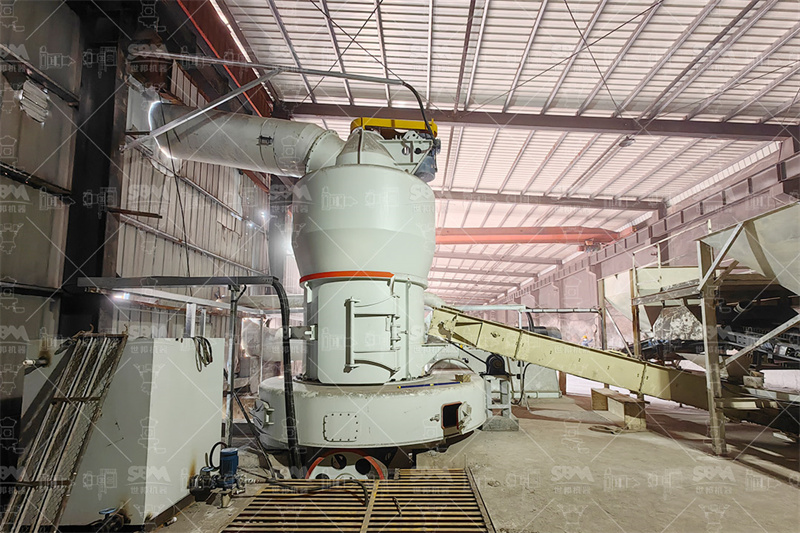
The heart of a talc processing line lies in its grinding mill. For standard industrial grades requiring a fineness of 30-325 mesh (600-45 μm), the MTW Series European Trapezium Mill is an industry benchmark. Its integral bevel gear drive system achieves a transmission efficiency of up to 98%, while the anti-wear shovel design dramatically reduces maintenance intervals. The optimized arc air duct minimizes energy loss, making the MTW series an ideal choice for medium-to-large scale operations where energy costs are a primary concern.
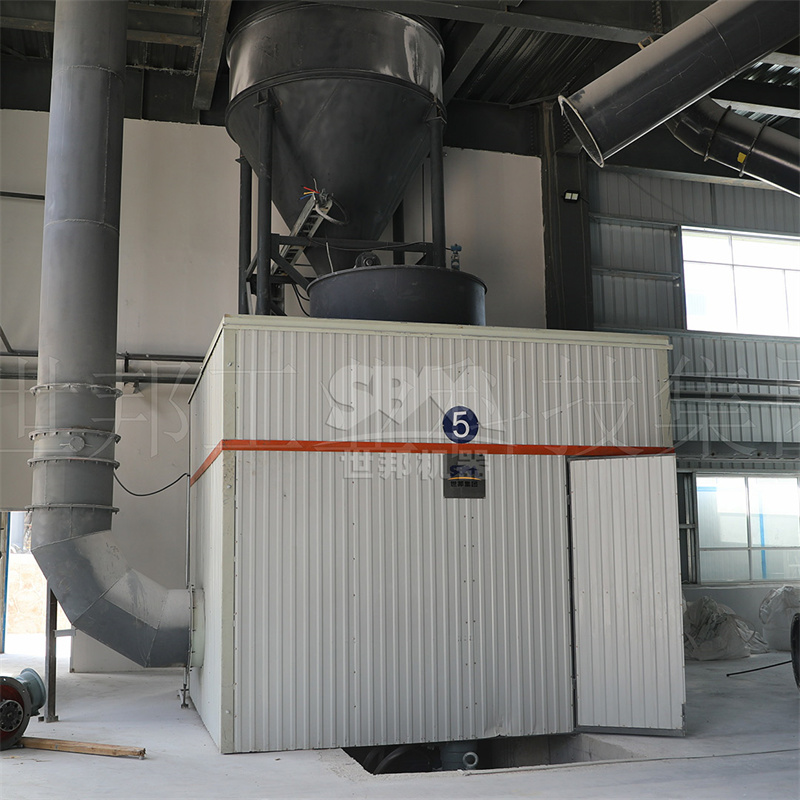
However, for high-value applications like cosmetics, paper coating, and high-end plastics, talc must be processed to an ultrafine fineness of 325-2500 mesh (45-5 μm). In these demanding applications, our SCM Series Ultrafine Mill is the preferred solution. This mill utilizes a unique three-layer grinding ring and roller mechanism that applies intense pressure to crush and grind material layer by layer. It is engineered to deliver a capacity up to twice that of jet mills while consuming 30% less energy. The vertical turbine classifier ensures a precise particle size cut without any coarse powder mixing, guaranteeing uniform final products.
Why the SCM Series Excels for Ultrafine Talc
To achieve the stringent requirements for D97 < 10μm talc powders, the SCM Series Ultrafine Mill offers several distinct technical advantages. First, its intelligent control system features automatic finished product granularity feedback, which adjusts the mill parameters in real-time to maintain consistent quality. Second, the durable design utilizes special materials for the rollers and grinding rings, extending their service life several times compared to conventional mills. The shaftless screw grinding chamber ensures stable and vibration-free operation, even under full load. Finally, the integrated pulse dust collection system operates with efficiency exceeding international standards, while the soundproof room design keeps noise levels below 85dB, creating a safe and comfortable working environment.
High-Capacity Options: Vertical Roller Mills
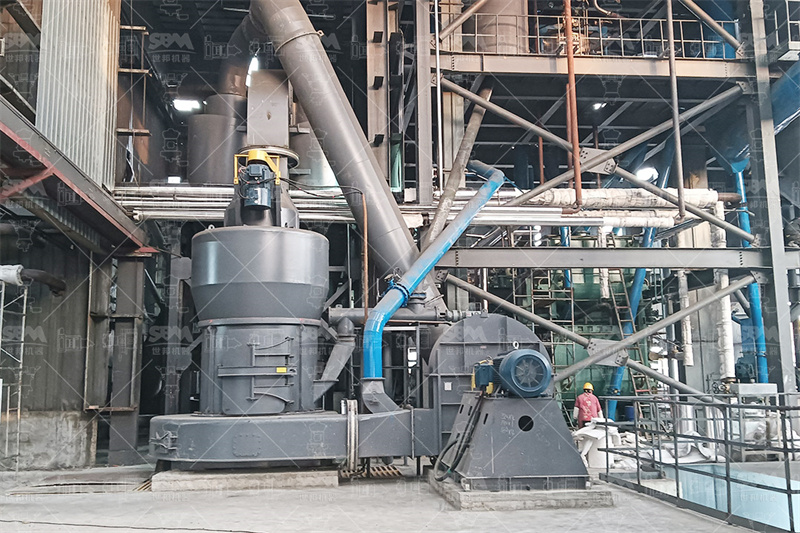
For large-scale talc powder producers requiring outputs of up to 250 tons per hour, the LM Series Vertical Roller Mill represents the ultimate solution. This mill system integrates crushing, grinding, drying, and classification into a single unit, reducing floor space by 50% and infrastructure costs by 40%. The non-contact design between the rollers and grinding table extends wear part life by three times, and the intelligent expert-level control system allows for remote monitoring. Talc processed in the LM mill achieves an exceptional specific surface area, making it perfect for high-filler-loading applications in the paper and plastic industries.
Classification and Collection: Ensuring Final Quality
The efficiency of a talc mill is only as good as its classification system. Whether using the dynamic classifier in the MTW series or the multi-rotor technology in the LUM Ultrafine Vertical Roller Mill, precise particle size control is non-negotiable. Coarse particles must be efficiently returned to the grinding zone for re-processing, while the final powder is collected by high-efficiency cyclone collectors and pulse dust removal systems. This closed-loop system not only maximizes yield but also ensures a clean, dust-free working environment that meets strict emission standards.
Model Selection and Configuration
Choosing the right equipment depends on the desired fineness and production capacity. For a typical talc plant producing 400 mesh (38μm) products at 10 tons per hour, the MTW138Z Mill (55kW) is an excellent fit. If the goal is to produce 1250 mesh (10μm) for high-end coatings at 5 tons per hour, the SCM1000 Ultrafine Mill (132kW) would be the optimal choice. For operations aiming for a D97 of 5μm at lower capacities, the LUM series offers specialized solutions. We also provide complete turnkey packages, including feeders, crushers, elevators, and air ducts, ensuring seamless integration.
Conclusion: Investing in Efficiency
In the competitive landscape of mineral processing, investing in high-efficiency talc production equipment is a strategic decision that directly impacts profitability. From the robust primary crusher to the ultra-precise ultrafine mill, each component must work in perfect harmony. Our range of mills—including the versatile MTW series, the high-performance SCM series, and the massive LM series—provides tailored solutions for every talc processing need. By choosing advanced machinery with durable components, intelligent controls, and superior energy efficiency, producers can achieve the highest quality talc powder at the lowest possible cost per ton. For more information on configuring your ideal talc processing line, please consult our technical sales team.