
Introduction
Barite (barium sulfate) is a critical mineral in the insecticide industry, valued for its inertness, high density, and ability to act as a carrier and extender for active ingredients. The efficacy of insecticidal formulations depends heavily on the particle size and distribution of the barite powder—typically requiring fine to ultrafine grinding in the range of 325 to 2500 mesh. Selecting the right milling system is therefore essential for product quality, operational efficiency, and cost control. This buyer’s guide examines the key criteria for choosing barite milling equipment and highlights two outstanding solutions from our portfolio: the SCM Series Ultrafine Mill and the MTW Series European Trapezium Mill.
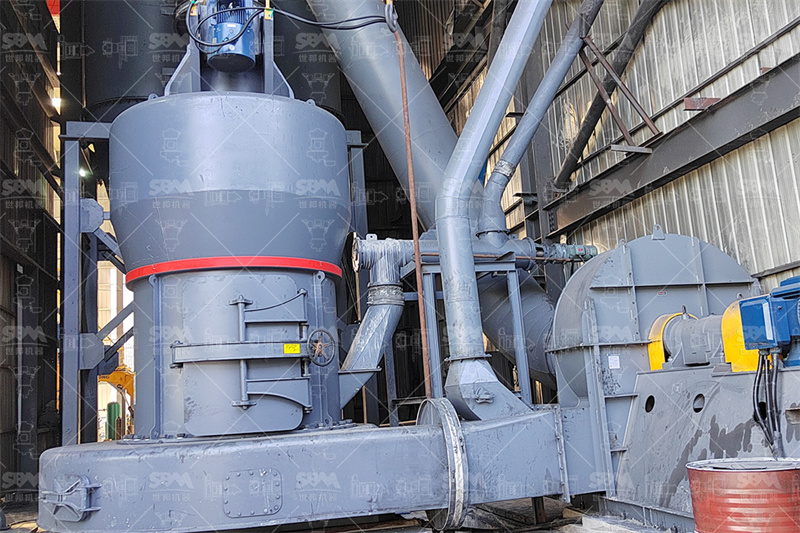
Why Barite Powder for Insecticides Requires Specialized Milling
Insecticide formulations—whether dusts, wettable powders, or suspension concentrates—demand barite powder with consistent fineness, low contamination, and high whiteness. Coarse particles can clog spray nozzles, while excessive fines may cause dusting hazards. Moreover, barite’s Mohs hardness of 3–3.5 and high specific gravity (4.2–4.5) place unique stresses on grinding equipment. A milling system must deliver:
- Precise particle size control (narrow distribution)
- High energy efficiency to offset barite’s density
- Dust-tight operation to protect operators and the environment
- Wear-resistant components to handle abrasive minerals
- Scalability from pilot to full production
Key Selection Criteria for Barite Milling Systems
1. Fineness Range and Adjustability
Insecticide-grade barite typically falls between 325 and 1250 mesh, with some premium formulations requiring up to 2500 mesh. The mill must offer easy, reliable adjustment of fineness without frequent downtime. Systems with dynamic classifiers or turbine separators provide sharper cut points and reduce coarse particle contamination.
2. Capacity and Scalability
Production scales vary from small specialty batches (0.5 t/h) to large continuous lines (25+ t/h). Buyers should choose a system with modular models that can be upgraded as demand grows. Look for mills with proven capacity ranges and minimal performance drop at finer grinds.
3. Energy Efficiency
Grinding barite is energy-intensive due to its density. Mills that combine pressure, attrition, and classification in one unit—such as vertical roller mills and trapezium mills—typically consume 30–40% less energy than traditional ball mills. Intelligent control systems further optimize power draw.
4. Wear Parts and Maintenance
Abrasive barite accelerates wear on rollers, rings, and liners. Choose equipment with hardened materials (e.g., special alloy rollers, high-manganese steel) and designs that allow quick replacement. Predictive maintenance features and remote diagnostics reduce downtime.
5. Environmental and Safety Compliance
Barite dust is a respiratory irritant. Mills must integrate high-efficiency pulse-jet dust collectors, negative-pressure operation, and soundproofing. Compliance with international emission standards (e.g., <10 mg/m³) is non-negotiable for insecticide manufacturing facilities.
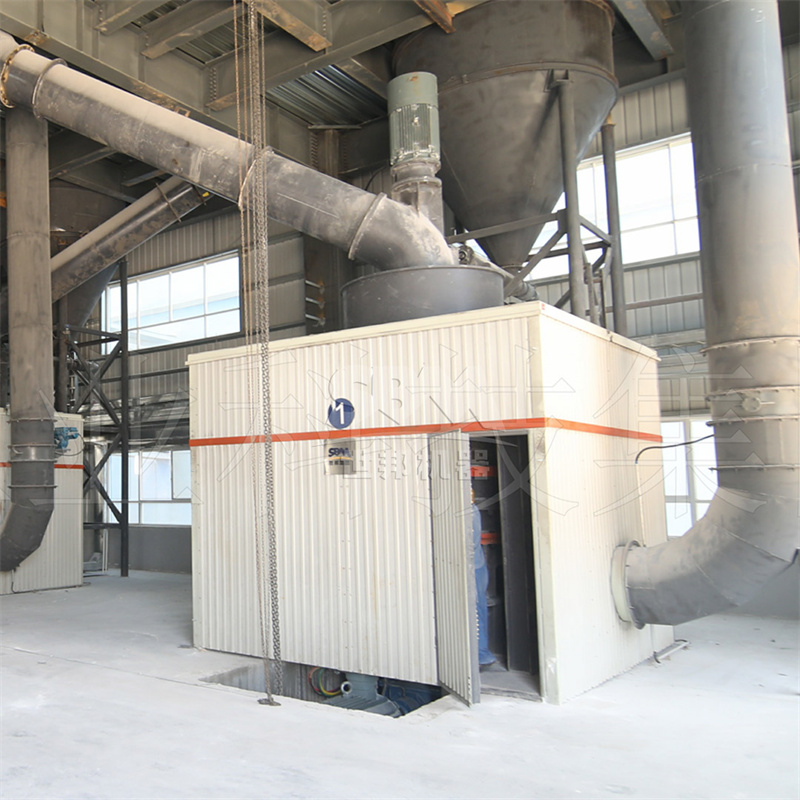
Recommended Solution 1: SCM Series Ultrafine Mill (45–5 μm)
For insecticide producers requiring the finest barite powders, the SCM Series Ultrafine Mill is an ideal choice. It delivers output fineness from 325 to 2500 mesh with capacities from 0.5 to 25 t/h depending on model. Key advantages include:
- High efficiency and energy saving: Capacity is twice that of jet mills with 30% lower energy consumption. Intelligent control with automatic finished product granularity feedback ensures consistent quality.
- High-precision classification: The vertical turbine classifier achieves precise particle size cutting with no coarse powder mixing, guaranteeing uniform finished products—critical for insecticide efficacy.
- Durable design: Special material rollers and rings extend service life several times over. The shaftless screw grinding chamber ensures stable operation even with dense barite.
- Eco-friendly and low noise: Pulse dust collection efficiency exceeds international standards, and soundproof room design keeps noise levels low.
With models from SCM800 (0.5–4.5 t/h) to SCM1680 (5–25 t/h), the SCM Series scales seamlessly from specialty insecticide batches to high-volume production. Its ability to produce ultra-fine barite (<10 μm) makes it particularly suitable for advanced suspension concentrate formulations.
Recommended Solution 2: MTW Series European Trapezium Mill (600–45 μm)
For mid-range fineness (30–325 mesh) and higher capacity requirements, the MTW Series European Trapezium Mill offers an excellent balance of performance and cost. Capacities range from 3 to 45 t/h. Notable technical advantages include:
- Anti-wear shovel design: Combined shovel blades with curved geometry reduce maintenance costs and extend grinding roller life.
- Optimized arc air duct: Reduces airflow energy loss and improves transmission efficiency, while high-strength guard plates protect the duct.
- Integral bevel gear drive: Transmission efficiency up to 98%, saving space and reducing installation costs.
- Wear-resistant volute structure: Non-resistance flow design improves air selection efficiency and reduces maintenance costs by 30%.
The MTW Series is well-suited for producing barite powder in the 200–325 mesh range for wettable powders and dust formulations. Models such as MTW138Z (6–17 t/h) and MTW215G (15–45 t/h) provide robust, continuous operation with low downtime. The patented internal suction oil lubrication system and pulse dust removal technology ensure reliable, clean operation.
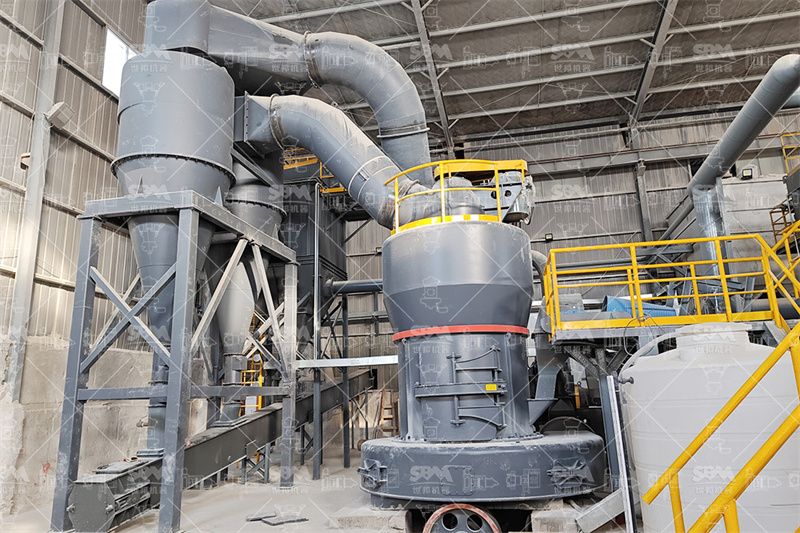
Comparing the Two Systems
Choosing between the SCM and MTW Series depends on your target fineness and production scale. If your insecticide formulations demand ultra-fine barite (≥1250 mesh) with tight particle distribution, the SCM Series is superior. Its turbine classifier and high energy efficiency make it the go-to solution for premium products. On the other hand, if you need large volumes of 200–325 mesh barite for standard dusts or wettable powders, the MTW Series offers higher capacity per unit and lower capital cost per ton. Both systems share our company’s commitment to durability, environmental compliance, and intelligent control.
Integration and Auxiliary Equipment
A complete barite milling system includes feeding, grinding, classification, dust collection, and product collection. For both SCM and MTW mills, we recommend:
- Vibrating feeders with variable speed control for stable feed rate
- Pulse-jet dust collectors with PTFE filter bags for high efficiency
- Cyclone collectors for primary product recovery
- Automated control systems with remote monitoring
Our engineering team can design a turnkey system tailored to your plant layout, electrical supply, and automation requirements.
Case Study: Barite Grinding for Insecticide Dust
A Southeast Asian insecticide manufacturer required 8 t/h of barite powder at 325 mesh (90% passing). After evaluating several options, they selected an MTW138Z mill. The system achieved target fineness with 98% classifier efficiency, and dust emissions remained below 10 mg/m³. Energy consumption was 35% lower than their previous ball mill, and maintenance downtime dropped by 40%. For their newer ultra-fine line (1250 mesh), they added an SCM1000 mill, which delivered consistent product with no coarse contamination.
Conclusion
Selecting the right milling system for barite powder in insecticides requires careful consideration of fineness, capacity, energy efficiency, wear life, and environmental compliance. Our SCM Series Ultrafine Mill and MTW Series European Trapezium Mill represent two proven, high-performance solutions that cover the full spectrum of insecticide-grade barite production. By matching the mill to your specific product portfolio and production scale, you can achieve superior product quality, lower operating costs, and long-term reliability. Contact our technical sales team today to discuss your barite grinding requirements and receive a customized recommendation.