
Introduction
Feldspar is one of the most abundant minerals in the Earth’s crust and serves as a critical raw material in the ceramics, glass, paint, plastics, and rubber industries. Its unique properties—such as high fusibility, chemical stability, and low thermal expansion—make it indispensable in modern manufacturing. However, to unlock the full value of feldspar, it must be processed into fine powders with precise particle size distributions. This is where the right grinding mill becomes the cornerstone of your plant’s efficiency and profitability.
Choosing the correct grinding equipment for feldspar processing is not a one-size-fits-all decision. It depends on your desired fineness, production capacity, energy costs, and the specific characteristics of your raw ore. This article provides a comprehensive guide to selecting the optimal grinding mill for your feldspar powder plant, highlighting key technologies and recommending proven solutions from our product portfolio.
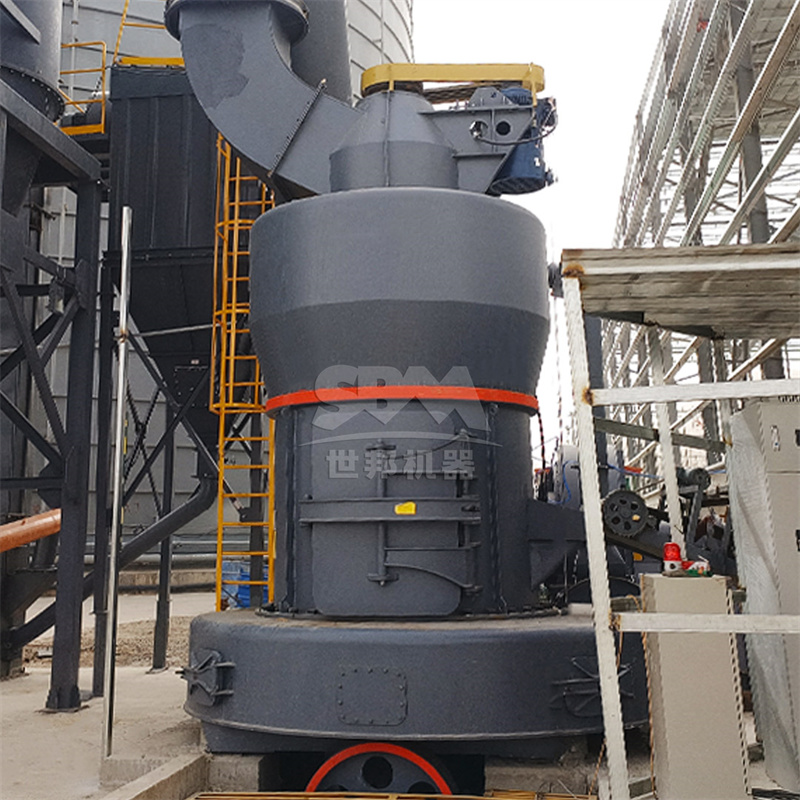
Understanding Feldspar Grinding Requirements
Feldspar typically ranges from 6 to 6.5 on the Mohs hardness scale, making it moderately hard and abrasive. The grinding process must balance throughput, fineness, and wear costs. Common end-product fineness for feldspar powder includes:
- Coarse powder: 0-3 mm (for certain glass and ceramic body applications)
- Fine powder: 45-325 mesh (0.045-0.6 mm) for ceramics, glazes, and fillers
- Ultrafine powder: 325-2500 mesh (down to 5 μm) for high-end paints, coatings, and specialty ceramics
Your choice of mill will largely be dictated by the target fineness and capacity. Below, we analyze the main mill types suitable for feldspar processing, with references to our advanced equipment.
Key Grinding Mill Technologies for Feldspar
1. Raymond Mills and Pendulum Mills (45-325 mesh)
For traditional feldspar powder production in the 45-325 mesh range, pendulum mills are a reliable and cost-effective choice. They offer good capacity and relatively low energy consumption. Our MTM Series Medium-speed Trapezium Mill is an upgraded version of the traditional Raymond mill, featuring intelligent pressure regulation, innovative roller assembly, and damping technology. With models ranging from 3 to 22 t/h, it delivers precise fineness control and extended wear life—ideal for ceramic-grade feldspar.
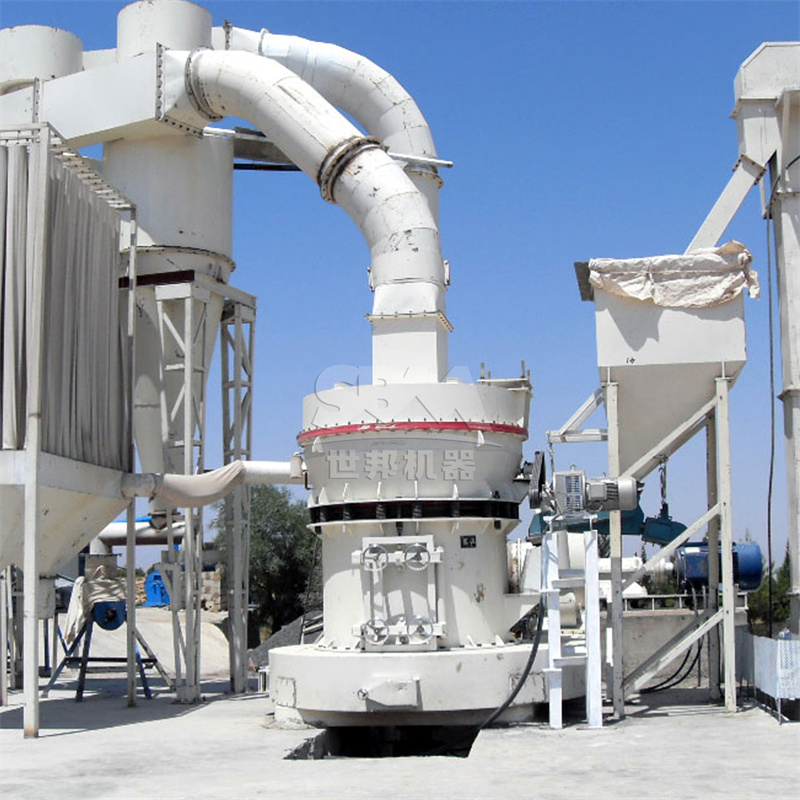
2. Ball Mills (0.074-0.8 mm)
Ball mills are versatile and can handle both dry and wet grinding. They are often used for coarse to medium grinding of feldspar, especially when large capacities are required. Our Ball Mill series offers capacities from 0.65 to 450 t/h and can produce powders down to 0.074 mm. With high crushing ratio (up to 300:1) and stable operation, they are a solid choice for primary or secondary grinding in large feldspar plants. However, ball mills are generally less energy-efficient for ultrafine grinding compared to vertical mills.
3. Vertical Roller Mills (30-325 mesh, up to 600 mesh)
Vertical roller mills (VRM) have revolutionized fine grinding in the minerals industry. They combine crushing, grinding, and classification in one unit, reducing floor space and infrastructure costs. Our LM Series Vertical Roller Mill is a prime example, with capacities from 3 to 250 t/h and fineness adjustable from 30 to 325 mesh (special models up to 600 mesh). Its integrated design reduces space by 50%, and energy consumption is 30-40% lower than ball mill systems. The non-contact roller-table design extends wear part life by three times, making it highly cost-effective for medium to large feldspar operations.
4. Ultrafine Mills (325-2500 mesh)
When your feldspar application demands ultrafine powders—such as for high-performance coatings or electronic materials—you need specialized ultrafine mills. Two outstanding options from our lineup are the SCM Series Ultrafine Mill and the LUM Ultrafine Vertical Roller Mill.
The SCM Series Ultrafine Mill is a proven solution for producing 325-2500 mesh powders with capacities from 0.5 to 25 t/h. It features a high-precision vertical turbine classifier that ensures no coarse powder mixing, and its capacity is twice that of jet mills with 30% lower energy consumption. The durable roller and ring design, along with a shaftless screw grinding chamber, guarantee stable operation and long service life.
For even more advanced ultrafine grinding, the LUM Ultrafine Vertical Roller Mill offers multi-rotor classifying technology and PLC automation. With models like LUM1525 (1.6-11.5 t/h) and LUM1836 (2.3-15 t/h), it achieves fineness down to 5 μm. Its unique roller/liner curves improve grinding efficiency, while negative pressure operation ensures a dust-free environment.
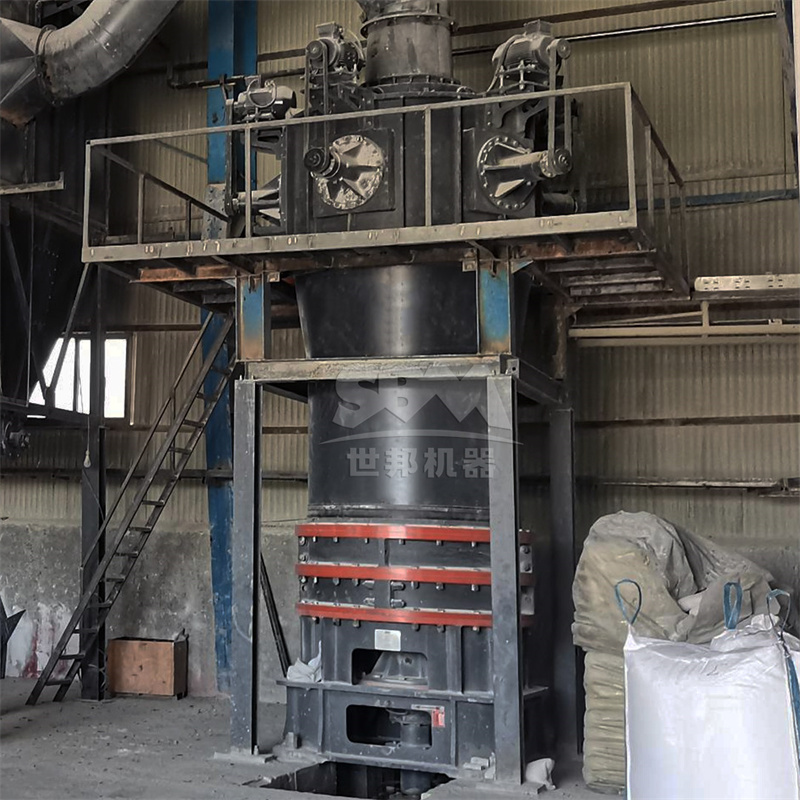
How to Choose the Right Mill: A Decision Framework
To select the optimal grinding mill for your feldspar plant, consider the following factors:
- Target Fineness: For coarse powders (0-3 mm), a hammer mill may suffice. For 45-325 mesh, pendulum or vertical mills are ideal. For ultrafine (325-2500 mesh), choose SCM or LUM mills.
- Production Capacity: Match the mill’s capacity to your required output. Our MTM, LM, and SCM series cover a wide range from 0.5 t/h to 250 t/h.
- Energy Efficiency: Vertical and ultrafine mills consume significantly less energy per ton than ball mills. If power costs are a concern, prioritize LM, LUM, or SCM series.
- Wear and Maintenance: Abrasive feldspar causes wear. Choose mills with wear-resistant materials (e.g., special alloy rollers, ceramic liners) and easy maintenance features like hydraulic roller change.
- Space and Infrastructure: Vertical mills have a smaller footprint and can be installed outdoors, saving civil construction costs.
- Environmental Regulations: Ensure the mill is equipped with efficient dust collection (e.g., pulse dust collectors) and noise reduction measures.
Recommended Products for Feldspar Processing
Based on our extensive experience in mineral processing, we strongly recommend the following two products for feldspar powder plants:
SCM Series Ultrafine Mill
Ideal for producing high-value ultrafine feldspar powder (325-2500 mesh). With models from SCM800 to SCM1680, capacities up to 25 t/h, and intelligent control, it ensures precise particle size and low operating costs. Its energy-saving design and eco-friendly dust collection make it a future-proof investment.
LM Series Vertical Roller Mill
Perfect for medium to large-scale plants requiring 30-325 mesh powder. The LM series offers unbeatable energy efficiency, compact layout, and low maintenance. With capacities up to 250 t/h, it can handle the most demanding feldspar grinding tasks while keeping your cost per ton minimal.
Conclusion
Selecting the right grinding mill for your feldspar powder plant is a strategic decision that impacts product quality, operational costs, and environmental compliance. By understanding your fineness and capacity requirements, and by leveraging advanced technologies like our SCM Ultrafine Mill and LM Vertical Roller Mill, you can achieve optimal performance and profitability. Our team of experts is ready to help you configure the perfect grinding solution tailored to your specific feldspar ore and business goals. Contact us today to request a quote or schedule a consultation.