
Introduction: The Strategic Role of Fly Ash in Cement Manufacturing
Fly ash, a fine powdery by-product of coal combustion in thermal power plants, has become an indispensable supplementary cementitious material (SCM) in modern cement production. Its pozzolanic properties improve concrete durability, reduce permeability, and lower the overall carbon footprint of cement manufacturing. However, to fully harness the benefits of fly ash, it must be processed to the appropriate fineness and uniformity. This is where the selection of the right grinding mill becomes critical. The grinding stage not only determines the particle size distribution of the fly ash but also directly impacts the energy consumption, operating cost, and final quality of the cement blend.
With a wide array of milling technologies available—from ball mills to vertical roller mills and ultrafine mills—choosing the optimal equipment for your production line requires a clear understanding of your raw material characteristics, target fineness, capacity requirements, and budgetary constraints. This article provides a comprehensive guide to fly ash processing equipment for cement raw materials, with a focus on how to select the right mill. We will also highlight two of our most advanced products—the SCM Series Ultrafine Mill and the LM Series Vertical Roller Mill—which have proven to be highly effective in fly ash processing applications.
Key Considerations for Fly Ash Grinding
Before delving into specific mill types, it is essential to understand the unique properties of fly ash that influence grinding equipment selection. Fly ash particles are typically spherical, with a size range from 0.5 to 300 microns. The fineness of fly ash used in cement is usually characterized by the amount retained on a 45-micron sieve, with Class F and Class C ashes requiring different processing approaches. The grindability of fly ash, often expressed by the Bond Work Index, varies depending on the source coal and combustion conditions. Additionally, moisture content, abrasiveness, and chemical composition all play a role in determining the wear rate and operational stability of the mill.
When selecting a mill for fly ash, you should consider the following factors:
- Target Fineness: For cement replacement, fly ash is typically ground to 325 mesh (45 microns) or finer, with some high-performance applications requiring 600 mesh or even 2500 mesh.
- Capacity Requirements: The mill must match the throughput of your cement production line, whether it is a few tons per hour or several hundred.
- Energy Efficiency: Grinding is energy-intensive; therefore, the specific energy consumption (kWh/t) is a key economic indicator.
- Wear and Maintenance: Abrasive fly ash can cause rapid wear of grinding elements, so the mill’s wear-resistant design and maintenance intervals are critical.
- Environmental Compliance: Dust emission and noise levels must meet stringent environmental regulations.
- Space and Infrastructure: The mill’s footprint, foundation requirements, and integration with existing systems affect capital costs.
Overview of Mill Technologies for Fly Ash Processing
Several types of mills are commonly used for grinding fly ash in cement plants. Each has its own advantages and limitations.
Ball Mills
Ball mills are traditional workhorses in the cement industry. They can grind fly ash to the desired fineness, but they are generally less energy-efficient than modern vertical mills, especially for fine grinding. The high wear rate of grinding media and liners when processing abrasive fly ash also adds to operating costs. However, ball mills are robust and can handle large capacities, making them suitable for some applications.
Vertical Roller Mills
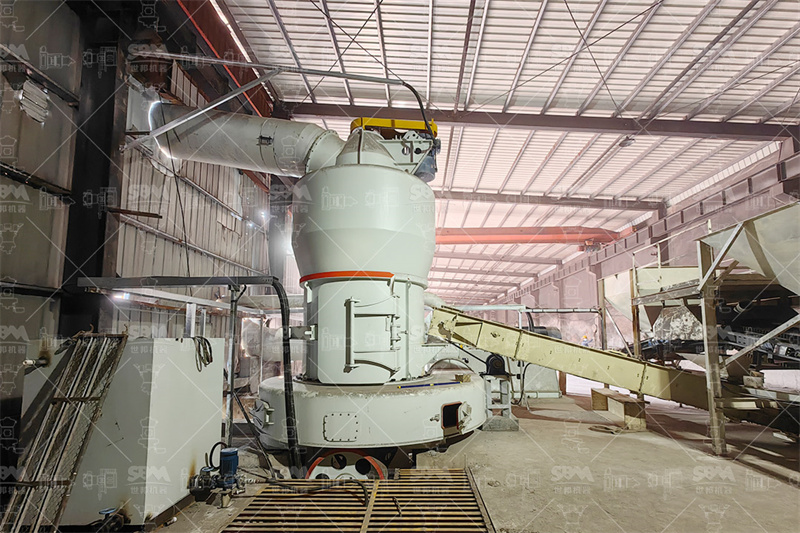
Vertical roller mills (VRMs) have gained popularity for grinding fly ash due to their high energy efficiency, compact layout, and ability to dry and grind simultaneously. They use a grinding table and rollers to crush the material, and an integrated classifier ensures precise product fineness. VRMs are particularly effective for large-scale production and can achieve very fine products with lower specific power consumption compared to ball mills.
Ultrafine Mills
For high-value applications requiring ultrafine fly ash (e.g., for high-performance concrete or as a pozzolanic filler), ultrafine mills such as the SCM Series are ideal. These mills can produce particles down to 5 microns, significantly enhancing the reactivity of fly ash. They often incorporate advanced classification technology to ensure a narrow particle size distribution.
Other Mills
Trapezium mills, hammer mills, and pendulum mills are also used in some fly ash processing circuits, depending on the required fineness and capacity. However, for cement raw material preparation, the trend is toward vertical roller mills and ultrafine mills due to their efficiency and product quality.
How to Choose the Right Mill: A Step-by-Step Approach
Selecting the optimal mill for your fly ash processing line involves a systematic evaluation. Here is a step-by-step guide:
Step 1: Define Your Product Requirements
Determine the desired fineness (e.g., 325 mesh, 600 mesh, or 2500 mesh), the required throughput (t/h), and any special quality parameters such as particle shape or reactivity. For cement blending, fly ash typically needs to meet ASTM C618 or EN 450 standards, which specify fineness and strength activity index.
Step 2: Analyze Your Fly Ash Characteristics
Conduct a thorough laboratory analysis of your fly ash, including moisture content, grindability, abrasiveness, and chemical composition. This data will help you predict mill performance and wear rates. For example, fly ash with high unburned carbon content may require more grinding energy.
Step 3: Evaluate Mill Technologies
Compare different mill types based on your requirements. Consider factors such as:
- Specific energy consumption (kWh/t)
- Product fineness capability
- Capacity range
- Wear part life and maintenance costs
- Capital cost and installation complexity
- Footprint and infrastructure needs
- Environmental performance (dust, noise)
Step 4: Consider System Integration
The mill is part of a larger grinding system that includes feeders, classifiers, dust collectors, and fans. Ensure that the mill you choose can be seamlessly integrated with your existing or planned equipment. For instance, if you need to dry high-moisture fly ash, a mill with integrated drying capability (like a VRM with hot gas generator) is advantageous.
Step 5: Assess Total Cost of Ownership
Look beyond the initial purchase price. Calculate the total cost of ownership over the mill’s lifespan, including energy, maintenance, wear parts, and downtime. Often, a higher initial investment in a more efficient mill yields significant savings in the long run.
Step 6: Consult with Equipment Experts
Engage with mill manufacturers who have extensive experience in fly ash processing. They can provide valuable insights, test your material in their pilot facilities, and recommend the best solution for your specific needs.
Recommended Products for Fly Ash Processing
Based on our extensive experience in the cement and fly ash industries, we recommend the following two products for fly ash processing lines. Both have been successfully deployed in numerous projects worldwide and offer distinct advantages depending on your fineness and capacity requirements.
SCM Series Ultrafine Mill: For High-Fineness Fly Ash
If your production line requires ultrafine fly ash (325-2500 mesh) to enhance cement performance, the SCM Series Ultrafine Mill is an excellent choice. This mill is designed for high-efficiency, energy-saving ultrafine grinding. Its key features include:
- High Efficiency & Energy Saving: Capacity is twice that of jet mills, with 30% lower energy consumption. The intelligent control system provides automatic feedback on finished product granularity, ensuring consistent quality.
- High-Precision Classification: The vertical turbine classifier achieves precise particle size cutting, eliminating coarse powder mixing and ensuring a uniform product.
- Durable Design: Special material rollers and rings extend service life several times over. The shaftless screw grinding chamber ensures stable operation.
- Eco-friendly & Low Noise: Pulse dust collection efficiency exceeds international standards, and the soundproof room design keeps noise levels low.
The SCM Series is available in models from SCM800 to SCM1680, with capacities ranging from 0.5 to 25 t/h and fineness from 325 to 2500 mesh. Its working principle involves a main motor driving three layers of grinding rings to rotate, with materials dispersed by centrifugal force and crushed by roller pressure. This makes it ideal for producing high-reactivity fly ash for premium cement products.
LM Series Vertical Roller Mill: For Large-Scale Fly Ash Grinding
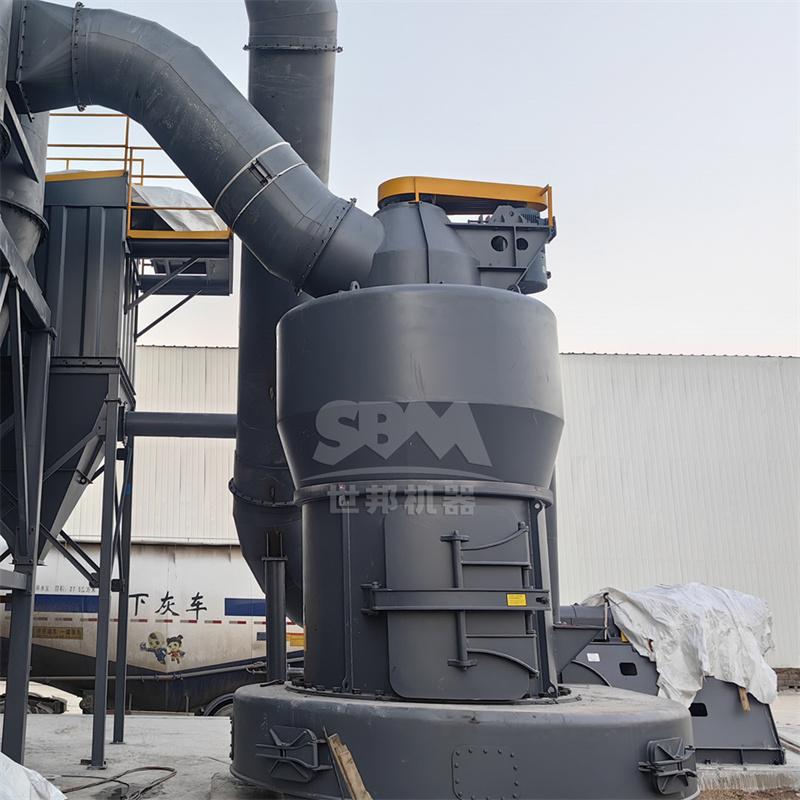
For large-scale cement production lines where high capacity and energy efficiency are paramount, the LM Series Vertical Roller Mill is the industry benchmark. It integrates crushing, grinding, and selection into one compact unit, reducing floor space by 50% and enabling outdoor installation. Key advantages include:
- Low Operating Cost: The non-contact design between rollers and table increases wear part life by three times, and energy consumption is 30-40% lower than ball mill systems.
- Intelligent Control: An expert-level auto-control system supports remote/local switching and real-time monitoring, reducing manual intervention.
- Environmental Compliance: Fully sealed negative pressure operation ensures dust emission is well below limits, and operating noise is minimal.
The LM Series offers a wide range of models, from LM130K with 10-28 t/h capacity to LM280K with 50-170 t/h, and even larger custom models. For fly ash grinding, the LM series can produce fineness from 30 to 325 mesh (up to 600 mesh for special models). Its working principle involves a main motor driving the grinding table via a reducer, with materials entering through the central feed port and being ground by rollers. Qualified fines are carried by hot air to the classifier, while coarse powder returns to the table for re-grinding.
Case Study: Successful Fly Ash Processing with Our Mills
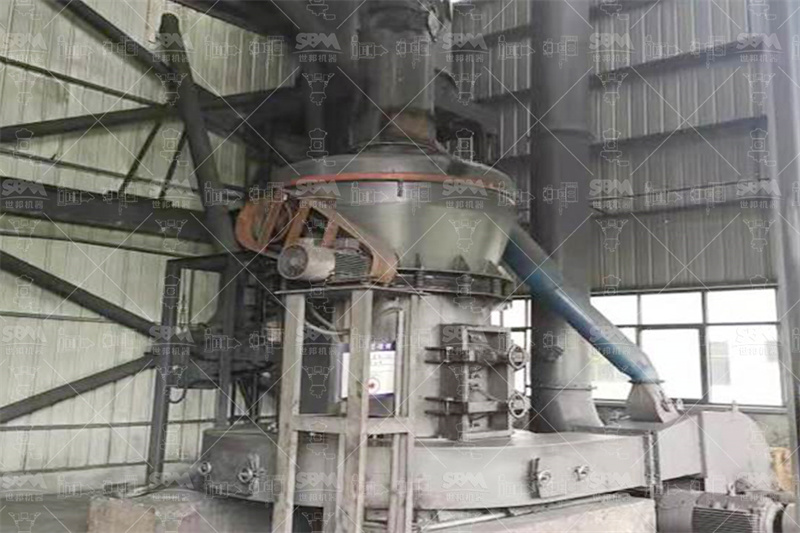
To illustrate the effectiveness of our mills, consider a recent project in Southeast Asia where a cement plant needed to process 30 t/h of fly ash to 600 mesh for blending into high-grade cement. After evaluating several options, the plant chose an LM Series Vertical Roller Mill (LM220K) equipped with a high-efficiency classifier. The mill achieved a specific energy consumption of 22 kWh/t, significantly lower than the ball mill system previously used. The product fineness was consistently maintained at 600 mesh (20 microns), with 95% passing. The plant reported a 35% reduction in energy costs and a 50% decrease in maintenance downtime. In another project in Europe, an SCM1680 Ultrafine Mill was installed to produce 10 t/h of ultrafine fly ash at 1250 mesh for a specialty cement. The SCM mill’s precise classification ensured a narrow particle size distribution, enhancing the cement’s early strength. The client praised the mill’s low noise and dust emissions, which allowed indoor installation without additional soundproofing.
Conclusion: Making the Right Choice for Your Production Line
Choosing the right mill for fly ash processing is a decision that impacts the efficiency, quality, and profitability of your cement production. By carefully assessing your requirements and understanding the capabilities of different mill technologies, you can select the equipment that best fits your needs. The SCM Series Ultrafine Mill and LM Series Vertical Roller Mill represent the state-of-the-art in fly ash grinding, offering high efficiency, precise product control, and environmental compliance. Whether you need ultrafine fly ash for high-performance cement or large-scale grinding for ordinary Portland cement blends, our mills are engineered to deliver reliable performance and low total cost of ownership. We invite you to contact our experts to discuss your specific application and to arrange for material testing at our facility. With the right mill, your fly ash processing line can achieve new levels of productivity and sustainability.