
1. Introduction to Food-Grade Gypsum Additives
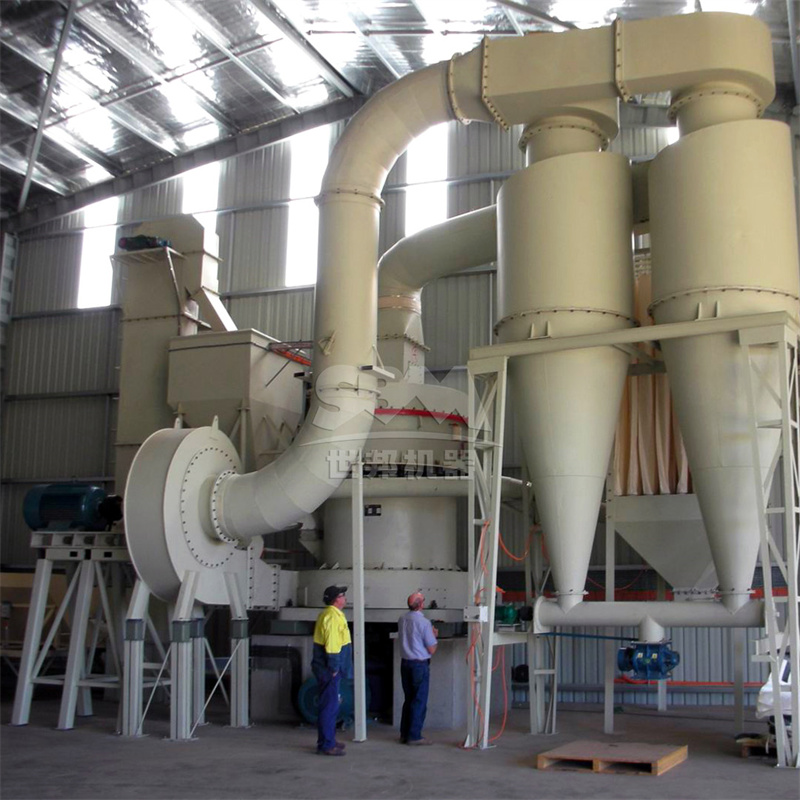
Food-grade gypsum (calcium sulfate dihydrate) serves as a crucial coagulant, firming agent, and nutritional supplement in industries ranging from tofu production and baking to brewing and pharmaceutical excipients. Unlike industrial-grade gypsum, food applications demand strict adherence to safety regulations, precise particle size distribution, and contaminant-free processing. The production of such high-purity additives requires specialized grinding equipment that can achieve ultra-fine fineness without introducing metallic contamination or thermal degradation.
2. Regulatory Compliance and Material Safety
Manufacturers must comply with international food safety standards including FDA 21 CFR 184.1230, EU Regulation 231/2012, and China’s GB 1892-2007. These regulations mandate that equipment contacting gypsum must be constructed from food-grade stainless steel or have protective coatings that prevent ferrous contamination. Critical control points include:
- Raw material pre-screening to remove heavy metals (arsenic ≤ 1 ppm, lead ≤ 2 ppm)
- Avoiding lubricants or hydraulic fluids that could contaminate the product
- Implementing CIP (Clean-in-Place) systems for regular sanitization
- Controlled temperature zones to prevent dehydration of calcium sulfate dihydrate above 45°C
3. Core Equipment Selection for Grinding Stages
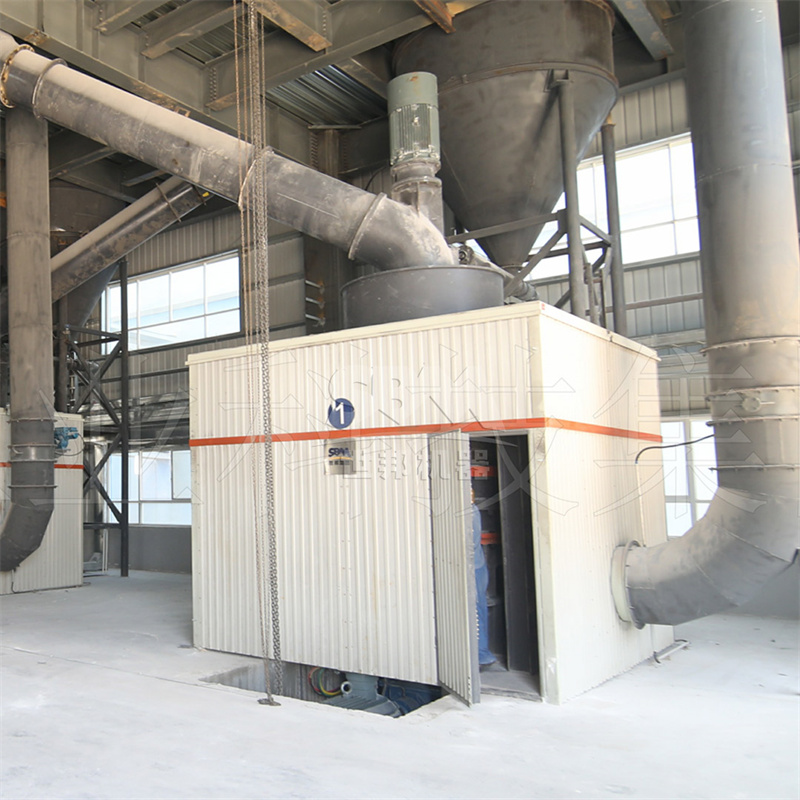
Selecting the correct milling technology determines productivity, energy efficiency, and final powder quality. For food-grade gypsum with target fineness between 45-5 microns, we recommend our SCM Series Ultrafine Mill (45-5μm). This flagship equipment delivers 325-2500 mesh output with a capacity of 0.5-25 t/h. Its vertical turbine classifier ensures precise particle cutting with zero coarse powder mixing—critical for uniform coagulation activity in food applications.
4. SCM Series Ultrafine Mill: The Heart of Ultra-Fine Production
The SCM mill’s three-layer grinding ring design disperses materials via centrifugal force, achieving layer-by-layer compression. Key food-safety advantages include:
- Contact-free grinding zone: The shaftless screw design prevents cross-contamination between batches.
- Automated fineness feedback: Intelligent control maintains ±2% consistency in particle size distribution.
- Energy efficiency: Consumes 30% less power than jet mills while delivering 2x higher capacity.
- Soundproof housing: Reduces operational noise to below 85 dB, improving worker comfort.
For a typical 5-8 t/h line, the SCM1000 model (132kW main power) offers the optimal balance of production scale and precise fineness control (1.0-8.5 t/h capacity). Its pulse dust collection system exceeds international emission standards, capturing 99.9% of particulates.
5. Primary Crushing and Pre-Grinding Solutions
Before ultra-fine milling, raw gypsum rock (typically 0-50mm) requires size reduction. Our Hammer Mill PC4015-132 efficiently crushes feed material to 0-3mm particles, operating at 40-70 t/h with 132kW power. The high-manganese steel liners ensure 3-5x longer service life compared to conventional hammers, reducing replacement frequency in continuous production environments.
6. Integrating MTW Series for Economical Medium-Grade Production
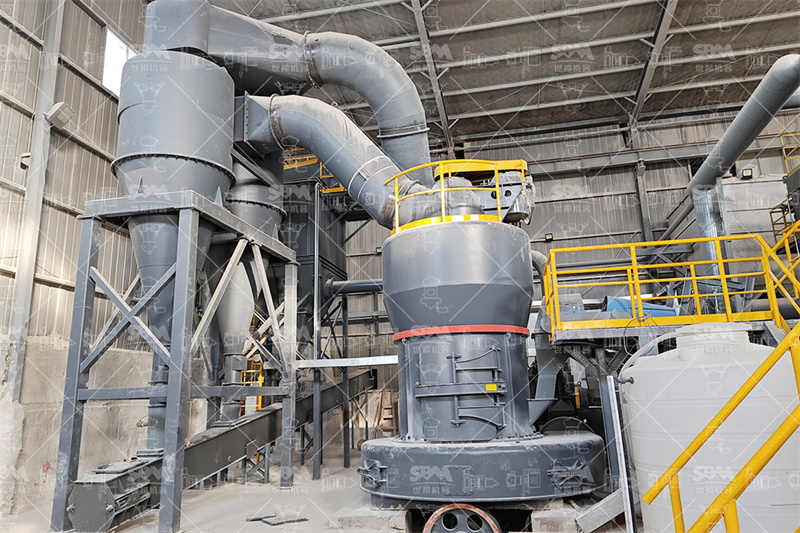
When producing gypsum additives for baking powder or pH regulators (65-45μm target), the MTW Series European Trapezium Mill provides exceptional value. With integral bevel gear drive achieving 98% transmission efficiency, the MTW138Z model (90kW) processes 6-17 t/h at 10-325 mesh. Its anti-wear shovel design reduces maintenance costs by 30%, while the optimized arc air duct minimizes energy losses—crucial for cost-sensitive food ingredient manufacturing.
7. Complete Line Configuration Example
A comprehensive food-grade gypsum line includes:
- Feed hopper with vibrating feeder (GZ series) ensuring even material flow
- Hammer mill for primary crushing to ≤20mm
- Bucket elevator with dust-tight enclosures
- SCM ultrafine mill for final grinding to 800-1250 mesh
- Cyclone collector + pulse jet baghouse for product recovery
- Automated packing station with metal detection
8. Dust Control and Explosion Safety
Gypsum powder forms explosive atmospheres at concentrations above 30 g/m³. Our systems incorporate:
- Negative-pressure operation throughout the milling circuit
- Explosion venting panels on cyclones and baghouses
- Nitrogen inerting for ultra-fine mills when processing below 10μm
- Continuous CO and O₂ monitoring with automatic shutdown interlocks
9. Quality Control and Sampling Protocols
In-line particle size analyzers using laser diffraction (Malvern Mastersizer or equivalent) provide real-time feedback. Our intelligent control systems automatically adjust classifier speed and mill load to maintain D50 within ±0.5μm of setpoint. Microbiological testing requires quarterly validation of the entire system, with documented HACCP plans covering all critical control points from raw material reception to final packaging.
10. Maintenance and Sanitation Best Practices
Food-grade operations demand weekly sanitation schedules. Our SCM and MTW mills feature:
- Quick-release clamps on inspection doors
- Food-grade silicone gaskets resistant to calcium sulfate buildup
- Stainless steel covers over all product contact areas
- Automated lubrication systems using NSF H1 food-grade grease
11. Energy Consumption and Sustainability Metrics
Compared to traditional ball milling systems, modern vertical and trapezium mills reduce energy consumption by 30-40%. For a 10 t/h line producing 800-mesh food gypsum:
- Total installed power: 200-220kW
- Specific energy: 22-25 kWh/ton
- CO₂ emissions: 8-10 kg/ton (vs. 15-18 kg for ball mills)
12. Selecting the Right Capacity for Your Market
Start-up producers typically begin with SCM900 (0.8-6.5 t/h, 90kW) to serve regional tofu manufacturers. Mid-sized operations often choose SCM1250 (2.5-14 t/h, 185kW) offering flexibility across both food and pharmaceutical grades. Large-scale producers with output exceeding 20 t/h should evaluate the MTW215G (15-45 t/h) for cost-efficient medium-fineness production alongside an SCM1680 for premium ultra-fine fractions.
13. Installation and Commissioning Services
Our engineering team provides complete turnkey installation including:
- Foundation design with vibration isolation pads
- Pneumatic conveying systems using food-grade stainless steel piping
- Validation documentation (IQ/OQ/PQ) for regulatory audits
- Operator training on sanitation protocols and emergency shutdown procedures
14. Future Trends in Gypsum Additive Processing
The industry is moving toward continuous inline sterilization using steam injection during classification, and AI-driven predictive maintenance to reduce unplanned downtime. Our R&D department is currently testing ceramic-coated grinding rollers that eliminate all metallic wear particles—potentially achieving <0.1 ppm iron contamination in final products.
15. Conclusion
Investing in high-quality food-grade gypsum production equipment ensures compliance, efficiency, and profitability. The combination of our SCM ultrafine mills for premium products and MTW trapezium mills for standard grades covers the full spectrum of fineness requirements. With proper selection, installation, and maintenance, your line will produce safe, consistent additives that meet the most stringent global food safety standards. Contact our engineering team today for a tailored equipment layout and quotation.