
Introduction to Graphite Powder Processing
Graphite is one of the most versatile industrial minerals, finding applications in lithium-ion battery anodes, refractory materials, lubricants, pencils, carbon brushes, and numerous high-tech products. With the rapid growth of the electric vehicle and energy storage industries, the demand for high-quality graphite powder has surged dramatically. As a result, selecting the appropriate grinding equipment for graphite powder production has become a critical decision for manufacturers seeking to optimize productivity, product quality, and operational costs.
The unique properties of graphite—its layered crystal structure, natural lubricity, and tendency to produce flaky particles—require careful consideration when choosing a grinding mill. Unlike many other minerals, graphite can be challenging to grind because excessive mechanical force can damage the crystal structure of flakes, reducing the value of the final product. Therefore, understanding the characteristics of different grinding mills and matching them to your specific application requirements is essential.
Key Factors in Selecting a Graphite Grinding Mill
Before examining specific equipment options, it is important to understand the key factors that influence the selection of a grinding mill for graphite powder production:
1. Target Particle Size and Distribution
The required fineness of the final graphite powder is perhaps the most fundamental consideration. Different applications demand vastly different particle sizes. Battery anode materials typically require particles in the range of 5-30 micrometers, while refractory applications may need particles between 100-500 micrometers. The grinding mill must be capable of achieving the target fineness consistently and efficiently.
2. Production Capacity Requirements
Your desired throughput will directly influence the size and type of mill you select. Small-scale operations may require capacities of just a few tons per hour, while large industrial operations may need hundreds of tons per hour. Matching the mill’s capacity to your production targets ensures optimal utilization of capital investment.
3. Feed Material Characteristics
The initial size, moisture content, hardness, and purity of the graphite feed material all affect mill selection. Natural graphite typically has a Mohs hardness of 1-2, making it relatively soft, but its layered structure and lubricating properties can still pose challenges for certain mill types.
4. Preservation of Particle Morphology
For many high-value applications, particularly in battery manufacturing, preserving the flaky, crystalline structure of graphite particles is crucial. Some grinding methods can cause excessive fracturing, delamination, or rounding of particles, which reduces performance in end-use applications.
5. Energy Efficiency and Operating Costs
Grinding is an energy-intensive process, and energy costs typically represent a significant portion of total operating expenses. Selecting a mill with high energy efficiency and low wear rates can substantially reduce long-term operating costs.
Types of Grinding Mills for Graphite Processing
Ultrafine Grinding Mills
For applications requiring extremely fine graphite powder, particularly below 325 mesh and down to 2500 mesh (approximately 5 micrometers), ultrafine grinding mills are the preferred choice. These mills employ high-precision classification systems to ensure that the finished product meets strict particle size specifications.
The SCM Series Ultrafine Mill from our company is an excellent example of this category. It features a vertical turbine classifier that achieves precise particle size cutting, ensuring no coarse powder mixing and uniform finished products. With a capacity range of 0.5-25 tons per hour and output fineness from 325 to 2500 mesh, this mill can handle various production scales while maintaining exceptional product quality. The SCM Series is particularly well-suited for producing battery-grade graphite powder because its intelligent control system with automatic finished product granularity feedback ensures consistent output quality.
Key technical advantages of the SCM Series include:
- Capacity is twice that of jet mills with 30% lower energy consumption
- Special material rollers and rings extend service life several times over
- Shaftless screw grinding chamber ensures stable operation
- Pulse dust collection efficiency exceeds international standards
- Soundproof room design ensures low noise levels
Medium-Speed Trapezium Mills
For medium to fine grinding applications, trapezium mills offer an excellent balance between capacity and fineness. The MTW Series European Trapezium Mill from our company represents the latest generation of this mill type, incorporating numerous technological innovations.
The MTW Series offers output fineness from 30 to 325 mesh with capacities ranging from 3 to 45 tons per hour. Its anti-wear shovel design with combined blades reduces maintenance costs, while the curved design extends grinding roller life. The optimized arc air duct reduces airflow energy loss and improves transmission efficiency. With an integral bevel gear drive achieving up to 98% transmission efficiency, this mill delivers exceptional performance for graphite powder production at medium fineness levels.
For graphite processing specifically, the MTW Series offers several advantages:
- Precise classification system controls finished product size accurately
- Wear-resistant volute structure reduces maintenance costs by 30%
- Independent intellectual property rights with patented technology
- Internal suction oil lubrication system for reliable operation
Vertical Roller Mills
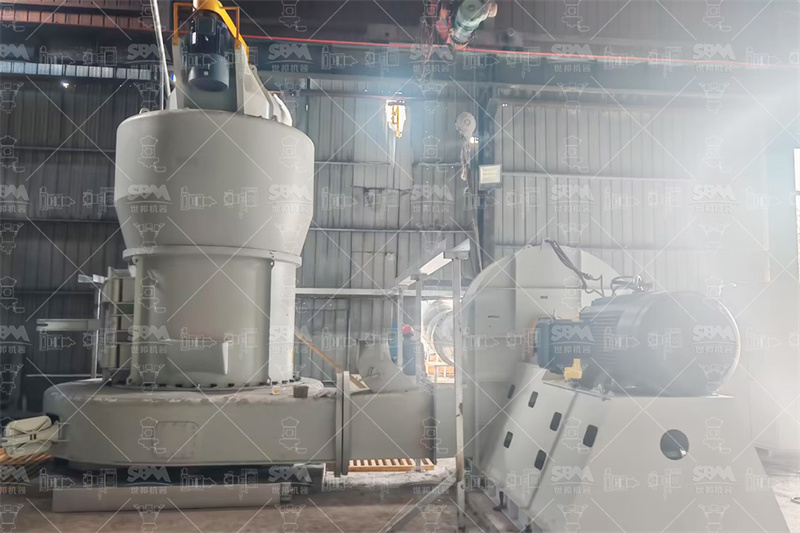
Vertical roller mills have become increasingly popular for graphite processing due to their high efficiency, low operating costs, and excellent product quality. The LM Series Vertical Roller Mill from our company is a prime example of this technology, offering capacities from 3 to 250 tons per hour depending on the model.
The LM Series features an integrated design that combines crushing, grinding, and selection functions, reducing floor space by 50% compared to traditional systems. The non-contact design between rollers and table increases wear part life by three times, while energy consumption is 30-40% lower than ball mill systems. The expert-level auto-control system supports remote and local switching, with real-time monitoring of parameters to reduce manual intervention.
For graphite powder production, the LM Series offers particular advantages in terms of environmental compliance with fully sealed negative pressure operation and dust emission well below regulatory limits. The hot air circulation energy-saving system further reduces energy costs while maintaining consistent product quality.
Ball Mills for Coarse Grinding
For applications requiring coarser graphite powder in the range of 0.074-0.8mm, ball mills remain a reliable and cost-effective option. While ball mills generally have higher energy consumption than more modern mill designs, they offer advantages in terms of simplicity, reliability, and the ability to handle large feed sizes.
Our company’s Ball Mill series offers capacities from 0.65 to 450 tons per hour, making them suitable for both small-scale and large industrial operations. The high crushing ratio of up to 300:1 allows for continuous adjustment of fineness, while the proven technical solution reduces downtime by 40% compared to less reliable alternatives.
Application-Specific Considerations
Battery Anode Material Production
For lithium-ion battery anode applications, graphite powder must meet stringent specifications for particle size distribution, morphology, and purity. The grinding process must preserve the flaky structure of natural graphite while achieving the desired particle size. Ultrafine grinding mills with precise classification systems, such as the SCM Series, are ideal for this application. The ability to achieve particle sizes below 20 micrometers with narrow size distribution is essential for optimal battery performance.
Refractory Material Production
For refractory applications, graphite powder with particle sizes ranging from 100 to 500 micrometers is typically required. Medium-speed trapezium mills or ball mills can efficiently produce material in this size range. The key considerations are consistent product quality, high capacity, and low operating costs.
Lubricant and Specialty Applications
For lubricant applications and other specialty uses requiring very fine graphite powder, ultrafine grinding mills capable of achieving sub-micron particle sizes may be necessary. The LUM Ultrafine Vertical Roller Mill from our company offers output fineness from 325 to 2500 mesh with capacities from 1.6 to 15 tons per hour, making it suitable for producing high-value specialty graphite products.
Conclusion
Selecting the right grinding mill for graphite powder production requires careful consideration of your specific application requirements, including target particle size, production capacity, feed material characteristics, and product quality specifications. While ultrafine grinding mills like the SCM Series are essential for high-value applications such as battery anode materials, medium-speed mills like the MTW Series offer excellent value for medium-fineness applications. Vertical roller mills like the LM Series provide high capacity and low operating costs for large-scale production.
Our company offers a complete range of grinding mills suitable for every graphite processing application. Our experienced technical team can help you select the optimal equipment configuration based on your specific requirements, ensuring maximum productivity, product quality, and return on investment. Contact us today to discuss your graphite powder production needs and discover how our advanced grinding technology can benefit your operation.