
Introduction
Gypsum powder is a fundamental material in construction, agriculture, and industrial manufacturing. From wallboard and plaster to soil conditioners and cement retarders, the quality of gypsum powder directly influences end-product performance. At the heart of any gypsum powder production line lies the grinding mill—the equipment that determines fineness, capacity, energy consumption, and overall operational cost. With a myriad of grinding mill types available, selecting the right one for your plant can be daunting. This article provides a professional guide to choosing the optimal grinding mill for gypsum powder production, highlighting key technical considerations and introducing two proven solutions from our company: the SCM Series Ultrafine Mill and the MTW Series European Trapezium Mill.
Understanding Gypsum Powder Requirements
Gypsum (calcium sulfate dihydrate) undergoes calcination to become hemihydrate or anhydrite, which is then ground to specific fineness. The required fineness varies by application:
- Construction gypsum: typically 80–200 mesh (75–180 μm) for plaster, wallboard, and blocks.
- High-strength gypsum: 200–325 mesh (45–75 μm) for dental and precision casting applications.
- Ultrafine gypsum: 325–2500 mesh (5–45 μm) for specialty coatings, fillers, and advanced materials.
Therefore, the grinding mill must be capable of achieving the target fineness consistently and efficiently. Additionally, capacity requirements can range from a few tons per hour in small plants to over 50 t/h in large industrial operations. Energy efficiency, wear part life, dust control, and automation are also critical factors.
Key Criteria for Selecting a Gypsum Grinding Mill
1. Fineness and Particle Size Distribution
The mill must deliver the required fineness with a narrow particle size distribution. For high-value applications, precise classification is essential to avoid coarse particles. Mills with dynamic classifiers or turbine classifiers offer better control over top size.
2. Capacity and Scalability
Production capacity should match your market demand and allow for future expansion. Consider the mill’s rated capacity at the desired fineness—capacity often decreases as fineness increases. Modular designs and multiple model options enable scaling.
3. Energy Efficiency
Grinding is energy-intensive. Mills that combine crushing, grinding, and classification in one system, or that use advanced roller/table designs, can reduce power consumption by 30–40% compared to traditional ball mills. Intelligent control systems further optimize energy use.
4. Wear Parts and Maintenance
Gypsum is moderately abrasive. Mills with wear-resistant materials (e.g., special alloy rollers and rings) and easy maintenance features (e.g., hydraulic roller change, modular assemblies) minimize downtime and operating costs.
5. Environmental Compliance
Dust emission and noise are regulated. Ensure the mill is equipped with high-efficiency pulse dust collectors and soundproof enclosures. Negative pressure operation prevents dust leakage.
6. Automation and Control
PLC-based control with automatic fineness feedback and remote monitoring improves stability and reduces labor. Expert control systems can adjust parameters in real time.
Grinding Mill Types for Gypsum
Several mill types are commonly used for gypsum grinding:
- Ball Mills: Traditional, robust, and suitable for large capacities, but energy-hungry and offer limited fineness control.
- Raymond Mills (Pendulum Mills): Widely used for 80–325 mesh, cost-effective, but may struggle with ultrafine requirements.
- Vertical Roller Mills: Efficient for medium to fine grinding, integrated drying and classifying, but higher capital cost.
- Ultrafine Mills: Specialized for 325–2500 mesh, often with turbine classifiers and high-precision separation.
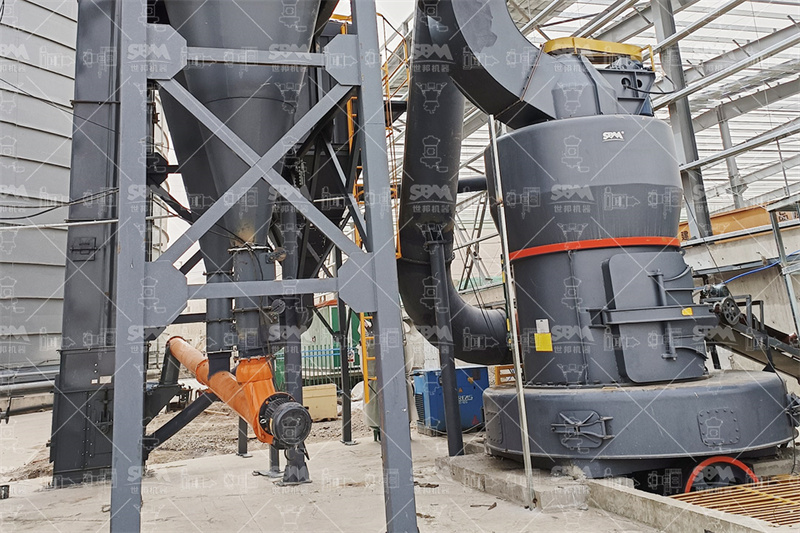
- Trapezium Mills: Enhanced pendulum mills with improved airflow and wear resistance, suitable for 30–325 mesh.
Among these, the SCM Series Ultrafine Mill and MTW Series European Trapezium Mill stand out for gypsum processing due to their optimized designs, reliability, and efficiency.
Recommended Solution 1: SCM Series Ultrafine Mill
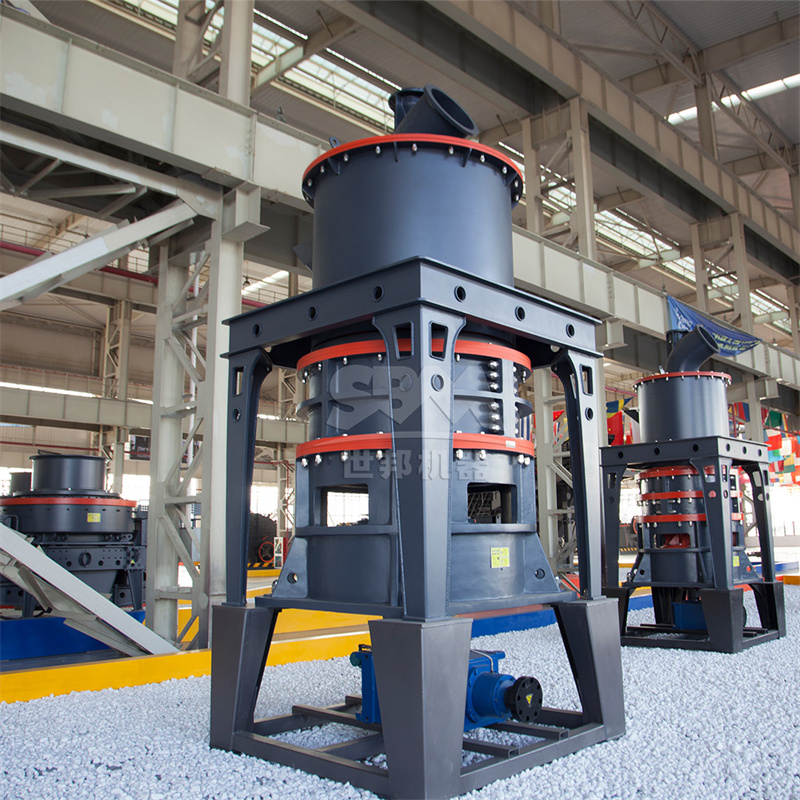
When your plant requires high-precision gypsum powder in the ultrafine range (325–2500 mesh), the SCM Series Ultrafine Mill is an ideal choice. It is engineered for efficiency, precision, and durability.
Technical Highlights
- High Efficiency & Energy Saving: Capacity is twice that of jet mills, with 30% lower energy consumption. Intelligent control with automatic fineness feedback ensures stable operation.
- High-Precision Classification: The vertical turbine classifier achieves precise particle size cutting, eliminating coarse powder mixing and ensuring uniform finished products.
- Durable Design: Special material rollers and rings extend service life several times over. The shaftless screw grinding chamber ensures stable operation.
- Eco-friendly & Low Noise: Pulse dust collection efficiency exceeds international standards. Soundproof room design ensures low noise levels.
Working Principle
The main motor drives three layers of grinding rings to rotate. Materials are dispersed into the grinding path by centrifugal force, crushed by roller pressure, and ground layer by layer. Finally, powder collection is completed by a cyclone collector and a pulse dust removal system.
Models for Gypsum
SCM800 (0.5–4.5 t/h), SCM900 (0.8–6.5 t/h), SCM1000 (1.0–8.5 t/h), SCM1250 (2.5–14 t/h), SCM1680 (5.0–25 t/h). All models accept feed size ≤20 mm and deliver 325–2500 mesh. With capacities up to 25 t/h, the SCM Series can serve both specialty and large-scale ultrafine gypsum production.
Recommended Solution 2: MTW Series European Trapezium Mill
For standard gypsum powder production in the 30–325 mesh range, the MTW Series European Trapezium Mill offers an excellent balance of capacity, efficiency, and cost. It incorporates advanced European technology and is designed for robust performance.
Technical Highlights
- Anti-wear Shovel Design: Combined shovel blades reduce maintenance costs, and the curved design extends grinding roller life.
- Optimized Arc Air Duct: Reduces airflow energy loss and improves transmission efficiency. High-strength guard plates protect the air duct working surface.
- Integral Bevel Gear Drive: Transmission efficiency up to 98%, saving space and reducing installation costs.
- Wear-resistant Volute Structure: Non-resistance flow design improves air selection efficiency, reducing maintenance costs by 30%.
Working Principle
The main motor drives the grinding rollers to revolve around the central axis while self-rotating to generate centrifugal force. Shovels throw materials between the ring and rollers to form a material layer, achieving efficient crushing through extrusion. The classification system precisely controls the finished product size.
Models for Gypsum
The MTW Series includes models from MTW110 (3–9 t/h) to MTW215G (15–45 t/h), with feed size up to 50 mm and fineness adjustable from 10 to 325 mesh. For higher capacities, the MRN series (e.g., MRN198: 12–33 t/h; MRN218: 15–45 t/h) is available. These mills are well-suited for producing construction-grade gypsum powder with reliable output and low operating cost.
Comparing the Two Solutions
Choose the SCM Series if:
- Your product requires fineness above 325 mesh (ultrafine).
- You value highest precision and uniform particle size.
- Your capacity need is up to 25 t/h.
Choose the MTW Series if:
- Your target fineness is between 30 and 325 mesh.
- You need higher capacity (up to 45 t/h) for standard products.
- You seek a cost-effective solution with low maintenance.
Both series feature patented technologies, eco-friendly operation, and intelligent control options, ensuring compliance with modern industrial standards.
Additional Considerations for Plant Design
Beyond the mill itself, integrate the following:
- Feeding system: Consistent feed size and rate are crucial. Use a vibrating feeder or belt scale.
- Dust collection: A pulse jet dust collector with high filtration efficiency is essential.
- Product storage and packing: Ensure enclosed conveying and storage to prevent moisture absorption.
- Automation: Consider a central control system that monitors mill load, temperature, and fineness.
Our company offers complete gypsum powder production lines, from crushing and grinding to calcination and packing, with customized layouts and technical support.
Conclusion
Selecting the right grinding mill for gypsum powder production hinges on fineness requirements, capacity, energy efficiency, and operational reliability. The SCM Series Ultrafine Mill and MTW Series European Trapezium Mill represent two optimized solutions that cover a wide spectrum of gypsum applications. By carefully evaluating your product specifications and production goals, you can invest in a mill that maximizes return on investment and ensures long-term competitiveness. For detailed specifications, model selection, or a tailored proposal, please contact our engineering team—we are committed to helping you build a efficient, profitable gypsum powder plant.