
Introduction to Attapulgite in Drilling Mud
Attapulgite, also known as palygorskite, is a magnesium-aluminum phyllosilicate mineral renowned for its unique needle-like crystal structure, high surface area, and remarkable rheological properties. In the oil and gas drilling industry, attapulgite is a critical component in saltwater-based drilling muds. Unlike bentonite, which fails to hydrate in saline environments, attapulgite maintains stable viscosity and gel strength even in saturated brine solutions, making it indispensable for drilling through salt formations and offshore applications. However, the performance of attapulgite in drilling fluids is directly dependent on its processing quality, specifically its fineness, particle size distribution, and specific surface area. Therefore, selecting the right grinding equipment is paramount to producing high-grade attapulgite powder that meets the stringent API (American Petroleum Institute) standards.
This article provides a comprehensive guide to the key machines used in attapulgite processing for drilling mud applications. We will explore the technical requirements, compare different milling technologies, and offer a selection guide to help you optimize your production line for maximum efficiency and profitability. We will also highlight two of our flagship products—the SCM Series Ultrafine Mill and the MTW Series European Trapezium Mill—which are engineered to deliver superior performance in attapulgite grinding.
Processing Requirements for Drilling-Grade Attapulgite
The primary function of attapulgite in drilling mud is to provide thixotropic viscosity and filtration control. To achieve this, the mineral must be processed to a specific particle size, typically in the range of 325 mesh (45 microns) to 1250 mesh (10 microns), with a high percentage of particles below 10 microns to maximize surface interaction. Coarse particles or a wide particle size distribution can lead to poor mud cake quality, increased fluid loss, and unstable rheology. Additionally, the processing equipment must handle the fibrous nature of attapulgite, which requires shearing forces to open the bundles of needles without over-grinding, which could destroy the crystalline structure and reduce its thickening efficiency.
Therefore, an ideal attapulgite processing system must offer:
- Precise Particle Size Control: The ability to adjust fineness between 325 and 2500 mesh to tailor the product for specific drilling conditions.
- High Throughput: Sufficient capacity to meet the demanding schedules of drilling fluid supply.
- Energy Efficiency: Lower operational costs are critical in a competitive commodity market.
- Durability: Attapulgite is an abrasive mineral; equipment must be wear-resistant to minimize downtime and maintenance costs.
Key Grinding Machines for Attapulgite Processing
Several types of mills are used in the mineral processing industry, but not all are suitable for attapulgite. The selection depends on the desired production capacity, fineness, and capital versus operating cost considerations.
1. Ultrafine Grinding: The SCM Series Advantage
For high-end drilling mud applications where a very fine particle size (D97 = 5-45μm) is required, an ultrafine grinding mill is essential. Traditional jet mills can achieve this fineness but are notoriously energy-inefficient and expensive to operate. Our SCM Series Ultrafine Mill offers a superior alternative. It is specifically designed for producing powders in the 325-2500 mesh range (45-5μm).
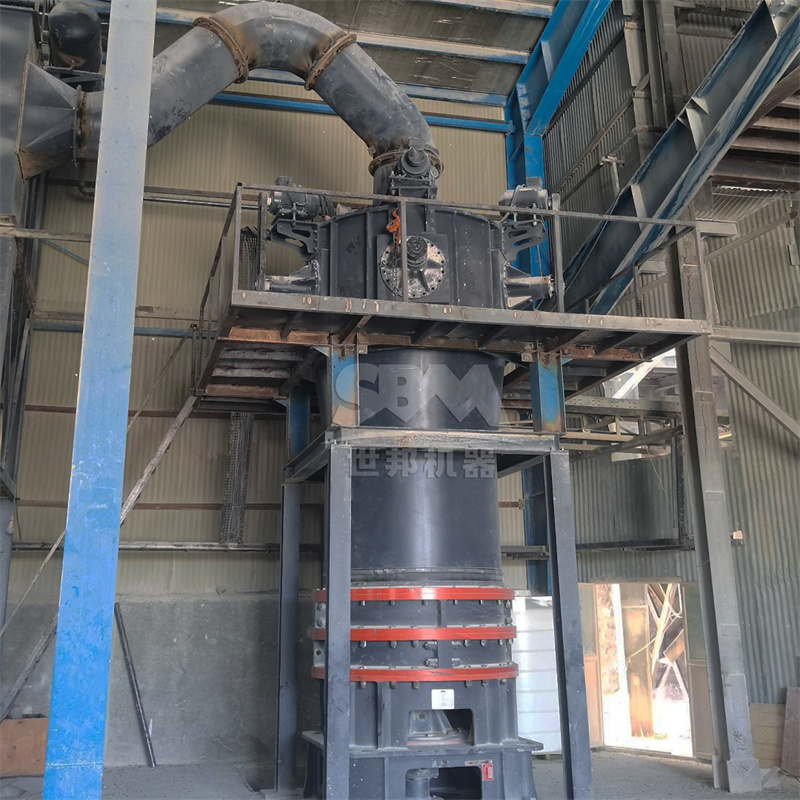
The SCM mill operates on a unique principle where three layers of grinding rings rotate, forcing material against the rollers via centrifugal force. This layer-by-layer grinding action is perfect for attapulgite, as it efficiently separates the needle-like fibers without excessive energy waste. Its technical advantages are directly relevant to attapulgite:
- High Efficiency & Energy Saving: The SCM mill’s capacity is twice that of a jet mill, yet it consumes 30% less energy. This is a game-changer for producers looking to lower their carbon footprint and energy bills.
- High-Precision Classification: The vertical turbine classifier ensures a sharp cut point, guaranteeing that no coarse powder contaminates the final product. This consistency in particle size is crucial for maintaining the predictable rheology of drilling mud.
- Durable Design: The rollers and rings are made from special wear-resistant materials, extending service life several times over when processing abrasive materials like attapulgite. The shaftless screw grinding chamber also ensures stable and reliable operation.
- Eco-Friendly Operation: The integrated pulse dust collection system exceeds international environmental standards, and the soundproof room design keeps noise levels low, ensuring a compliant and safe working environment.
For a typical drilling mud plant requiring fine attapulgite, the SCM1000 or SCM1250 models are ideal, offering capacities from 1.0 to 14 tons per hour with a main power of 132-185kW.
2. Medium-Fine Grinding: The MTW Series European Trapezium Mill
When the target fineness is within the range of 30 to 325 mesh (600-45μm), the MTW Series European Trapezium Mill is the optimal choice. This mill represents the pinnacle of traditional pendulum mill technology, incorporating advanced features that enhance efficiency and durability. It is an excellent solution for producing bulk attapulgite powder that meets API specs for standard drilling fluids.
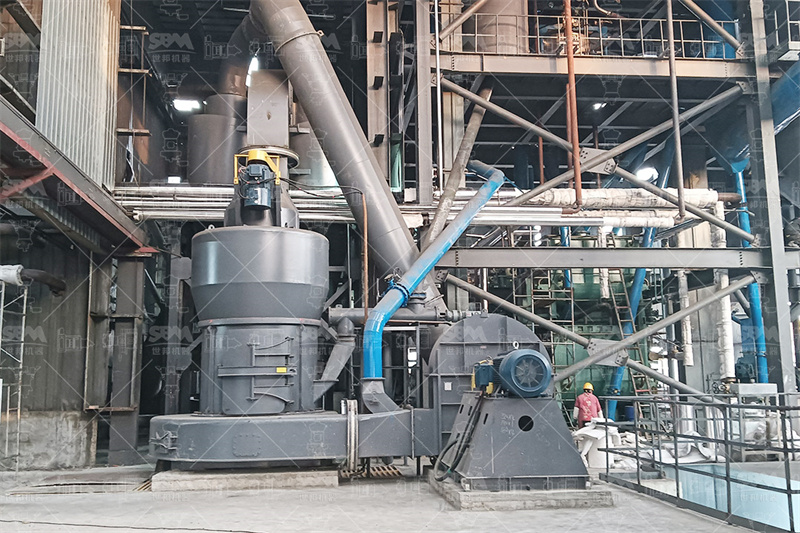
The MTW mill uses an integral bevel gear drive with a transmission efficiency of up to 98%, reducing energy loss and saving valuable installation space. Its optimized arc air duct and high-strength guard plates minimize wear and protect the working surface. Key benefits for attapulgite processing include:
- Anti-wear Shovel Design: The combined shovel blades and curved design extend the life of grinding rollers, significantly reducing maintenance costs associated with abrasive minerals.
- Stable Performance: The machine is built to run continuously under heavy loads, ensuring a consistent supply of material to the drilling operation.
- Flexible Configuration: With models like the MTW138Z (6-17 t/h) and MTW175G (9.5-25 t/h), producers can select the perfect size for their capacity needs. The MRN158 and MRN198 models offer additional options with similar capabilities, ensuring a solution for every plant size.
3. Large-Scale Production: The LM Series Vertical Roller Mill
For very large mining operations, the LM Series Vertical Roller Mill offers unmatched economies of scale. This integrated system combines drying, grinding, and classification in one unit, which is particularly useful if the raw attapulgite clay has a high moisture content. With capacities ranging from 3 to 250 tons per hour, the LM mill can handle the most demanding production schedules. Its key advantage is the bed-grinding principle, where material is crushed between a rotating table and stationary rollers. This method is 30-40% more energy-efficient than ball mill systems. However, for many mid-sized producers, the capital investment in a vertical roller mill is significantly higher than for an SCM or MTW mill, making the latter more accessible.
4. Primary Crushing: The Hammer Mill
Before fine grinding can occur, the run-of-mine attapulgite ore (typically 0-40mm) must be reduced to a manageable feed size (≤20mm). The Hammer Mill is the perfect solution for this primary and secondary crushing stage. Its high-speed rotating hammers crush the material against wear-resistant liners until it passes through a bottom screen. This ensures a consistent feed size for the downstream mills, optimizing their performance. Our hammer mills, such as the PC4015-132 with a capacity of 40-70 t/h, provide a compact and cost-effective pre-grinding solution.
Selection Guide: How to Choose the Right Equipment
Choosing the correct mill for your attapulgite processing plant is a decision that hinges on several critical factors:
- Product Fineness (API Spec): Determine the target particle size for your drilling mud. If you require premium-grade attapulgite with D97 < 10μm to enhance gel strength in challenging wells, the SCM Series Ultrafine Mill is the definitive choice. If you are producing standard API-grade material where a D97 of 45-75μm is acceptable, the MTW Series European Trapezium Mill is more cost-effective.
- Desired Capacity (tons/hour): Calculate your required annual tonnage. For small to medium output (0.5-25 t/h), SCM mills are perfectly suited. For medium to large output (3-45 t/h), MTW mills or MRN pendulum mills are excellent. For very high capacity (up to 250 t/h), LM vertical mills are the only viable option.
- Feed Size: Ensure your upstream crushing equipment (e.g., hammer mill) delivers a feed size that the ultra-fine or trapezium mill can accept. The SCM requires ≤20mm, while the MTW needs ≤50mm.
- Energy Consumption & Operating Cost: Evaluate the total cost of ownership. While LM vertical mills have the lowest energy consumption per ton, their initial cost is high. SCM mills and MTW mills offer a better balance of initial investment, operational efficiency, and maintenance simplicity for many producers.
Conclusion: Maximizing Efficiency with Advanced Technology
Investing in high-efficiency processing equipment is not just about increasing tonnage; it is about product quality, consistency, and overall profitability. The fibrous nature of attapulgite demands machinery that can handle its unique morphology and abrasive characteristics. Our SCM and MTW series mills are built precisely for these challenges, incorporating wear-resistant materials, intelligent control systems, and precise classification to deliver a superior product for the oilfield industry.
We highly recommend the SCM Series Ultrafine Mill for producers targeting the high-value, fine-particle market, and the MTW Series European Trapezium Mill for those prioritizing high throughput and low operational costs in standard-grade production. Both machines ensure your drilling mud will meet the most demanding technical specifications, providing stable rheology and excellent filtration control in the most challenging downhole conditions.
By partnering with our technology, you are not just buying a machine—you are investing in a complete solution designed to maximize your operational efficiency and competitive edge in the global drilling fluids market.