
Introduction to Barite Powder Processing
Barite, a barium compound (BaSO₄), is a critical industrial mineral widely used in oil and gas drilling, paint manufacturing, medical applications, and radiation shielding. The production of high-quality barite powder requires advanced milling equipment capable of achieving precise particle size distributions, high throughput, and energy efficiency. Modern industrial processing demands equipment that not only meets strict fineness specifications but also ensures operational reliability and environmental compliance. This article explores the specialized machinery required for efficient barite powder production, focusing on the technological innovations that drive the industry forward.
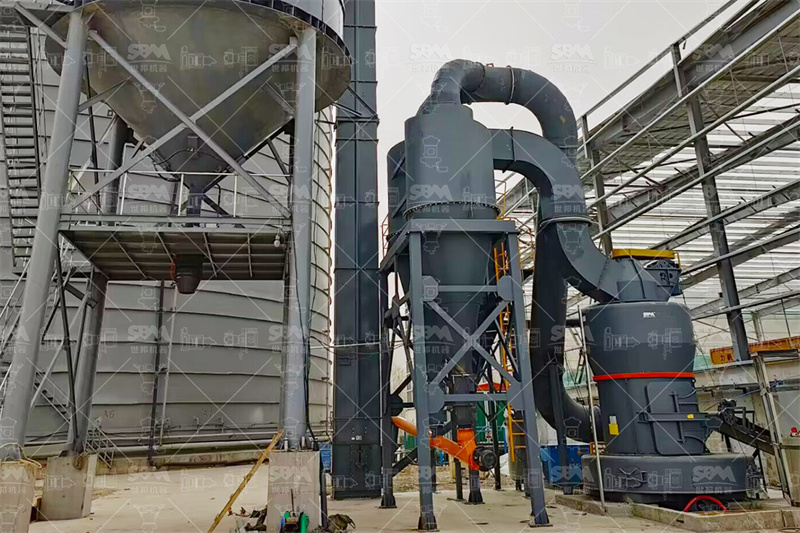
Key Challenges in Barite Grinding
Barite, with a Mohs hardness of 3-3.5 and specific gravity of 4.2-4.5, presents unique challenges in powder processing. The material’s brittleness requires careful control to avoid over-grinding while maintaining consistent particle size. High-purity barite for medical applications often requires fineness up to 2500 mesh (5μm), while drilling-grade barite typically requires 200-325 mesh (75-45μm). Traditional ball mills often struggle with energy efficiency and precise classification, while jet mills, though precise, consume excessive energy. The industry requires solutions that balance throughput, energy consumption, and product quality.
Advanced Grinding Technologies for Barite
Modern barite processing plants increasingly adopt vertical roller mills and ultrafine grinding technologies. These systems offer significant advantages over conventional equipment. The integration of intelligent control systems allows for real-time adjustment of grinding parameters, ensuring consistent product quality even with variations in feed material. High-precision classifiers enable sharp particle size cuts, eliminating the need for secondary classification stages. Additionally, advanced materials science has led to wear-resistant components that significantly extend equipment service life, reducing maintenance downtime and operational costs.
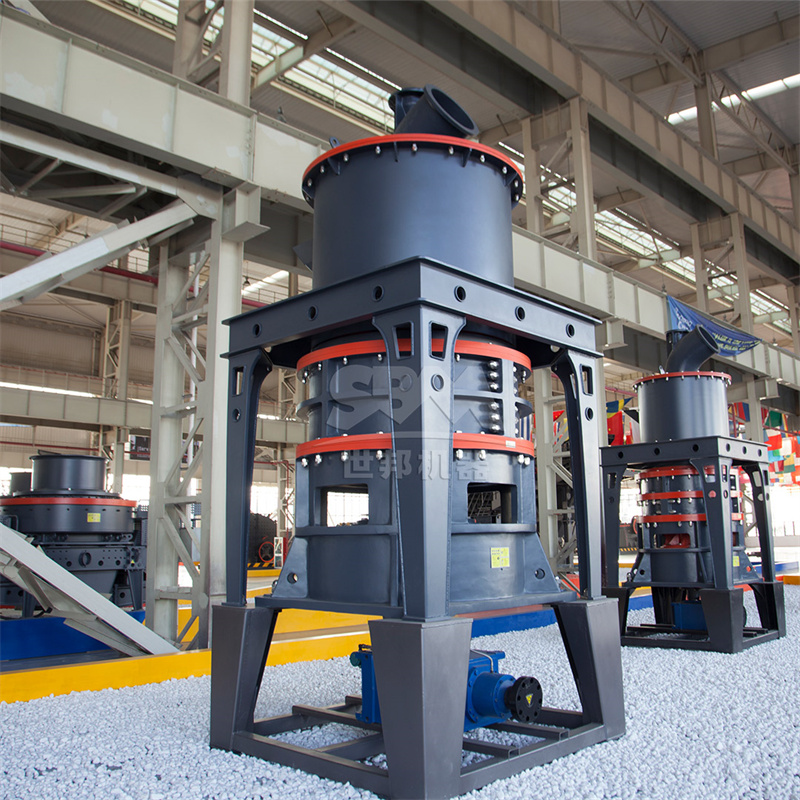
SCM Series Ultrafine Mill: Precision Engineering for Fine Barite Powders
For applications requiring ultra-fine barite powders between 325 and 2500 mesh (45-5μm), the SCM Series Ultrafine Mill represents a breakthrough in grinding technology. This equipment achieves capacity up to two times that of traditional jet mills while consuming 30% less energy. The intelligent control system features automatic finished product granularity feedback, ensuring consistent quality. The vertical turbine classifier provides precise particle size cutting without coarse powder mixing, delivering uniform finished products essential for high-value applications such as medical barium sulfate and high-performance coatings.
The SCM Series incorporates special material rollers and rings that extend service life several times over conventional designs. The shaftless screw grinding chamber ensures stable operation even during extended production runs. Models range from the SCM800 (0.5-4.5 t/h, 75kW) to the SCM1680 (5.0-25 t/h, 315kW), providing flexibility for different production scales. For operations requiring consistent ultra-fine barite powder with minimal contamination, the SCM Series offers an unmatched combination of efficiency, precision, and durability.
MTW Series European Trapezium Mill: Versatile Solution for Standard Barite Grades
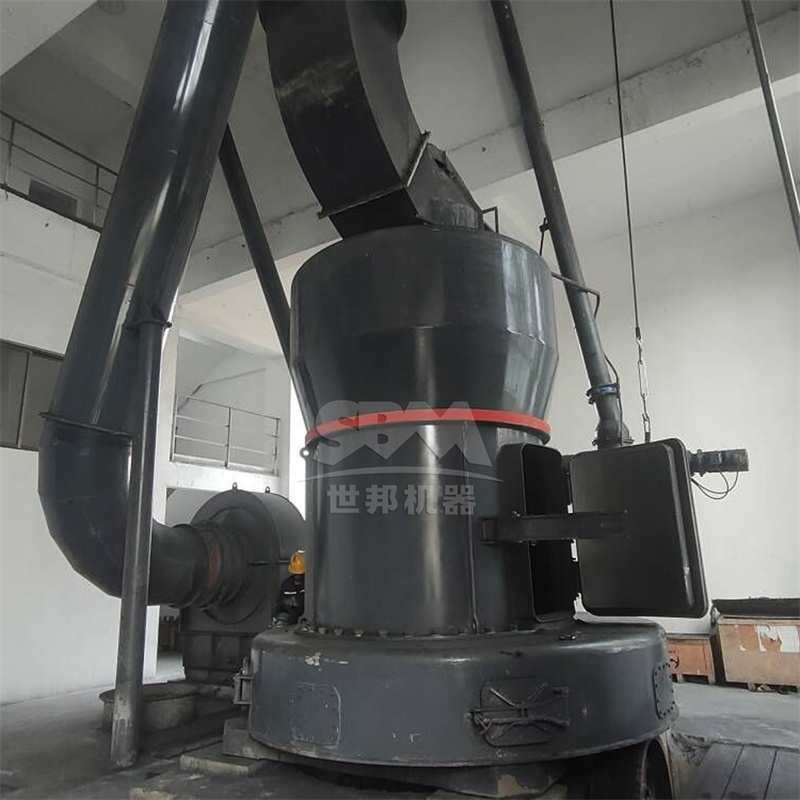
For standard barite grinding requirements (30-325 mesh / 600-45μm), the MTW Series European Trapezium Mill delivers exceptional performance with capacities from 3 to 45 tons per hour. This equipment features an innovative anti-wear shovel design with combined shovel blades that reduce maintenance costs, while the curved design extends grinding roller life significantly. The optimized arc air duct reduces airflow energy loss, improving transmission efficiency and reducing operational costs.
The integral bevel gear drive achieves transmission efficiency up to 98%, saving valuable floor space and reducing installation costs. The wear-resistant volute structure with non-resistance flow design improves air selection efficiency while reducing maintenance costs by 30%. With multiple models including the MTW110 (3-9 t/h, 55kW) through the MTW215G (15-45 t/h, 280kW), the MTW Series can handle feed sizes up to 50mm, making it ideal for processing larger barite chunks without requiring extensive pre-crushing.
LM Series Vertical Roller Mill: Industrial-Scale Barite Processing
For large-scale industrial barite processing operations, the LM Series Vertical Roller Mill offers capacities from 3 to 250 tons per hour. The integrated design combines crushing, grinding, and selection in a single system, reducing floor space by 50% and allowing outdoor installation that reduces infrastructure costs by 40%. The non-contact design between rollers and grinding table increases wear part life by three times, while energy consumption is 30-40% lower than ball mill systems. The expert-level auto-control system supports remote and local switching, with real-time parameter monitoring that reduces manual intervention and ensures consistent product quality.
The LM Series includes specialized configurations for different applications. The LM130K through LM280K models handle barite with feed sizes up to 50mm, producing fineness from 170-40μm. For ultra-fine barite requirements, the LM130X-GX through LM220X-GX vertical fine-powder mill series achieves fineness from 325-600 mesh (45-23μm) with capacities of 4-30 t/h. The fully sealed negative pressure operation ensures dust emissions below 20mg/m³ and operating noise below 85dB, meeting the most stringent environmental regulations.
Environmental and Operational Benefits
Modern barite grinding equipment incorporates advanced environmental protection features. Pulse dust collection systems achieve efficiency exceeding international standards, while soundproof room designs maintain noise levels below 85dB. The intelligent control systems optimize energy consumption based on real-time load conditions, further reducing operational costs. The combination of high efficiency, precise classification, and durable construction ensures that barite processing plants can achieve maximum productivity while minimizing environmental impact.
Conclusion
The production of high-quality barite powder requires sophisticated equipment that can deliver precise particle size distributions, high throughput, and energy efficiency. Whether processing ultra-fine powders for medical applications or standard grades for drilling fluids, modern milling technology from the SCM Ultrafine Mill series to the MTW Trapezium Mill series and LM Vertical Roller Mill series provides solutions tailored to specific requirements. These systems incorporate intelligent controls, durable components, and environmental protection features that ensure consistent product quality, reduced operating costs, and regulatory compliance.
For industrial processors seeking reliable, high-performance barite grinding solutions, our comprehensive range of equipment offers options for every production scale and fineness requirement. Contact our engineering team to discuss your specific application and discover how our advanced grinding technology can optimize your barite powder production.