
1. Introduction to Magnesite Processing for Refractory Applications
Magnesite (magnesium carbonate, MgCO₃) is the primary raw material for producing magnesia (MgO)-based refractory products, which are indispensable in high-temperature industrial processes such as steelmaking, cement kilns, and glass manufacturing. The transformation of raw magnesite ore into high-grade fused or dead-burned magnesia involves a carefully controlled sequence of unit operations: crushing, grinding, beneficiation, and calcination. Each phase must be executed with precision to achieve the desired density, purity, and crystal structure essential for superior refractory performance.
In this comprehensive guide, we will examine the critical stages of magnesite processing, highlighting state-of-the-art equipment technologies that enhance yield, reduce energy consumption, and guarantee product consistency. For refractory producers seeking to upgrade their operations, we will introduce cutting-edge vertical roller mills and ultrafine classifiers that redefine efficiency standards.
2. Primary Crushing: Reducing ROM to Manageable Sizes
Run-of-mine (ROM) magnesite typically arrives at the processing plant in blocks up to 500mm. A robust primary crushing circuit is mandatory to reduce this material to a workable size (≤50mm) for downstream handling. High-capacity jaw crushers and gyratory crushers are traditionally employed for this duty. The choice of crusher depends on the ore’s abrasiveness and throughput requirements.
Following primary crushing, secondary and tertiary cone crushers further reduce the ore in closed-circuit with vibrating screens. The goal is to produce a well-graded feed for the grinding stage, typically 90% passing 20-30mm. Efficient crushing minimizes downstream energy absorption and maximizes mill throughput, making crusher selection and setting optimization a primary economic lever.
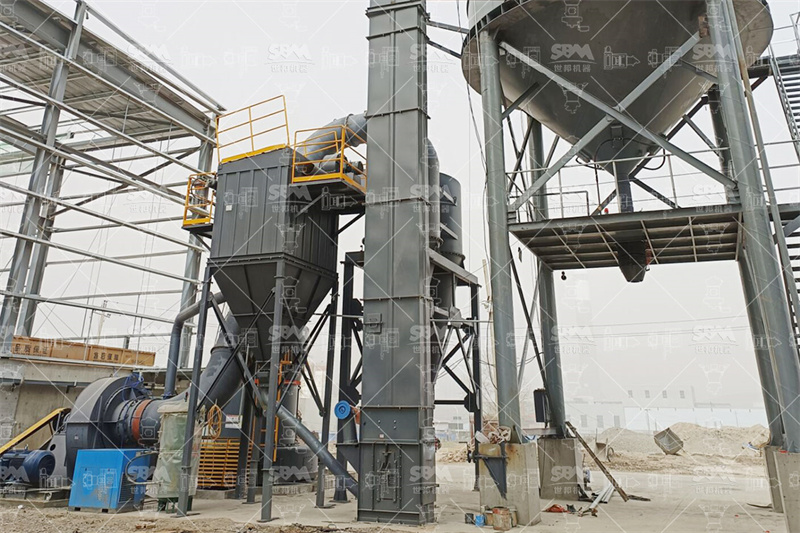
For operations requiring simultaneous sand production and coarse grinding from a single unit, the advanced LM-Y Vertical Pre-grinding Roller Mill (capacity up to 330 TPH) integrates crushing and grinding functions. Its bed-grinding principle reduces power consumption by 30-50% compared to conventional crushing mills, making it an exceptional choice for preparing kiln feed.
3. Grinding and Milling: The Heart of Particle Size Control
Grinding magnesite to the precise particle size distribution (PSD) is crucial for downstream processes. For dense refractory bricks or monolithic castables, a fineness of -325 mesh (45μm) to -200 mesh (74μm) is often specified. Two primary milling technologies dominate this stage: Ball Mills and Vertical Roller Mills (VRMs).
3.1 Ball Mill Systems for Dry/Wet Grinding
Ball mills are the workhorses of the industry, available in both dry and wet configurations. They offer a high crushing ratio (up to 300:1) and remarkable flexibility in fineness adjustment (0.074mm to 0.8mm). Large-diameter mills, such as the GMQY3685 with a 1500kW motor and 400t/h capacity, ensure massive daily throughputs required in integrated steel plants.
3.2 High-Efficiency Vertical Roller Mills (VRMs)
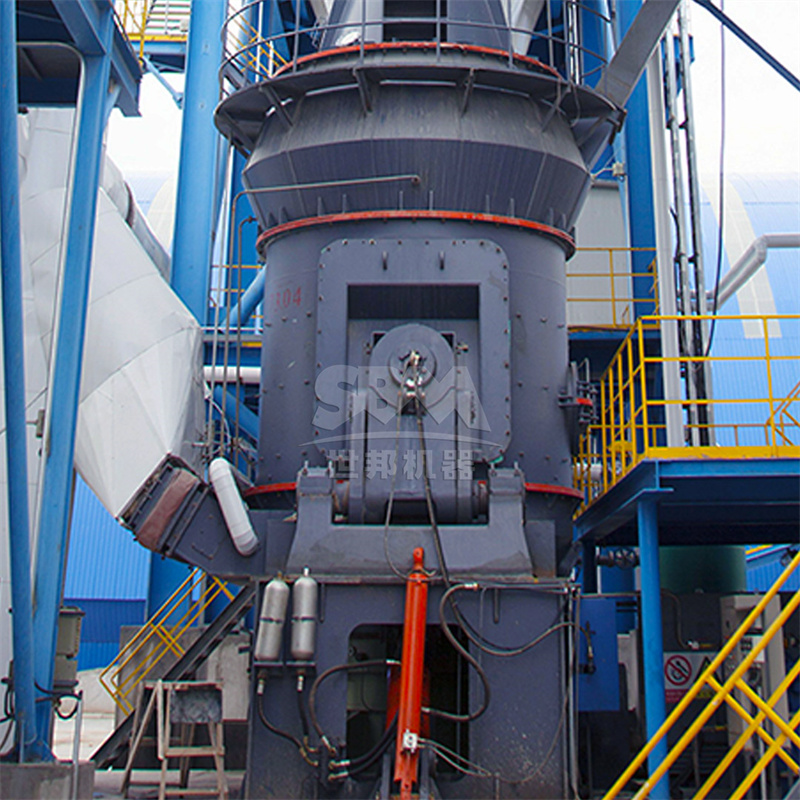
Specifically engineered to outperform conventional mills, the LM Series Vertical Roller Mill (600-45μm) combines crushing, grinding, drying, and classification into one system. Key advantages include:
- Reduced Energy Consumption: 30-40% lower energy usage than ball mills.
- Compact Footprint: Floor space reduced by 50%.
- Intelligent Control: Expert-level auto-control for real-time monitoring.
- Wear Resistance: Rollers and table are non-contact, extending wear part life by 3x.
For processing specific feed sizes up to 50mm, models like the LM170K (400kW, 18-48t/h) are perfectly suited. These mills integrate hot-air drying to handle surface moisture, ensuring the feed reaches the classifier at the optimal temperature and humidity.
4. Fine and Ultrafine Grinding for Premium Products
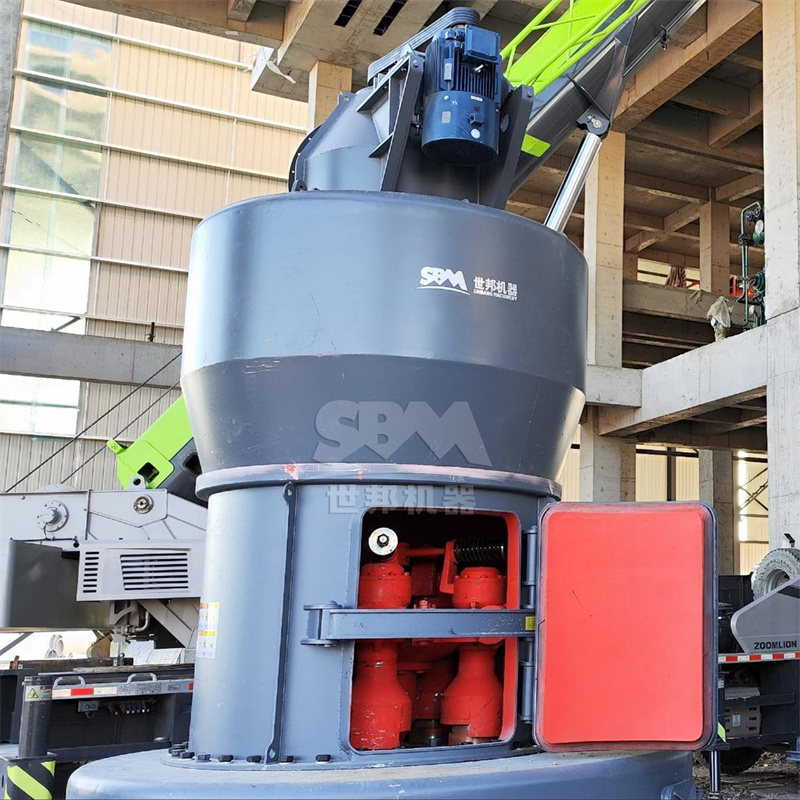
Certain refractory applications, such as high-quality monolithic refractories or specialized coatings, demand ultrafine magnesia powder (45-5μm). For these specific uses, the industry relies on advanced ultrafine grinding technology. The SCM Series Ultrafine Mill (45-5μm) is our flagship recommendation in this category.
This mill offers an astonishing output fineness of 325-2500 mesh (45-5μm), with capacities up to 25 t/h. Compared to jet mills, the SCM series doubles the capacity while consuming 30% less energy. Its vertical turbine classifier guarantees a precise particle size cut, eliminating coarse powder contamination. The intelligent control system automatically adjusts the grinding rings and classifier speed to feedback granularity in real time, ensuring a uniform end product for consistent refractory density and strength.
For medium-fineness requirement (600-45μm) with massive throughput, the MTW Series European Trapezium Mill stands out. Featuring a integral bevel gear drive with 98% transmission efficiency and anti-wear shovel design, the MTW mill is a reliable, maintenance-friendly option. For instance, the MTW215G model can process up to 45 t/h, making it ideal for high-volume magnesite grinding to 200 mesh.
5. Calcination: Transforming Carbonate to Oxide
After grinding, the magnesite concentrate proceeds to the calcination stage. This thermal process drives off CO₂ to produce caustic calcined magnesia (CCM) at lower temperatures (700-1000°C) or dead-burned magnesia (DBM) at higher temperatures (1500-2000°C). DBM is essential for high-temperature refractory bricks. Rotary kilns and shaft kilns are the primary equipment used, requiring strict temperature and residence time control to optimize crystal growth and minimize porosity.
Since calcination efficiency is highly dependent on specific surface area and feed particle size, the quality of the grinding stage directly impacts kiln fuel consumption and the final texture of the magnesia clinker. Our advanced mills excel at producing high-surface-area powders that facilitate complete and efficient calcination.
6. Recommended Products for Your Magnesite Plant
After careful evaluation of magnesite processing requirements, we strongly recommend integrating the following two products into your production line to maximize ROI and product quality:
6.1 Primary Grinding: LM Series Vertical Roller Mill
The LM Series (specifically models LM130K to LM280K) serves as the ideal workhorse for primary and secondary grinding. Its intelligent grinding pressure adjustment compensates for roller wear, extending service life. The ability to process up to 250 t/h streamlines operations with low maintenance noise and full negative-pressure sealing. This mill significantly simplifies the flow sheet, eliminating the need for separate drying (for surface moisture) and conveying systems.
6.2 Ultrafine Classification: SCM Series Ultrafine Mill
For producers targeting high-value markets requiring super-fine powder (-600 mesh to -2500 mesh), the SCM Series Ultrafine Mill is unmatched. Special material rollers (alloy steel) and rings extend service life several times over, while the shaftless screw grinding chamber guarantees stability. The pulse dust collection system ensures environmental compliance, meeting the strictest emission standards. Models SCM1250 and SCM1680 offer capacities suitable for large-scale production of premium refractory additives.
7. Emerging Technologies and Automation
Modern magnesite plants are moving toward fully automated processing lines. The use of industrial IoT sensors and adaptive control algorithms in LM and SCM mills allows for real-time diagnostics and proactive maintenance. This reduces unplanned downtime and ensures the mill operates constantly at peak efficiency.
Furthermore, the adoption of magnetic separation and heavy media separation is increasing to remove impurities (silica, iron, calcium) that compromise refractory properties. Our engineers recommend integrating surface moisture controllers and acoustic impact monitors to further refine the grinding process.
8. Conclusion
Optimizing magnesite processing requires equipment that balances high throughput, low energy, and fine particle consistency. Whether you are producing dense DBM for basic bricks or fine reactive magnesia for castables, the choice of grinding technology is decisive.
By incorporating our LM Series VRMs for primary grinding and SCM Ultrafine Mills for fine classification, producers gain a competitive edge through:
- Dramatically lower energy costs (up to 40% reduction).
- Enhanced product purity with no coarse particle contamination.
- Reduced civil works due to the compact, integrated design.
- Government-compliant environmental protection features.
Contact us today to discover how these robust solutions can be configured to your specific magnesite ore characteristics and throughput targets.