
Introduction to Phosphate Rock Powder Production
Phosphate rock is a vital mineral resource used primarily in the production of fertilizers, animal feed supplements, and various industrial chemicals. The process of converting raw phosphate rock into fine powder requires advanced grinding and processing equipment to achieve the desired particle size, purity, and production efficiency. High-efficiency phosphate rock powder production equipment plays a critical role in reducing energy consumption, improving throughput, and ensuring consistent product quality. This article explores the key machines used in phosphate rock grinding and processing, highlighting their technical advantages and working principles.
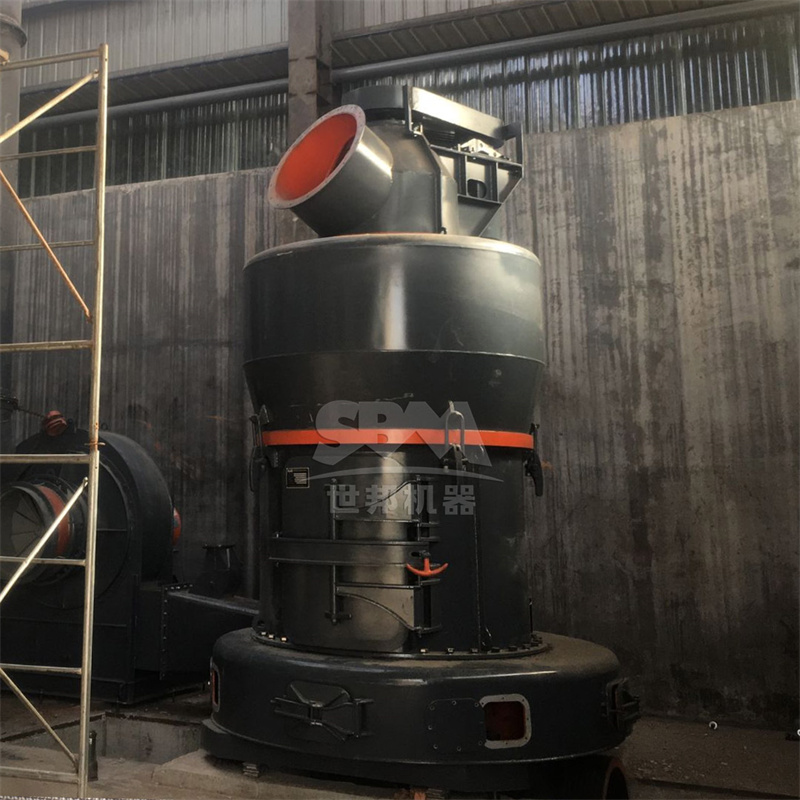
Importance of Grinding Technology in Phosphate Processing
The grinding stage is the heart of any phosphate rock processing plant. The fineness of the final powder directly affects the reactivity and solubility of phosphate, which is crucial for agricultural applications. Traditional grinding methods often suffer from high energy consumption, excessive wear, and inconsistent particle size distribution. Modern high-efficiency equipment addresses these challenges through innovative design, intelligent control systems, and durable materials. Below, we examine the most effective machines for phosphate rock grinding, including roller mills, ultrafine mills, and ball mills.
SCM Series Ultrafine Mill: Precision Grinding for Fine Phosphate Powder
For applications requiring ultra-fine phosphate rock powder in the range of 325 to 2500 mesh (45-5μm), the SCM Series Ultrafine Mill is an ideal choice. This mill is designed with a three-layer grinding ring structure that rotates at high speed, dispersing material into the grinding path by centrifugal force. Rollers apply pressure to crush and grind the material layer by layer, while a vertical turbine classifier ensures precise particle size cutting without coarse powder mixing.
Key technical parameters include a feed size of ≤20mm and a capacity ranging from 0.5 to 25 tons per hour, depending on the model. The SCM800 model, for example, offers a capacity of 0.5-4.5 t/h with a main power of 75kW, while the larger SCM1680 delivers up to 25 t/h with 315kW main power. The mill’s intelligent control system automatically adjusts the finished product granularity feedback, ensuring consistent quality. Additionally, the use of special material rollers and rings extends service life several times over, and the shaftless screw grinding chamber ensures stable operation. Eco-friendly features include pulse dust collection efficiency exceeding international standards and soundproof room design to keep noise levels low.
We highly recommend the SCM1250 Ultrafine Mill for medium-to-large-scale phosphate rock powder production. With a capacity of 2.5-14 t/h and a fineness range of 325-2500 mesh, this model provides an excellent balance of throughput and precision. Its energy-saving design offers 2x the capacity of jet mills while consuming 30% less energy, making it a cost-effective solution for your grinding needs.
MTW Series European Trapezium Mill: Versatile Grinding for Coarse to Medium Phosphate Powder
When the target fineness is between 30 and 325 mesh (600-45μm), the MTW Series European Trapezium Mill is a robust and efficient option. This mill features an anti-wear shovel design with combined shovel blades that reduce maintenance costs, and a curved design that extends grinding roller life. The optimized arc air duct reduces airflow energy loss and improves transmission efficiency, while high-strength guard plates protect the air duct working surface. An integral bevel gear drive achieves transmission efficiency up to 98%, saving space and reducing installation costs.
The MTW series can handle feed sizes up to 50mm and offers capacities from 3 to 45 tons per hour. Models like the MTW175G deliver 9.5-25 t/h with a main power of 160kW, while the larger MTW215G reaches 15-45 t/h with 280kW power. The mill’s working principle involves the main motor driving grinding rollers to revolve around a central axis while self-rotating to generate centrifugal force. Shovels throw materials between the ring and rollers to form a material layer, achieving efficient crushing through extrusion. The classification system precisely controls the finished product size, ensuring uniform particle distribution.
For operations requiring high-capacity phosphate rock grinding with moderate fineness, the MTW215G European Trapezium Mill is an excellent choice. Its capacity of 15-45 t/h and fineness down to 0.038mm make it suitable for large-scale fertilizer production. Patented technologies, such as internal suction oil lubrication and internationally advanced pulse dust removal, ensure reliable and environmentally friendly operation.
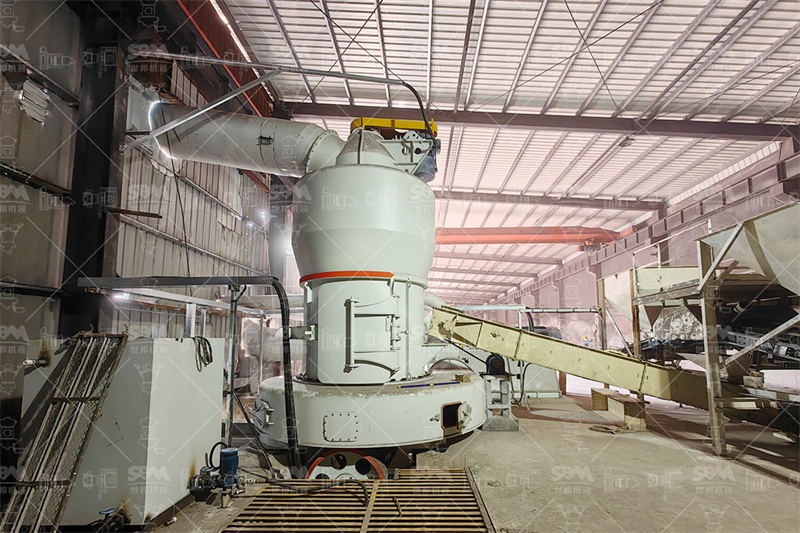
LM Series Vertical Roller Mill: Integrated Solution for High-Volume Production
The LM Series Vertical Roller Mill is designed for large-scale phosphate rock powder production, offering capacities from 3 to 250 tons per hour. This mill integrates crushing, grinding, and selection in a single system, reducing floor space by 50% and infrastructure costs by 40%. The non-contact design between rollers and table increases wear part life by 3x, and energy consumption is 30-40% lower than ball mill systems. Intelligent control allows expert-level automation with remote or local switching, real-time parameter monitoring, and reduced manual intervention. The fully sealed negative pressure operation ensures dust emissions below 30mg/m³ and noise levels under 85dB.
The LM series is available in multiple configurations, including vertical mineral mill models (LM130K to LM280K) with capacities up to 170 t/h, vertical coal mill models, slag mill models, fine-powder mills, and pre-grinding mills. For phosphate rock, the LM190K model, with a table diameter of 1900mm, capacity of 23-68 t/h, and fineness of 170-40μm, is a popular choice. The mill’s working principle involves the main motor driving the grinding table via a reducer. Materials enter through the central feed port and spread evenly by centrifugal force. Grinding rollers apply pressure to crush the material layer; qualified fines are carried by hot air to the classifier, while coarse powder returns for re-grinding.
For high-capacity phosphate rock grinding with integrated processing, the LM220K Vertical Roller Mill is highly recommended. With a capacity of 36-105 t/h and feed size up to 50mm, this model uses patented modular grinding roller assembly quick-change systems and dynamic classifier multi-stage adjustment technology to maximize uptime and efficiency.
MTM Series Medium-speed Trapezium Mill: Reliable Grinding for Medium-Scale Operations
The MTM Series Medium-speed Trapezium Mill is designed for medium-scale phosphate rock powder production with fineness ranging from 45 to 325 mesh. It features intelligent pressure regulation through a spring pressure system that automatically compensates for roller wear, extending roller and ring life by 30%. The innovative roller assembly uses horizontal pull-rod connection to protect main shaft bearings, and radial force design handles large materials effectively. Damping and noise reduction technologies include dual reduction via damping springs and sealing strips, along with equipment resonance elimination technology.
Available models include the MTM100 (3-8 t/h, 37kW main power), MTM130 (6-11 t/h, 75kW), and MTM160 (9-22 t/h, 132kW). The mill’s working principle involves the main motor driving the central axis via a gearbox. The arm assembly suspends rollers to form a swing pivot; shovels feed material into the gap between rollers and ring, and centrifugal force enables crushing. Airflow separates fines via the classifier, with qualified powder discharged and coarse particles returned for further grinding.
Ball Mill: Proven Technology for Coarse to Medium Grinding
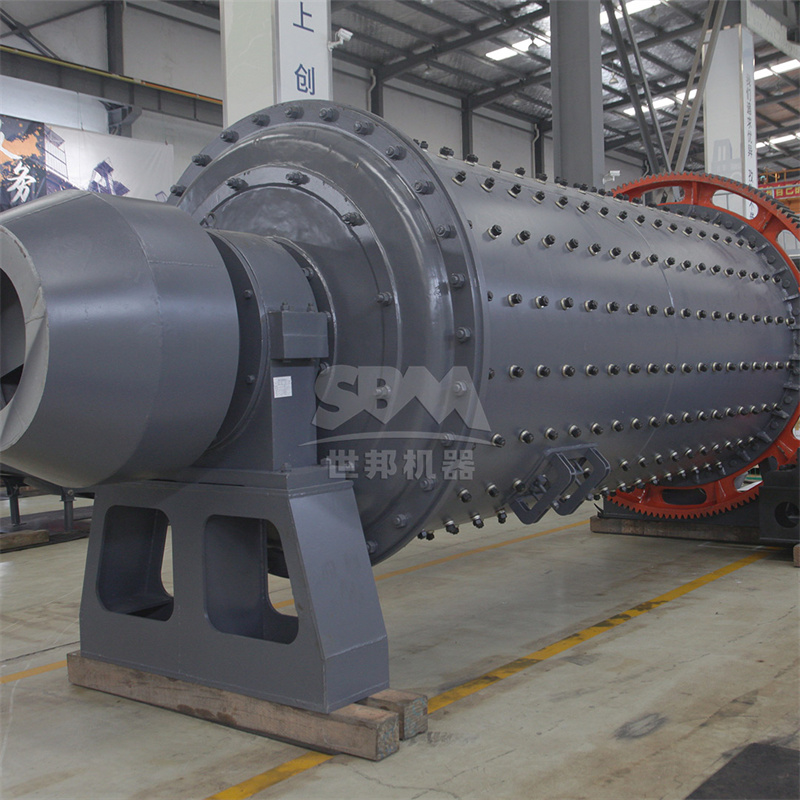
For applications requiring output fineness of 0.074-0.8mm, the Ball Mill remains a reliable and widely used solution. It offers a high crushing ratio of up to 300:1, with fineness continuously adjustable. The ball mill can operate in dry or wet modes, covering both powder preparation and mineral processing. Large capacity models, such as the GMQY3685, achieve effective volume up to 170m³ and capacities up to 450 t/h. The mill’s design uses gear transmission to rotate the shell; inner liners and steel balls are lifted by centrifugal force and dropped, crushing material via impact and attrition.
Ball mills are suitable for cement, metallurgy, and chemical industries, but for phosphate rock, they are often used in secondary grinding stages or when very fine powder is not required. However, compared to roller mills, ball mills typically consume more energy and have higher maintenance requirements.
Other Essential Equipment: Hammer Mills and Ultrafine Vertical Roller Mills
In addition to the main grinding mills, several auxiliary machines are crucial for phosphate rock processing. Hammer mills, such as the PC4015-132 model with a capacity of 40-70 t/h and output size of 0-3mm, are used for primary crushing of feed materials up to 40mm. They feature high capacity, stable operation, compact structure, and wear-resistant high manganese steel liners. For ultra-fine grinding, the LUM Ultrafine Vertical Roller Mill offers fineness of 325-2500 mesh with capacities up to 15 t/h. Its unique roller and liner curves improve grinding efficiency, while multi-rotor classification technology ensures no coarse particles remain. The PLC automation system guarantees stable running, and negative pressure operation prevents dust leakage.
Patented Technologies in Modern Phosphate Grinding Equipment
Modern phosphate rock grinding equipment incorporates several patented technologies to enhance performance. The MRN Pendulum Mill, for example, features thin oil lubrication for maintenance-free operation, efficient square-pipe collectors that reduce resistance, and pulse dust collectors for automatic eco-friendly operation. The LM-Y Vertical Pre-grinding Roller Mill integrates sand making and grinding, uses a bed grinding principle to reduce power consumption by 30-50%, and includes a hydraulic system for quick roller changes. These innovations help operators achieve higher throughput, lower operating costs, and compliance with environmental regulations.
Conclusion: Choosing the Right Equipment for Your Phosphate Rock Processing Needs
Selecting the appropriate grinding equipment is essential for maximizing efficiency and profitability in phosphate rock powder production. For ultra-fine powders (325-2500 mesh), the SCM Series Ultrafine Mill offers unmatched precision and energy savings. For coarse to medium powders (30-325 mesh), the MTW European Trapezium Mill and LM Vertical Roller Mill provide high capacity and durability. For medium-scale operations, the MTM Medium-speed Mill is a cost-effective choice, while ball mills remain suitable for specific coarse-grinding applications. By investing in high-efficiency equipment with advanced features such as intelligent control, wear-resistant materials, and eco-friendly design, phosphate processors can achieve superior product quality and operational excellence. We invite you to contact our team for further guidance on selecting the best machines for your specific requirements.