
Introduction: The Critical Role of Molybdenum Ore Additives
In modern paint manufacturing, molybdenum-based additives are indispensable functional fillers that significantly enhance corrosion resistance, anti-settling properties, and weatherability. The value chain of these additives demands precise particle size distribution—typically ranging from ultra-fine 5-micron grades for premium coatings to coarser 45-micron fractions for industrial primers. Unlike commodity mineral processing, paint-grade molybdenum requires stringent control over surface characteristics and contamination levels. Therefore, selecting the right milling equipment is not merely a production decision; it is a core competitive strategy directly influencing pigment dispersion, film integrity, and long-term color stability. The intricate relationship between grinding energy efficiency and particle morphology dictates that manufacturers must navigate a complex landscape of mechanical, aerodynamic, and classification technologies.
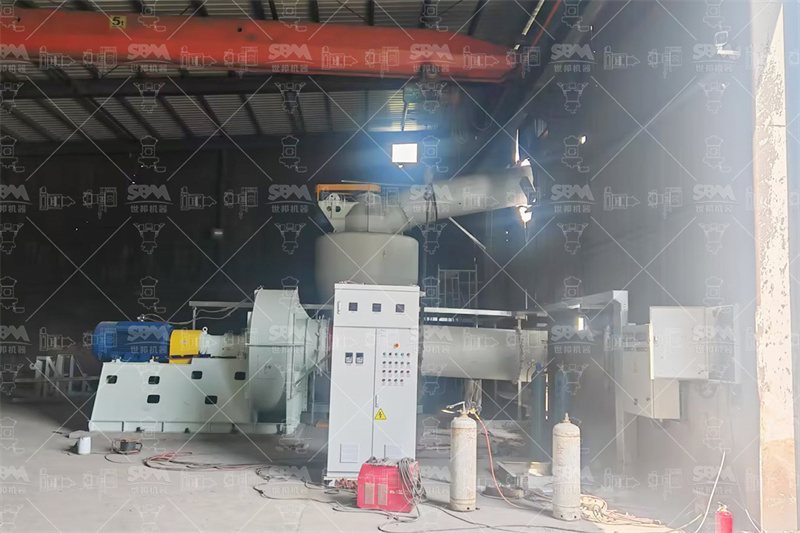
This selection guide synthesizes engineering principles with comparative analyses of leading mill architectures. We will dissect how different grinding forces—pressure, impact, and attrition—affect the brittle fracture behavior of molybdenum sulfide (MoS2) and its oxide derivatives. A systematic equipment selection helps avoid common pitfalls such as over-grinding, thermal degradation, and excessive wear-metal contamination. This article empowers procurement teams and process engineers to align equipment specifications with rheological requirements, production throughput, and lifecycle cost targets.
Defining the Process Landscape: From ROM Ore to Finished Additive
The upstream beneficiation process typically yields a flotation concentrate with a particle size of 70% passing 74 microns (200 mesh). For paint applications, this concentrate must undergo advanced fine grinding and classification. The target specifications are stratified based on application segments: Anti-corrosion primers: D90 at 45 microns (325 mesh) for economic hiding power. Decorative topcoats: D97 at 10–20 microns for superior gloss. Anti-fouling and specialty coatings: D97 at 5–10 microns for high-performance barrier films. This particle size spectrum spans the working ranges of several grinding system families: traditional ball mills (45-150 μm), medium-speed trapezium mills (45-600 μm), and high-precision ultrafine vertical roller mills (5-45 μm). A robust plant design maintains flexibility by staging secondary milling circuits.
Furthermore, consideration of bond work index (Wi) and abrasion index (Ai) of molybdenum shale is crucial. Molybdenum ores often contain hard gangue like silica, which elevates mill body wear risk. Equipment selection must therefore evaluate wear-resistant materials, hydraulic loading systems, and grinding roller geometry for long-term operational reliability.
Technical Deep-Dive: The MTW Series European Trapezium Mill
For baseline production of molybdenum additives targeting a 45-micron (325 mesh) finish, the MTW Series European Trapezium Mill represents an optimal blend of legacy reliability and modern efficiency. It is engineered with a uniquely curved blade and an arc-shaped air duct that mitigates material blockage. The integral bevel gear drive transmits power with up to 98% efficiency, significantly reducing energy consumption per ton of processed molybdenum.
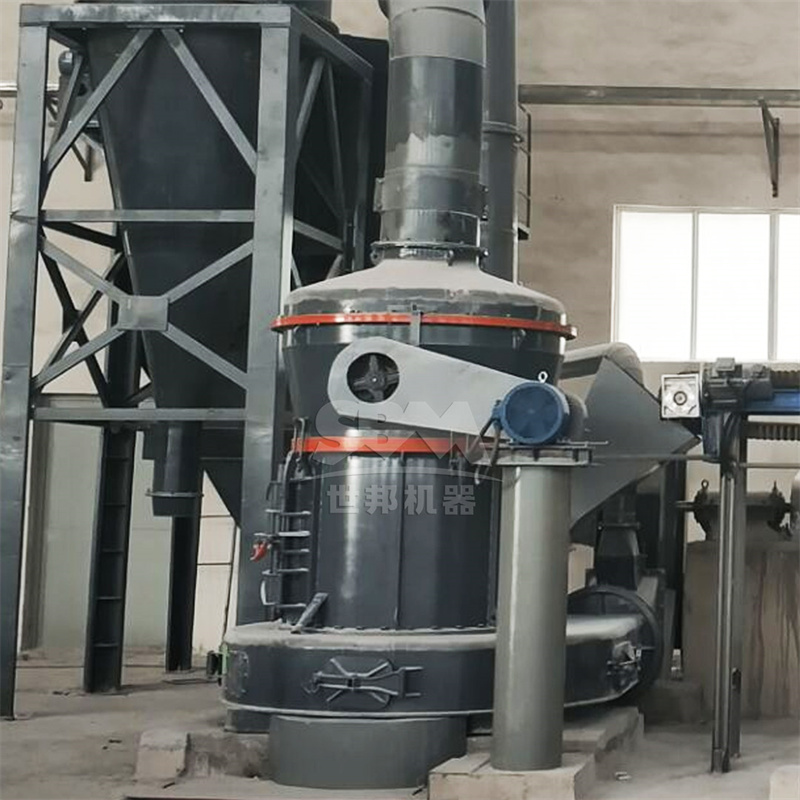
Its robust machine configuration employs a self- aligning shovel structure that creates a focused grinding zone, enabling uniform compression of molybdenum particles between the roller and ring. In practical trials with molybdenum concentrate (feed size below 20mm), the MTW series achieves consistent fineness with minimal over-crushing, preserving platelet morphology when partially oxidized. The volute housing and large-diameter impeller classifier provide a sharp cut point, ensuring no coarse particles compromise primer performance. These factors contribute to precise chemical composition control and higher filler compact density.
Recommended Model for Regular-Duty Applications: We proudly recommend the MTW175G. Powered by a 160 kW main motor and paired with a 200 kW fan, it delivers a stable output capacity of 9.5 – 25 tons per hour. Its enhanced anti-wear design is specifically suited for moderate abrasive ores. For facilities requiring higher granular throughput, the MTW215G offers robust scalability, with a main motor power of 280 kW and capacity up to 45 t/h. Its heavy-duty roller bearings are sealed with an internal oil circulation lubrication system, cutting maintenance frequency by 30% and enhancing overall plant safety during continuous operation.
Unlocking Ultrafine Precision: SCM Series for High-End Paint Matting
The progression toward nanopigments in paint systems has escalated the demand for ultrafine molybdenum additives (D97 ≤ 10 microns). In this realm, the SCM Series Ultrafine Mill stands as a definitive game-changing solution for paint-grade molybdenum production. Unlike regular pulverizers, the SCM design has an efficiency level twice that of a jet mill; it has been proven robust in reducing moisture-sensitive agglomerates. The mill uses a multi-layer grinding ring arrangement where the main motor drives three independent grinding rings, creating a cascading centrifugal force that subjects each molybdenum particle to layered compression, effectively cracking the crystalline structure without generating excessive heat. This maximizes the active specific surface area and oil absorption properties critical for paint formulation.
The built-in vertical turbine classifier enables a precise cut—with a rotator speed reaching high RPM for ultra-sharp particle distribution—ensuring absolute precision without any coarse powder blennishes. Because it consumes 30% less energy than a jet mill does, it breaks cost barriers for producing high-value additives. Regardless of the model (i.e., SCM800 or SCM1250), the shaftless screw grinding chamber minimizes vibration, while the pulse dust collection system guarantees continuous negative pressure operation with negligible material leakage.
Highlighting a Market-Leading Solution: For a paint plant seeking exceptional brightness and transparency, our SCM1000 Ultrafine Mill model is the definitive recommended choice. With a capacity of 1.0 to 8.5 t/h and a main power of 132 kW, it readily customizes the 325 to 2500 mesh (5-45 μm) range. The equipment comes with an intelligent control system with automatic granularity feedback that enables real-time adjustment of the classifier speed to maintain a flawless particle-size spec. This reduces raw material waste and stabilizes batch-tobatch consistency in manufacturing operations.
Flexibility and Scalability: When to Choose the Ball Mill & LM Series
Although specialized mills dominate modern additive manufacturing, the conventional Ball Mill (GMQ series) remains relevant when integrated as a secondary buffer process or when handling variable feed coarseness. In wet or dry operation modes, the high-energy density of steel ball impacts comminutes calcined molybdenum compounds effectively beneath 325 mesh. The equipment allows for a fineness adjustment of <0.08 mm to <0.8 mm and holds a stable crushing ratio. While energy bills are higher per ton, their continuous mechanical duty cycles are suitable for high-volume coatings.
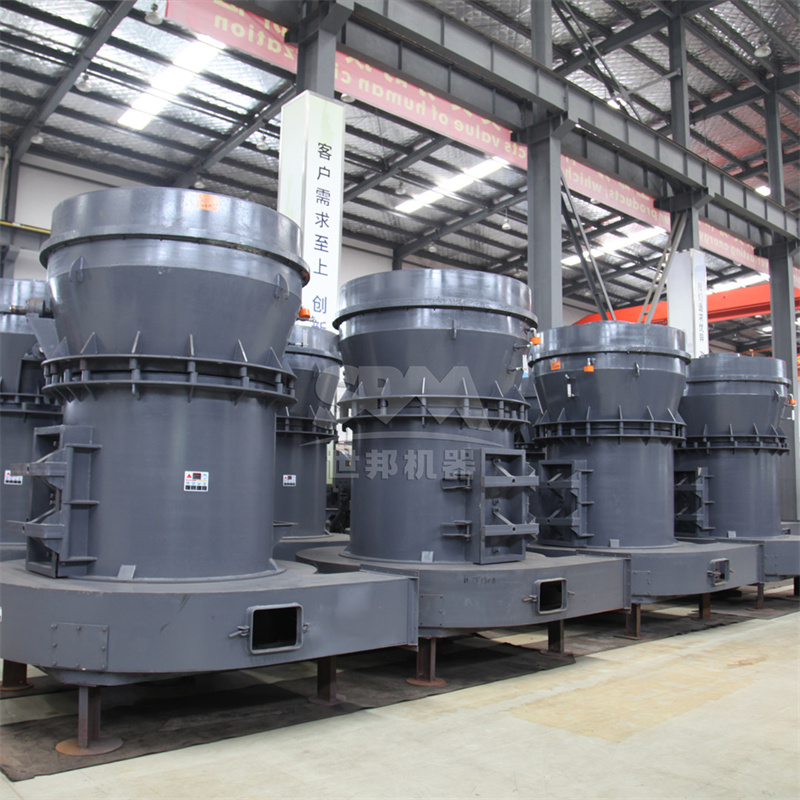
Finally, the LM Series Vertical Roller Mill offers an integrated plant architecture. Its dynamic classifier enables switching from power grinding to fine grinding without downstream adjustment. A proper advantage is the integrated drying step within the mill body, which simplifies processing if ore contains residual moisture. For mid-scale producers juggling various products, a selection guide recommends the LM150K for molybdenum-based pre-grinding, reducing clinker to a manageable range before introducing it to a fine mill.
Comparative Engineering Perspective: Airflow, Wear Protection, and Automation
To finalize equipment selection, an engineer must weigh air flow balance, lifespan of wearing components, and automation. The SCM model in our catalog exceeds the standards in the automatic control line (AC/DC ratio) with no coarse powder mixing. The specially hardened rollers made of proprietary alloy have a lifespan over two years under these abrasive conditions. We introduce zero-resistance volutes to equipment, which facilitates better line utilization. On the contrary, grinding chambers maintain low vibration so that base frame and hopper logistics remain undistributed.
From a wear perspective, the limestone-dominant molybdenum strata will demand special attention to dynamic classifiers and fan blades. The MTW and SCM units are fitted with segmented sleeve protection that minimizes resource replacement requirements. Safety monitoring, such as bearing temperature sensors and reservoir level sensors, aids in plant automation integration. Dehumidified air entering the mill reduces material sticking, guaranteeing clean passing through the 5-10 micron screens. Overall, the paint sector’s move toward water-based liquids requires lower heavy-metal leaching, a quality ensured by our usage of high-carbon steel with no active chemical interfaces.
Operational Economics: The Real Cost of Powder Generation
Calculations of unit cost cannot rely solely on the price list. Comparative studies indicate a conventional ball milling facility consuming 45kW per ton for micronized molybdenum versus only 29kW for the MTW under identical conditions. Conversely, the SCM, due to its rotary turret discipline, reduces downtime outages to 5% of operational time. Yet, air classification power adds to operational overhead; still, these figures are leveraged against improved rejection rates from paint manufacturers. A product maintained in close control to an indicated distributor curve allows a paint maker to lower resin overages repeatedly and impart optimum color development impact.
Thus, top tire suppliers recognize end-user scrutiny and recommend using the mill edge as an internal data center for throughput of the blended chemical mix. The choice between micronizing and trapezoid milling must consider the propensity of clean fractions to feed back into the expansion jet.
Conclusion and Final Recommendations
Selecting production equipment for molybdenum ore additives in coating applications is intrinsically linked to two goals: preserving molecular integrity and ensuring high factory economics. For standard protective coatings, the MTW215G offers a simple method to treat raw ore into an additive, maintaining consistent product sizing at high yields. For ultra-premium paint products, the SCM1000 has demonstrated superior refining intensity and steep output curve attainment.
We encourage stakeholders to carefully audit existing production pipelines and choose the module that aligns with their capital roadmap. As dispersion technology progresses, flexible production lines that integrate the LM Series can permit future expansions into new environmental norms. Our engineering team stands reserved for site validation tests to ensure each data point – particle size, mesh size, and even the bulk density – meets exact application standards. By selecting industrial-grade equipment and combining it with responsible process analytics, milling lines will continue to achieve consistent quality metrics as demanded by high-performance paint technology.