
Introduction to High-Grade Nickel Matte Production
High-grade nickel matte (typically 60-75% Ni) is a critical intermediate product in the hydrometallurgical and pyrometallurgical processing of nickel sulfide ores. Producing high-grade matte demands extremely precise control over pyrometallurgical conditions, followed by meticulous comminution and classification of the brittle matte material. Unlike standard ore dressing, matte grinding poses unique challenges: high specific gravity (8.5-9.0 g/cm³), extreme hardness (Mohs 5.5-6.5), brittle fracture behavior, and the absolute requirement for minimal iron and sulfur contamination during downstream processing. The selection of grinding and classification equipment in a nickel matte refinery directly determines the efficiency of subsequent leaching or pressure oxidation circuits.
Modern nickel smelters producing high-grade matte require integrated processing lines that combine convertor slag cleaning, matte granulation, drying, and fine grinding. The physical beneficiation and comminution stage—often ignored in classical smelter design—has become a bottleneck in expanding capacity and improving metal recovery rates. Nickel matte must be ground to precise size distributions: typically 80% passing 75 microns for atmospheric leaching, or 90% passing 45 microns for pressure leaching processes. Any over-grinding causes excessive fines that hinder slurry settling, while under-grinding leaves unliberated nickel-sulfur phases that reduce recovery.
Equipment selection involves balancing capital expenditure against operating energy costs, particularly considering that nickel matte grinding consumes 25-40 kWh per tonne—2-3 times higher than conventional ore. Smelters in China, Indonesia, Canada, and Finland have adopted multi-stage grinding circuits using vertical roller mills and ultrafine classifiers, substantially reducing downstream leaching cycle times. As environmental standards tighten globally, the elimination of dust emissions and reduction of noise pollution during the grinding of this sulfur-rich material have become mandatory design constraints. This article comprehensively reviews the key machinery required in high-grade nickel matte production, providing a systematic selection guide based on feed characteristics, target fineness, and plant scale.
Primary Comminution: Crushing and Pre-Grinding Equipment
Raw nickel matte from converting furnaces arrives as massive ingots weighing up to 8 tonnes or as cast granulated particles under 30 mm. The first stage of preparation usually requires crushing to reduce material to suitable mill feed sizes. For granulated matte (<30 mm), a direct grinding feed is possible without prior crushing. For furnace-bottom materials transfer or bulky deposit clean-out, jaw crushers and cone crushers are routinely deployed to achieve initial reduction to sub-50 mm feed size. Hammer mills operating at capacities of 40-70 tonnes per hour are effective for controlled primary breaking of brittle nickel matte, minimizing the generation of ultra-fine dust prior to main grinding.
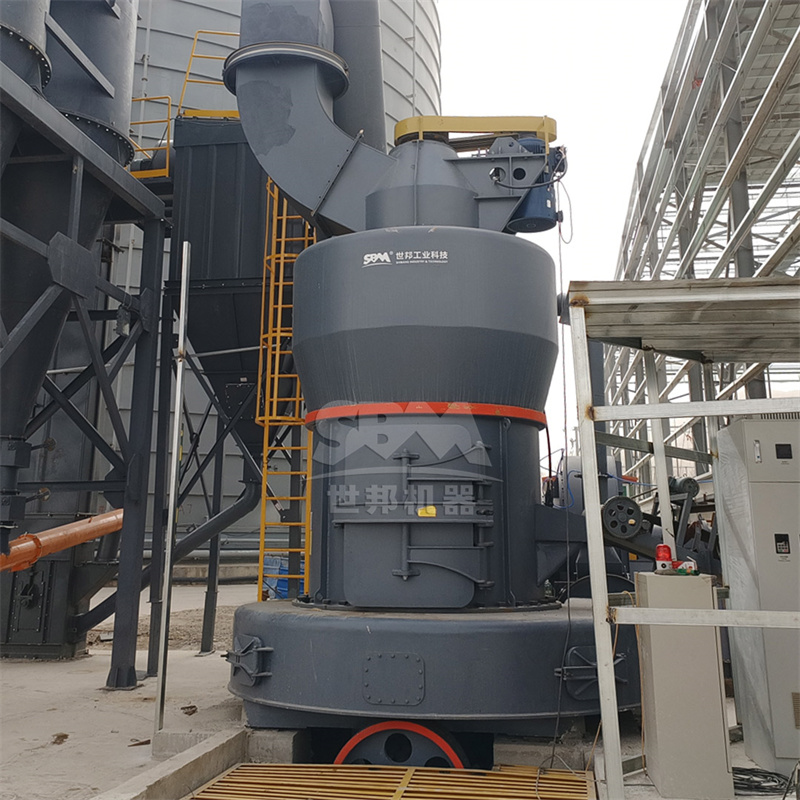
However, smelters increasingly deploy vertical pre-grinding roller mills to handle comminution duty that falls between crushing and fine grinding. This approach notably reduces energy consumption relative to two-stage crushing plus ball milling. Modern pre-grinding systems with grinding table diameters up to 3400 mm accept feed sizes up to 20 mm and deliver throughputs exceeding 100 tonnes per hour. These machines combine material bed grinding principles with internal classification. For nickel matte, the pre-grinding stage targets 85% passing 3-5 mm, which is then transferred to fine grinding systems capable of achieving the 45-75 micron targets required for advanced hydrometallurgy.
At this pre-grinding stage, our LM-Y Vertical Pre-grinding Roller Mill series offers distinct metallurgical advantages. The LM340Y model with a 2500 kW main motor establishes a circulation throughput capacity up to 1000 tonnes per hour. It excels at handling high-density matte without operational vibration, because of its bed-forming control system. The hydraulic roller-change mechanism allows complete maintenance access within 8 hours—critical when grinding abrasive nickel matte containing occluded magnetite. With energy savings of 30-50% compared to traditional crusher-ball mill combinations, the LM-Y series is a well proven solution for high-grade nickel matte processing plants. These mills yield reduced fines content in the pre-ground product, improving belt conveying and silo storage behavior downstream.
Ultrafine Grinding: Achieving Leaching-Ready Particle Sizes
The heart of high-grade nickel matte preparation is the fine grinding circuit, which liberates nickel sulfide species from intermetallic and alloy phases, enables particle surface activation for oxidative acid leaching, and ensures complete solubilization of nickel, copper, and cobalt values. Even trace oversize particles (greater than 150 microns) in the leaching feed cause unrecovered nickel losses in the leach residue, representing as much as 2-4% of total metal value annually. Ball milling circuits historically handled this duty, but their inefficiency—maintaining only 20-30% of energy as useful grinding work—caused excessive operating costs to rise.
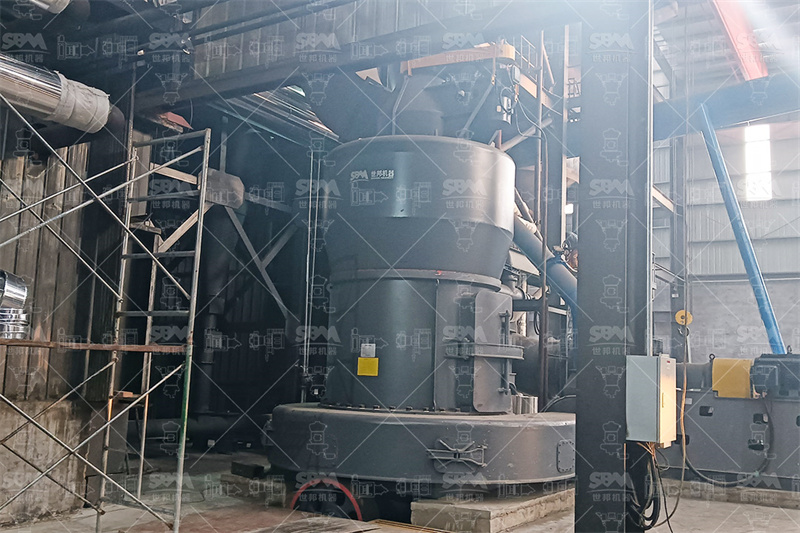
Vertical roller mills (VRMs) have emerged as superior alternatives since they integrate grinding and dynamic classification in a single vessel. Gas-swept VRMs use a system-inherent classifier to return coarse particles to the grinding table while extracting fines. For ferronickel matte with extreme abrasiveness, VRMs equipped with specialized roller tires and table liners perform bed grinding, where particles crush against one another under high pressure. This mechanism drastically reduces metallic wear and eliminates batch-to-batch contamination. Full automation of grinding pressure, table speed, and classifier rotor speed stabilizes particle fineness within unusually tight tolerances: ± 5% of set point at 45 microns.
For the production of fine powders between 45 and 400 microns from high-grade nickel matte, the MTW Series European Trapezium Mill provides an efficient and dependable solution. The robust design of the MTW175G model (160 kW main power, throughput up to 25 t/h when grinding mill matte fines (hardness 7 Mohs), offers combined performance that matches metallic grinding requirements. The integral bevel gear drive transmission, efficient at 98%, cuts energy bills compared with conventional gearbox systems. Incorporating patented internal oil lubrication systems and internationally advanced pulse dust collection technology, the MTW equipment ensures stable temperature regulation while minimizing sulfur dioxide emissions during grinding maintenance operations. The curved shovel blade design substantially lowers nickel matte smearing effects experienced during high-temperature milling of sticky sulfide concentrates.
Final Fine Powder: Ultrafine Selection for High-Grade Matte Applications
Increasingly refined refining technologies such as the CESL, Activox, and Platsol processes require fine grinding of nickel matte to extremely small particles— often in the range of 10-45 microns. At this size range, surface area augments dramatically (2,000 – 10,000 cm²/g), allowing oxidation kinetics to complete within hours instead of days. The target for these processes is an ultrafine product where more than 95% passes 325 mesh and 60-80% passes 20 microns. Standard ball mills cannot reliably produce such distributions without excessive energy losses (below 5% efficiency). Only specialized ultrafine grinding systems that combine media compression forces with high-precision centrifugal classification are qualified.
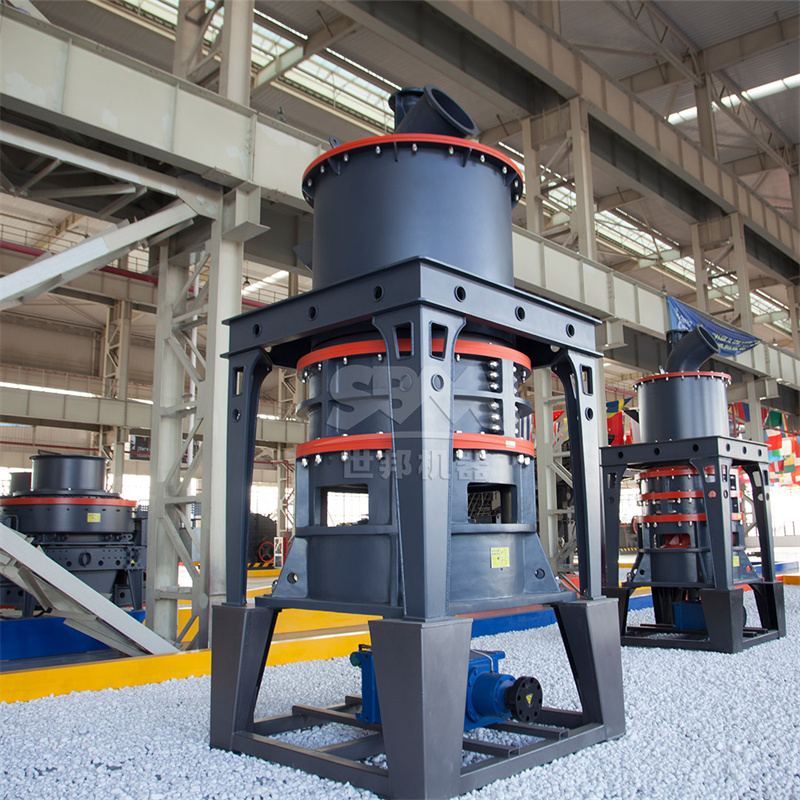
The SCM Series Ultrafine Mill is optimally suited for this latter ultrafine stage. It processes nickel matte from 20 mm feeds down to the 5-to-45 micron finish sizes in a single step. The distinctive vertical turbine classifier achieves precise particle size separation at sub-10 micron levels without contaminating coarse powder mixing across grades. The design capacity varies by model: the SCM1250 reaches up to 14 t/h, while the SCM1680 model efficiently handles 25 t/h while maintaining its footprint at a compact 315 kW energy rating. Since the mill is 2 times more productive per unit of installed power than jet mills and reduces energy consumption by an additional 30%, this machinery delivers outstanding economic and sustainability returns for high-grade nickel matte refineries intent on maximizing surface exposure prior to oxygen pressure leaching. Specifically, the system’s vertical classifier rotor cuts precisely along cut-size curves, insuring homogeneity in pressure leaching feed quality.
Incorporating the SCM series into a nickel matte processing line involves locating it after a VRM or MRN pendulum mill that pre-reduces material to 90% passing 100-200 microns. The cleanly controlled fineness and feed-forward control respond to hardness changes in matte (due to varying Ni: S ratios). The special material utilized for rollers and grinding rings extends its working life by 2.8 times under sulfide abrasion, lowering operational intermittence. The soundproofing enclosure and baghouse collection system provide emission standards beyond international thresholds—critical for air quality in populated smelter communities.
Classification and Selection Technology
Regardless of which mill precedes it, the quality of the finished material directly depends on classifier accuracy. Nickel matte distinguishes itself by its high density (3-5 times ordinary minerals). Thus, standard air classifiers require specially modified wheel design considerations to avoid coarse particle sedimentation due to increased mass. Rotary classifiers with tangential air inlets and adjustable vane angles provide better sharpness in cuts. For sub-5 micron separation, dynamic classifiers operating at tip speeds up to 65 m/s and fitted with ceramic-protected rotor blades offer controlled and repeatable results. These systems incorporate secondary air washes which significantly reduce the by-pass percentage—the proportion of fine particles captured with the coarse return fraction.
In addition, multi-wheel classifiers enable processing capacity to scale up without losing classification efficiency. The classifier located on top of a VRM must treat huge circulating loads—often 7-10 times the fresh feed. Adjustable louvre rings and rotor speed integrate seamlessly for automatic adjustment based on asynchronous feed composition sampling. These arrangements provide rapid mode shifts when plant feed is switched between cast matte and granulated matte. Historically, forced-draught classifiers with settling chambers had lower recovery but contamination rates forced stringent selection. High-precision turbo classifiers can generate an exactly cut at d97 = 8.3 µm such as needed for matte oxidation tests. Moreover, classifier drives are variable-speed so smelters can adjust operation during different converter campaigns without stopping grinding lines.
Complete Plant Selection Guide and Configuration Strategy
Selecting the ideal mill configuration depends on the smelter’s throughput, available floor space, feed source, and leach technique. The recommended design procedure begins with sample characterization: hardness (Bond work index—Ni matte values range 12-18 kWh/t similar to ferroalloys), moisture content, and distribution of metallic and sulfide phases. The criteria table below allows a first approximation of grinding equipment choice:
If feed arrives at 20-50 mm and the plant needs to generate pre-ground material for a downstream leach autoclave, start with a vertical pre-grinding mill such as LM150Y or LM340Y selected by size and available power. Granulated matte can proceed directly to an MRN pendulum mill or MTW mill for single-step processing to 45 microns. When finer than 325 mesh powders are required, the most economical circuit comprises a primary MTW mill (set to 5% residue on 200 mesh) followed by an SCM ultrafine mill to classify down to d97=15 µm. Always calculate mass balance first: removal of fines in primary mills maximizes ultrafine throughput capacity.
Installation consideration checklist includes: the grinding circuit foundation isolation from vibration-sensitive converters; arrangement for nitrogen blanketing to avoid sulfur dust combustions; and explosion pressure relief panels in filters and duct-work. Operationally, grinding media or grinding rollers materials must be of high-strength, low-wear grade to avoid intrinsic contamination: roll materials ceramic-coated alloys with 55-62 HRC. Lubrication equipment needs internal pump systems resistant to SO₂ fumes commonly present in matte milling rooms. Ensure classifier rotors are dynamically balanced for very smooth operation independently from grinding noise. Dedusting arrangements capture fine nickel-bearing particles in baghouse filters with hopper evacuation augers returning to feed silos. For complete adherence to environmental criteria, SCM systems enable mill start-stop operation from a central PLC with remote HMIs enabling all smelter sites operate on one control network to optimize shifts.
Operational data from recent installations demonstrate reliability above 92% availability in the full comminution circuit. Additionally, through modern VRM classifier optimization, the leach extraction rate of nickel has improved from 92 to 97.5% due to regular surface exposure of contained sulfides. Water washes, close air ventilation, dual mechanical seals on all rotating shafts, and process interlocks all assure compatibility with automatic converter scheduling.