
Introduction
The enamel manufacturing industry demands precision, durability, and efficiency in raw material processing. Titanium additives, essential for enhancing the opacity, whiteness, and chemical resistance of enamel coatings, require specialized grinding equipment to achieve the ultra-fine particle sizes that guarantee superior product quality. This comprehensive guide explores the high-performance titanium additive production equipment designed specifically for enamel manufacturing, detailing the technical parameters, working principles, and operational advantages that set industry-leading solutions apart. From ultrafine milling to energy-efficient classification, we examine the critical technologies that enable consistent, high-quality titanium additive production.
The Importance of Particle Size Control in Enamel Manufacturing
Titanium dioxide (TiO₂) and other titanium-based additives play a pivotal role in enamel formulation. The particle size distribution of these additives directly influences the final enamel’s gloss, opacity, and mechanical strength. Research indicates that optimal performance is achieved when titanium particles fall within the 5-45 micron range, with specific applications demanding fineness as low as 5 microns. Achieving such precise specifications requires state-of-the-art milling technology capable of consistent, repeatable results across production batches. Traditional milling methods often fall short in terms of energy efficiency and particle size uniformity, creating a clear demand for advanced solutions.
Key Equipment for Titanium Additive Processing
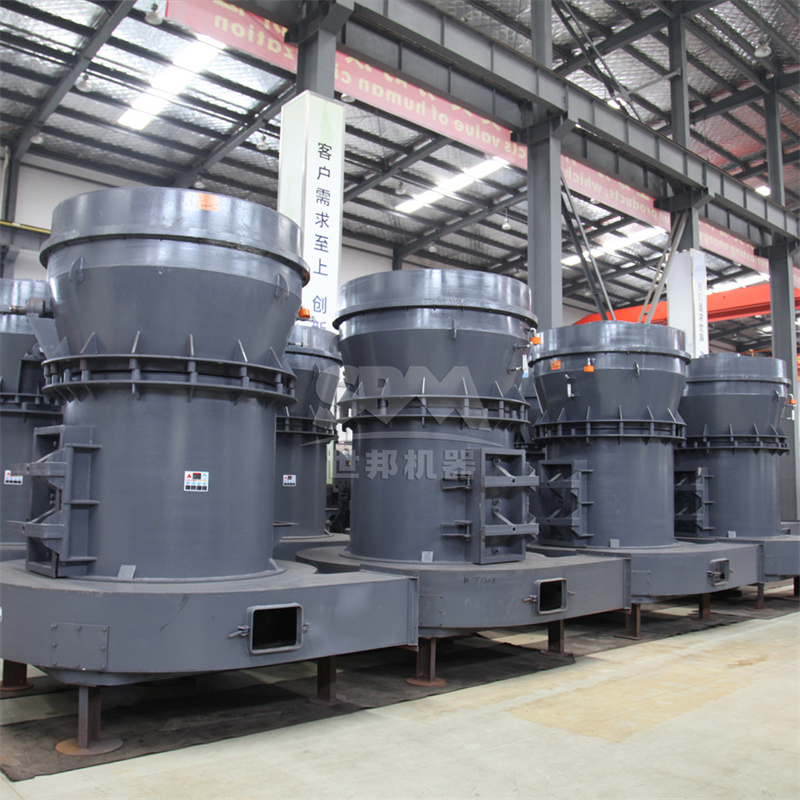
Several mill types are utilized in titanium additive production, each offering distinct advantages based on the required fineness and production volume. Among these, the ultrafine mill series stands out for its ability to produce particles as fine as 5 microns while maintaining high throughput. The SCM Series Ultrafine Mill, for instance, is specifically engineered for the 45-5μm range, with an input size of ≤20mm and capacities ranging from 0.5 to 25 tons per hour depending on the model. Its vertical turbine classifier ensures precise particle size cutting, eliminating coarse powder contamination—a critical requirement for enamel applications where uniformity is paramount.
For enamel manufacturers requiring larger production volumes without compromising on fineness, the MTW Series European Trapezium Mill offers an excellent solution. With an output fineness of 30-325 mesh (down to 0.038mm) and capacities up to 45 tons per hour, this mill series utilizes an integral bevel gear drive that achieves transmission efficiency up to 98%. The anti-wear shovel design and optimized arc air duct reduce maintenance costs and improve energy efficiency, making it a cost-effective choice for continuous production environments.
Working Principle and Technical Advantages
Understanding the working principle of these mills is essential for optimizing their performance in titanium additive production. In the SCM Series Ultrafine Mill, the main motor drives three layers of grinding rings to rotate. Materials are dispersed into the grinding path by centrifugal force, then crushed by roller pressure and ground layer by layer. The resulting powder is collected by a cyclone collector and a pulse dust removal system, ensuring minimal environmental impact and high recovery rates. The intelligent control system automatically adjusts the finished product granularity through feedback mechanisms, maintaining consistent output quality even as operating conditions change.
Key technical advantages include a capacity that is twice that of traditional jet mills, combined with 30% lower energy consumption. The special material rollers and rings extend service life several times over, while the shaftless screw grinding chamber ensures stable operation. These features translate directly into reduced operating costs and higher uptime for enamel manufacturers who rely on continuous production schedules.
Energy Efficiency and Environmental Compliance
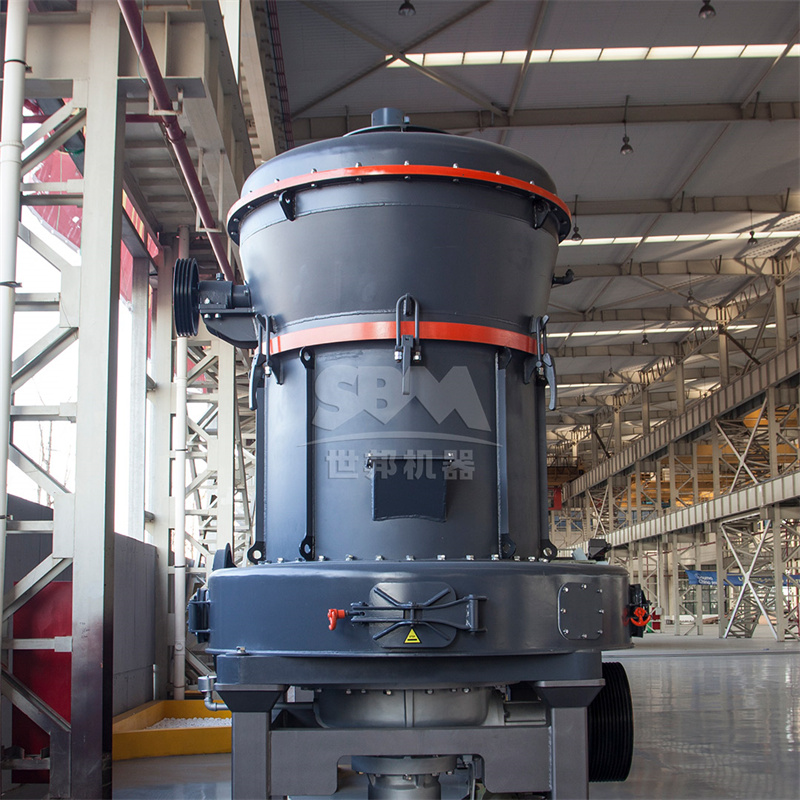
Modern enamel production facilities face increasing pressure to reduce energy consumption and minimize environmental impact. High-performance titanium additive production equipment addresses these challenges through innovative design features. The LM Series Vertical Roller Mill, for example, offers energy consumption that is 30-40% lower than ball mill systems, thanks to its non-contact design between rollers and table. Its integrated system combines crushing, grinding, and selection in a single unit, reducing floor space by up to 50% and enabling outdoor installation that lowers infrastructure costs by 40%.
Environmental compliance is further enhanced by fully sealed negative pressure operation, which ensures dust emissions below 20mg/m³ and operating noise below 85dB. The pulse dust collection efficiency exceeds international standards, and soundproof room design keeps noise levels comfortable for operators. These features make high-performance mills suitable for facilities located in densely populated areas or regions with strict environmental regulations.
Product Recommendation: SCM1250 Ultrafine Mill
For enamel manufacturers seeking a balance between high capacity and ultra-fine output, we strongly recommend our SCM1250 Ultrafine Mill. With a capacity of 2.5-14 tons per hour, main power of 185kW, and the ability to achieve fineness from 325 to 2500 mesh (45-5μm), this model is ideally suited for titanium additive production. The feed size of 0-20mm accommodates a wide range of raw materials, while the intelligent control system ensures consistent product quality. The SCM1250’s vertical turbine classifier provides precise particle size cutting, effectively eliminating coarse powder mixing—a critical factor for enamel applications where uniformity directly impacts final product performance.
Advanced Classification Technology
The precision of particle classification is a defining characteristic of high-performance mills. In the MRN Pendulum Mill series, thin oil lubrication systems provide first-in-class maintenance-free operation, while square pipe collectors reduce resistance and improve efficiency. The pulse dust collector operates automatically, ensuring eco-friendly operation without compromising productivity. The scientific configuration of the new classifier combined with an isolated cyclone reduces energy consumption while maintaining high throughput. These technological advancements enable enamel manufacturers to achieve the exact particle size distributions required for specific formulations.
For applications requiring even higher production volumes, the LM series vertical roller mills offer capacities up to 250 tons per hour while maintaining fineness down to 600 mesh. The multi-stage adjustment capability allows operators to fine-tune the output to match specific enamel formulation requirements, whether for base coats, top coats, or specialty applications. The expert-level auto-control system supports both remote and local switching, with real-time parameter monitoring that reduces manual intervention and minimizes the risk of human error.
Durability and Long-Term Reliability
Enamel manufacturing is a demanding process that subjects equipment to continuous wear and chemical exposure. High-performance titanium additive production equipment addresses these challenges through durable design and robust materials. The MTM Series Medium-speed Trapezium Mill features a spring pressure system that automatically compensates for roller wear, extending roller and ring life by 30%. The horizontal pull-rod connection protects main shaft bearings, while radial force design handles large materials without compromising stability. Dual reduction via damping springs and sealing strips eliminates equipment resonance, further extending the machine’s operational life.
Similarly, the Ball Mill series offers a high crushing ratio of up to 300:1 with continuously adjustable fineness. The proven technical solution reduces downtime by 40%, while the ability to operate in both dry and wet modes provides flexibility for different titanium additive processing requirements. The use of high chrome or manganese steel grinding media with hardness HRC58-62, combined with wave or step liners, ensures long-term wear resistance even under continuous operation.
Intelligent Control and Automation
Modern high-performance mills incorporate advanced automation and control systems that simplify operation while improving consistency. The LUM Ultrafine Vertical Roller Mill features PLC automation for stable running, with multi-rotor technology ensuring no coarse particles contaminate the finished product. The intelligent control system can be integrated into existing plant control networks, enabling centralized monitoring and data logging for quality assurance purposes. These capabilities are particularly valuable for enamel manufacturers who must maintain strict quality control over titanium additive particle size distribution to ensure consistent batch-to-batch performance.
Product Recommendation: MTW138Z European Trapezium Mill
For enamel operations that require a combination of high capacity, fine fineness, and exceptional reliability, we recommend the MTW138Z European Trapezium Mill. With a capacity of 6-17 tons per hour, main power of 90kW, and output fineness ranging from 10 to 325 mesh, this model excels in processing titanium additives for enamel manufacturing. The feed size of less than 35mm accommodates diverse raw material specifications, while the integral bevel gear drive delivers transmission efficiency up to 98%. The optimized arc air duct reduces airflow energy loss and improves transmission efficiency, making the MTW138Z a cost-effective choice for medium to large-scale enamel production facilities. The combined shovel blades reduce maintenance costs by 30%, while the curved design extends grinding roller life, ensuring long-term reliability.
Conclusion
High-performance titanium additive production equipment is essential for enamel manufacturers seeking to optimize product quality while minimizing operating costs and environmental impact. From ultrafine mills capable of achieving 5-micron fineness to high-capacity vertical roller mills handling up to 250 tons per hour, the range of available solutions ensures that facilities of all sizes can find the right equipment for their specific requirements. The combination of energy-efficient design, precise classification technology, durable construction, and intelligent automation makes modern mills indispensable tools for the enamel industry. By investing in the right grinding equipment, manufacturers can ensure consistent titanium additive quality, reduce production costs, and maintain compliance with increasingly stringent environmental regulations. As enamel applications continue to evolve, the demand for high-performance milling solutions will only grow, making it essential for manufacturers to stay informed about the latest technological advancements.