
Introduction to Magnesite Additives in Refractory Materials
In the modern metallurgical and industrial furnace industry, the performance and longevity of refractory materials are critical factors that directly influence operational efficiency, safety, and cost-effectiveness. Magnesite (magnesium carbonate, MgCO₃) and its derivatives, such as fused magnesia and dead-burned magnesia, are essential raw materials in the production of high-quality refractory bricks, castables, and monolithic linings. When processed into fine powders, magnesite additives improve the thermal resistance, slag corrosion resistance, and mechanical strength of refractory products. The quality of these additives is intrinsically linked to the performance of the grinding and milling equipment used in their production. This article explores how state-of-the-art production equipment can transform magnesite processing, thereby enhancing furnace performance and extending service life.
The Critical Role of Particle Size and Fineness
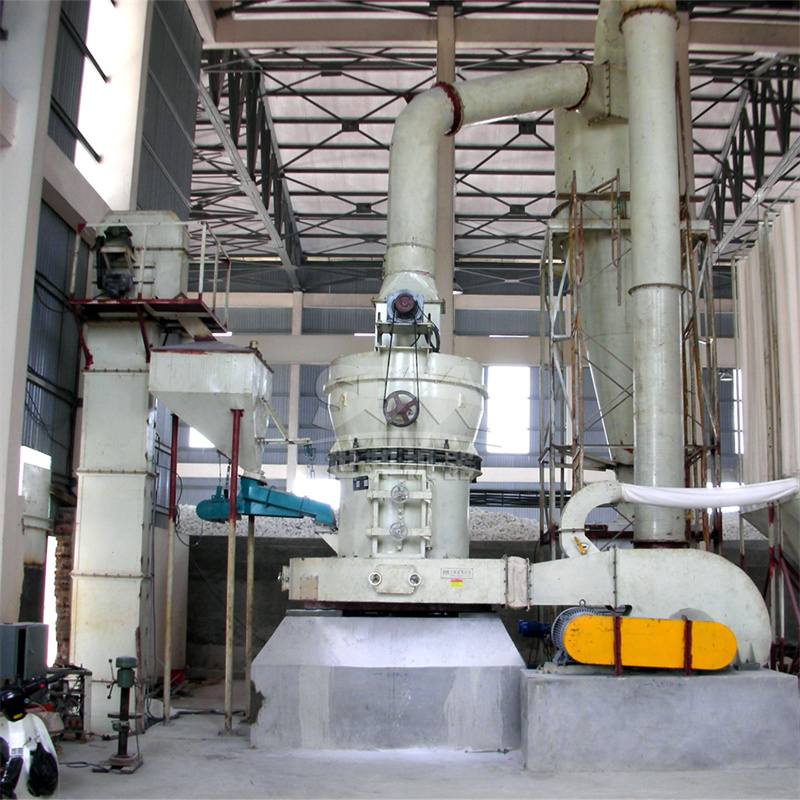
The efficacy of magnesite additives in refractory formulations heavily depends on the particle size distribution and specific surface area of the powder. Finer particles pack more densely, reducing porosity and improving the material’s resistance to molten slag and metal penetration. For instance, microfine magnesia powders (below 45 microns or 325 mesh) are used to create high-density spinel bonds that enhance hot modulus of rupture (HMOR). Conversely, coarser fractions may be required for specific permeability or thermal shock resistance properties. Therefore, a flexible milling system that can precisely control output fineness from 30 mesh (600 μm) up to 2500 mesh (5 μm) is indispensable for manufacturers seeking to optimize their refractory formulations.
Overview: Key Grinding Technologies for Magnesite
Different grinding technologies offer unique advantages for processing magnesite, which has a Mohs hardness of 3.5 to 4.5 but can be abrasive due to associated silica or iron impurities. The selection of the right equipment involves balancing capacity, energy consumption, product fineness, and maintenance requirements. The following sections explore the most effective modern solutions.
Ultrafine Grinding: The SCM Series Ultrafine Mill
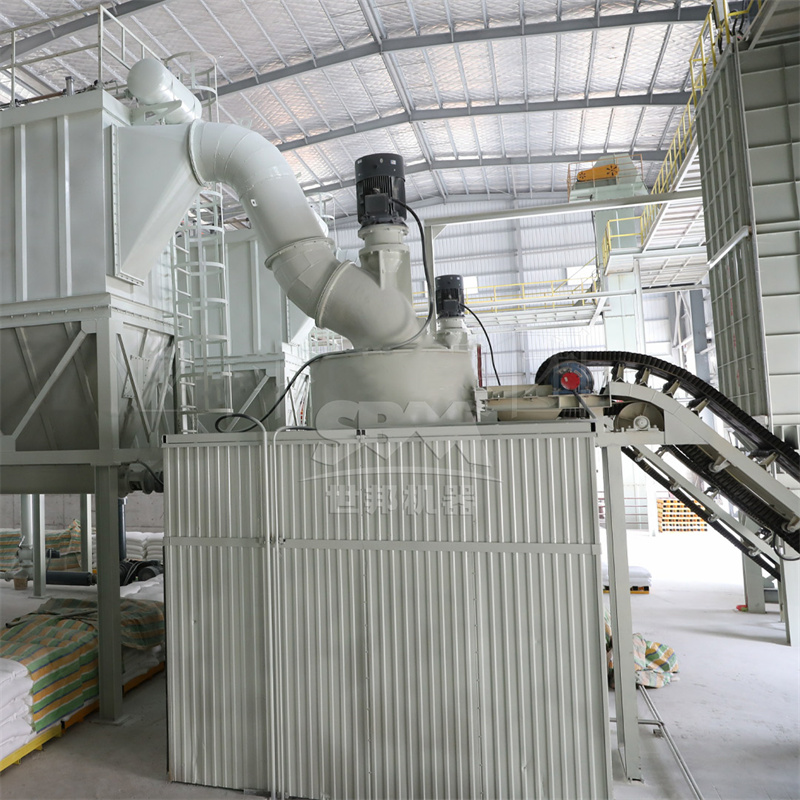
For applications requiring ultra-high fineness (325-2500 mesh), the SCM Series Ultrafine Mill stands out as a premier solution. Designed for feed sizes up to 20mm, this mill offers a capacity ranging from 0.5 to 25 tons per hour, depending on the model. Its core technical advantages make it exceptionally suitable for producing high-value magnesite additives.
The SCM mill operates on a unique principle: the main motor drives three layers of grinding rings to rotate. Materials are dispersed into the grinding path by centrifugal force, crushed by roller pressure, and ground layer by layer. This mechanism ensures that the material undergoes sufficient grinding force without over-grinding, leading to a uniform particle size distribution. The vertical turbine classifier is a standout feature, enabling precise particle size cutting without coarse powder mixing. This guarantees that the final magnesite powder has a consistent quality, which is crucial for maintaining the performance standards of refractory bricks and castables.
From an operational standpoint, the SCM series offers remarkable energy efficiency. Its capacity is approximately double that of traditional jet mills, while energy consumption is reduced by 30%. This not only lowers production costs but also supports environmental sustainability goals. Additionally, the intelligent control system provides automatic finished product granularity feedback, allowing for real-time adjustments and reducing labor intervention. The durable design, featuring special material rollers and rings, ensures that the mill can handle the abrasive nature of magnesite, extending service life several times over that of conventional mills.
Recommended Product: SCM Series Ultrafine Mill (SCM1000 Model)
For medium-scale magnesite additive production requiring high fineness, we recommend the SCM1000 model. With a capacity of 1.0-8.5 t/h and a main power of 132kW, it achieves an output fineness of 325-2500 mesh. This model is ideal for producing high-grade magnesia powder for premium refractory applications where consistency and ultra-fine particle size are non-negotiable.
Flexible Fine to Medium Grinding: The MTW Series European Trapezium Mill
While the SCM series excels in ultrafine applications, the MTW Series European Trapezium Mill offers a versatile solution for producing magnesite additives in the 30 to 325 mesh range (600-45 μm). This mill is particularly well-suited for operations that require a balance between high capacity and moderate fineness, such as producing standard refractory grade magnesia or pre-grinding material for subsequent processing. With an input size capacity of up to 50mm and a capacity range of 3-45 t/h, the MTW mill is a workhorse in the mineral processing industry.
The technical advantages of the MTW series are engineered for reliability and low maintenance. The anti-wear shovel design, featuring combined shovel blades, significantly reduces maintenance costs and extends grinding roller life. The optimized arc air duct minimizes airflow energy loss, improving overall transmission efficiency. Furthermore, the integral bevel gear drive achieves transmission efficiency of up to 98%, saving both space and installation costs. The wear-resistant volute structure adopts a non-resistance flow design, which enhances air selection efficiency and reduces maintenance costs by an estimated 30%.
The working principle involves the main motor driving the grinding rollers to revolve around a central axis while self-rotating. Shovels feed the magnesite between the ring and rollers, forming a material layer that is efficiently crushed through extrusion. The classification system then precisely controls the finished product size, ensuring that the final powder meets exacting specifications. This makes the MTW mill a dependable choice for continuous, high-volume production of magnesite additives.
Recommended Product: MTW Series European Trapezium Mill (MTW175G Model)
For high-capacity production of magnesite additives with fineness in the 10-325 mesh range, the MTW175G is an excellent choice. With a capacity of 9.5-25 t/h and a main power of 160kW, it can handle large feed sizes (up to 40mm) efficiently. Its robust construction and patented internal suction oil lubrication system ensure long-term, trouble-free operation, making it ideal for large-scale refractory material manufacturers.
Large-Scale Integrated Production: The LM Series Vertical Roller Mill
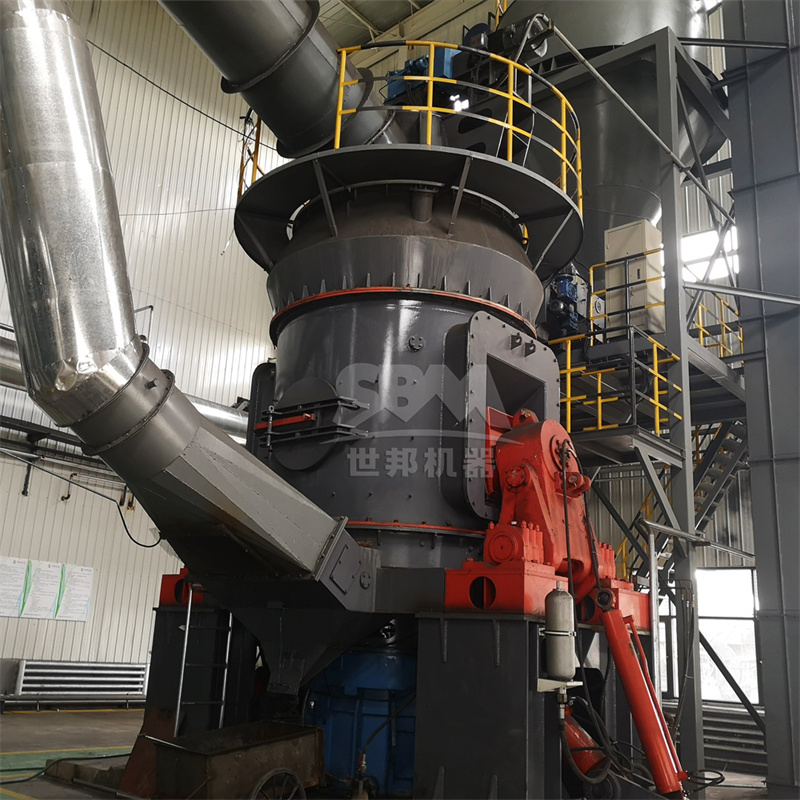
For operations demanding the highest levels of integration and throughput, the LM Series Vertical Roller Mill provides a comprehensive solution. This mill integrates crushing, grinding, and selection into a single system, reducing floor space by 50% compared to traditional ball mill systems. With a capacity range from 3 to 250 tons per hour and the ability to achieve fineness down to 45 μm (or 600 μm for special models via the X-GX series), the LM mill is perfectly suited for large-scale magnesite processing plants.
The technical advantages of the LM series are compelling for refractory material producers. The non-contact design between the rollers and the grinding table means that wear parts last up to three times longer than in conventional mills. Energy consumption is 30-40% lower than ball mill systems, translating into substantial cost savings. The expert-level auto-control system supports remote and local switching, providing real-time monitoring of parameters and significantly reducing the need for manual intervention. Environmentally, the fully sealed negative pressure operation ensures dust emissions are minimal, and operating noise levels are low, contributing to a safer and cleaner working environment.
The working principle is straightforward yet effective: the main motor drives the grinding table via a reducer. Magnesite enters through the central feed port and spreads evenly via centrifugal force. Grinding rollers apply pressure to crush the material layer, and qualified fines are carried by hot air to the classifier. Coarse powder returns to the table for re-grinding. This continuous circulation ensures high efficiency and consistent product quality.
Optimizing Refractory Formulations with High-Quality Additives
The ultimate goal of using high-quality magnesite additives is to enhance the performance of furnace linings. Finely ground magnesia (MgO) reacts with alumina (Al₂O₃) and other oxides to form spinel phases, which have high melting points and excellent corrosion resistance. Properly processed additives reduce the porosity of the refractory matrix, making it less permeable to molten slag and gases. This directly translates to longer furnace campaigns, reduced maintenance downtime, and improved thermal efficiency. By investing in advanced milling equipment that can precisely control additive characteristics, refractory manufacturers can unlock new levels of product performance.
Economic and Operational Benefits of Modern Milling Equipment
Switching to modern milling technology like the SCM, MTW, or LM series offers clear economic advantages. Reduced energy consumption (up to 40% less than ball mills), lower wear part costs (due to durable designs and special alloys), and higher throughput per unit of time all contribute to a lower total cost of ownership (TCO). For example, a single LM vertical mill can replace a multi-stage crushing and grinding circuit, simplifying the plant layout and reducing capital expenditure by as much as 40% in terms of infrastructure. Furthermore, the intelligent control systems minimize the need for skilled operators and allow for 24/7 unattended operation, further reducing labor costs and increasing overall plant reliability.
Conclusion: Investing in the Future of Refractory Materials
The performance of a furnace is only as good as the quality of its refractory lining, which in turn depends on the quality of the additives used. Producing high-grade magnesite additives requires precision, efficiency, and reliability from the grinding equipment. The SCM Series Ultrafine Mill delivers unmatched fineness for specialized applications, the MTW Series European Trapezium Mill offers versatile and robust performance for fine to medium grinding, and the LM Series Vertical Roller Mill provides the ultimate solution for large-scale, integrated production. By selecting the appropriate equipment, refractory manufacturers can not only enhance the durability and performance of their products but also achieve significant operational and economic benefits. In the competitive world of industrial furnace technology, investing in high-quality production equipment is not just an option—it is a strategic necessity for long-term success.