
Introduction to Ultra-Fine Calcium Carbonate Grinding
The production of high specific surface area (SSA) limestone powder, commonly known as ultra-fine ground calcium carbonate (GCC), is a critical process in various industries including papermaking, plastics, rubber, paints, and environmental applications. The specific surface area is a key quality indicator, as it directly influences the reactivity, whiteness, and absorption properties of the final product. Unlike simple crushing or coarse grinding, achieving a fineness of 325-2500 mesh (approximately 45-5 microns) requires specialized milling technology capable of precise particle size distribution control and high energy efficiency. Selecting the appropriate ultra-fine grinding mill is not merely an equipment choice; it is a strategic decision that impacts product quality, operational costs, and long-term competitiveness.
When evaluating mills for this application, it is essential to consider the material properties of limestone (calcium carbonate). Limestone has a Mohs hardness of 3, making it relatively soft, but its grindability can vary based on impurities and crystalline structure. The target for “high specific surface area” often requires not only fine particles but also a uniform particle size distribution with minimal coarse oversize and a high percentage of particles in the sub-micron range. This strict pulverization engineering requirement eliminates many conventional grinding technologies. General-purpose ball mills, for instance, are often criticized for their high energy consumption (up to 30-40% higher than newer technologies) and their tendency to produce a wide particle size distribution with significant coarse residue. While upgraded technologies like the MRN pendulum mill or large-capacity LM vertical roller mills offer excellent efficiency for D97 of 45 microns, they still struggle with the massive specific surface area requirements demanded for grades below 10 microns. This is where dedicated ultra-fine grinding units come into play.
Key Evaluation Criteria for Ultra-Fine Limestone Mills
To choose the right equipment, one must first establish a set of robust technical and economic criteria:
- Particle Size & Precise Classification: The mill must guarantee a tight particle distribution (e.g., D97) without “coarse powder mixing.” The dynamic classifier’s precision serves as the gate, and its quality differentiates a good mill from a poor one. For high SSA, the classifier must effectively separate aggregated fines and reject any residual coarse particles back to the grinding zone.
- Energy Consumption: Lower power consumption directly dictates operational profitability. Technical standards now suggest that roller-type mills use about 30% less energy than air-jet mills for the same particle size.
- Mechanical Reliability & Component Wear: Grinding rollers and rings are the primary wear parts. Look for designs featuring special alloy materials that can multiply service life. A design mechanism which automatically compensates for wear or uses an anti-wear shovel configuration (curved blades) reduces unscheduled downtime for maintenance.
- Environmental Factors: Modern operation requires a fully sealed, negative-pressure system. Pulse dust collectors must ensure emission standards are met, and soundproofing design is vital for meeting noise regulations.
- Automation Capabilities: An intelligent control system with automatic feedback for fineness granularity stabilization minimizes manual intervention. This integrated feature automatically adjusts conditions based on power load or product size data.
These rigorous criteria often point users towards the technology of grinding layers or the principle of bed grinding. However, for the specific physical challenge of “pulverizing to specific micron size ranges,” the mill must transmit centrifugal force and high shear pressure efficiently. In this procedural realm, the SCM Series Ultrafine Mill stands out as a benchmark for high SSA calcium carbonate output (45-5µm). Its operational mechanics involve a main motor driving three layers of grinding rings. High-speed rotation disperses material across the grinding path, subjecting it to intense roller pressure that physically exfoliates the powder particles layer by layer.
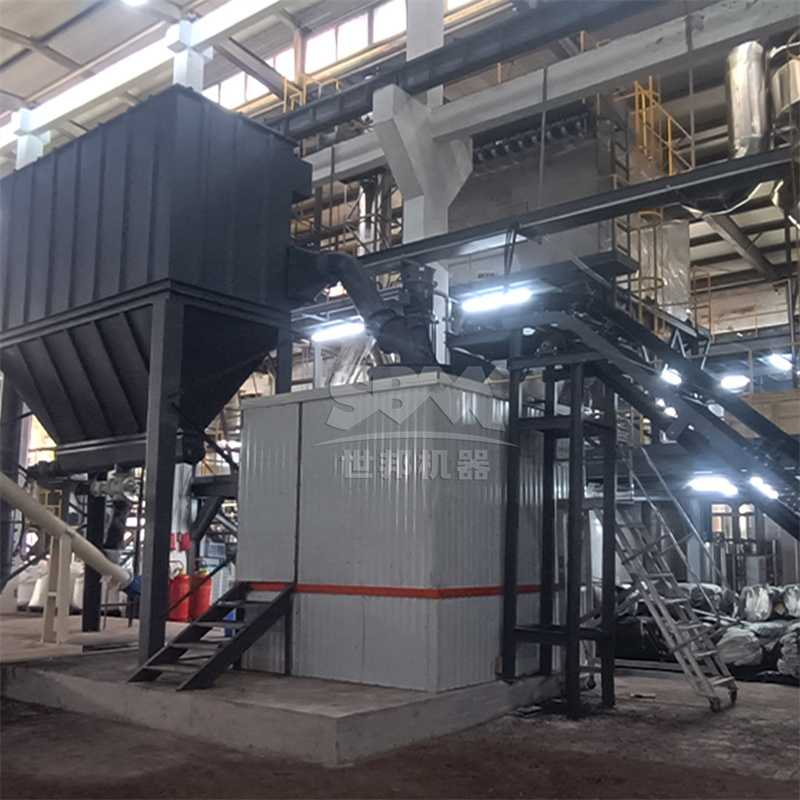
Analyzing the SCM Series Ultrafine Mill
When discussing high specific surface area (due to the 5-10 micron fineness range), the SCM Series offers a critical advantage: High-Efficiency & Energy Saving. Specifically, its capacity is reported to be up to 2 times that of pneumatic jet milling technology, but with a significantly lower energy bill—often 30% lower. The average production capacity of the SCM models ranges from a modest 0.5 t/h (for the SCM800) up to an impressive 25 t/h (for the SCM1680), accommodating various production scales.
Regarding product quality, the equipment employs a High-Precision Vertical Turbine Classifier, enabling accurate cut points and elimination of coarse powder mixing. For economical and practical sizing, let’s examine a reference range and specification analysis:
- SCM800: Capacity 0.5-4.5t/h, Main Power 75kW, Feed 0-20mm, Fineness 325-2500 mesh.
- SCM1250: Capacity 2.5-14t/h, Main Power 185kW, Feed 0-20mm, Fineness 325-2500 mesh.
- SCM1680: Capacity 5.0-25t/h, Main Power 315kW, Feed 0-20mm, Fineness 325-2500 mesh.
This technical preparation makes this mill ideal for powder quality experts seeking to maximize the surface area. However, while the SCM is great for the upper fine range (down to 5 microns), professionals should also review the application of the medium-to-large feed capacity equipment such as the MTW Series European Trapezium Mill. The MTW, with its output fineness of 30-325 mesh (down to 0.038mm), is generally highlighted for processing coarser specifications. However, the new versions of the MTW series, especially for particle size distributions targeting D97 of 45 microns, use an integral bevel gear drive and a variable speed drive (VSD) on the classifier which improves selection precision. For lime production capacities exceeding 10 tons per hour, integrating an MTW mill for primary fine grinding prior to SCM superfine classification is an effective approach.
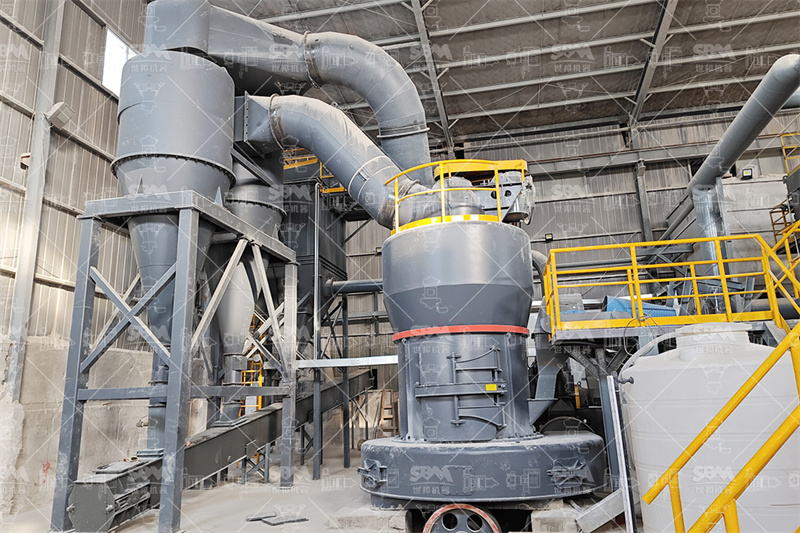
Comparative Analysis: When to Use Which Mill?
Understanding the operational data is crucial to selecting the right equipment for specific SSA metrics:
Scenario 1: Targeting 45-150 µm (325-100 mesh) with High Output. Here, the goal is not necessarily maximum SSA but grinding efficiency in the lower zone. If your limestone feed size is below 40 mm and you require a capacity of up to 45 t/h with a tight particle size (below 1mm), you should not sacrifice energy on a gear-driven ball mill. Instead, choose the MTW Series specifically because its Anti-wear Shovel Design and Optimized Arc Air Duct significantly reduce airflow energy loss when classifying high quantities of powder.
Scenario 2: Targeting of 5-20 µm (more than 1250 mesh) for High SSA. The particle diameter becomes exceptionally small at these levels. The forces required here are relatively lower in compression but higher in shear and primary grinding frequency. The material must spend more time in the high-pressure zone. For this, the SCM Series Ultrafine Mill ‘s design mechanism is superior. The Shaftless screw grinding chamber ensures that sub-millimeter samples do not clog or accumulate, maintaining a stable grinding displacement cycle. The equipment stability of the SCM avoids the risk of elevated temperatures which can change crystal lattice and affect the surface’s active sites, thus ensuring ideal ‘High SSA’ values.
Additionally, users targeting High SSA often experiment with coatings and surface modifiers. The SCM’s classification system ensures that only particles that hit the exact mesh target pass through, ensuring that the specific surface area isn’t diluted by over-fine or ultra-coarse distributions.
Thus, the choice between MTW and SCM only depends on the equation of size versus energy. For calcium carbonate production enterprises, modern professional guidelines suggest ensuring that the production line includes a two-stage classification system. A leading high-efficiency fining system strategy is combining a LM Vertical Roller Mill for initial preliminary breakdown of mined stones (from 50mm to powdered stones) with a SCM Ultrafine Mill for the secondary processing of mineral powder into an ultra-fine product grade, ensuring the lowest cost-per-ton finished product. The grinding wheel of the vertical mill initially breaks down the stone particles, while the ultrafine mill effectively doubles the surface area to yield the high SSA result.
Technical Evaluation: Wear, Durability, and Cost Impact
High purity limestone (CaCO3) can be highly abrasive due to the angular edges quickly forming during the fine grinding stages. The high speed of an SCM Mill creates a strong centrifugal force, increasing friction on machine parts. In this aspect, our engineering team’s emphasis on materials science plays a major role. The SCM and MTW series both come equipped with hardened steel rollers with special alloys that can increase service life several times over compared to standard steel units. Additionally, the self-lubricated sealing strips for the axles in the MTW, installed strictly as a safety measure against powder leakage, ensure that the high torque doesn’t break the drive assembly. Choosing a mill equipped with Pulse Dust Collection that exceeds international emission standards means that dust leakage is minimized, maintaining the safety of the factory environment across these high-speed operations.
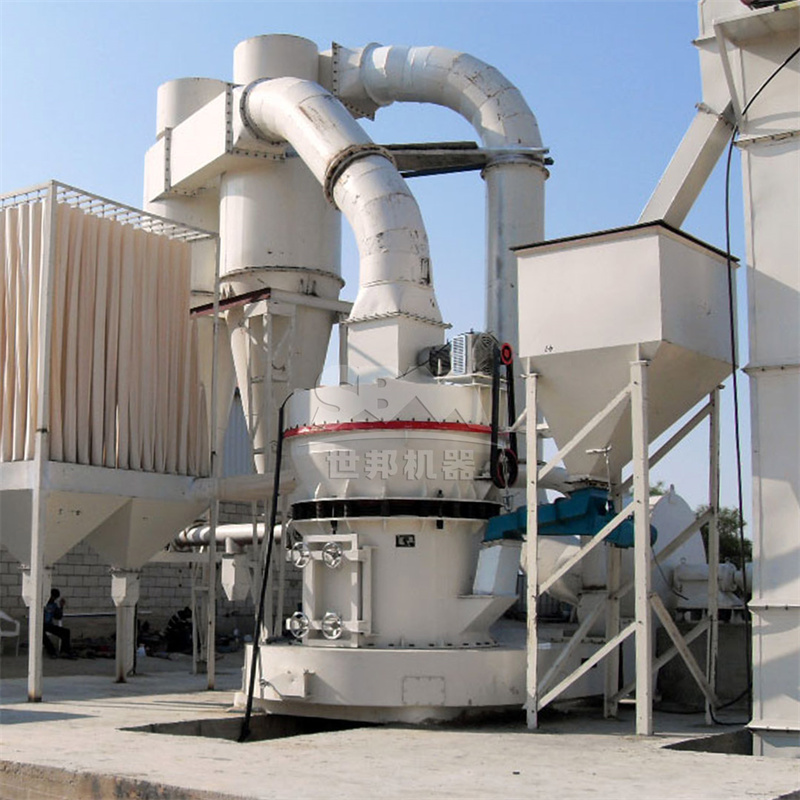
Economic Assessment and Project Sizing
Capital investment often dictates technology; however, the project’s Net Present Value can be seriously affected by milling. If the production target is to produce a high SSA product for paper filler applications (PCC-like properties but from natural limestone), you must use a specialized grinding mill without the high maintenance costs of a jet mill. The SCM1000/1250 is a wise investment due to its high output power efficiency. For instance, the SCM1000 achieves 1.0-8.5 t/h with a 132kW main motor. This power rating ensures low internal breakage and stable operation.
Additionally, analyzing the cost of operation, the difference between SCM1680 and any classical ball mill is significant. As highlighted, ball mill grinding media can weigh over 100 tons and draw massive power. The SCM1680’s grinding path relies on mechanical pressure; the unit runs at high efficiency using 35% less floor space and lower kWh per finished ton. A standard modular assembly configuration for the SC, like the Vertical Turbine Classification system, has a proven adjustment range for the separation gap without stopping the main drive, maximizing machine uptime.
Recommendation for High SSA Limestone Processing
Given the growing demand for ultra-fine powder < D97 = 10µm in the plastic masterbatch industry, we strongly recommend the SCM Series Ultrafine Mill. The specific vertical turbine classifier mechanism guarantees no coarse powder mixing, which is the most vital parameter for achieving a High Specific Surface Area grade. Furthermore, this machine is engineered to process materials with specific optical properties (like whiteness) without over-grinding. The SCM line is exceptionally competent at handling high-throughput requirements. For the 1250-mesh (10 µm) standard mark, the SCM1000 or SCM1250 will turn limestone of a 20mm input size into a premium ultrafine powder while pushing through 8.5 – 14 tons per hour of final product. It is energy wise and meets the strict noise pollution limits, incorporating low-emission standards for both air & sound. In terms of model adaptation for the full project lifecycle, it is common to partner this SCM mill with our extensive jaw crusher or one MTW European mill; this maximizes crushing rates of oversized aggregate blocks to achieve minimal raw product cost.
The development of the industrial processing facility of the future begins with the pulverization stage. Precision and cleanliness are key performance parameters of a smart factory. The SCM and MTW series allow for intelligent control systems to be installed, automating production procedures. Therefore, to address the essential demand for ‘High Specific Surface Area’, engineers and plant managers must choose the excellent efficiency of the SCM Series Ultrafine Mill. If your materials are exceedingly coarse, or your system requires a larger capacity coarser output that can then feed an SCM, the MTW Technical Process (simplified transmission structure and wear-resistant construction) remains our optimal secondary recommendation.
Conclusion
To achieve consistency in ultra-fine filled composite materials, the parameters around the specific surface area must be exact, and the physical specification of the mill must be designed for stability. Whether using MTW series for medium grinding or LM vertical mills for large-scale systems, the recommendation stands to place SCM Series as the core solution when focusing strictly on high-end ultra-fine classification. Our pulverizing machines ensure high precision output, improved capacity utilization, and minimal consumption. Before you buy, check the model rating against actual production, we have multiple SCM variants compatible with a scalable production chain. Incorporating this milling technology ensures that your high specific surface area production economics are sustainable and top-ranked.