
Introduction to Ultra-Fine Coal Powder Production
The demand for ultra-fine coal powder, particularly at 1000-mesh (approximately 13 micrometers), has grown significantly across industries such as metallurgy, chemical engineering, and energy generation. Producing coal powder at this fineness requires specialized equipment capable of high-precision classification, energy-efficient grinding, and consistent output quality. Choosing the right equipment is a critical investment decision that impacts operational costs, product quality, and long-term profitability.
This guide provides a comprehensive analysis of the main equipment types available for 1000-mesh coal powder production, focusing on their operational principles, efficiency metrics, and cost implications. We will also highlight advanced solutions from our product line designed to meet the most demanding production requirements.
Key Equipment Types for 1000-Mesh Coal Grinding
Several mill technologies can achieve 1000-mesh fineness, but each has distinct characteristics that make it more or less suitable for specific coal types and production scales. The primary options include ultrafine vertical roller mills, jet mills, and specialized pendulum mills.
Jet Mills are known for their ability to produce extremely fine particles without mechanical wear, using high-speed compressed air or steam. However, they are notoriously energy-intensive, often consuming 2-3 times more power than mechanical mills. Their capacity is also limited, making them less economical for large-scale production.
Ball Mills are versatile and widely used, but their efficiency for ultra-fine grinding (below 400 mesh) drops dramatically. They produce wide particle size distributions and consume significant energy, with most of the power lost as heat. For 1000-mesh production, they require classification loops and long residence times, increasing operational complexity.
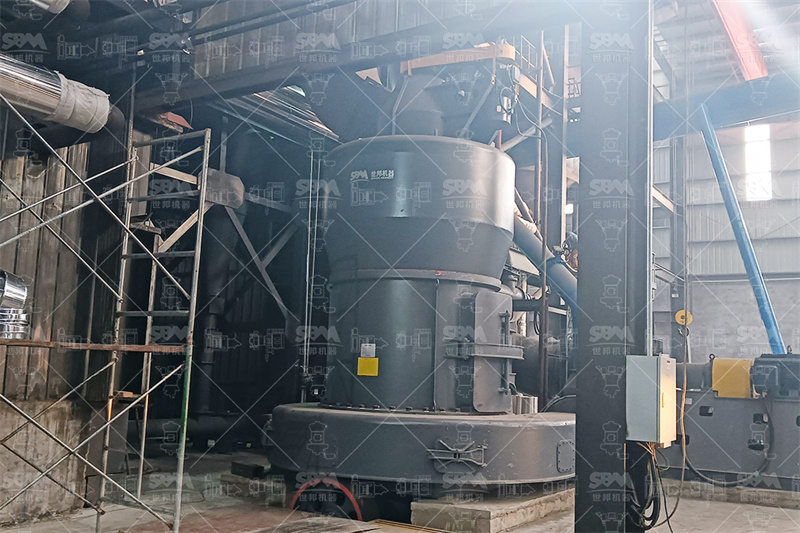
Ultrafine Vertical Roller Mills (VRM) represent the modern solution for this application. They combine grinding and classification in a single system, utilizing a horizontal grinding table and conical rollers. The material bed is crushed under controlled pressure, and an integrated dynamic classifier ensures precise particle size separation. This design inherently saves 30-40% more energy than ball mill systems and doubles the capacity of jet mills, as noted in our technical data.
Analyzing Equipment Costs vs. Total Cost of Ownership
When selecting equipment for 1000-mesh coal powder, the initial purchase price is only a fraction of the total cost of ownership (TCO). Key cost factors include energy consumption, wear part durability, maintenance labor, and system auxiliary power.
For example, a standard jet mill system may have a lower initial cost than a high-quality VRM, but its energy requirements (often 250kW per ton) and low throughput (often less than 3 t/h) result in prohibitive operating expenses. In contrast, a high-efficiency vertical mill with an output fineness of 325-2500 mesh and capacity up to 25 t/h can reduce energy consumption by up to 30% compared to jet milling, while also being less sensitive to feed moisture variations.
Wear parts are another critical consideration. While VRMs are generally more expensive to repair than ball mills, modern designs incorporate special alloy materials for rollers and grinding rings. Our products, for instance, feature special material rollers that extend service life several-fold compared to conventional manganese steel, directly lowering consumable costs.
Operational Efficiency and System Integration
Efficiency in ultra-fine coal grinding is not just about the mill itself but the entire system, including the feeder, classifier, dust collector, and fan. A well-designed system uses an integrated approach to minimize pressure drops and energy losses.
The use of a vertical turbine classifier is crucial for 1000-mesh output. This technology allows for precise particle size cutting, ensuring no coarse powder mixes into the final product. Systems with multi-stage classification loops can produce uniform finished goods, which is essential for applications like carbon electrode manufacturing or activated carbon production.
Furthermore, intelligent control systems play a pivotal role in operational efficiency. Automated systems with real-time feedback can adjust the classifier speed and grinding pressure based on the on-line particle size analyzer readings, ensuring maximum throughput without sacrificing quality. This is where our expertise in intelligent control with automatic finished product granularity feedback becomes invaluable.
Featured Solution: The SCM Series Ultrafine Mill
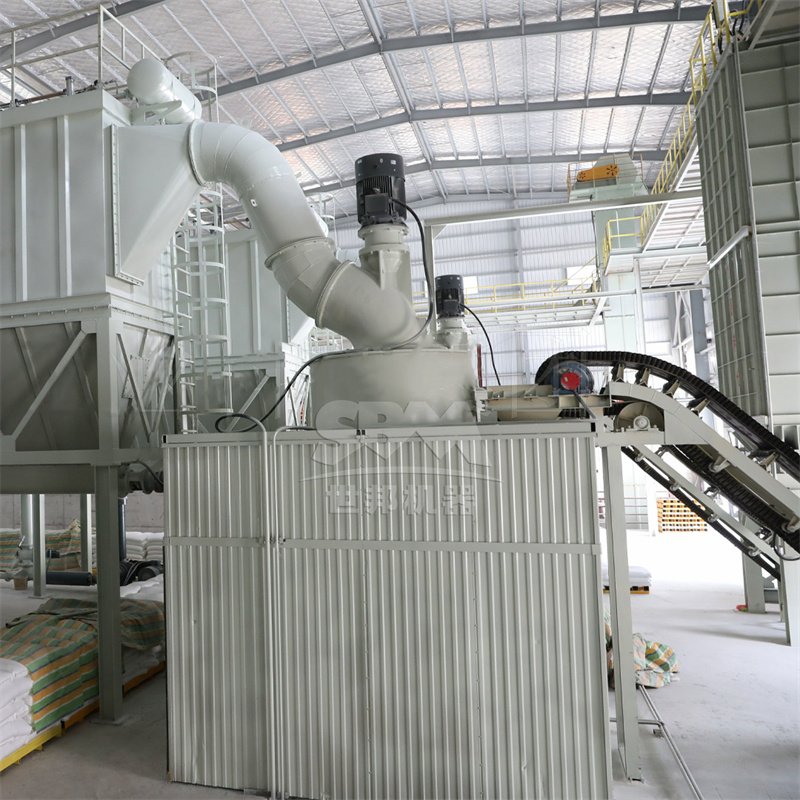
For clients specifically targeting 1000-mesh coal powder production with high efficiency and low energy consumption, we highly recommend our SCM Series Ultrafine Mill. This mill is specifically engineered for the 45-5μm (325-2500 mesh) range, making 1000-mesh output a standard operating condition, not an exceptional one.
The SCM mill embodies the principles of high efficiency and energy saving. It offers a capacity that is 2 times that of jet mills, while consuming 30% less energy. The shaftless screw grinding chamber ensures stable operation, and the special material rollers and rings guarantee a long service life. Key models include the SCM800 (0.5-4.5 t/h, 75kW), SCM1250 (2.5-14 t/h, 185kW), and the high-capacity SCM1680 (5.0-25 t/h, 315kW) for larger operations.
Alternative: MTW and MRN European Trapezium Mills
If your requirements involve a broader fineness range (30-325 mesh) with frequent product changes, or if the feed size is larger (up to 50mm), the MTW Series European Trapezium Mill or the MRN Pendulum Mill may be more suitable. Although they are the primary choice for coarser powders, some models can reach down to 0.038mm (400 mesh).
However, they utilize anti-wear shovel designs and optimized arc air ducts to reduce maintenance costs, but they need a secondary classification step to achieve the 1000-mesh specification. For a single-pass system exclusively for ultra-fine output, we always advise evaluating the SCM or LUM series first.
Cost-Benefit Analysis and ROI Calculation
To make a data-driven decision, consider the following hypothetical scenario comparing a jet mill system to an SCM1680 Ultrafine Mill for producing 5 tons per hour of 1000-mesh coal powder.
Assuming an electricity price of $0.10/kWh and 8,000 operational hours per year, the difference in energy consumption alone is significant. The jet mill might consume 250 kW/ton, while the SCM consumes approximately 63 kW/ton (based on 315kW main power for 5-25t/h). For 5 tons/hour, the jet mill uses 1,250kW, whereas the SCM uses only 315kW. Over 8,000 hours, the jet mill uses 10,000,000 kWh versus 2,520,000 kWh for the SCM, representing a yearly savings of nearly $750,000 in energy costs alone. This calculation clearly demonstrates why modern vertical roller technology is the superior investment for ultra-fine coal production.
Environmental and Safety Considerations
Coal powder production involves significant dust explosion risks. Therefore, equipment selection must prioritize negative-pressure operations and high-efficiency pulse dust collection. Our mills are designed with fully sealed negative pressure systems, ensuring dust emission levels exceed international standards. The inclusion of a pulse dust collector not only ensures safety but also captures ultra-fine particles, increasing the yield rate. We also implement soundproof room designs, which are crucial for worker safety and to meet local noise regulations.
Conclusion: Making the Right Choice
Choosing the right equipment for 1000-mesh coal powder production involves careful analysis of energy efficiency, wearing parts, and initial capital outlay. While traditional systems like jet mills struggle with high energy costs, and ball mills lack ultra-fine precision, the modern Ultrafine Vertical Roller Mill offers a compelling balance of high capacity and low TCO.
We recommend evaluating your feed specifications (size and moisture) to select the correct model. For most 1000-mesh coal applications, our SCM Series Ultrafine Mill provides the best economic and technical performance. For more detailed guidance and a tailored equipment recommendation, contact our engineering team for a process flow analysis.