
Introduction: The Critical Role of Limestone Powder in AAC Production
In the manufacturing of Autoclaved Aerated Concrete (AAC), the quality of raw material processing directly determines the performance, consistency, and cost-efficiency of the final product. Limestone, as a primary source of calcium oxide (CaO), must be finely ground to react with silica under high-pressure steam curing conditions. The fineness, particle size distribution, and throughput of the limestone powder significantly influence the formation of tobermorite crystals, which are responsible for the mechanical strength and thermal insulation properties of AAC blocks. Consequently, selecting the right processing equipment is not merely a procurement decision—it is a strategic investment that affects plant productivity, energy consumption, and product quality for decades.
This guide provides a comprehensive framework for AAC plant managers, process engineers, and investors to evaluate and choose limestone grinding equipment. We will discuss key selection criteria, compare different mill types, and highlight advanced features that modern machines offer.
Key Selection Criteria for Limestone Grinding Equipment
Before diving into specific equipment models, it is essential to establish a set of technical and economic parameters that will guide the selection process. These criteria are universally applicable and help in filtering out unsuitable options early in the decision-making phase.
1. Raw Material Properties and Feed Size
Limestone from different quarries varies in hardness, moisture content, abrasiveness, and chemical purity. The feed size—typically from a primary crusher—dictates the required reduction ratio of the mill. For AAC plants, limestone is usually crushed to less than 20-30 mm before fine grinding. Equipment like the Hammer Mill (0-3mm) can effectively handle feed sizes up to 40 mm and reduce the material to 0-3 mm, making it an ideal pre-grinding solution. However, for final pulverization to 45-75 μm, a dedicated fine grinding mill is necessary.
2. Required Fineness and Particle Size Distribution
AAC specifications typically demand that limestone powder has a fineness of 45-75 μm (200-325 mesh) with a controlled percentage of oversize particles. A narrow particle size distribution ensures uniform reactivity during autoclaving. Over-grinding wastes energy and reduces throughput, while under-grinding compromises product quality. Therefore, the classifier efficiency of the mill is a paramount feature. For operations requiring ultra-fine powder (e.g., for special AAC additives), mills like our SCM Series Ultrafine Mill can produce powders from 325 to 2500 mesh (45-5 μm) with high-precision classification, ensuring no coarse powder mixes into the final product.
3. Capacity and Throughput Requirements
The hourly production capacity of the grinding system must align with the AAC plant’s overall design capacity. For instance, a plant producing 200,000 m³ of AAC blocks per year may require 15-25 tons of limestone powder per hour, while a smaller plant might only need 5-10 t/h. Choosing a mill with too large a capacity increases capital and operational costs unnecessarily, while an undersized mill becomes a bottleneck. It is advisable to consider future expansion plans. Our MTW Series European Trapezium Mill and LM Series Vertical Roller Mill offer capacities ranging from 3 to 250 t/h, covering nearly every possible plant size.
4. Energy Consumption and Operational Cost
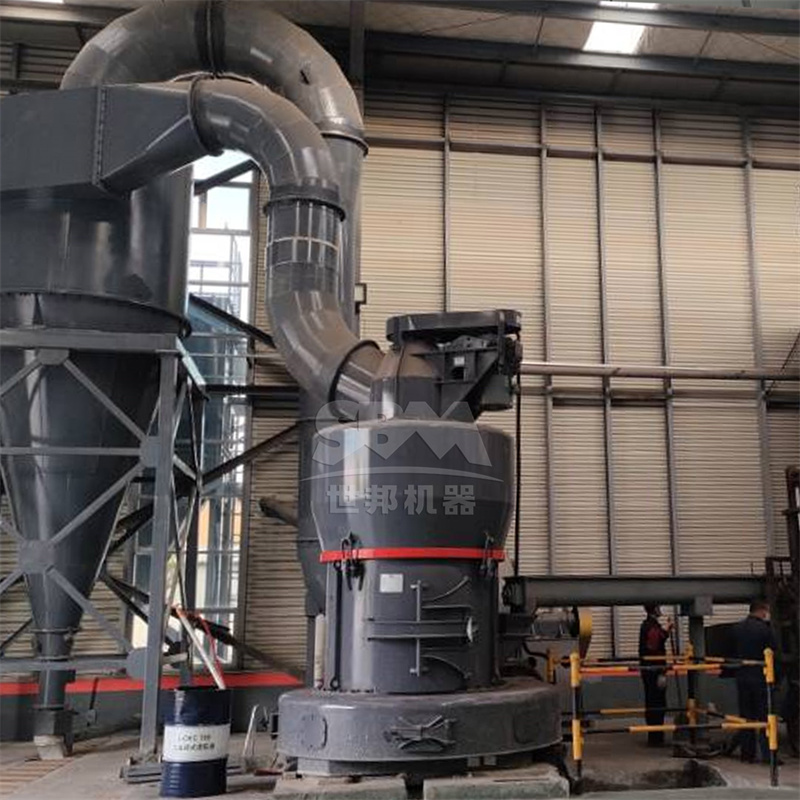
Grinding is an energy-intensive process, often accounting for more than 60% of the total electricity demand of an AAC plant. Therefore, the specific energy consumption (kWh/t) of the mill is a decisive factor. Traditional ball mills, while reliable, are notoriously inefficient. In contrast, vertical roller mills (VRMs) and modern trapezium mills employ bed-grinding and advanced drive systems to reduce energy consumption by 30-40%. For example, our LM Series Vertical Roller Mill integrates crushing, drying, grinding, and classification into one unit, drastically reducing auxiliary equipment energy needs. Moreover, its non-contact design between rollers and table extends wear part life, lowering maintenance costs over the equipment’s lifetime.
Comparative Analysis of Grinding Equipment for AAC Plants
To make a well-informed choice, one must understand the strengths and limitations of each technology available in the market.
Option A: Ball Mill (0.074-0.8mm)
The ball mill is a classic solution for limestone grinding. It consists of a rotating cylinder filled with steel balls and liners. The material is crushed by impact and attrition. Its advantages include high reliability, low capital cost, and the ability to grind very hard materials. However, its disadvantages are significant for modern AAC plants: high energy consumption, large floor space requirement (up to 50% more than a vertical mill), and less precise particle size distribution. While we offer high-capacity ball mills (up to 450 t/h), we often recommend them for plants where electricity is inexpensive and where the simplicity of operation is the top priority.
Option B: Vertical Roller Mill (LM Series) – The Modern Standard
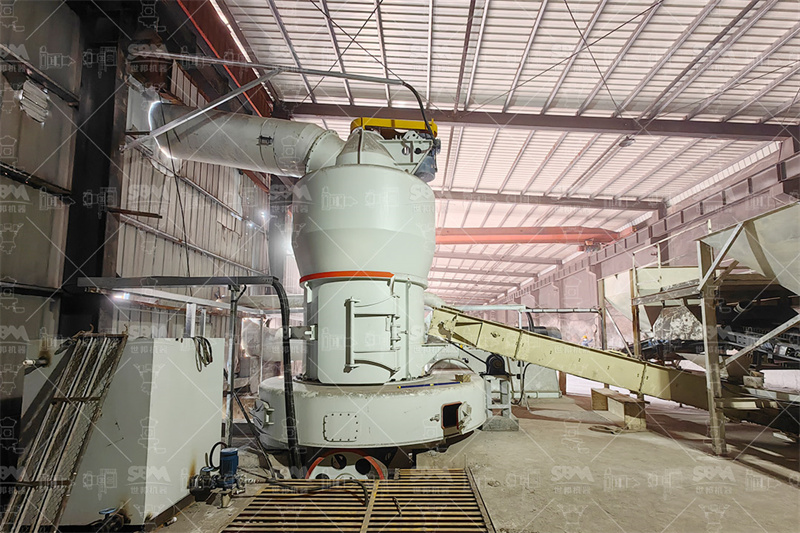
Our LM Series Vertical Roller Mill has become the industry standard for AAC limestone grinding. It combines crushing, grinding, drying, and classifying in a single unit. The material is crushed and ground on a rotating table by hydraulic-pressure-driven rollers. Air sweeps the fine particles to a dynamic classifier, while coarse particles return for further grinding. This closed-circuit system ensures high efficiency and precise fineness control (from 170 to 40 μm). The integrated design reduces the floor space by up to 50% and allows outdoor installation, cutting construction costs by 40%. Additionally, the LM mill operates under negative pressure, ensuring a dust-free environment. With capacities from 10 to 250 t/h, it is suitable for mid-to-large-scale AAC plants that demand high productivity and low operational costs.
Option C: European Trapezium Mill (MTW Series) – The Versatile Choice
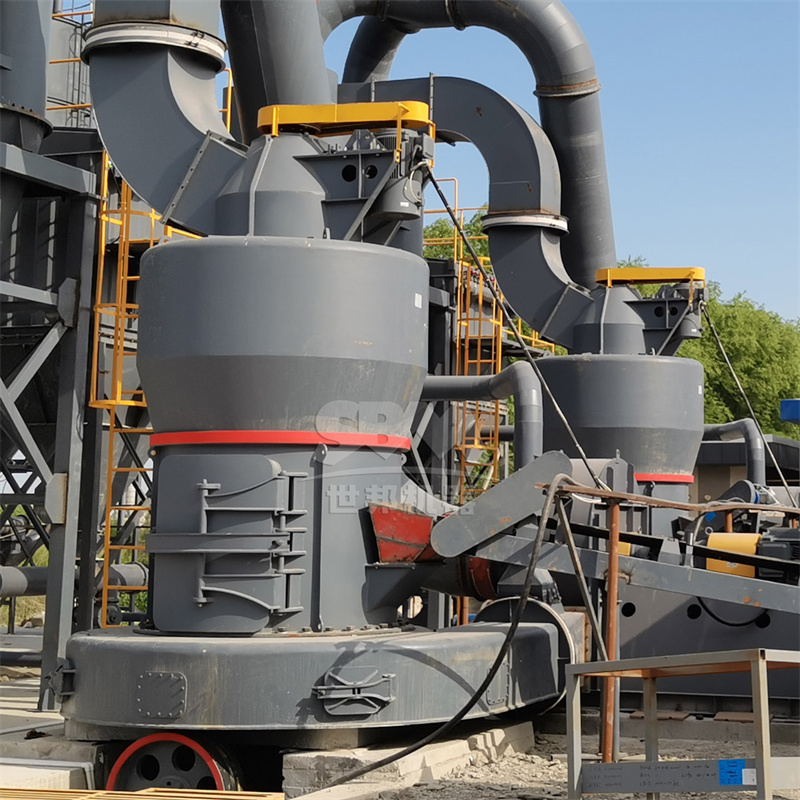
For plants with capacities between 3 and 45 t/h, the MTW Series European Trapezium Mill is an excellent alternative. It features an integral bevel gear drive system that boosts transmission efficiency to 98%. Its optimized arc air ducts minimize airflow energy loss, and the wear-resistant volute structure reduces maintenance costs by 30%. The MTW mill produces fineness in the range of 30-325 mesh, making it ideal for both limestone and gypsum grinding in AAC plants. The new combined shovel blades extend the grinding roller life and reduce the frequency of replacement. This mill is particularly well-suited for medium-scale producers looking for a balance between performance and investment.
Option D: Ultrafine Mill (SCM/LUM) – For Specialized Applications
When high fineness is required—for instance, to improve the reactivity of limestone or to produce specialized AAC products—our SCM Series Ultrafine Mill and LUM Ultrafine Vertical Roller Mill are the go-to solutions. The SCM mill achieves a fineness of 325-2500 mesh with an output of up to 25 t/h, and its capacity is twice that of jet mills while consuming 30% less energy. The LUM mill features multi-rotor classification technology, guaranteeing no coarse particles. Although these ultrafine mills are not typically used for bulk limestone grinding due to their higher specific energy consumption, they are indispensable for producing high-value fillers or additives.
Recommendations for Your AAC Plant
Based on the above analysis, we offer the following recommendations:
For Standard Lime Grinding (45-75 μm): Choose the LM Series or MTW Series
For the main grinding task of producing AAC-grade lime powder (typically 325 mesh), the LM170K Vertical Roller Mill or MTW138Z Trapezium Mill are top choices for a plant requiring 15-30 t/h. The LM170K’s capacity is 18-48 t/h with a power of 400 kW, while the MTW138Z produces 6-17 t/h with a 90 kW main motor. If your plant has a capacity of 20 t/h, the LM170K is more efficient due to its lower energy consumption per ton. However, if floor space is limited or if you have multiple raw materials to grind, the MTW138Z’s versatility and lower initial cost could be advantageous.
For High-Fineness Additives or Small-Scale Production: Consider the SCM Mill
If your process requires limestone powder finer than 325 mesh (for example, for foam concrete or to improve the autoclave reaction rate), we recommend the SCM900 Ultrafine Mill (capacity 0.8-6.5 t/h, fineness up to 2500 mesh). It is also an excellent choice for pilot plants or existing plants that need to supplement their main grinding line with a high-precision unit.
Case Study: Optimal Configuration for a Mid-Sized AAC Plant
Let’s consider a 300,000 m³/year AAC plant. The limestone crushing circuit reduces the raw material to 20 mm. For primary reduction, the PC4012-90 Hammer Mill is an efficient and inexpensive choice, crushing the 20 mm feed down to 0-3 mm at 15-40 t/h. This pre-crushed material is then fed to an LM190K Vertical Roller Mill (capacity 23-68 t/h, power 500 kW) to produce 325-mesh powder. The LM190K system includes a built-in dynamic classifier and a pulse-jet dust collector, ensuring clean operation. This configuration would have a total installed power of roughly 1 MW, with the grinding section consuming around 0.7 MW, which is acceptable for the plant’s capacity. If the plant also needs to grind silica sand or fly ash, the MTW mill can be added as a second line, providing operational flexibility.
Advanced Features to Look For
Regardless of the mill type, ensure that the equipment you select includes the following advanced features:
- Intelligent Control Systems: Modern mills like the LM and MTW series feature expert-level auto-control systems with real-time monitoring of parameters such as vibration, temperature, and current. This reduces manual intervention and stabilizes product quality.
- High-Efficiency Classifiers: Look for vertical turbine classifiers with multi-stage adjustment. They ensure precise particle size cutting and prevent coarse powder from entering the finished product silo.
- Environmental Compliance: The equipment must be fully sealed and operate under negative pressure. Our pulse dust collectors have an efficiency exceeding international standards, and the soundproof enclosures maintain noise levels below 85 dB.
- Ease of Maintenance: Quick-change roller assemblies, hydraulic systems for lifting grinding rollers, and wear-resistant liners are critical for reducing downtime. The LM mill’s modular roller assembly can be replaced in hours, not days.
Conclusion: Making the Right Choice
Selecting the limestone grinding equipment for an AAC plant is a multifaceted decision that should be based on raw material characteristics, desired fineness, capacity, energy costs, and long-term expansion plans. The initial purchase price is important, but the total cost of ownership—including power consumption, wear parts, and maintenance—has a much greater financial impact over the plant’s lifespan. We strongly recommend that AAC producers assess their specific conditions and consult with our engineers to perform a comprehensive technical analysis. With a proven range of milling solutions including the LM, MTW, SCM, and LUM series, our company is uniquely positioned to provide the right equipment for any AAC production scenario, ensuring high efficiency, lower costs, and a superior final product.