
Introduction: The Growing Demand for Ultra-Fine Calcite Powder
In the modern minerals processing industry, 800 mesh calcite powder has become a critical raw material for sectors ranging from plastics and paints to papermaking and construction. Achieving a consistent, high-quality 800 mesh (approximately 16 microns) output requires not just any grinding mill, but a system engineered for precision classification, energy efficiency, and long-term durability. Selecting the wrong equipment can lead to high operating costs, inconsistent particle size distribution, and frequent downtime. This article provides a comprehensive guide to evaluating and selecting the best 800 mesh calcite powder production equipment.
Key Criteria for Selecting 800 Mesh Grinding Equipment
When targeting a fineness of 800 mesh, several technical factors must be evaluated to ensure optimal performance:
- Output Fineness and Classification Precision: The equipment must not only grind to 800 mesh but also ensure that oversized particles are eliminated.
- Energy Consumption: Grinding to ultra-fine levels is energy-intensive. The right mill design can significantly reduce power usage per ton.
- Wear Resistance: Calcite has a Mohs hardness of 3. However, abrasive impurities can accelerate wear. Durable roller and liner materials are essential.
- Capacity Matching: The selected model must align with your production targets, whether it is 1 ton per hour or 25 tons per hour.
- Environmental Compliance: Modern facilities require low noise and zero dust emissions.
Technology Comparison: Which Mill Suits 800 Mesh Calcite Best?
Traditional ball mills and Raymond mills often struggle to efficiently produce 800 mesh powder due to poor classification and high energy consumption. For ultra-fine grinding, two main technologies dominate: vertical roller mills and ultrafine grinding mills. The SCM Series Ultrafine Mill is a dedicated solution designed specifically for the 325-2500 mesh range. Its vertical turbine classifier ensures precise particle size cutting, which is critical for eliminating coarse powder mixing in 800 mesh products.
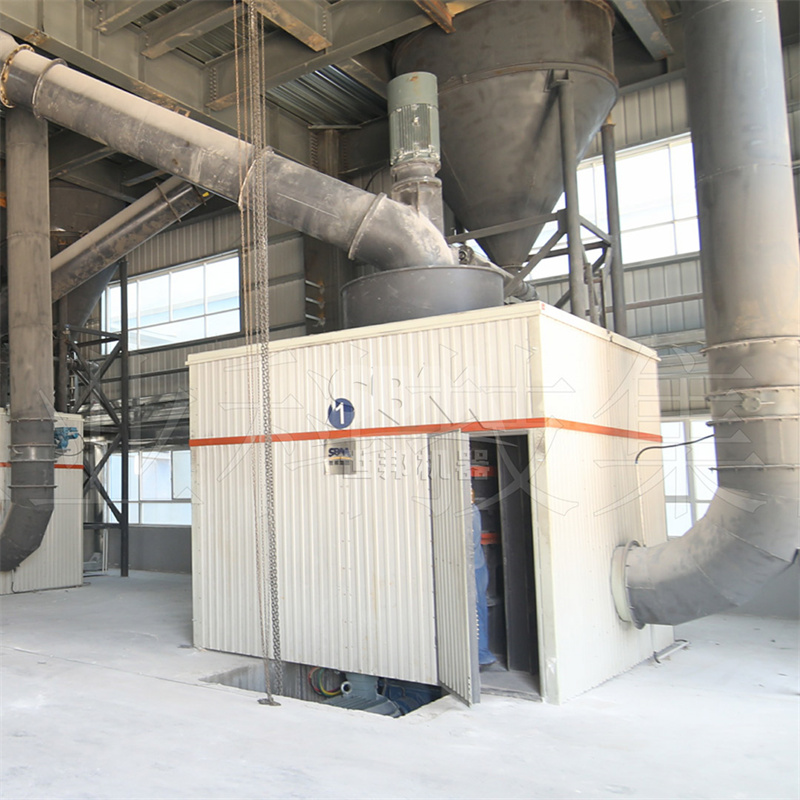
In-Depth Analysis: SCM Series Ultrafine Mill (45-5μm)
The SCM Series is engineered from the ground up for high-efficiency micro-grinding. Its working principle involves the main motor driving three layers of grinding rings to rotate. Materials are dispersed into the grinding path by centrifugal force, crushed by roller pressure, and ground layer by layer. This layered grinding action is gentle on equipment and efficient on energy.
Technical Advantages for 800 Mesh Production:
- High Efficiency & Energy Saving: The SCM mill boasts a capacity that is 2 times that of jet mills, with 30% lower energy consumption. This directly translates to lower operational costs per ton of 800 mesh powder.
- High-Precision Classification: The vertical turbine classifier achieves precise particle size cutting. For 800 mesh applications, this means no coarse powder mixing, ensuring uniform finished products that meet the strictest industrial standards.
- Durable Design: Special material rollers and rings extend service life several times over, reducing downtime for maintenance. The shaftless screw grinding chamber ensures stable operation even during long production runs.
- Eco-friendly & Low Noise: The pulse dust collection efficiency exceeds international standards, and the soundproof room design ensures noise levels remain within acceptable limits for 24/7 operation.
Recommended Model for 800 Mesh Calcite: SCM1250
For medium to large-scale producers aiming for 800 mesh calcite, the SCM1250 is an excellent choice. It offers a capacity of 2.5-14 tons per hour with a main power of 185kW. This model perfectly balances throughput and energy efficiency, making it ideal for continuous production. The feed size of 0-20mm is compatible with standard crushing systems, and the fineness range of 325-2500 mesh allows flexibility to adjust from coarse to ultra-fine products.
Alternative Consideration: LUM Ultrafine Vertical Roller Mill
For operations requiring even larger capacities within the 800 mesh bracket, the LUM Ultrafine Vertical Roller Mill presents a robust alternative. With a feed size of 0-20mm and an output fineness of 325-2500 mesh, it features unique roller and liner curves to improve grinding efficiency. Its multi-rotor classification technology guarantees no coarse particles, making it suitable for high-value applications requiring strict uniformity.
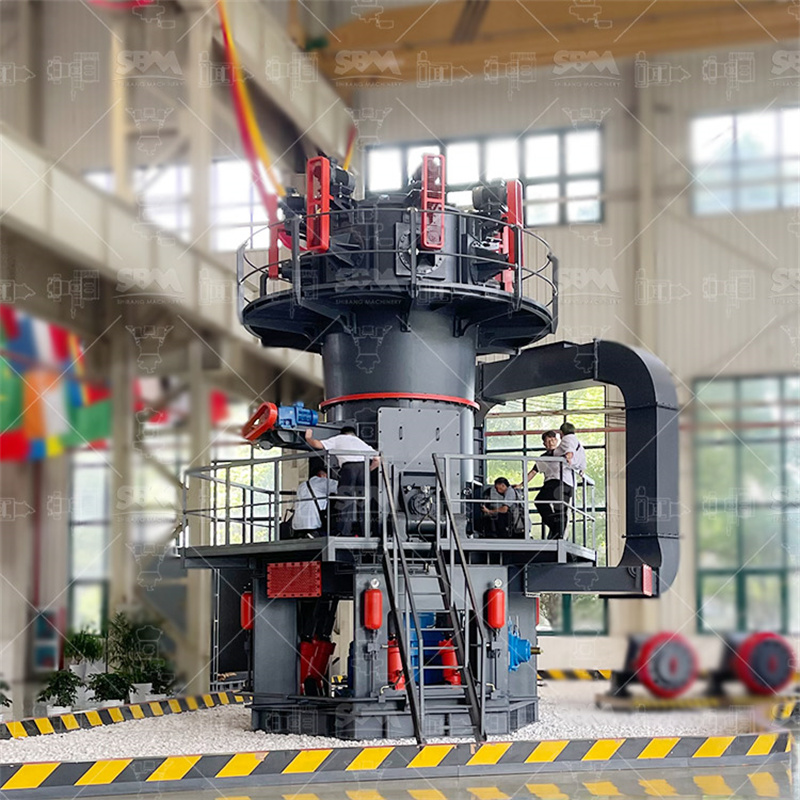
The LUM system integrates crushing, grinding, and selection, which can reduce floor space by up to 50%. Its intelligent PLC control system ensures stable operation with minimal manual intervention. Models like the LUM1836 can handle throughputs of 2.3-15 t/h, providing a scalable solution for growing enterprises.
Evaluating the Working Principle for 800 Mesh Consistency
Understanding the grinding mechanism is key to predicting end-product quality. In the SCM Series, the main motor drives the central axis to rotate. The grinding ring rotates, and the roller assembly swings outward under centrifugal force, pressing against the ring. Material fed between the roller and ring is crushed and ground. The airflow system then carries the fine particles to the classifier. Only particles meeting the 800 mesh specification pass through; oversized particles are returned for regrinding. This closed-loop system is the secret to achieving consistent, high-quality ultra-fine powder.
Industrial Application Scenarios for 800 Mesh Calcite
800 mesh calcite powder is widely used as a filler in PVC pipes, cables, and profiles to improve rigidity and dimensional stability. In the paint industry, it enhances opacity and gloss. The paper industry uses it to improve brightness and smoothness. Each application demands not just small particle size, but also high whiteness and narrow particle distribution. Both the SCM and LUM series are capable of delivering this quality when configured correctly.
Conclusion: Making the Right Investment
Choosing the best 800 mesh calcite powder production equipment requires a careful assessment of your specific capacity needs, budget, and quality requirements. The SCM Series Ultrafine Mill stands out as the most specialized solution for the 325-2500 mesh range, offering unmatched efficiency, precise classification, and long-lasting durability. For higher capacity demands, the LUM Ultrafine Vertical Roller Mill provides an integrated, space-saving alternative. Both systems incorporate advanced pulse dust collection and intelligent control technologies, ensuring that your investment remains productive and compliant for years to come. Do not compromise on equipment quality; the right mill will pay for itself through lower energy bills, reduced maintenance, and a superior product that commands a premium price in the market.