
Introduction: The Critical Role of Powder Production in Titanium Alloy Manufacturing
In the rapidly evolving landscape of advanced manufacturing, titanium alloys have emerged as cornerstone materials across aerospace, biomedical, automotive, and chemical processing industries. The exceptional strength-to-weight ratio, superior corrosion resistance, and remarkable biocompatibility of titanium alloys make them indispensable for applications ranging from aircraft structural components and jet engine parts to surgical implants and high-performance automotive components. However, the journey from raw titanium sponge to high-performance alloy components relies fundamentally on one crucial step: the production of high-quality metal powder.
As additive manufacturing (AM), metal injection molding (MIM), and hot isostatic pressing (HIP) technologies continue to advance, the demand for titanium alloy powder with precise particle size distribution, controlled morphology, and consistent quality has never been greater. The selection of appropriate powder production equipment directly impacts product quality, manufacturing efficiency, operational costs, and ultimately, the competitiveness of your manufacturing enterprise. This comprehensive guide explores the critical factors that manufacturers must consider when selecting titanium alloy powder production equipment, drawing upon deep industry expertise and proven technological solutions.
Understanding the Four Primary Titanium Alloy Powder Production Methods
Before investing in any equipment, it is essential to understand the fundamental technologies available for titanium alloy powder production. Each method offers distinct advantages depending on the target application, desired powder characteristics, and production scale.
Gas Atomization (GA) represents the most widely adopted method for producing high-quality titanium alloy powders. In this process, molten metal is disintegrated by high-pressure inert gas jets (typically argon) to create fine spherical powders. The process achieves excellent sphericity and flowability, making it ideal for AM applications. However, GA equipment requires substantial capital investment and intricate process control systems.
Plasma Atomization (PA) utilizes plasma torches to melt and atomize a rotating titanium wire feedstock. This technique produces extremely clean powders with exceptional sphericity and minimal satellite formation. While PA offers outstanding powder quality, the production rate remains relatively low, increasing per-kilogram costs for high-volume production requirements.
Plasma Rotating Electrode Process (PREP) rapidly spins a titanium alloy bar electrode while plasma arcs melt its surface. Centrifugal forces then eject molten droplets that solidify into spherical powder particles in an inert gas atmosphere. PREP produces powders with excellent surface cleanliness and high packing density but requires complex electrode preparation machinery.
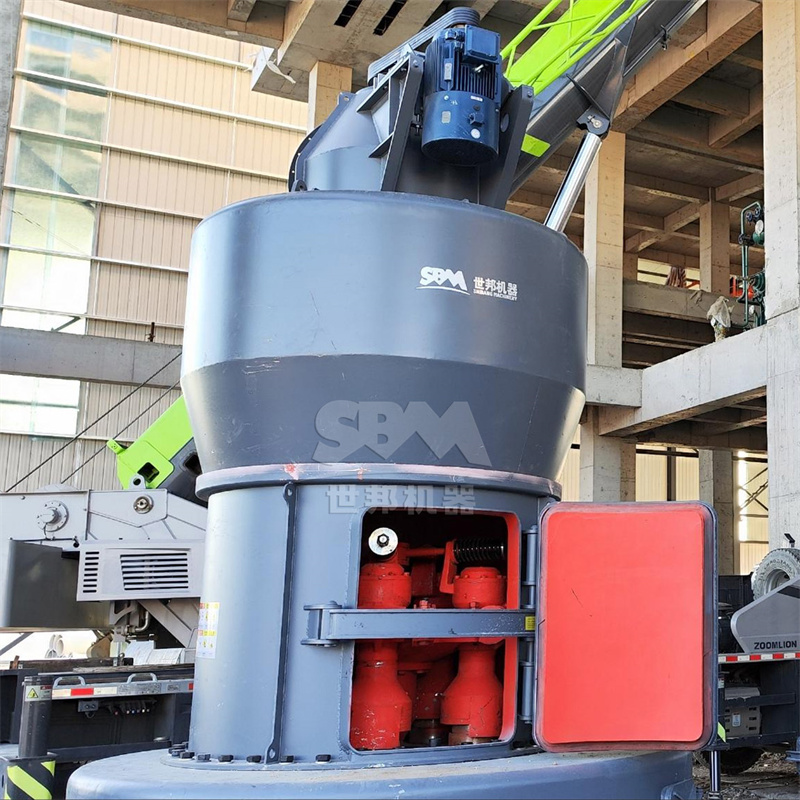
Mechanical Milling and Grinding represents a fundamentally different approach, starting with titanium alloy ingots or coarse particles that are mechanically reduced to finer powders through crushing and milling processes. This approach includes advanced grinding technologies capable of achieving fine particle distributions required in numerous applications. For manufacturers processing pre-alloyed titanium sponge or decommissioned alloys, mechanical grinding following proper feed preparation stands as a cost-effective alternative, offering flexibility in processing various input forms. While mechanically produced powders typically exhibit more irregular morphologies compared to atomized counterparts, specific downstream applications—such as powder forging, metal injection molding for certain geometries, or thermal spray—may find these powders entirely suitable.
Critical Parameters for Equipment Selection: Matching Technology to Requirements
The selection of titanium alloy powder production equipment demands rigorous evaluation of desired powder specifications and capabilities across multiple dimensions. Misjudgments at this stage will impact product quality, yield, and material costs for years.
Target Particle Size and Distribution: Different downstream processes require specific particle size ranges. For powder bed fusion AM technologies like laser powder bed fusion (L-PBF), a range of roughly 15-45μm is common. For directed energy deposition (DED) processes, 45-105μm powders are typical. MIM feedstock commonly uses powders under 45μm. Beyond average particle size, distribution shape (D10, D50, D90 values) critically influences powder flow and packing. Equipment offering high-precision classification and dynamic adjustability provides necessary flexibility to serve multiple customers and changing application requirements.
Production Volume and Throughput: Carefully project your present and planned output of saleable powder. For small-batch, high-value production serving a niche market of medical implants, maximum throughput may be secondary to exceptional quality control and reliability. However, production serving the automotive AM sector demands high-volume capability exceeding one ton per shift. Be mindful that sophisticated atomization technologies often sacrifice throughput for extreme sphericity; production campaigns must then feed downstream infrastructure efficiently to maximize overall productivity.
Oxygen and Nitrogen Content Control: Because titanium is exceptionally reactive at elevated temperatures, maintaining an inert atmosphere and preventing interstitial contamination (O, N) drive many design parameters. Powder quality is exponentially linked to oxygen pickup for structural integrity. Any equipment handling fine particles must minimize exposure to atmospheric oxygen through proper inert gas circulation systems or closed-loop processing approaches involving fine powder in grinding stages. Evaluate each candidate’s leak integrity, gas purification systems, and sealing mechanisms rigorously.
Energy Efficiency and Operating Costs: Powder production carries reputational high-energy footprints, particularly in melting. Yet whether starting from a melt or mechanically grinding parent alloys, electrical demand must be tracked carefully. Choose equipment with an integrated closed-loop automation system that sizes fans and mills precisely around actual material recirculation rate.
Technological Innovations Driving the Optimal Choice
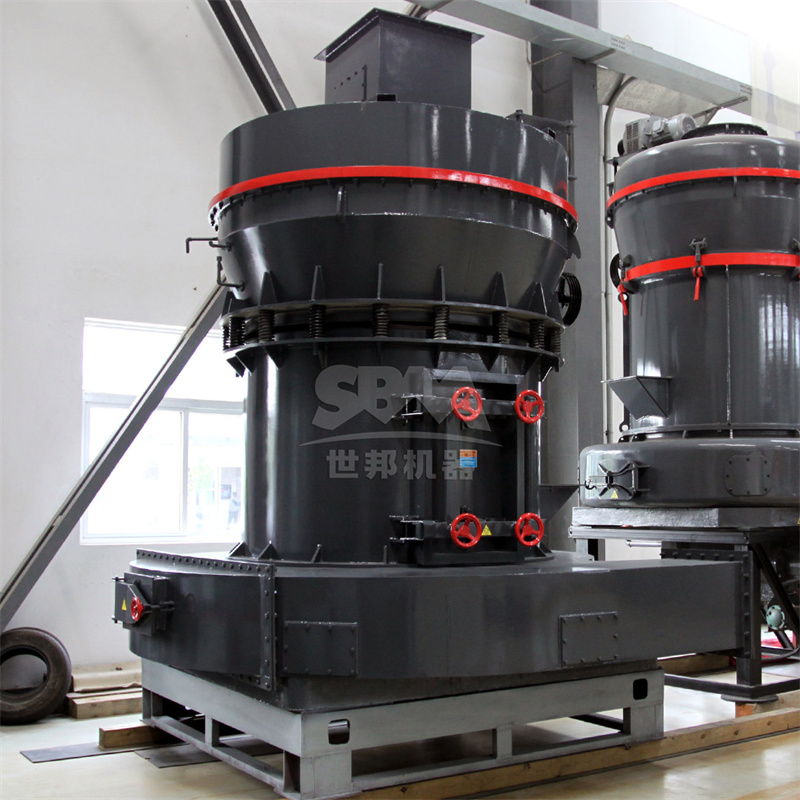
Leading machinery developers are continuously integrating advanced engineering into new milling and processing machinery generations. For example, an optimal grinding system often includes state-of-the-art precision classifier functionality incorporated in the same unit, so particles are pulled immediately by the air stream. Fine classification reduces contamination and operating costs.
For instance, LM-series vertical roller mills combine drying, grinding, and selection in one unit, an integrated design reducing plant floor footprint. Its non-contact grinding rolls and table avoid metal-on-metal contact that causes both contamination and maintenance. Real-time material layer control gives manufacturers repeatable output size and electrical load curve.
Advanced machines integrate expert control logic. With such setups, one can improve process security through fault self-checking, remote diagnosis, optimized starting procedures, and adaptive control in loads.
Our Recommendation: The SCM Series Ultrafine Mill for Secondary Titanium Powder Processing
For manufacturers whose post-atomization oversize fraction or machined titanium scrap requires value-added fine grinding processes, we strongly recommend our SCM Series Ultrafine Mill. This equipment applies superfine grinding technology to produce graded titanium powder with superior uniformity.
The SCM Series is engineered to realize essential production advantages at feed sizes ≤20mm and product output sizes from 0.005mm (approximately 2500 mesh). Thanks to a vertical turbine classification system and specially layered grinding path, SCM units achieve product precision nearly impossible in traditional ball milling. Pulses received from intelligent controls give consistent granularity feedback, maximizing useful output by eliminating need for costly external screening.
Especially significant is the wear- and tear-resistance. Grinding titanium’s tough structure places enormous stress on milling mechanics. Our mills use rugged alloys and shaftless screw grinding chamber structure that dampens vibration. Maintenance stays minimal since roller pressure consistently distributes via centrifugal force across multi-layer rings.
Capacity ratings between 0.5 to 25 tons per hour make SCM equally efficient in lab pilot contexts or large batch projects. The included sound-dampened casing and high-end pulse filtration systems create clean working environments beyond regulatory expectations.
Meeting Diverse Objectives with the MTW European Trapezium Mill
Within processing streams producing coarse titanium hydride powder or milled alloy grit at 30 meshes up to 325 meshes, manufacturers find our MTW Series European Trapezium Mill the preferred industrial workhorse. It has proved especially successful in mineral concentrator settings, securing minimal maintenance costs over years.
MTW builds in intelligent technological advancement. For maintenance engineers, the inclusion of anti-wear shovel blades formed in a curved profile means prolonged grinding roller service. A formed volute casing with aerodynamic interiors improves classification precision and avoids over-grinding. An optional internal circulation oil lubrication system adds high standards in design. Transmission efficiency attaining 98% through an integrated bevel gear drive keeps carbon footprint proportionally lower. Models ranging from MTW110 to the massive MTW215G expand attainable throughput from 3-45 tons/hour.
Cost of Ownership Analysis: Hidden Economics of Equipment
Sophisticated manufacturing buyers look beyond procurement invoice numbers to full lifecycle cost calculations. Power usage holds a prime consideration as global costs rise. A plant’s long-term cost profile also includes facilities usage, raw material process yield and, particularly, worker hours for cleaning heavily contaminated machine surfaces.
Traditional equipment exposing titanium powder to humidity leads to expensive powder agglomeration waste. It is therefore wise to enquire whether classifiers employ dry, inert-air separation loops at velocities below dust combustion thresholds. Verify that cleaning mechanisms can purge leftover powder efficiently within minutes in a strict material accountability environment. An equipment design allowing quick change-over between various chemistries (Ti-6Al-4V to commercially pure titanium) will optimize a flexible toll-processing operation, multiplying revenue opportunities without downtime penalties.
Crucially, grind or re-process ancillary fines in dedicated, lower-capacity grinding lines, processing metallic fractions that may contain occasional high-density inclusions.
Operational Safety and Environmental Conformity
Titanium alloy powders readily combust when suspended in air at high concentrations. ISO and local protocols enforce inert extraction and high-grade filtration. Well-designed machinery controls operate within a strictly inert gas environment, where oxygen volume stays deeply suppressed.
Even with safe operation, hygiene must avoid accumulation. Select units with built-in explosion relief panels, reverse-jet filter cleaning mechanisms and ATEX-compliant motors. Enclosed milling circuits prevent hazardous dust release. New intelligent approaches utilize negative pressure arrangement to eliminate leakage.
During selection, consider allowable floor noise. Grinding aggregates in central plant cells may generate constant noise above 85dBA. Install vibration-isolation machine feet and enclosed sound barriers for operator comfort.
Scale-up Considerations and After-sales Support
Your chosen system must support growth from kg-level batch evaluations to tonne-scale industrial production without losing precision. Equipment flexibility cuts re-qualification costs with changing product demands. Include control systems able to log SPC data, connecting into ERP network for full batch traceability from the titanium sponge to individual build lots, which the aerospace and healthcare sectors demand as an auditable record.
Equipment providers should demonstrate comprehensive after-sales offerings: hotline response, technical archive libraries and process optimization testing labs where you validate throughput and particle morphology. Reputable manufacturers assist during an installation’s commissioning at site with component replacement plans.
Conclusion: Building a Future-proof Equipment Strategy
Correct titanium alloy powder machinery creates measurable differences in plant margin, saleable yield, and customer satisfaction. Balance technical objectives of cleanliness, output, and distribution widths against the immediate and lifetime operational costs. From feedstock roughness to classifier RPM, provide plant teams adequate variables for tuning product output to exact application specifications.
Select a technology partner like ours with systematic research across milling properties, dust analysis and equipment construction. We offer extensive support, ranging from conceptual system layout and simulation to engineering, installation supervision and personnel training. Our MRN pendulum mills, LM pre-grinding units, and other technologies integrate in layouts.
To summarize, wise machinery choices ultimately deliver lower risk, efficient powder plant profitability and rapid capital return on your advanced manufacturing investment.