
Introduction
Magnesite (magnesium carbonate) is a critical industrial mineral used in refractories, magnesium compounds, and various chemical processes. Grinding magnesite to 150 mesh (approximately 100 μm) is a common requirement for many downstream applications, including magnesium oxide production, flame retardants, and animal feed supplements. Selecting the right grinding equipment for 150-mesh magnesite powder is essential to achieve optimal productivity, energy efficiency, and product quality. With a wide range of mills available—from ball mills to ultrafine mills—it is crucial to match the equipment to your specific capacity, fineness, and budget requirements. This article provides a comprehensive guide to help you choose the most suitable 150-mesh magnesite powder production equipment for your grinding plant, with recommendations from our proven product lines.
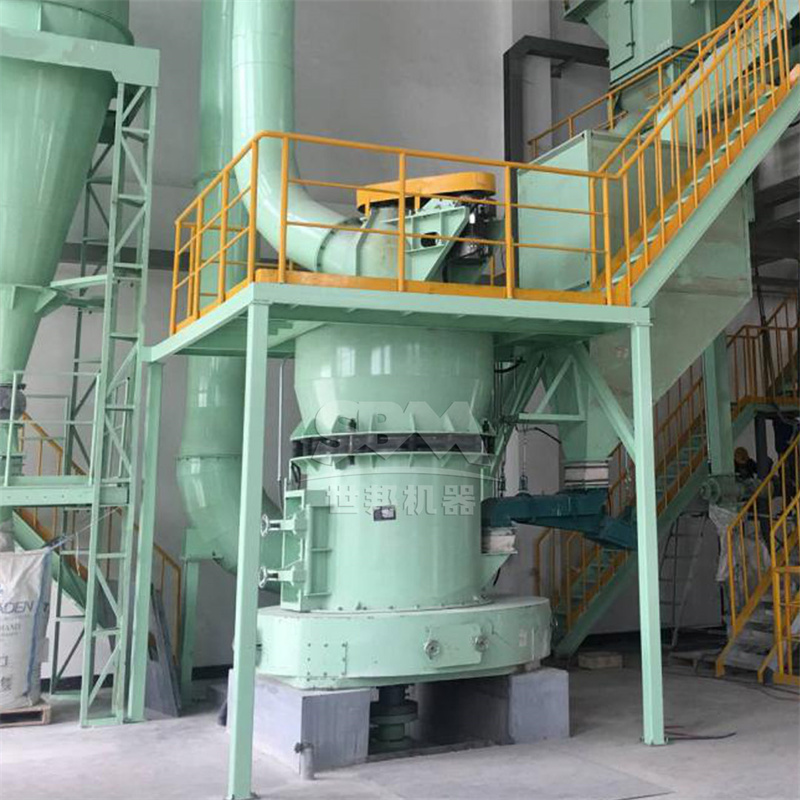
Understanding 150-Mesh Magnesite Powder
Mesh size refers to the number of openings per linear inch in a sieve. A 150-mesh screen has 150 openings per inch, corresponding to a particle size of about 100 micrometers (0.1 mm). This fineness is relatively coarse compared to ultrafine powders (e.g., 1250 mesh), but it still requires efficient grinding and classification to ensure consistent particle size distribution. Magnesite is moderately hard (Mohs hardness 3.5–4.5) and can be abrasive, so equipment must be wear-resistant. The target 150-mesh product is often used in:
- Refractory bricks and monolithics
- Magnesium oxide (MgO) production
- Magnesium sulfate and other chemicals
- Soil amendment and feed additives
Because of these diverse applications, the grinding system must deliver reliable performance with minimal downtime and low operating costs.
Key Factors in Equipment Selection
Before choosing a mill, evaluate the following parameters:
- Capacity requirement: How many tons per hour (t/h) of 150-mesh powder do you need? This determines the mill size and model.
- Feed size: Magnesite ore may come in lumps up to 50 mm or more. The mill’s maximum feed size must accommodate your material.
- Product fineness: While 150 mesh is the target, you may need flexibility to adjust fineness for different product grades.
- Energy efficiency: Grinding is energy-intensive; choose a mill with low power consumption per ton.
- Wear parts and maintenance: Abrasive magnesite requires durable rollers, rings, and liners to minimize downtime.
- Environmental compliance: Dust collection and noise control are essential for regulatory compliance and worker safety.
- Budget and footprint: Consider capital cost, installation space, and infrastructure requirements.
By systematically evaluating these factors, you can narrow down the most suitable mill types.
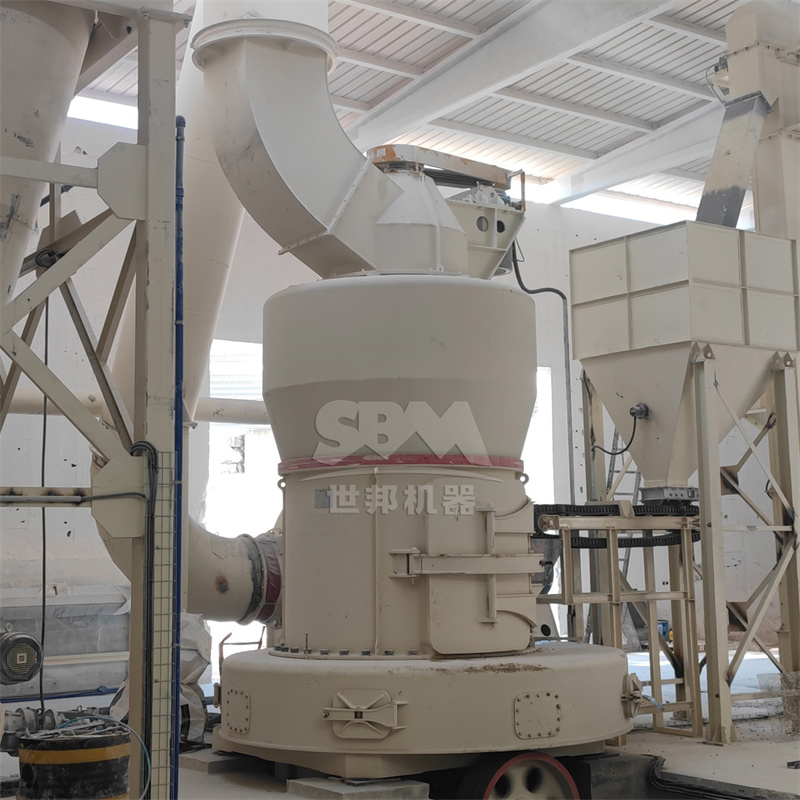
Types of Grinding Mills for 150-Mesh Magnesite
Several mill types can produce 150-mesh powder, each with distinct advantages and limitations:
1. Ball Mills
Ball mills are traditional and robust, capable of grinding magnesite to 150 mesh. They are suitable for large capacities (up to 450 t/h) and can handle feed sizes up to 25 mm. However, ball mills are energy-intensive, noisy, and have a large footprint. They also produce a relatively wide particle size distribution, which may require additional classification. For a 150-mesh product, ball mills are often used in wet or dry closed-circuit configurations. While reliable, they are not the most efficient choice for fine grinding.
2. Raymond Mills (Pendulum Mills)
Raymond mills, such as our MTM or MRN series, are widely used for 150-mesh production. They offer good energy efficiency and can handle feed sizes up to 50 mm. With fineness adjustable from 30 to 325 mesh, they are flexible. The pendulum mill design uses centrifugal force to grind material between rollers and a ring, and an integrated classifier ensures precise top size. These mills are compact, easy to maintain, and suitable for medium capacities (3–22 t/h for MTM, up to 83 t/h for MRN).
3. Vertical Roller Mills
Vertical roller mills (VRMs) like our LM series are highly efficient for grinding magnesite to 150 mesh. They integrate crushing, grinding, and classification, reducing floor space by up to 50%. VRMs have low energy consumption (30–40% less than ball mills) and can handle large capacities (up to 250 t/h). The grinding rollers and table are designed for wear resistance, and the external circulating air system ensures efficient drying and transport. However, VRMs require a higher capital investment and may not be cost-effective for small capacities.
4. Ultrafine Mills
Ultrafine mills, such as our SCM series, are designed for fine and ultrafine grinding (325–2500 mesh). While they can produce 150 mesh, they are typically overkill for such a coarse product. They are best suited when you need the flexibility to produce both 150 mesh and finer grades. SCM mills offer high efficiency and precise classification but come at a higher cost per ton for coarse grinding.
5. Hammer Mills
Hammer mills are used for coarse crushing (0–3 mm) and are not suitable for producing 150-mesh powder directly. They can be used as a pre-grinding step before a fine mill.
Given these options, pendulum mills and vertical roller mills are often the best choices for dedicated 150-mesh magnesite production, balancing efficiency, capacity, and cost.
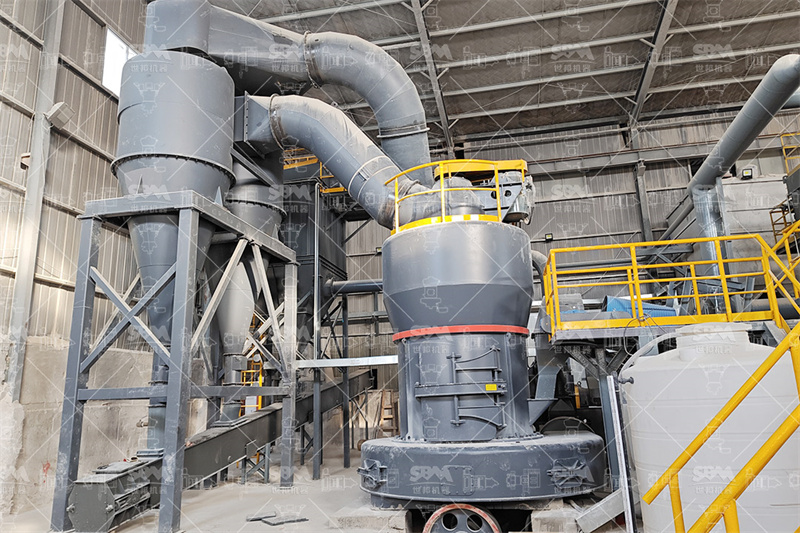
Recommended Equipment from Our Product Line
Based on our extensive experience in mineral grinding, we recommend the following two models for 150-mesh magnesite powder production. Both are part of our proven series and offer exceptional performance, reliability, and value.
MTW Series European Trapezium Mill
The MTW series is a perfect fit for 150-mesh magnesite grinding. It combines advanced European technology with robust construction, making it ideal for medium to large capacities. Key advantages include:
- Fineness range: 30–325 mesh, easily adjustable to 150 mesh.
- Capacity: 3–45 t/h depending on model, suitable for most plant sizes.
- Anti-wear shovel design: Combined shovel blades and curved rollers extend wear life, reducing maintenance costs.
- Optimized arc air duct: Reduces airflow energy loss and improves transmission efficiency.
- Integral bevel gear drive: Transmission efficiency up to 98%, saving space and installation costs.
- Wear-resistant volute structure: Non-resistance flow design improves air selection efficiency and reduces maintenance costs by 30%.
For a typical 150-mesh magnesite plant with a capacity of 10 t/h, the MTW138Z model (6–17 t/h, main power 90 kW) is an excellent choice. It offers a good balance of capacity and energy consumption. The MTW series also features an internal suction oil lubrication system and pulse dust removal, ensuring clean and reliable operation.
LM Series Vertical Roller Mill
For larger capacities or when energy efficiency is paramount, the LM series vertical roller mill is the ideal solution. It is designed for high-throughput grinding and can easily produce 150-mesh powder. Key benefits include:
- Integrated design: Crushing, grinding, and classification in one unit, reducing floor space by 50% and infrastructure costs by 40%.
- Low operating cost: Non-contact rollers and table increase wear part life by 3x, and energy consumption is 30–40% lower than ball mill systems.
- Intelligent control: Expert-level auto-control system with remote/local switching and real-time monitoring.
- Environmental compliance: Fully sealed negative pressure operation with dust emission below 20 mg/m³ and noise below 75 dB.
- Capacity: Up to 250 t/h, with fineness adjustable from 30 to 325 mesh.
For a magnesite plant requiring 30 t/h of 150-mesh powder, the LM150K model (13–38 t/h, main power 280 kW) is a strong candidate. It offers high efficiency and low maintenance, with a patented modular grinding roller assembly for quick changes. The LM series also includes a dynamic classifier with multi-stage adjustment, ensuring precise product fineness.
Both the MTW and LM series are backed by our global service network and proven track record in magnesite processing. The choice between them depends on your specific capacity needs and budget. For small to medium plants, MTW is more cost-effective; for large-scale operations, LM provides superior efficiency and scalability.
Conclusion
Choosing the right 150-mesh magnesite powder production equipment is a critical decision that impacts your plant’s profitability and product quality. By considering capacity, fineness, energy consumption, maintenance, and environmental factors, you can select the most suitable mill. Our MTW European Trapezium Mill and LM Vertical Roller Mill are both excellent options, offering advanced technology and reliable performance for magnesite grinding. We encourage you to consult with our engineers to tailor a solution that meets your exact requirements. With the right equipment, your grinding plant can achieve efficient, sustainable, and profitable production of 150-mesh magnesite powder.