
Understanding the 200 Mesh Bentonite Market
Bentonite powder with a 200 mesh (74 micron) specification is a cornerstone material across drilling, foundry, construction, and civil engineering industries. Its high water absorption, swelling capacity, and binding properties make it indispensable. However, achieving consistent 200 mesh output at industrial scale demands precision equipment. Choosing the wrong mill or classifier not only jeopardizes product quality but also inflates operational costs through energy waste and frequent maintenance. This guide analyzes the critical factors in equipment selection, comparing mill types, classifier integrations, and total cost of ownership—with specific insights drawn from leading industrial grinding solutions.
Key Criteria for Mill Selection
The journey to 200 mesh bentonite begins with the mill. Unlike finer grades (325 mesh+), 200 mesh (74μm) material sits in a ‘middle ground’—it requires sufficient energy to break down clay aggregates yet must avoid over-grinding that wastes power and creates excessive ultrafine particles that harm filtration properties.
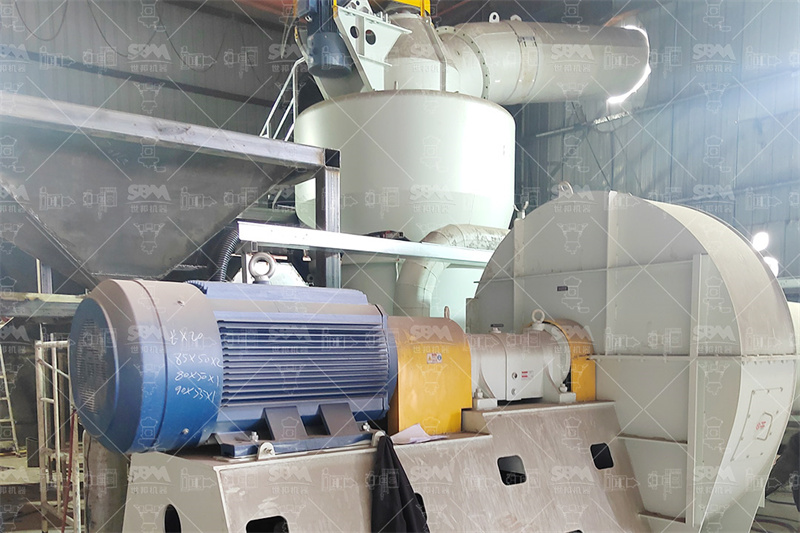
Feed Size and Moisture: Raw bentonite typically arrives at 30-50mm with 15-25% moisture. Mills with integrated drying capability or robust pre-crushing systems are vital. For example, the MTW Series European Trapezium Mill accepts feed sizes up to 50mm and uses internal hot air to dry and grind simultaneously, making it a versatile primary option. Its curved shovel blades and bevel gear drive (98% transmission efficiency) deliver low energy consumption—a critical factor given bentonite’s abrasive nature.
Energy Efficiency and Wear Costs: Bentonite contains crystalline silica, which accelerates wear on grinding rollers and rings. To address this, the SCM Series Ultrafine Mill employs special alloy rollers and rings that extend service life several times over. With a capacity range of 0.5-25 t/h and fineness adjustable from 325 to 2500 mesh, the SCM800 or SCM900 models are ideal for small-to-mid-scale 200 mesh production where precise particle size distribution (PSD) is mandatory. Its intelligent control system automatically adjusts based on real-time granularity feedback, reducing operator error.
The Role of Classifiers in 200 Mesh Production
Even the best mill produces a PSD with oversize particles. For 200 mesh bentonite, a high-precision classifier is non-negotiable. Oversized particles (>74μm) cause rheological failure in drilling muds and rough surfaces in foundry sands.
Dynamic vs. Static Classifiers: Static classifiers are cheap but struggle with sharp cut points at 200 mesh. Dynamic classifiers with variable-speed rotors provide precise control. The SCM Series’ vertical turbine classifier is designed for exactly this task—it achieves a ‘sharp cut’ without coarse powder mixing, ensuring 100% passing 200 mesh. For wet or sticky bentonite, the multi-stage adjustment technology in the LM Series Vertical Roller Mill classifier allows fine-tuning even when feed moisture varies. The LM130K model (10-28 t/h) uses a dynamic separator to handle typical bentonite loads efficiently.
Comparing Mill Types for 200 Mesh Bentonite
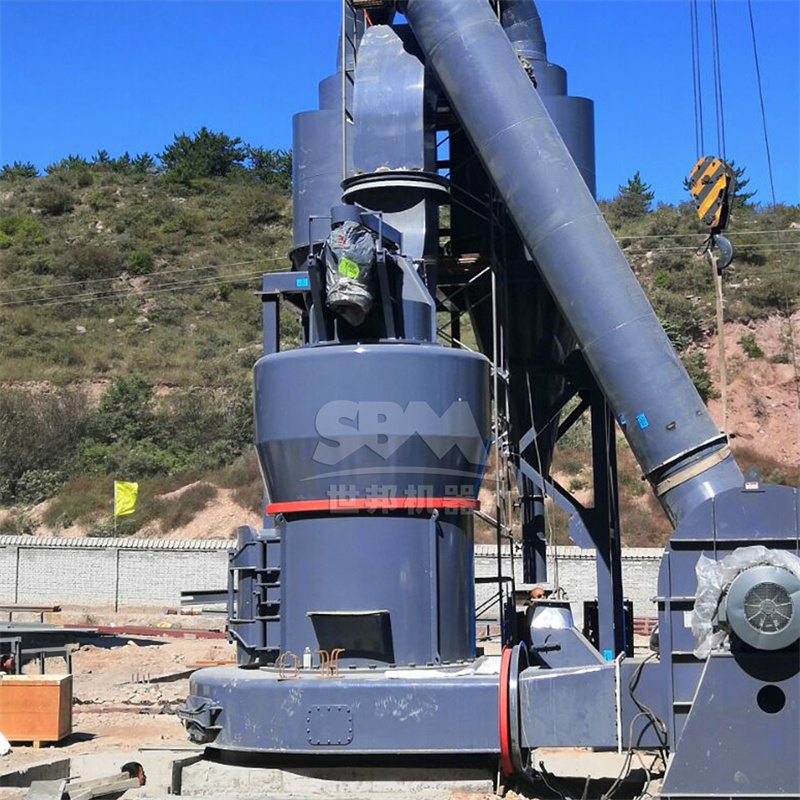
1. Pendulum Mills (MRN Series): These are traditional workhorses. The MRN158 pendulum mill yields 7-21 t/h at 10-325 mesh, using a thin-oil lubrication system that reduces maintenance. However, they consume more floor space and have higher specific energy consumption compared to newer vertical mills.
2. Trapezium Mills (MTW Series): The MTW110Z or MTW138Z models provide 3-17 t/h. Their anti-wear shovel design and curved air ducts minimize downtime. If your product mix includes 60-200 mesh materials (e.g., for foundry sand), the MTW system is a flexible, cost-effective solution.
3. Ultrafine Vertical Mills (LUM Series): While LUM mills target 325-2500 mesh, they can operate at the coarser 200 mesh setting with ease. The LUM1525’s multi-rotor classification system ensures no coarse particles slip through. This is over-engineering for basic 200 mesh, but it future-proofs your plant for higher-grade products later.
4. Ball Mills (GMQ Series): For high capacity (15-45 t/h), the GMQY3660 ball mill is unmatched. However, ball mills consume 30-50% more energy than vertical roller mills for non-ferrous minerals. Only consider a ball mill if you already have a fine-grinding circuit that uses the pre-ground material from a hammer mill or vertical pre-grinder.
Cost Analysis: Initial Investment vs. Operation
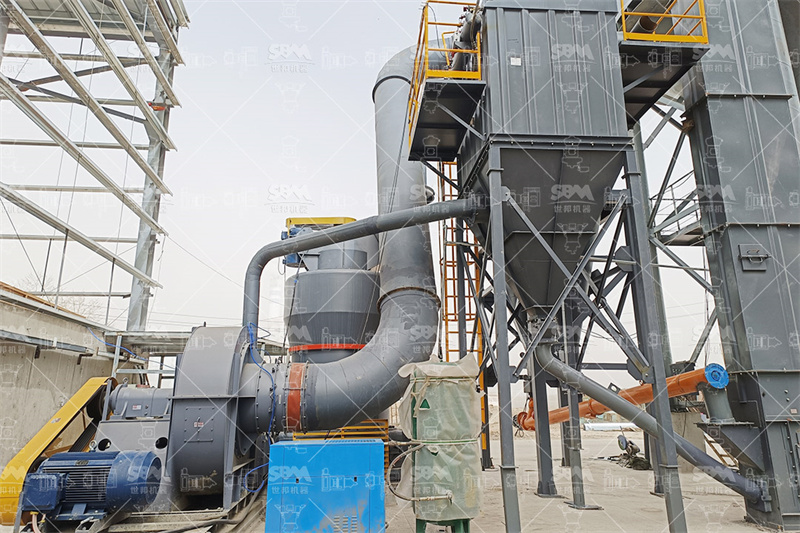
The ‘cheapest’ mill is rarely the most economical. A complete 200 mesh bentonite line includes the mill, classifier, dust collector, fan, feeder, and crusher. Prices range from $50,000 for a small MTM100 system to over $500,000 for a large LM series setup. But operational costs (power, wear parts, labor) dominate over a 5-year period.
Power Consumption: The SCM Series uses 30% less energy than jet mills and delivers 2x the capacity. For a mid-scale producer needing 8 t/h, the SCM1250 (185kW) with a dynamic classifier consumes roughly 23 kWh per ton. An equivalent ball mill system requires 35-40 kWh per ton. At $0.10/kWh, this saves up to $1,200 daily.
Wear Parts: Bentonite’s abrasiveness (Mohs hardness 1-2, but with quartz impurities) wears steel parts. The LM Series’ non-contact roller-to-table design extends wear part life by 3x. Similarly, MTW mills use high-strength guard plates on the air duct. Over 5,000 operational hours, these features reduce maintenance costs by 30-40% compared to standard pendulums.
Capex Optimization: The LM Vertical Roller Mill integrates crushing, grinding, drying, and classification in one unit, slashing floor space by 50% and civil engineering costs by 40%. If you are building a new plant, this single-system compactness offsets its higher upfront price. For upgrades, the MRN pendulum mill’s simple structure allows quick retrofits of existing facilities.
Our Recommended Solutions for 200 Mesh Bentonite
Based on product characteristics and cost dispersion, we strongly recommend the following systems from our portfolio:
Recommended Option 1 – SCM Series Ultrafine Mill: The SCM1000 model offers a 1.0-8.5 t/h capacity with a precisely calibrated output of exactly 200 mesh. Its 132kW main motor, paired with a high-precision vertical turbine classifier, produces 100% passing 74μm. The intelligent feedback system automatically adjusts the classifier speed to maintain particle consistency even as raw ore hardness varies. For operators focused on premium quality and low energy bills, the SCM series is a future-proof investment.
Recommended Option 2 – MTW Series European Trapezium Mill: The MTW138Z provides a robust balance of capacity (6-17 t/h) and versatility (10-325 mesh). Its integral bevel gear drive reduces installation footprint and noise. If your market demands both 200 mesh drilling mud powder and coarser 100 mesh foundry sand, the MTW138Z quickly adjusts via its variable-speed classifier, eliminating the need for a second machine. The optimized air duct reduces airflow resistance, breaking even it uses a 90kW motor, delivers 6-17 t/h with only 110kW fan power—an industry benchmark.
Conclusion: Aligning Equipment with Business Goals
Selecting 200 mesh bentonite equipment is a strategic decision, not a hardware purchase. Evaluate three pillars: Particle precision (requires dynamic classifiers), Energy intensity (vertical roller/trapezium mills win), and Wear resistance (special alloys and non-contact design). The SCM Series excels in precision and energy savings for pure 200 mesh applications. The MTW Series offers flexibility for multi-grade production. Both integrate modern pulse dust collection (exceeding environmental standards) and remote PLC control to reduce labor issues. By investing in these systems, you secure a production line that yields consistent quality, low operating costs, and compliance with strict emission norms.