
Introduction: The Critical Role of 325 Mesh Limestone in Cement Production
In the modern cement manufacturing industry, the fineness of raw materials is a decisive factor influencing clinker quality, energy consumption, and overall plant profitability. Specifically, producing a 325 mesh (45 micron) limestone powder is a benchmark requirement for many advanced cement plants, particularly those utilizing pre-decomposition kiln technology or producing high-grade Portland cement. This specific fineness ensures optimal chemical reactivity during calcination, leading to more uniform clinker formation and reduced fuel consumption in the kiln.
Selecting the appropriate grinding equipment for 325 mesh limestone is not merely a matter of matching capacity numbers. It requires a holistic evaluation of your plant’s geological conditions (feed moisture and hardness), existing infrastructure (available floor space and power supply), expansion plans (future capacity requirements), and environmental compliance mandates (dust emission and noise control). A poorly chosen mill can bottleneck your entire production line, inflate operating costs, and compromise final product quality.
Key Criteria for Equipment Selection
1. Output Fineness Consistency (D97 vs. D50)
When we specify 325 mesh, we refer to a particle size distribution where 97% of the material passes through a 45-micron sieve. However, the stability of this D97 value is crucial. Fluctuations in fineness can lead to inconsistent raw meal blending, directly impacting kiln operation. Look for equipment with advanced dynamic classifiers. A high-precision classifier ensures that no coarse particles escape the system, guaranteeing uniform finished product quality. For instance, a vertical turbine classifier with variable frequency drive (VFD) control allows real-time adjustment of rotor speed to maintain tight tolerances on the 325 mesh target.
2. Energy Efficiency and Specific Power Consumption
Grinding limestone to 325 mesh is energy-intensive. The energy consumed per ton of final product is the single largest variable operating cost in the raw materials preparation department. Traditional ball mills have high specific power consumption (often above 30 kWh/t for this fineness). Modern vertical roller mills (VRM) or ultrafine grinding mills can reduce this figure by 30-40% at the same fineness. You must calculate the projected annual energy savings against the higher upfront capital cost of advanced equipment. Pay close attention to the grinding principle: a material bed grinding mechanism (as in roller mills) is inherently more efficient than the impact and attrition mechanism used in a tumbling ball mill.
3. Feed Material Characteristics and Pre-Crushing Requirements
Limestone from the quarry can have a top size of up to 50 mm. Your equipment selection must consider whether you require a separate primary crusher (like a hammer mill) or if the grinding mill can accept the feed directly.
- Single-Stage Grinding: If your feed size is ≤20mm, advanced ultrafine mills can handle this directly. This simplifies the plant layout and reduces transfer points, minimizing dust escape.
- Two-Stage Grinding: For mine-run feed sizes of ≤50mm, a primary crusher (jaw or hammer crusher) is required before the finish mill. In this case, choosing a mill with a larger allowable feed size (like a European trapezium mill) eliminates the need for secondary crushing, saving equipment cost and space.
4. Moisture Content and Drying Requirements
Quarried limestone often contains surface moisture, especially after rainy seasons. Processing wet feed in a mill designed for dry grinding leads to material buildup on grinding rollers and classifiers, causing severe vibrations and reduced capacity. If your limestone moisture exceeds 5-6%, you must select a mill that integrates a hot air drying system within the grinding chamber (common in VRMs). Conversely, for dry limestone (moisture <2%), a simpler mill configuration without a heavy-duty drying system will be more economical.
5. Footprint and Capital Expenditure (CAPEX)
Expanding an existing cement plant often involves limited available land. A ball mill system requires a large foundation, a separate classifier, a bucket elevator, and extensive ducting—occupying a significant footprint. In contrast, an integrated vertical mill system performs grinding, drying, and classifying inside a single vessel. This reduces your civil construction costs by up to 40% and allows for outdoor installation, reducing the need for a massive enclosed building. You must weigh the costs of structural steel and concrete for the mill foundation against the capital saved from a smaller building footprint.
Our Recommended Solution: The SCM Series Ultrafine Mill
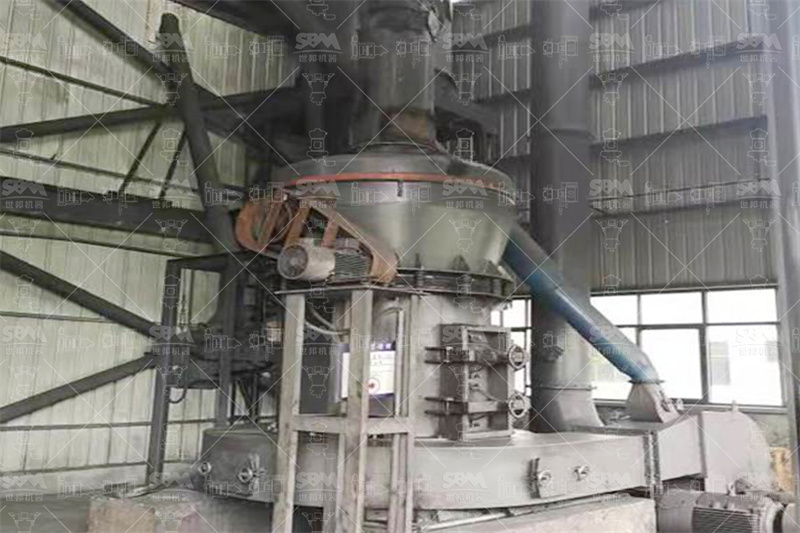
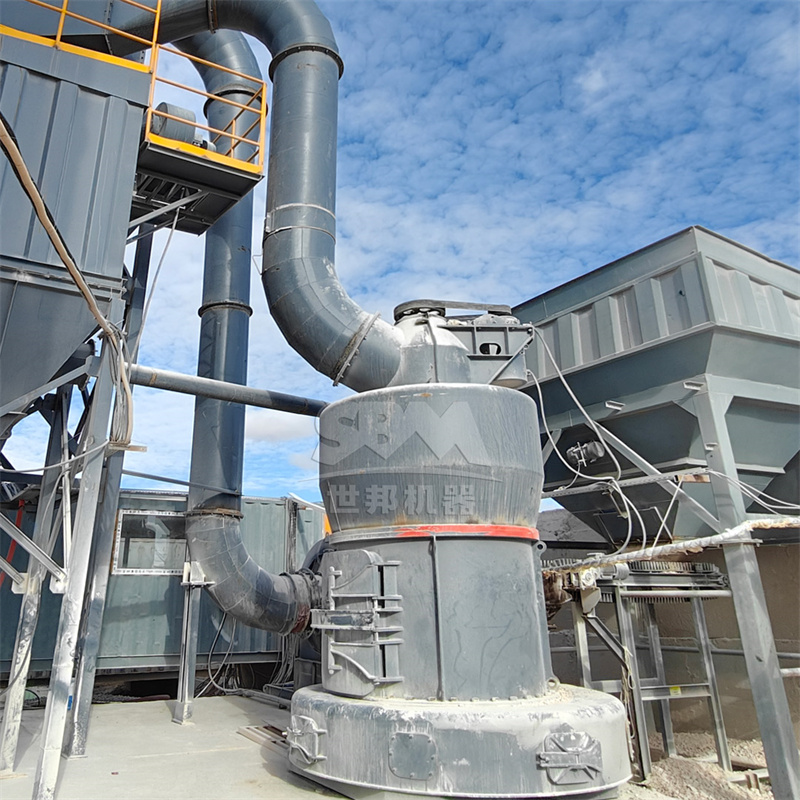
Given the stringent requirements of 325 mesh limestone powder for cement raw material, we strongly recommend the SCM Series Ultrafine Mill (45-5μm) for medium-scale production lines. This equipment is specifically engineered to deliver precisely the fineness range you require, filling the critical gap between standard fine grinding (325 mesh) and ultra-fine classification (2500 mesh).
Why SCM is ideal for your 325 mesh application:
- High-Precision Classification: The vertical turbine classifier guarantees a clean cut point. You will not experience the coarse powder mixing common with lower-grade mills, ensuring that your raw meal’s particle size distribution remains consistent, which is critical for clinker reactivity.
- Efficiency & Savings: Compared to a jet mill, the SCM Series offers double the capacity while consuming 30% less energy. For a 325 mesh target, it provides a significant efficiency boost over traditional ball mills due to its optimized grinding path and layer-by-layer grinding principle.
- Model Options to Match Your Scale: With a capacity range from 0.5 t/h up to 25 t/h, models like the SCM1000 (1.0-8.5 t/h) and the SCM1250 (2.5-14 t/h) are perfectly suited for dedicated raw meal production lines feeding mid-sized kilns. The input size of ≤20mm typically eliminates the need for separate secondary crushing.
Addressing Large-Scale Demands: The MTW Series Alternative
For plants requiring >15 t/h of 325 mesh limestone with a looser particle size control (yet still within 325 mesh D97), we also offer the MTW Series European Trapezium Mill. While its primary market is 45-600μm, it excels at producing 325 mesh at high throughputs (up to 45 t/h with the MTW215G model) with lower maintenance costs due to its integral bevel gear drive (98% transmission efficiency) and anti-wear shovel design.
Conclusion: A Structured Decision Framework
Choosing the right 325 mesh limestone grinding equipment is a multi-variable equation. Do not prioritize initial purchase price over the cost of power consumption over a 10-year lifecycle.
- Assess your capacity: Calculate the exact tonnage required by the kiln.
- Define your fineness rigor: Is D97=45μm a strict quality specification? If yes, the SCM’s precise classification is necessary.
- Evaluate your feed logistics: Can you crush to ≤20mm, or do you need the MTW’s tolerance for ≤50mm feed?
- Calculate Total Cost of Ownership: Factor in energy savings (30-50% vs ball mill), maintenance of wear parts, and the footprint cost of the building.
By matching the mill’s technological strengths to your plant’s specific bottlenecks, you ensure a reliable, energy-efficient, and quality-assured raw material preparation process. We invite you to send us your specific limestone characteristics for a detailed process flow calculation and a guaranteed equipment quotation.