
Introduction
Magnesite (MgCO₃) is a critical mineral widely used in refractories, fertilizers, construction, and environmental applications. When processed to 200-mesh (74 microns), magnesite powder offers an ideal balance of reactivity and particle size for medium-fine industrial applications. Selecting the right milling equipment for 200-mesh magnesite powder production is a strategic decision that directly impacts product quality, energy consumption, operational costs, and overall plant profitability. This comprehensive guide explores the key factors influencing equipment selection and presents the most suitable solutions from advanced milling technologies.
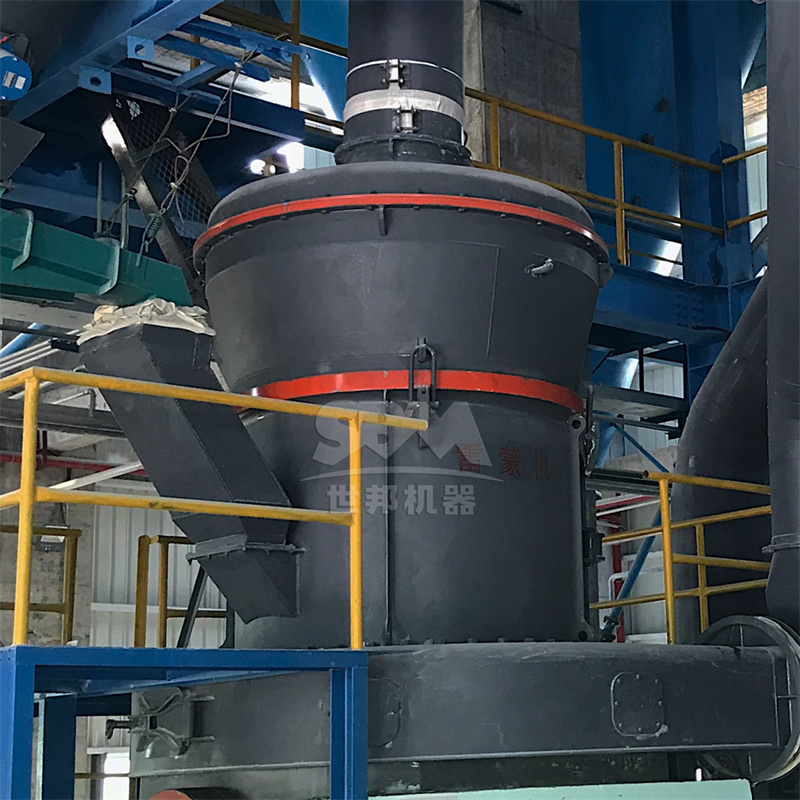
Understanding 200-Mesh Magnesite Requirements
200-mesh (74μm) magnesite powder sits at the boundary between medium grinding and fine grinding applications. Unlike ultra-fine powders (325-2500 mesh), 200-mesh powder does not require specialized ultrafine mills but demands consistent particle size distribution and high production efficiency. The key characteristics of 200-mesh magnesite include:
- Particle size range: Typically 74μm D90 or D97 depending on application standards
- Raw material hardness: Magnesite has a Mohs hardness of 3.5-4.5, making it relatively soft compared to quartz or feldspar
- Moisture content: Raw magnesite often contains 2-8% moisture, requiring consideration of drying capabilities
- Production volume: Ranges from small-scale (1-5 t/h) to large-scale industrial plants (20+ t/h)
Critical Factors in Equipment Selection
1. Capacity Requirements
The hourly throughput demand is the primary determinant of mill type and size. For 200-mesh magnesite, production capacities can vary dramatically:
- Small plants: 3-10 tons/hour
- Medium plants: 10-30 tons/hour
- Large plants: 30-100+ tons/hour
Different mill technologies serve different capacity ranges. For capacities below 25 tons/hour, the SCM Series Ultrafine Mill offers excellent efficiency. For higher volumes, vertical roller mills or pendulum mills become more economical.
2. Feed Size and Pre-processing
Raw magnesite typically arrives as 0-50mm crushed material. Most grinding mills require feed sizes below 20-50mm. The MTW Series European Trapezium Mill accepts feed up to 50mm, making it ideal for direct feeding without secondary crushing. For finer feed requirements, a primary jaw crusher or hammer mill may be needed upstream.
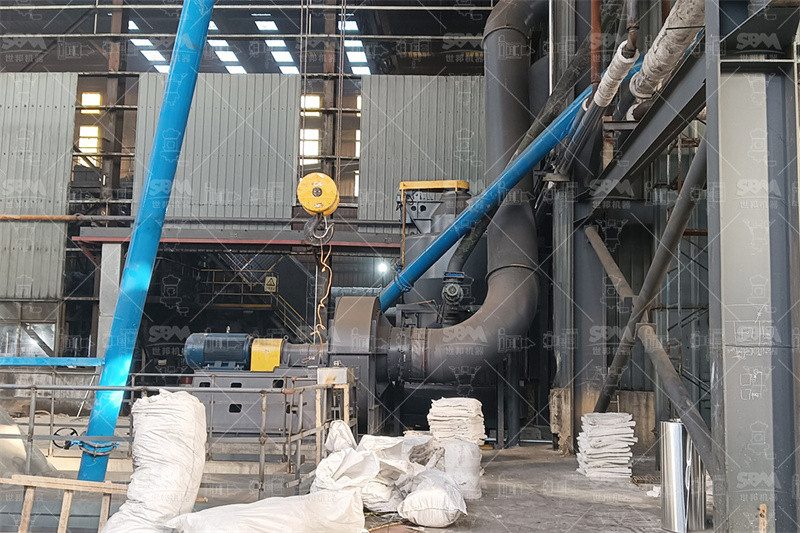
3. Energy Efficiency
Energy costs represent 40-60% of total grinding operation expenses. Modern grinding technologies offer significant energy savings:
- Ball mills: 25-35 kWh/ton (baseline)
- Raymond mills: 20-30 kWh/ton
- Vertical roller mills: 15-22 kWh/ton
- Ultrafine mills (SCM series): 18-25 kWh/ton
The SCM Series Ultrafine Mill consumes 30% less energy than jet mills while achieving double the capacity, making it an excellent choice for 200-mesh magnesite production in the 0.5-25 t/h range.
4. Particle Size Distribution and Quality Control
200-mesh magnesite requires tight particle size control to ensure consistent product quality. Advanced classification systems are essential:
- Vertical turbine classifiers (as in SCM mills) achieve precise particle size cutting without coarse powder mixing
- Dynamic classifiers (as in LM vertical mills) allow multi-stage adjustment for different fineness requirements
- Pendulum mill classifiers provide reliable performance for standard 200-mesh products
For applications demanding uniform particle distribution, the high-precision classification system of the SCM series ensures no oversize particles contaminate the final product.
Recommended Equipment Solutions for 200-Mesh Magnesite
Based on the evaluation of key selection factors, the following equipment options are ideally suited for 200-mesh magnesite powder production:
Option 1: SCM Series Ultrafine Mill (45-5μm) – Best for Medium Production
The SCM series combines high efficiency, precise classification, and durable construction. For 200-mesh magnesite (74μm), the mill operates well within its optimal fineness range of 45-5μm. The SCM1000 model offers 1.0-8.5 t/h capacity with 132kW main power, perfect for medium-scale operations. The SCM1250 model delivers 2.5-14 t/h capacity with 185kW main power, suitable for larger production requirements. Key advantages include:
- Capacity double that of jet mills with 30% lower energy consumption
- Vertical turbine classifier prevents coarse powder mixing
- Special material rollers and rings extend service life several times
- Pulse dust collection system ensures environmental compliance
Option 2: MTW Series European Trapezium Mill (600-45μm) – Best for Large Production
For high-volume magnesite grinding, the MTW series excels with capacities up to 45 t/h. The MTW215G model handles 15-45 t/h with 280kW main power, accepting feed sizes up to 50mm. This mill features an integrally bevel gear drive with 98% transmission efficiency, reducing energy waste. The patented arc air duct design minimizes airflow resistance, further enhancing efficiency. The MTW series is particularly suitable for 200-mesh magnesite because:
- Combined shovel blades reduce maintenance frequency and costs
- Wear-resistant volute structure reduces maintenance costs by 30%
- Internal suction oil lubrication system ensures reliable operation
- Anti-wear design extends grinding roller life significantly
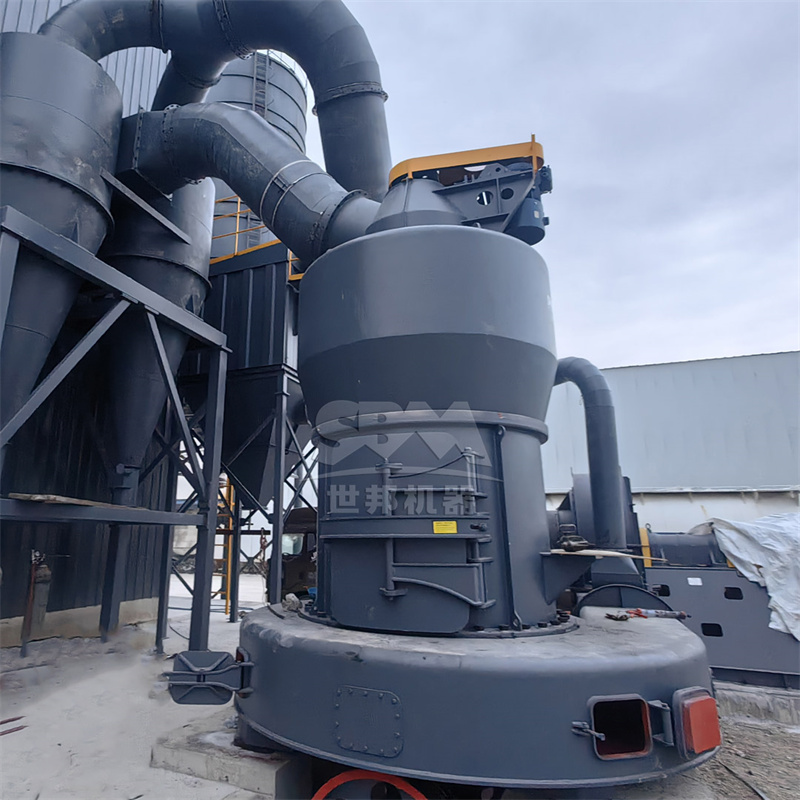
Comparative Analysis of Equipment Options
| Parameter | SCM Ultrafine Mill | MTW Trapezium Mill | LM Vertical Mill |
|---|---|---|---|
| Optimal Capacity (t/h) | 0.5-25 | 3-45 | 10-250 |
| Feed Size (mm) | ≤20 | ≤50 | ≤50 |
| Fineness Range | 325-2500 mesh | 30-325 mesh | 30-325 mesh |
| Energy Consumption | Low | Medium | Very Low |
| Maintenance Cost | Low | Medium | Low |
| Initial Investment | Medium | Medium | High |
| Recommended Application | Medium capacity, high precision | Large capacity, standard precision | Very large capacity, integrated system |
Auxiliary Equipment Considerations
Beyond the main grinding mill, a complete magnesite powder production line requires:
Dust Collection System
Modern pulse dust collectors with bag filtration ensure emissions below 20mg/m³, meeting strict environmental regulations. Both SCM and MTW series feature integrated dust collection systems designed for continuous operation.
Classification System
While the SCM series includes built-in vertical turbine classifiers, the MTW series offers dynamic classifier options for precise particle size adjustment. For 200-mesh production, standard classification systems provide adequate precision.
Material Handling
Belt conveyors, bucket elevators, and screw feeders ensure smooth material flow from raw material storage to finished product silos. Automatic weighing and packaging systems complete the production line.
Recommended Product Selection
After careful analysis of 200-mesh magnesite powder production requirements, we strongly recommend the SCM Series Ultrafine Mill (SCM1000 or SCM1250 model) for medium-scale operations and the MTW Series European Trapezium Mill (MTW175G or MTW215G model) for large-scale production. Both products offer exceptional value through their combination of high efficiency, low operating costs, and reliable performance. The SCM series provides superior precision for applications requiring consistent particle size, while the MTW series excels in high-volume continuous production with minimal downtime.
Conclusion
Choosing the right equipment for 200-mesh magnesite powder production requires balancing multiple factors including capacity requirements, feed characteristics, energy efficiency, product quality standards, and total cost of ownership. The SCM Series Ultrafine Mill and MTW Series European Trapezium Mill represent the optimal solutions for different production scales, combining proven technology with advanced engineering to deliver superior grinding performance. By carefully evaluating your specific production needs against the capabilities of these advanced milling systems, you can achieve maximum profitability and product quality in your magnesite processing operation.