
Introduction
In the papermaking industry, gypsum additives play a crucial role in improving paper opacity, brightness, and printability. Producing high-quality gypsum additives requires specialized equipment that can efficiently grind, classify, and process gypsum rock into fine powders. Choosing the right production equipment is essential for achieving consistent product quality, minimizing energy consumption, and maximizing throughput. This guide provides a comprehensive overview of the key machines and processes involved in papermaking gypsum additive production, along with practical tips for selecting the most suitable equipment for your needs.
Understanding the Production Process
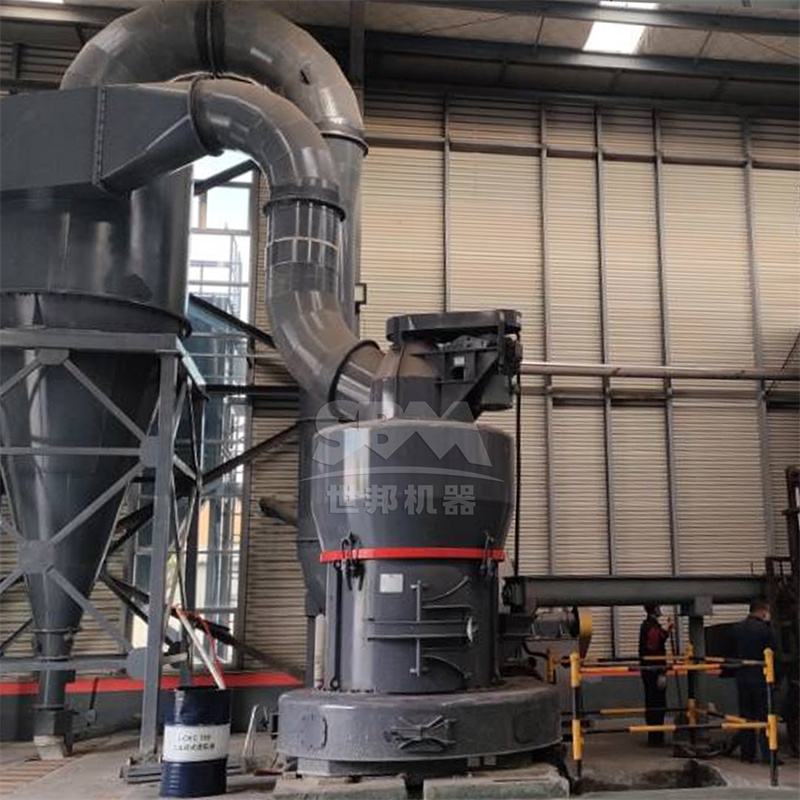
The production of gypsum additives for papermaking typically involves several stages: primary crushing, secondary grinding, fine classification, and powder collection. Each stage requires specific machinery designed to handle the material’s characteristics and achieve the desired particle size distribution. The most critical step is fine grinding, where gypsum rock is reduced to a fine powder with a particle size typically in the range of 45 to 600 micrometers (325 to 30 mesh). The choice of grinding mill directly influences the final product’s quality and production efficiency.
Key Machines for Gypsum Additive Production
1. Primary Crushing Equipment
Before grinding, large gypsum rocks (typically up to 50 mm) need to be reduced to a smaller size suitable for the mill’s feed opening. Hammer mills are commonly used for this purpose. They offer high capacity and a high crushing ratio, making them ideal for preliminary size reduction. For instance, our PC series hammer mills can accept feed sizes up to 40 mm and produce output sizes of 0-3 mm, with capacities ranging from 8 to 70 tons per hour. This ensures efficient downstream grinding.
2. Fine Grinding Mills
This is the heart of the gypsum additive production process. The selection depends on the required fineness, capacity, and energy efficiency. Several types of mills are available:
- MTW Series European Trapezium Mill: This mill is perfect for producing gypsum powder with a fineness of 30-325 mesh (600-45 μm). It features an integral bevel gear drive for high transmission efficiency (up to 98%) and an optimized arc air duct that reduces energy loss. Its anti-wear shovel design and wear-resistant volute structure significantly lower maintenance costs. With capacities up to 45 t/h, it is a robust and reliable choice for medium to large-scale operations.
- SCM Series Ultrafine Mill: For applications requiring an ultra-fine and precisely classified product (325-2500 mesh or 45-5 μm), our SCM series is the ideal solution. It uses a vertical turbine classifier to achieve precise particle size cutting without coarse powder mixing. With a capacity 2 times that of jet mills and 30% lower energy consumption, it is highly energy-efficient. The intelligent control system automatically adjusts parameters based on product fineness feedback.
- LM Series Vertical Roller Mill: This mill is designed for integrated crushing, grinding, and selection, reducing floor space by 50%. It is excellent for large-scale operations and can handle feed sizes up to 50mm, with capacities ranging from 3 to 250 t/h. Its low operating cost is due to a non-contact design between rollers and table, increasing wear part life by 3 times and reducing energy consumption by 30-40% compared to ball mill systems.
- MTM Series Medium-speed Trapezium Mill: A versatile and economical option for a fineness range of 45-325 mesh. It features an intelligent pressure regulation system that automatically compensates for roller wear, extending roller and ring life by 30%. It is suitable for small to medium capacity needs (3-22 t/h).
When choosing between these mills, consider the target fineness and your production capacity. For standard papermaking gypsum additives (around 200 mesh or 75 μm), the MTW series is a popular recommendation. For high-brightness or speciality papers requiring finer particles, the SCM series is preferable.
3. Classification and Collection Systems
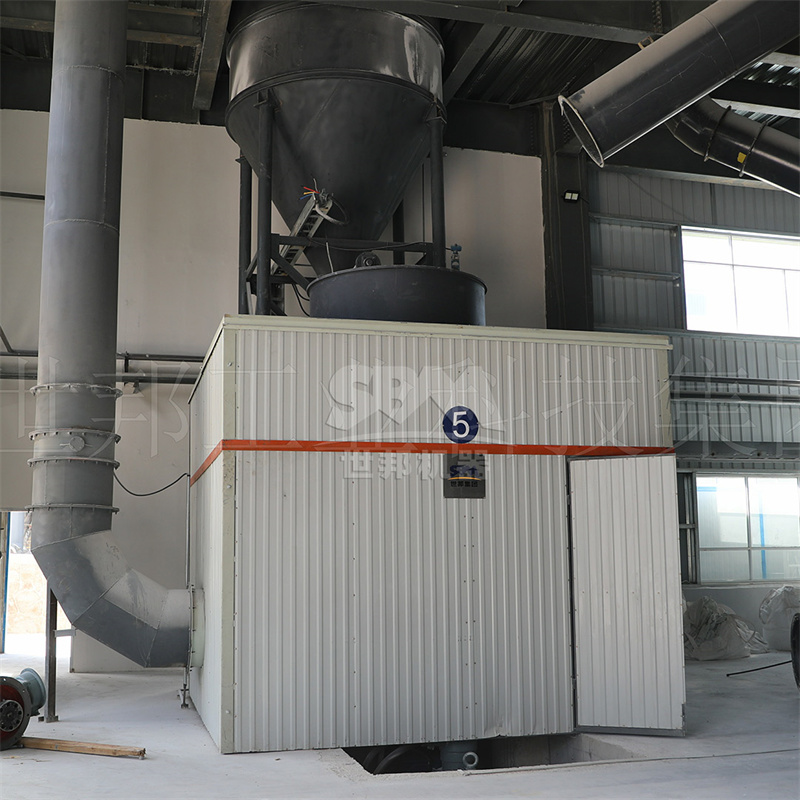
After grinding, the powder must be classified to ensure a uniform particle size and then collected. High-efficiency classifiers, such as the vertical turbine classifier used in our SCM and LUM mills, are critical for precise particle size control. The final powder collection is typically achieved using a cyclone collector and a pulse dust removal system, which ensures environmental compliance and minimal product loss. Our systems are designed to operate under negative pressure, preventing dust leakage.
Selection Criteria: A Practical Checklist
Choosing the right equipment involves evaluating several key factors:
- Feed Size vs. Mill Inlet: Ensure the primary crusher reduces the gypsum to a size that the chosen grinding mill can accept. For example, the MTW mill can accept feed up to 50mm, while the SCM mill has a smaller feed size of ≤20mm.
- Required Fineness (Mesh/μm): Define the exact particle size distribution you need for your paper product. The mill must be capable of achieving this with precision.
- Production Capacity (t/h): Choose a mill that can meet your daily or hourly production targets while providing some buffer for peak demand.
- Energy Consumption & Operating Cost: Look for mills with high energy efficiency. Vertical roller mills and our SCM ultrafine mills are known for their low energy consumption per ton of product.
- Maintenance Requirements: Consider the availability of wear parts and the ease of maintenance. Features like anti-wear shovels, modular roller assemblies, and automatic lubrication systems can reduce downtime significantly.
Phosphogypsum Processing Considerations
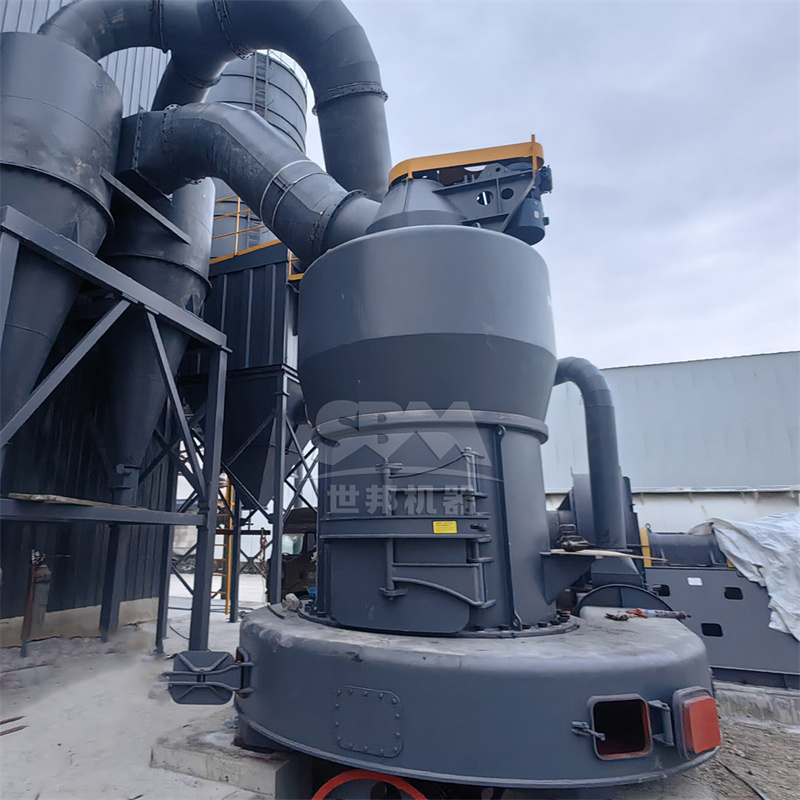
In many papermaking applications, phosphogypsum (a byproduct of phosphate fertilizer production) is used as a raw material. This material requires specific processing to remove impurities and achieve the right whiteness. Our LM vertical roller mill series includes models specifically designed for slag and mineral powders, which can handle these demanding applications. The intelligent control system and high-efficiency classifiers ensure a consistent, high-quality output even with variable feedstock.
Our Recommended Products
For most papermaking gypsum additive production lines, we recommend the following two products based on different capacity and fineness needs:
Recommendation 1: For High-Capacity and Standard Fineness
We highly recommend the MTW Series European Trapezium Mill for large-scale producers requiring a stable supply of 80-325 mesh gypsum powder. Its robust design, high capacity (up to 45 t/h), and lower maintenance costs make it an excellent return on investment. The optimized internal structure ensures high transmission efficiency and stable performance, making it the ‘workhorse’ for gypsum powder production.
Recommendation 2: For Ultra-Fine and Premium Quality
For producers targeting specialty paper grades that require a very fine, high-quality additive (e.g., 600-2500 mesh), the SCM Series Ultrafine Mill is the best choice. Its precise classification system and energy-saving grinding technology guarantee a uniform product with a particle size down to 5 micrometers, significantly enhancing paper gloss and smoothness. Its intelligent control system also helps in automating the production process.
Both product lines are equipped with internationally advanced pulse dust collection technology and soundproofing designs to ensure eco-friendly and low-noise operation, meeting the strictest environmental regulations.
Conclusion
Selecting the right papermaking gypsum additive production equipment is a strategic decision that affects your product quality, operational efficiency, and overall profitability. By carefully evaluating the feed size, target fineness, capacity, and energy costs, and by partnering with a supplier that offers reliable machinery like our MTW, SCM, and LM series mills, you can build a successful and sustainable production line. Our technical team is always available to help you tailor a process solution based on your specific requirements.