
Introduction to Kaolin and Its Industrial Significance
Kaolin, also known as china clay, is a naturally occurring hydrated aluminum silicate mineral (Al₂Si₂O₅(OH)₄) that has been indispensable to human civilization for centuries. From its early use in porcelain and pottery to its modern applications in paper coating, paints, rubber, plastics, pharmaceuticals, and cosmetics, kaolin remains one of the most versatile industrial minerals in the world. Global demand for high-quality kaolin powder continues to rise, driven by expanding applications in ceramics, fiberglass, catalysts, and advanced materials.
The production of kaolin powder involves a series of carefully engineered processing stages, including mining, crushing, grinding, classification, and surface treatment. Among these stages, grinding is arguably the most critical, as it directly determines the particle size distribution, whiteness, brightness, and overall quality of the final product. Choosing the right grinding mill for your kaolin processing line is therefore a decision of paramount importance — one that affects not only product quality but also operational costs, energy consumption, and long-term profitability.
Understanding Kaolin Processing Requirements
Before selecting a grinding mill, it is essential to understand the specific requirements of kaolin processing. Kaolin is relatively soft, with a Mohs hardness of approximately 2.0–2.5, which means it is easier to grind than many other industrial minerals such as quartz, feldspar, or limestone. However, the complexity lies in achieving the desired fineness and purity while maintaining high throughput and minimizing contamination.
Kaolin products are generally classified according to their brightness, particle size, and viscosity. Key product categories include:
- Filler-grade kaolin: Typically 200–400 mesh, used in paper, rubber, and plastics.
- Coating-grade kaolin: Typically 600–1500 mesh (or finer), used in high-end paper coating.
- Ultrafine kaolin: 1250–2500 mesh or finer, used in specialty applications such as catalysts and advanced ceramics.
- Calcined kaolin: Produced by calcination at 600–1000°C, requiring finer grinding and classification.
The required fineness range significantly influences the choice of grinding equipment. Coarse grinding (down to 200 mesh) may be accomplished with a range of mills, while ultrafine grinding (2500 mesh and beyond) demands specialized equipment with high-precision classification capabilities.

Key Factors in Selecting a Grinding Mill for Kaolin
Selecting the appropriate grinding mill involves evaluating multiple factors that collectively determine the feasibility and efficiency of your kaolin processing line. These factors include:
1. Target Product Fineness
The most fundamental factor is the required fineness of the final product. If your target is 200–325 mesh for filler-grade kaolin, a medium-speed trapezium mill or a ball mill may be sufficient. However, if you are producing coating-grade or ultrafine kaolin (800–2500 mesh or finer), you will need equipment specifically designed for ultrafine grinding, such as an ultrafine mill or a vertical roller mill with high-precision classification.
2. Capacity Requirements
The production capacity of the mill must align with your business scale. Small to medium-sized operations may require 1–10 tons per hour, while large industrial operations may need 20–50 tons per hour or more. It is crucial to choose a mill that not only meets your current capacity needs but also allows for future expansion.
3. Energy Efficiency
Energy consumption represents a significant portion of kaolin powder production costs. Grinding mills vary considerably in their energy efficiency. Modern mills with optimized grinding mechanisms and intelligent control systems can achieve substantial energy savings compared to traditional ball mills or Raymond mills.
4. Product Purity and Contamination Control
Kaolin is valued for its whiteness and chemical purity. Grinding equipment that introduces iron or other contaminants during the grinding process can degrade product quality. Mills with wear-resistant liners and grinding media made from materials that minimize contamination are preferred, especially for high-brightness kaolin products.
5. Particle Size Distribution and Classification Precision
Achieving a narrow particle size distribution is critical for many kaolin applications, particularly in paper coating and advanced ceramics. The mill’s classification system must be capable of precise particle size cutting to avoid coarse particle contamination in the finished product.
6. Environmental Compliance
Dust emissions, noise, and overall environmental footprint are increasingly important considerations. Modern grinding mills are equipped with advanced dust collection systems, soundproof enclosures, and fully sealed negative-pressure operation to meet stringent environmental regulations.
7. Maintenance and Operational Costs
The total cost of ownership includes not only the initial investment but also ongoing maintenance, wear parts replacement, and labor. Mills with modular designs, quick-change wear parts, and automated control systems can significantly reduce long-term operational costs.
Types of Grinding Mills Suitable for Kaolin Processing
Several types of grinding mills are commonly used in kaolin processing, each with distinct advantages and limitations. Below is an overview of the most popular options.
1. Raymond Mill / Pendulum Mill
Raymond mills, also known as pendulum mills, are traditional grinding equipment widely used in kaolin processing for producing 80–325 mesh products. They are relatively simple to operate and maintain, making them suitable for small to medium-scale operations. However, their capacity is limited, and they are less efficient for ultrafine grinding.
Modern pendulum mills, such as the MRN Pendulum Mill, have incorporated significant improvements, including thin oil lubrication systems, efficient collectors, and pulse dust collectors. These enhancements have improved reliability and environmental performance.
2. Ball Mill
Ball mills are versatile grinding machines that can handle a wide range of materials and produce products from 0.074 mm to 0.8 mm. They are suitable for both dry and wet grinding and are often used in large-scale kaolin processing operations. However, ball mills are generally less energy-efficient than more modern alternatives and may introduce iron contamination due to steel ball wear.
3. Hammer Mill
Hammer mills are typically used for primary crushing rather than fine grinding. They reduce kaolin lumps to 0–3 mm, preparing the material for subsequent fine grinding stages. Hammer mills are characterized by high crushing ratios, compact structure, and low investment costs.
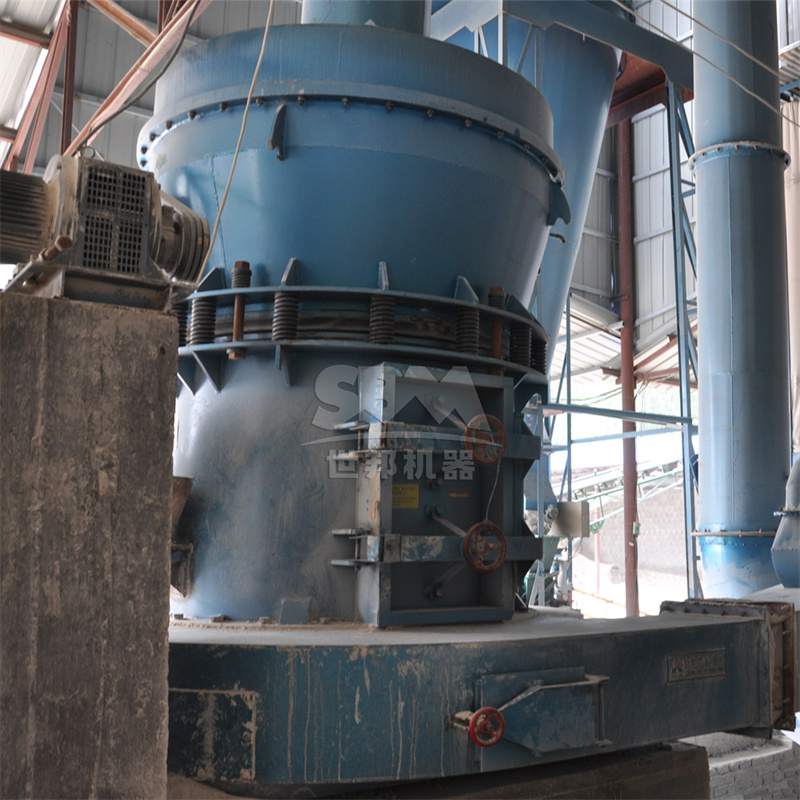
4. Vertical Roller Mill
Vertical roller mills have gained popularity in kaolin processing due to their high efficiency, low energy consumption, and ability to produce fine products. They integrate crushing, grinding, and classification into a single system, reducing floor space and infrastructure costs. Vertical roller mills are particularly suitable for large-scale operations requiring 3–250 tons per hour.
5. Ultrafine Mill
For producing ultrafine kaolin powder (325–2500 mesh), ultrafine mills are the equipment of choice. These mills use high-precision classifiers to achieve narrow particle size distributions and are capable of processing soft minerals like kaolin with high efficiency.
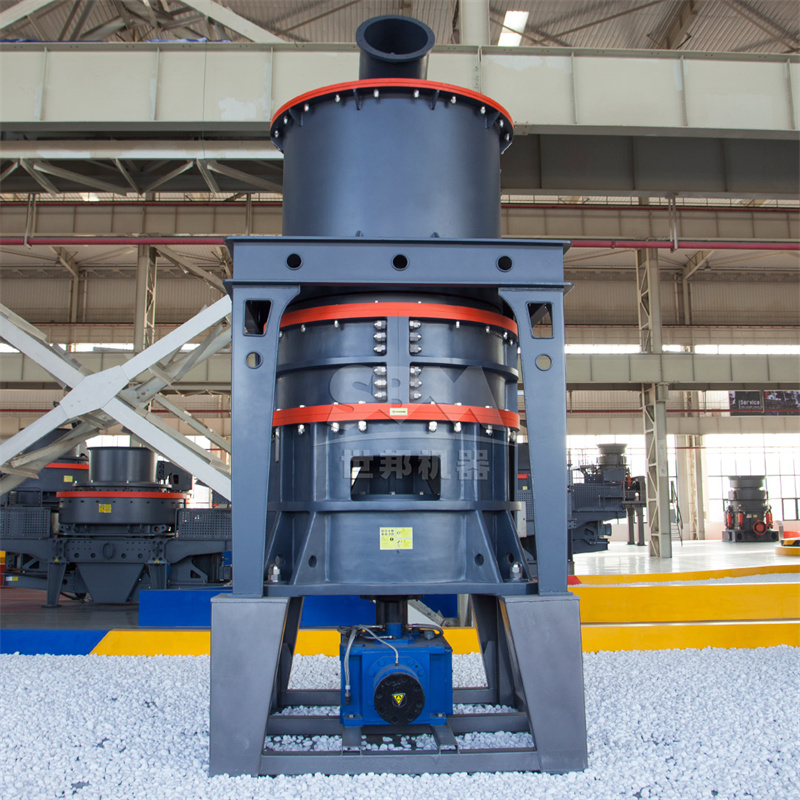
Recommended Equipment: SCM Series Ultrafine Mill
For kaolin processors targeting ultrafine powder production (325–2500 mesh), the SCM Series Ultrafine Mill stands out as an exceptional choice. This mill is specifically designed for producing high-quality ultrafine powders from soft to medium-hard minerals, making it ideal for kaolin processing.
Core Parameters
- Input Size: ≤20 mm
- Output Fineness: 325–2500 mesh
- Capacity: 0.5–25 tons per hour (depending on model)
Technical Advantages
High Efficiency and Energy Saving: The SCM Series Ultrafine Mill delivers twice the capacity of a jet mill while consuming 30% less energy. Its intelligent control system features automatic finished product granularity feedback, ensuring consistent product quality with minimal operator intervention.
High-Precision Classification: Equipped with a vertical turbine classifier, the SCM mill achieves precise particle size cutting with no coarse powder mixing. This ensures uniform finished products with a narrow particle size distribution — a critical requirement for coating-grade and ultrafine kaolin.
Durable Design: Special material rollers and rings extend service life several times over compared to conventional wear parts. The shaftless screw grinding chamber ensures stable operation and reduces maintenance downtime.
Eco-friendly and Low Noise: The pulse dust collection system exceeds international standards for dust removal efficiency, while the soundproof room design ensures noise levels remain well within regulatory limits.
Models and Specifications
- SCM800: Capacity 0.5–4.5 t/h | Main Power 75 kW | Fineness 325–2500 mesh
- SCM900: Capacity 0.8–6.5 t/h | Main Power 90 kW | Fineness 325–2500 mesh
- SCM1000: Capacity 1.0–8.5 t/h | Main Power 132 kW | Fineness 325–2500 mesh
- SCM1250: Capacity 2.5–14 t/h | Main Power 185 kW | Fineness 325–2500 mesh
- SCM1680: Capacity 5.0–25 t/h | Main Power 315 kW | Fineness 325–2500 mesh
The SCM Series Ultrafine Mill is particularly well-suited for kaolin processors who require high-capacity ultrafine grinding with precise particle size control. Its combination of energy efficiency, durability, and environmental compliance makes it a smart investment for any modern kaolin processing line.
Recommended Equipment: MTW Series European Trapezium Mill
For kaolin processors requiring medium to fine grinding (30–325 mesh) with higher capacity, the MTW Series European Trapezium Mill is an excellent option. This mill is designed with advanced technologies that improve grinding efficiency, reduce maintenance costs, and enhance product quality.
Core Parameters
- Input Size: ≤50 mm
- Output Fineness: 30–325 mesh (down to 0.038 mm)
- Capacity: 3–45 tons per hour (depending on model)
Technical Advantages
Anti-wear Shovel Design: Combined shovel blades reduce maintenance costs, while the curved design extends grinding roller life. This is particularly beneficial when processing abrasive minerals.
Optimized Arc Air Duct: The optimized arc air duct reduces airflow energy loss and improves transmission efficiency. High-strength guard plates protect the air duct working surface, extending equipment life.
Integral Bevel Gear Drive: The integral bevel gear drive achieves transmission efficiency of up to 98%, saving space and reducing installation costs.
Wear-resistant Volute Structure: The non-resistance flow design improves air selection efficiency, and maintenance costs are reduced by 30%.
Models and Specifications
- MTW110: Capacity 3–9 t/h | Main Power 55 kW | Fineness 10–325 mesh
- MTW138Z: Capacity 6–17 t/h | Main Power 90 kW | Fineness 10–325 mesh
- MTW175G: Capacity 9.5–25 t/h | Main Power 160 kW | Fineness 10–325 mesh
- MTW215G: Capacity 15–45 t/h | Main Power 280 kW | Fineness 10–325 mesh
The MTW Series European Trapezium Mill is an ideal choice for kaolin processors who need reliable, high-capacity grinding in the medium to fine range. Its patented technologies, including the internal suction oil lubrication system and internationally advanced pulse dust removal technology, ensure stable operation and environmental compliance.
Comparison and Selection Guidelines
To help you make an informed decision, the following table summarizes the key differences between the SCM Series Ultrafine Mill and the MTW Series European Trapezium Mill for kaolin processing:
| Feature | SCM Series Ultrafine Mill | MTW Series European Trapezium Mill |
|---|---|---|
| Fineness Range | 325–2500 mesh | 30–325 mesh |
| Capacity | 0.5–25 t/h | 3–45 t/h |
| Input Size | ≤20 mm | ≤50 mm |
| Best For | Ultrafine kaolin, coating-grade | Filler-grade, medium-fine kaolin |
| Energy Efficiency | 30% lower than jet mills | Optimized air duct reduces loss |
| Classification | Vertical turbine classifier | High-efficiency classifier |
| Environmental | Pulse dust collection, soundproof | Pulse dust removal, low noise |
When selecting between these two mills, consider the following guidelines:
- Choose the SCM Series Ultrafine Mill if your target product is ultrafine kaolin (800–2500 mesh) for coating, catalysts, or specialty applications.
- Choose the MTW Series European Trapezium Mill if you need high-capacity production of filler-grade kaolin (200–325 mesh) or medium-fine products.
- For operations requiring both coarse and fine products, consider installing both mills in a two-stage grinding circuit.
Conclusion
Choosing the right grinding mill for your kaolin processing line is a strategic decision that impacts product quality, operational efficiency, and profitability. By carefully evaluating your target fineness, capacity requirements, energy efficiency goals, and environmental compliance needs, you can select the equipment that best aligns with your business objectives.
The SCM Series Ultrafine Mill and MTW Series European Trapezium Mill represent two of the most advanced and reliable solutions available for kaolin processing. Whether you are producing ultrafine coating-grade kaolin or high-capacity filler-grade powder, these mills deliver the performance, durability, and efficiency that modern kaolin processors demand.
Investing in the right grinding equipment is not just about meeting today’s production targets — it is about building a foundation for long-term success in the competitive kaolin industry. We encourage you to consult with our technical experts to determine the optimal mill configuration for your specific kaolin processing requirements.