
Introduction: The Critical Role of Kaolin in FCC Catalysts
Fluid Catalytic Cracking (FCC) is a cornerstone of modern petroleum refining, converting heavy gas oils into high-value gasoline and light olefins. The performance of an FCC catalyst is largely determined by its physicochemical properties—surface area, pore structure, particle size distribution, and attrition resistance—which are directly inherited from the kaolin clay precursor. Kaolin, a hydrated aluminosilicate, must be processed into a finely divided, highly reactive matrix before it can be activated and incorporated into the catalyst microsphere. Consequently, the selection of a milling system for kaolin processing is not merely a comminution step; it is a strategic decision that impacts catalyst activity, selectivity, and manufacturing economics. This article examines the key criteria for choosing a milling system for high-performance FCC catalyst production and introduces two proven solutions from our portfolio: the SCM Series Ultrafine Mill and the MTW Series European Trapezium Mill.
Key Requirements for Kaolin Milling in FCC Catalyst Production
FCC catalyst manufacturers impose stringent specifications on kaolin powder. Typically, the kaolin must be ground to a median particle size (D50) between 1 and 5 μm, with a narrow particle size distribution to ensure uniform porosity after calcination. Coarse particles above 10 μm can lead to diffusion limitations in the cracking reactions, while excessive fines below 0.5 μm may cause handling issues and poor attrition resistance. Beyond fineness, the milling system must deliver:
- High purity and contamination control: Iron and other metallic wear debris can poison the zeolite component. The grinding chamber and classifier must be designed to minimize wear and avoid cross-contamination.
- Consistent particle size distribution: A sharp top-size cut is essential for reproducible catalyst performance.
- Energy efficiency: Kaolin milling is energy-intensive; systems that reduce specific energy consumption directly lower production costs.
- Thermal stability: Some milling operations generate heat, which can alter kaolin’s crystallinity. Systems with efficient classification and low residence time are preferred.
- Scalability and automation: FCC catalyst plants operate continuously at large capacities. The milling system must offer reliable, automated operation with minimal downtime.
Comparing Milling Technologies: Ball Mills, Jet Mills, and Advanced Roller Mills
Historically, ball mills and jet mills have been used for kaolin grinding. Ball mills are robust but suffer from low energy efficiency, high wear rates, and broad particle size distributions. Jet mills achieve fine grinding but consume large amounts of compressed air or steam, and their capacity is limited. Advanced roller mills—particularly pendulum roller mills and ultrafine vertical roller mills—have emerged as superior alternatives, offering higher capacity, lower energy consumption, and precise classification. When selecting a milling system for FCC catalyst-grade kaolin, the key differentiators are the classification mechanism, the wear protection design, and the ability to maintain stable product fineness under varying feed conditions.
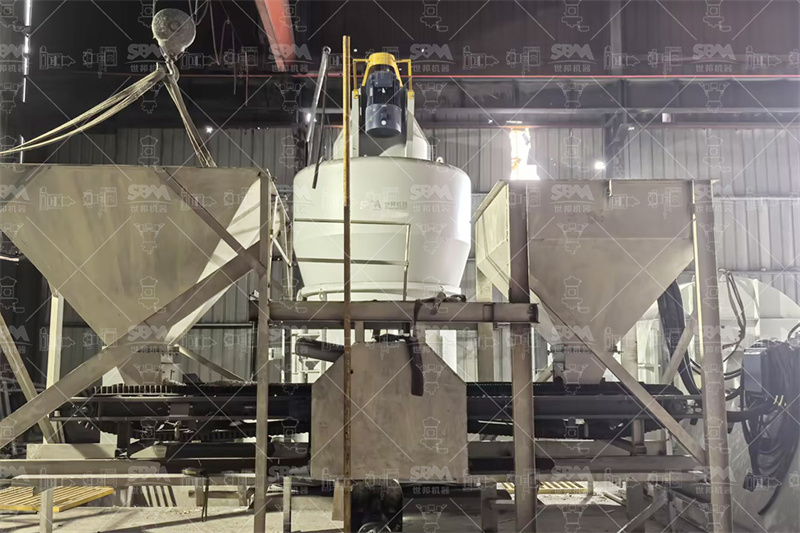
Solution 1: SCM Series Ultrafine Mill for High-Fineness Kaolin
For FCC catalysts requiring ultrafine kaolin (e.g., D90 ≤ 5 μm), the SCM Series Ultrafine Mill is an ideal choice. This mill combines a vertical turbine classifier with a multi-layer grinding ring to achieve precise particle size cutting. Its capacity is twice that of a jet mill at the same fineness, while energy consumption is 30% lower. The intelligent control system provides automatic feedback on finished product granularity, ensuring consistent quality. The shaftless screw grinding chamber and special material rollers and rings extend service life, reducing maintenance downtime. With five models ranging from 0.5 to 25 t/h, the SCM Series can be scaled to meet pilot or commercial production needs. For FCC catalyst manufacturers, the SCM800 or SCM1000 models offer a practical balance of capacity and fineness, delivering 325–2500 mesh (approximately 45–5 μm) product with minimal coarse particle contamination.
Solution 2: MTW Series European Trapezium Mill for Versatile Kaolin Processing
When the kaolin feed size is larger (up to 50 mm) and the target fineness is in the range of 30–325 mesh (down to 0.038 mm), the MTW Series European Trapezium Mill provides a robust and cost-effective solution. Its anti-wear shovel design and curved grinding rollers reduce maintenance costs, while the integral bevel gear drive achieves 98% transmission efficiency. The optimized arc air duct lowers airflow energy loss, and the wear-resistant volute structure improves air selection efficiency by 30%. For FCC catalyst production, the MTW Series is particularly suited for pre-grinding or for producing kaolin with a slightly coarser specification used as a matrix component. The MTW138Z model, with a capacity of 6–17 t/h and fineness adjustable from 10 to 325 mesh, offers excellent flexibility. The patented internal suction oil lubrication system ensures reliable operation under continuous duty.

Selection Criteria: Matching the Mill to Catalyst Specifications
The choice between the SCM and MTW Series depends on the target catalyst formulation. For high-activity catalysts where kaolin must be delaminated and ultrafine, the SCM Series is preferred due to its sharp classification and high fineness capability. For catalyst grades that require a broader particle size distribution or where the kaolin is used as a filler, the MTW Series offers higher capacity and lower capital cost. Other factors include:
- Feed moisture: Both mills can handle low-moisture feed, but the SCM Series is more sensitive to moisture; pre-drying may be necessary.
- Wear part life: The SCM’s special alloy rollers and rings last several times longer than standard components, reducing frequency of replacement.
- Dust collection: Both systems feature pulse dust collection exceeding international standards, essential for a clean catalyst plant.
- Automation: The SCM Series offers intelligent control with automatic fineness feedback, while the MTW Series provides stable operation with manual or PLC-based control.
Case Study: Optimizing Kaolin Milling for a 50,000 t/a FCC Catalyst Plant
A recent project involved the design of a kaolin milling circuit for a 50,000 t/a FCC catalyst plant. The target specification was D50 = 2.5 μm with 99.5% passing 10 μm. After laboratory and pilot testing, the SCM1000 was selected for ultrafine grinding, while an MTW138Z was used for pre-grinding the raw kaolin from 30 mm to 200 mesh. The combination reduced overall energy consumption by 35% compared to a conventional ball mill circuit and achieved a product with a narrow particle size distribution (span < 1.2). The plant has been operating for two years with minimal downtime, confirming the reliability of both systems.
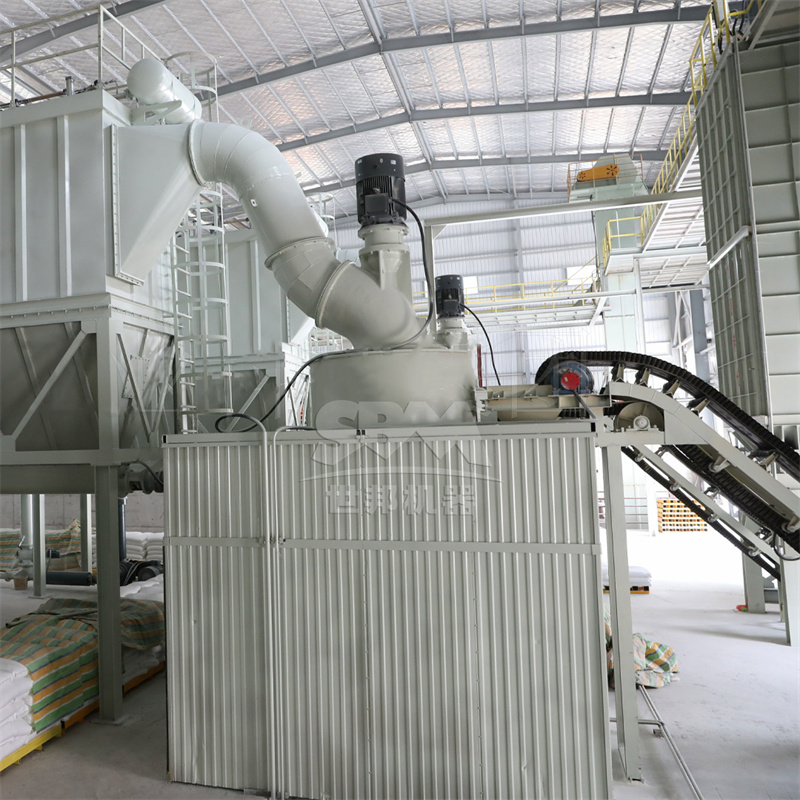
Conclusion: Partnering for High-Performance FCC Catalyst Production
Selecting the right milling system for kaolin processing is a critical decision that affects catalyst quality, plant efficiency, and operating costs. The SCM Series Ultrafine Mill and MTW Series European Trapezium Mill offer complementary solutions: the SCM for high-fineness, narrow-distribution applications, and the MTW for versatile, high-capacity grinding. Both systems are backed by patented technology, robust construction, and environmental compliance. By matching the mill to the specific catalyst specification and production scale, FCC catalyst manufacturers can achieve consistent, high-performance catalysts that meet the demands of modern refining. For further technical consultation and customized system design, please contact our application engineering team.