
Introduction
Bauxite is a critical raw material in the production of high-grade refractories and cement. As a leading building material grade, bauxite powder must meet stringent standards for fineness, purity, and consistency. The production equipment used to process bauxite into fine powder directly impacts the quality of the final refractory products and cement mixtures. This article provides a comprehensive overview of the advanced milling technologies available for bauxite powder production, focusing on equipment that delivers exceptional performance, energy efficiency, and product uniformity.
Understanding Bauxite Powder Requirements
Bauxite powder used in refractory applications typically requires a fineness ranging from 325 mesh to 2500 mesh (45-5 μm). For cement applications, the fineness usually falls between 30-325 mesh (600-45 μm). The choice of milling equipment depends on several factors including feed size, desired output fineness, production capacity, and energy efficiency requirements. High-quality bauxite powder must have uniform particle size distribution, minimal coarse particle content, and consistent chemical composition to ensure optimal performance in refractory bricks, castables, and cement blends.
Key Technologies for Bauxite Powder Production
Ultrafine Grinding Technology
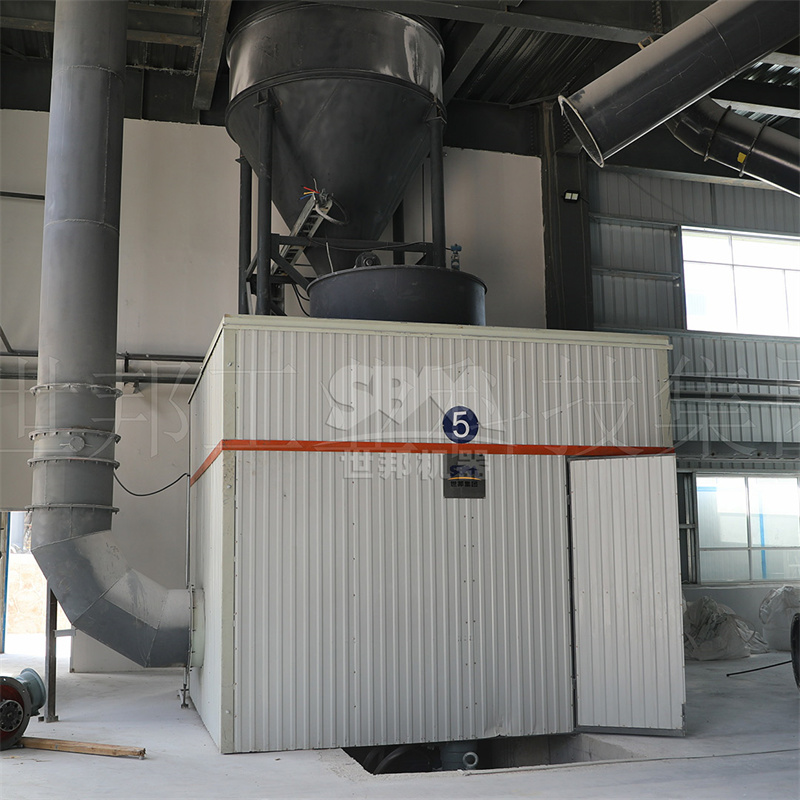
For applications requiring extremely fine bauxite powder (325-2500 mesh), ultrafine grinding mills are essential. These mills utilize advanced grinding principles and precision classification systems to produce powders with exceptional uniformity. The SCM Series Ultrafine Mill is specifically designed for this purpose, offering input sizes up to 20mm and achieving output fineness from 325 to 2500 mesh. With capacities ranging from 0.5 to 25 ton/h depending on the model, this equipment is ideal for high-value refractory applications where particle size consistency is paramount.
We recommend our SCM1000 Ultrafine Mill for medium-scale bauxite powder production, offering 1.0-8.5t/h capacity with main power of 132kW, and our SCM1680 Ultrafine Mill for large-scale operations, delivering 5.0-25t/h capacity with 315kW main power.
European Trapezium Mill Technology
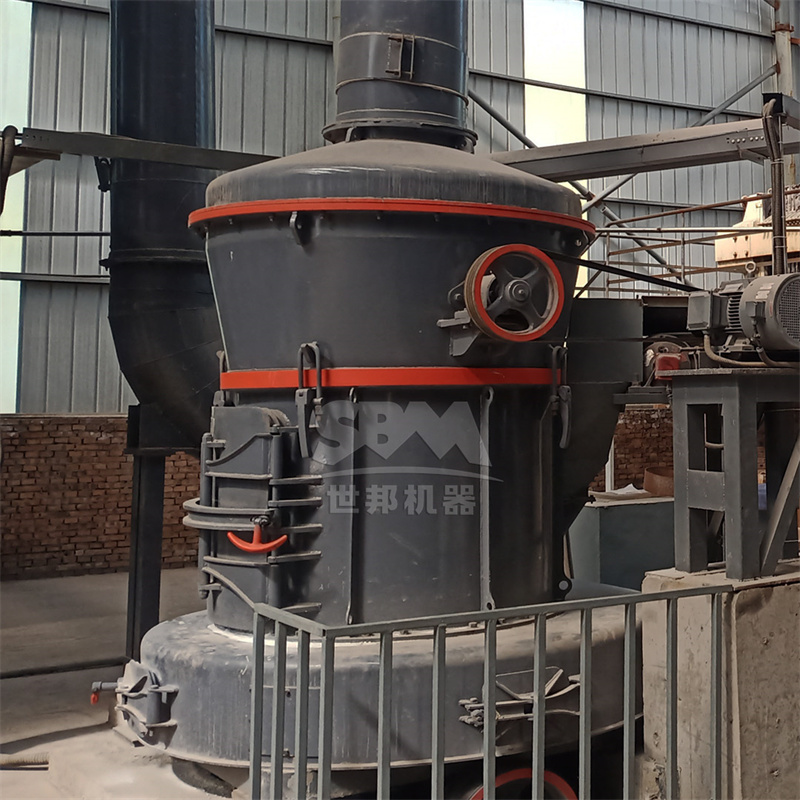
For bauxite powder production in the 30-325 mesh range, European trapezium mills offer excellent performance. The MTW Series European Trapezium Mill features an optimized arc air duct that reduces airflow energy loss and improves transmission efficiency. Its integral bevel gear drive achieves up to 98% transmission efficiency, saving space and reducing installation costs. The anti-wear shovel design combines specialized blade configurations to extend grinding roller life and reduce maintenance costs. This technology is particularly suitable for cement-grade bauxite powder production where cost-effectiveness and reliability are critical.
Vertical Roller Mill Technology
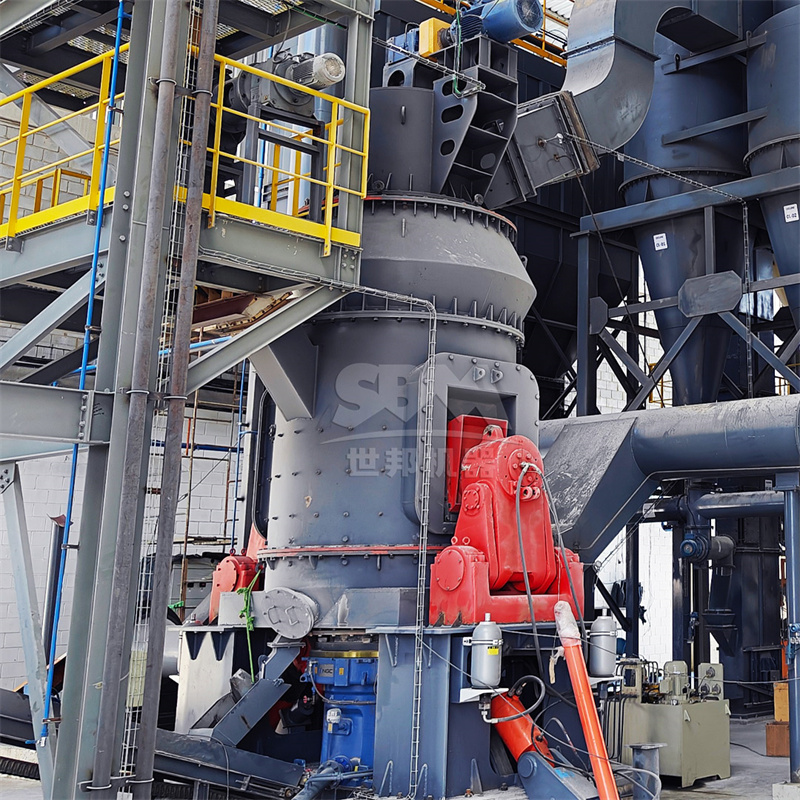
Vertical roller mills represent the most advanced technology for large-scale bauxite powder production. The LM Series Vertical Roller Mill integrates crushing, grinding, and selection in a single system, reducing floor space by 50% and infrastructure costs by 40%. Its non-contact design between rollers and table increases wear part life by three times while consuming 30-40% less energy than traditional ball mill systems. The intelligent control system supports remote and local switching with real-time monitoring, significantly reducing manual intervention. With capacities ranging from 3 to 250 ton/h, this technology is ideal for large cement plants and refractory material producers.
Technical Advantages of Modern Bauxite Grinding Equipment
High Efficiency and Energy Saving
Modern bauxite grinding equipment achieves capacities up to two times higher than traditional jet mills while consuming 30% less energy. Intelligent control systems with automatic finished product granularity feedback ensure optimal operation at all times. This energy efficiency translates directly to lower production costs and reduced environmental impact.
High-Precision Classification
Advanced vertical turbine classifiers achieve precise particle size cutting without coarse powder mixing, ensuring uniform finished products. This precision is particularly important for refractory applications where even small variations in particle size can affect product performance. The classification systems in modern mills can be adjusted to produce multiple fineness grades from the same raw material.
Durable Design and Long Service Life
Special material rollers and rings extend service life several times over compared to conventional designs. Shaftless screw grinding chambers ensure stable operation even under demanding conditions. These durability features reduce maintenance frequency and downtime, maximizing production throughput.
Eco-friendly and Low Noise Operation
Pulse dust collection systems in modern mills exceed international standards for emission control. Soundproof room designs ensure noise levels remain within acceptable limits for continuous industrial operation. These environmental features help producers meet increasingly stringent regulatory requirements while maintaining productive operations.
Working Principles of Bauxite Grinding Mills
In ultrafine mills like the SCM Series, the main motor drives three layers of grinding rings to rotate. Materials are dispersed into the grinding path by centrifugal force, crushed by roller pressure, and ground layer by layer. The process culminates with powder collection completed by a cyclone collector and pulse dust removal system.
For European trapezium mills, the main motor drives the grinding rollers to revolve around the central axis while self-rotating to generate centrifugal force. Shovels throw materials between the ring and rollers to form a material layer, achieving efficient crushing through extrusion. The classification system precisely controls the finished product size.
In vertical roller mills, the main motor drives the grinding table via a reducer. Materials enter through the central feed port and spread evenly via centrifugal force. Grinding rollers apply pressure to crush the material layer, while qualified fines are carried by air to the classifier and coarse powder returns to the table for re-grinding.
Model Selection Guide for Bauxite Powder Production
SCM Series Ultrafine Mill Models
- SCM800: Capacity 0.5-4.5t/h, Main Power 75kW, Feed Size 0-20mm, Fineness 325-2500 mesh
- SCM900: Capacity 0.8-6.5t/h, Main Power 90kW, Feed Size 0-20mm, Fineness 325-2500 mesh
- SCM1000: Capacity 1.0-8.5t/h, Main Power 132kW, Feed Size 0-20mm, Fineness 325-2500 mesh
- SCM1250: Capacity 2.5-14t/h, Main Power 185kW, Feed Size 0-20mm, Fineness 325-2500 mesh
- SCM1680: Capacity 5.0-25t/h, Main Power 315kW, Feed Size 0-20mm, Fineness 325-2500 mesh
MTW Series European Trapezium Mill Models
- MTW110: Capacity 3-9t/h, Main Power 55kW, Feed Size <30mm, Fineness 10-325 mesh
- MTW138Z: Capacity 6-17t/h, Main Power 90kW, Feed Size <35mm, Fineness 10-325 mesh
- MTW175G: Capacity 9.5-25t/h, Main Power 160kW, Feed Size <40mm, Fineness 10-325 mesh
- MTW215G: Capacity 15-45t/h, Main Power 280kW, Feed Size <50mm, Fineness 10-325 mesh
LM Series Vertical Roller Mill Models for Bauxite
- LM130K: Table Φ1300mm, Capacity 10-28t/h, Fineness 170-40μm, Feed ≤38mm, Power 200kW
- LM150K: Table Φ1500mm, Capacity 13-38t/h, Fineness 170-40μm, Feed ≤40mm, Power 280kW
- LM170K: Table Φ1700mm, Capacity 18-48t/h, Fineness 170-40μm, Feed ≤42mm, Power 400kW
- LM190K: Table Φ1900mm, Capacity 23-68t/h, Fineness 170-40μm, Feed ≤45mm, Power 500kW
- LM220K: Table Φ2200mm, Capacity 36-105t/h, Fineness 170-45μm, Feed ≤50mm, Power 800kW
- LM280K: Table Φ2800mm, Capacity 50-170t/h, Fineness 170-45μm, Feed ≤50mm, Power 1250kW
Conclusion
The production of high-quality bauxite powder for refractory and cement applications requires advanced milling equipment capable of delivering precise particle size control, high energy efficiency, and reliable operation. Whether producing ultrafine powder for premium refractories or standard-grade powder for cement manufacturing, modern mills offer the technology and performance needed to meet demanding specifications. By selecting the appropriate equipment based on production requirements and desired product characteristics, manufacturers can optimize their bauxite powder production processes for maximum quality and profitability.