
Introduction
Flue gas desulfurization (FGD) is a critical process in coal-fired power plants and industrial boilers to reduce sulfur dioxide (SO₂) emissions. Limestone, due to its abundance and cost-effectiveness, remains the most widely used desulfurization agent. However, the performance of limestone-based FGD systems depends heavily on the quality and fineness of the limestone powder. Choosing the right milling system is therefore essential for ensuring high desulfurization efficiency, low operating costs, and reliable long-term operation.
This article provides a comprehensive guide to selecting the optimal milling equipment for limestone desulfurization agent production. We will examine the key requirements of FGD limestone powder, compare different mill types, and recommend specific equipment from our product portfolio that meets the demanding needs of modern FGD plants.
Key Requirements for FGD Limestone Powder
Before selecting a mill, it is important to understand the specifications that make limestone powder suitable for FGD. Typically, the required fineness ranges from 250 mesh to 325 mesh (45-75 μm), although some advanced systems may require finer powders. The particle size distribution should be narrow to ensure complete reaction with SO₂. Additionally, the powder must have high reactivity, which is influenced not only by fineness but also by the grinding method and any thermal treatment during milling.
Throughput requirements vary widely. Small industrial boilers may need only a few tons per hour, while large utility boilers can require 30-50 tons per hour or more. Energy consumption is a major operational cost, so mills with high energy efficiency are preferred. Maintenance and wear part life also significantly impact total cost of ownership. Finally, environmental compliance—dust emission and noise levels—must be considered.
Overview of Milling Technologies
Several types of mills are used for limestone grinding in FGD applications: ball mills, vertical roller mills, trapezium mills, ultrafine mills, and hammer mills. Each has distinct advantages and limitations.
Ball mills are traditional and robust, capable of producing fine powders with high throughput. However, they are energy-intensive, noisy, and have a large footprint. They are often used in older plants or where very fine grinding is needed.
Vertical roller mills (VRM) have become the preferred choice for modern FGD systems due to their high efficiency, compact design, and ability to handle large capacities. They integrate grinding, drying, and classification, reducing auxiliary equipment.
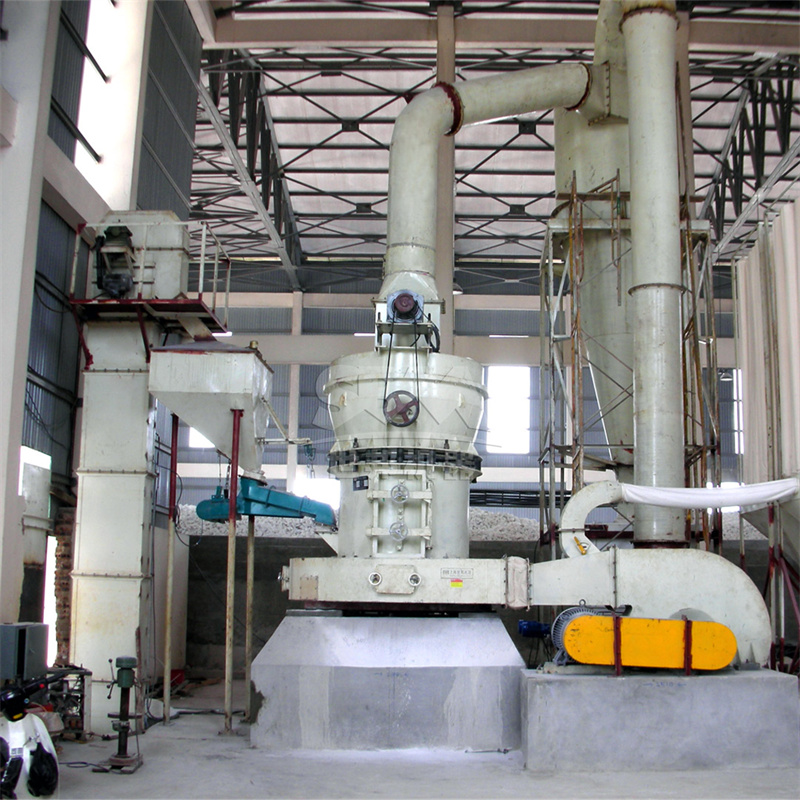
Trapezium mills and ultrafine mills are suitable for smaller to medium capacities, offering precise fineness control and lower energy consumption compared to ball mills.
Hammer mills are used for coarse grinding (0-3 mm) and are often employed in pre-grinding or when a coarse product is acceptable.
Selection Criteria for FGD Limestone Milling Systems
When choosing a milling system, consider the following factors:
- Required Fineness and Capacity: Match the mill’s output fineness and tonnage to your FGD system’s demand. Oversizing wastes energy; undersizing limits desulfurization efficiency.
- Energy Efficiency: Look for mills with low specific power consumption (kWh/t). Vertical roller mills and advanced trapezium mills typically excel here.
- Wear Part Life: Limestone is abrasive, so mills with wear-resistant materials (e.g., special alloys, ceramic liners) reduce downtime and maintenance costs.
- System Integration: Mills that combine grinding, drying, and classification reduce equipment count and simplify layout.
- Environmental Performance: Dust collection and noise control are essential for regulatory compliance and worker safety.
- Automation and Control: Intelligent control systems optimize grinding parameters, ensuring consistent product quality and reducing manual intervention.
- Footprint and Installation: Especially for retrofits, compact mills that can be installed outdoors save civil construction costs.
Recommended Milling Systems from Our Portfolio
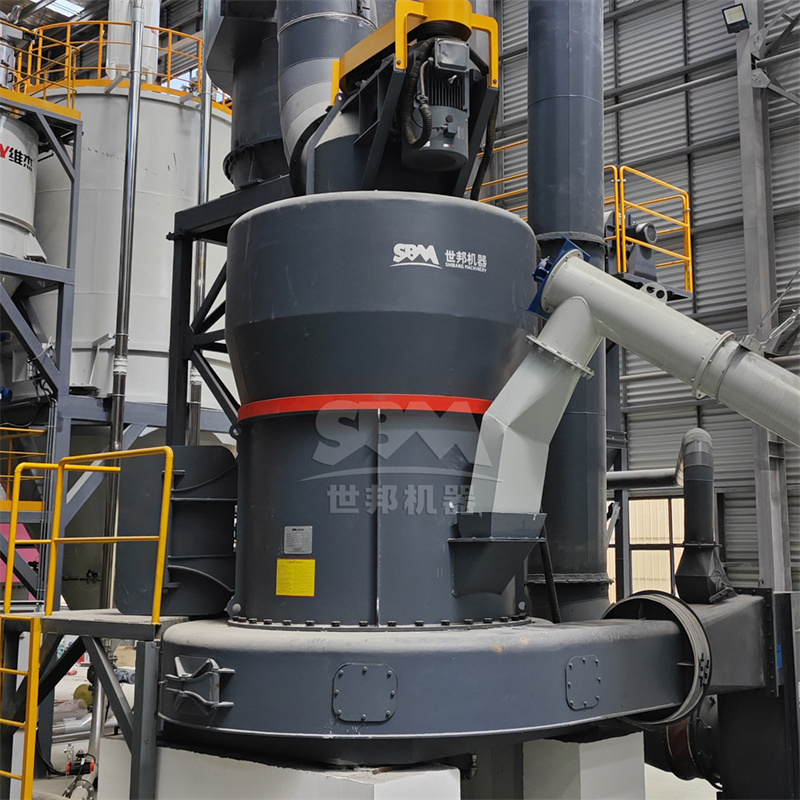
Based on the above criteria, we recommend two of our advanced milling systems that are particularly well-suited for limestone desulfurization agent production: the LM Series Vertical Roller Mill and the MTW Series European Trapezium Mill. Both are designed for high efficiency, reliability, and environmental compliance.
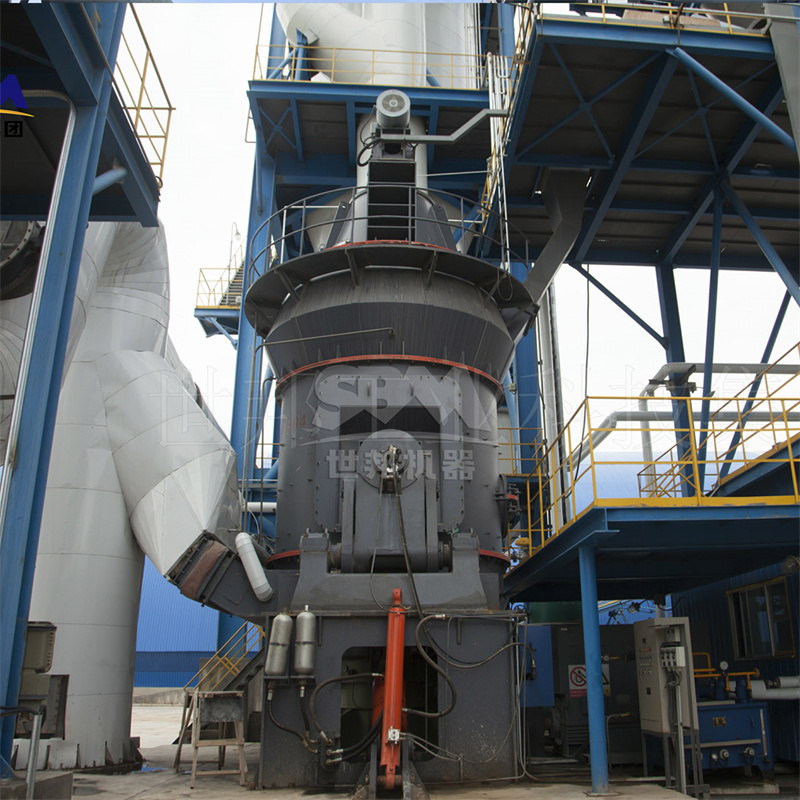
LM Series Vertical Roller Mill
The LM Series Vertical Roller Mill is an ideal choice for medium to large FGD plants. Its integrated design combines crushing, grinding, and classification, reducing floor space by up to 50% compared to ball mill systems. It can be installed outdoors, cutting infrastructure costs by 40%.
Key technical advantages include:
- Low Operating Cost: Non-contact design between rollers and table extends wear part life by 3 times. Energy consumption is 30-40% lower than ball mill systems.
- Intelligent Control: Expert-level auto-control system supports remote/local switching and real-time monitoring, minimizing manual intervention.
- Environmental Compliance: Fully sealed negative pressure operation ensures dust emission and noise levels meet stringent standards.
- High Capacity: Available in models from LM130K (10-28 t/h) to LM280K (50-170 t/h), with fineness adjustable from 170 to 45 μm.
For FGD applications, the LM Series can produce limestone powder with excellent particle size distribution, ensuring high reactivity. Its ability to handle high moisture content (when equipped with hot air system) makes it versatile for various limestone sources.
MTW Series European Trapezium Mill
For small to medium FGD plants, the MTW Series European Trapezium Mill offers a cost-effective solution with outstanding performance. It features an anti-wear shovel design, optimized arc air duct, integral bevel gear drive, and wear-resistant volute structure, resulting in maintenance costs reduced by 30% and transmission efficiency up to 98%.
Key technical advantages include:
- Precise Fineness Control: Output fineness adjustable from 30 to 325 mesh (down to 0.038 mm), suitable for various FGD requirements.
- High Efficiency: Optimized airflow design reduces energy loss, while the curved shovel blades extend grinding roller life.
- Compact Design: Saves space and reduces installation costs, ideal for retrofits or limited spaces.
- Reliable Operation: Patented internal suction oil lubrication system ensures long-term stability.
- Models: From MTW110 (3-9 t/h) to MTW215G (15-45 t/h), catering to a wide range of capacities.
The MTW Series is particularly praised for its consistent product quality and low maintenance requirements. Its advanced pulse dust removal technology ensures environmental compliance.
Case Study: Successful FGD Application
A 600 MW coal-fired power plant in Asia required a limestone milling system to produce 30 t/h of powder with 90% passing 325 mesh. After evaluating options, they selected an LM220K Vertical Roller Mill. The system achieved the target fineness with specific energy consumption of 18 kWh/t, significantly lower than the 28 kWh/t of their old ball mill. Dust emission was below 10 mg/m³, and noise levels were under 85 dB. The plant reported a payback period of less than two years due to energy savings and reduced maintenance.
Conclusion
Choosing the right milling system for limestone desulfurization agent production is a strategic decision that impacts operational efficiency, costs, and environmental compliance. The LM Series Vertical Roller Mill and MTW Series European Trapezium Mill from our company represent state-of-the-art solutions that meet the demanding requirements of modern FGD plants. By carefully assessing your capacity, fineness, and site conditions, you can select the optimal mill to ensure reliable, efficient, and sustainable desulfurization.
For more information on our milling solutions or to request a quote, please contact our technical team. We are committed to helping you achieve excellence in FGD performance.