
Introduction: The Strategic Role of Limestone Powder in Fertilizer Production
Limestone powder, also known as agricultural lime or ground calcium carbonate, is a cornerstone input in modern fertilizer manufacturing. Whether used as a filler, a soil pH conditioner, or a calcium supplement in compound fertilizers, the physical and chemical properties of the limestone powder directly influence the quality, efficiency, and market value of the final fertilizer product. As global agriculture intensifies its focus on soil health and sustainable nutrient management, the demand for finely ground, consistently graded limestone powder has never been higher.
For fertilizer producers, the choice of grinding equipment is not merely a matter of capital expenditure; it is a strategic decision that affects operational cost, product consistency, environmental compliance, and long-term profitability. This article provides a professional guide to selecting the right grinding mill for your lime fertilizer line, drawing on the latest technologies and real-world performance data.
Key Criteria for Selecting a Limestone Grinding Mill
Before evaluating specific mill models, it is essential to define the technical and economic parameters that will govern your selection process. The following criteria are critical:
1. Target Fineness and Particle Size Distribution
Fertilizer applications typically require limestone powder in the range of 80 to 325 mesh (180 to 45 microns), though premium products may demand ultrafine grades down to 5 microns. The selected mill must not only achieve the required top size but also deliver a narrow particle size distribution to ensure consistent reactivity and blending behavior.
2. Capacity and Scalability
Your production line may start at a few tons per hour and scale to hundreds of tons per hour. The grinding mill should offer modular capacity options or be part of a series that allows future expansion without replacing the entire system.
3. Energy Efficiency
Grinding is one of the most energy-intensive processes in fertilizer production. Mills that offer higher grinding efficiency, lower power consumption per ton, and intelligent control systems can significantly reduce operating costs.
4. Wear Resistance and Maintenance
Limestone is abrasive. Grinding components must be made from high-quality wear-resistant materials, and the mill design should allow for quick maintenance and parts replacement to minimize downtime.
5. Environmental Performance
Dust emission, noise levels, and overall environmental footprint are increasingly regulated. Choose mills equipped with advanced dust collection systems and soundproofing to ensure compliance and community acceptance.
6. Integration with Existing Lines
The mill should integrate seamlessly with feeding, conveying, classification, and packaging systems. A turnkey solution from a single supplier can reduce interface risks and commissioning time.
Grinding Mill Technologies for Limestone Powder Production
Several types of grinding mills are commonly used in the fertilizer industry. Each has its strengths and limitations, and the optimal choice depends on your specific requirements.
Ball Mills
Traditional ball mills are robust and can handle high capacities, but they are energy-intensive and offer limited control over particle size distribution. They are best suited for coarse grinding or when a large throughput is required.
Hammer Mills
Hammer mills are ideal for primary crushing of limestone to 0-3 mm. They are compact, low-cost, and easy to maintain, but they cannot produce fine powders.
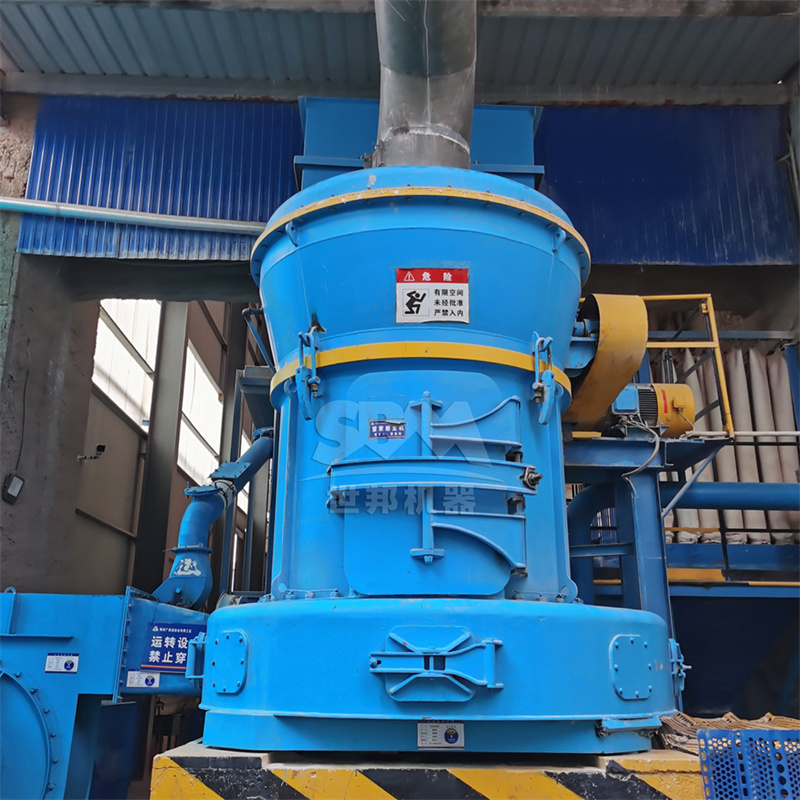
Vertical Roller Mills
Vertical roller mills (VRMs) have become the industry standard for grinding limestone in fertilizer plants. They combine grinding, drying, and classification in a single unit, offering high efficiency, low energy consumption, and excellent product consistency.
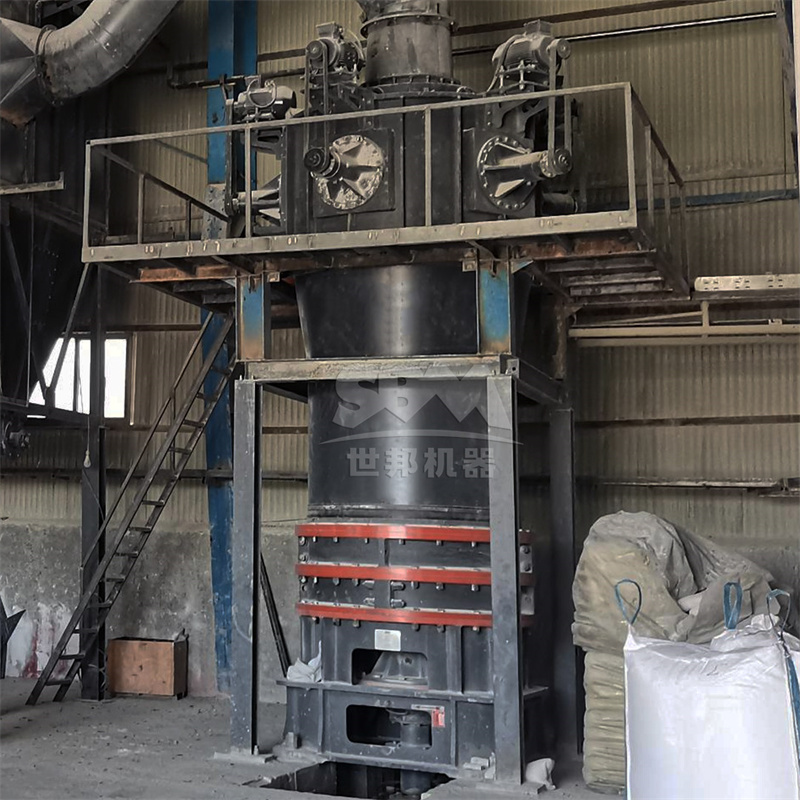
Ultrafine Mills
For premium fertilizer products requiring ultrafine limestone powder (e.g., for foliar application or specialty blends), ultrafine mills such as the SCM series are the preferred choice.
Recommended Equipment for Your Lime Fertilizer Line
Based on decades of experience in powder processing and a deep understanding of fertilizer production requirements, we recommend the following two products from our portfolio. They represent the best-in-class solutions for different capacity and fineness targets.
1. SCM Series Ultrafine Mill (45-5μm)
The SCM Series Ultrafine Mill is a state-of-the-art grinding solution designed for producing ultrafine limestone powder with exceptional efficiency. It is particularly suitable for fertilizer producers who require high-value, fine-grade limestone powder.
Core Parameters:
- Input Size: ≤20mm
- Output Fineness: 325-2500 mesh (45-5μm)
- Capacity: 0.5-25 ton/h (depending on model)
Technical Advantages:
- High Efficiency & Energy Saving: Capacity is twice that of jet mills, with 30% lower energy consumption. Intelligent control with automatic finished product granularity feedback ensures optimal operation.
- High-Precision Classification: The vertical turbine classifier achieves precise particle size cutting, ensuring no coarse powder mixing and uniform finished products.
- Durable Design: Special material rollers and rings extend service life several times over. The shaftless screw grinding chamber ensures stable operation.
- Eco-friendly & Low Noise: Pulse dust collection efficiency exceeds international standards. Soundproof room design ensures noise levels are well below regulatory limits.
Working Principle: The main motor drives three layers of grinding rings to rotate. Materials are dispersed into the grinding path by centrifugal force, crushed by roller pressure, and ground layer by layer. Finally, powder collection is completed by a cyclone collector and a pulse dust removal system.
Models & Specifications:
- SCM800: Capacity 0.5-4.5t/h | Main Power 75kW | Fineness 325-2500 mesh
- SCM900: Capacity 0.8-6.5t/h | Main Power 90kW | Fineness 325-2500 mesh
- SCM1000: Capacity 1.0-8.5t/h | Main Power 132kW | Fineness 325-2500 mesh
- SCM1250: Capacity 2.5-14t/h | Main Power 185kW | Fineness 325-2500 mesh
- SCM1680: Capacity 5.0-25t/h | Main Power 315kW | Fineness 325-2500 mesh
For fertilizer lines that demand ultrafine limestone powder with strict quality control, the SCM Series is an excellent choice.
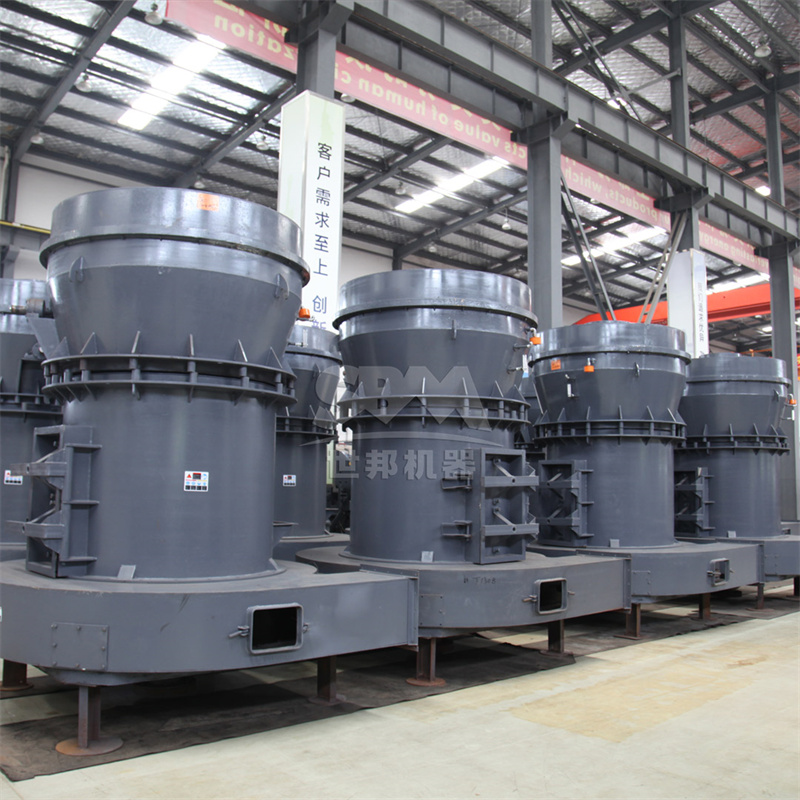
2. MTW Series European Trapezium Mill (600-45μm)
For medium to large-scale fertilizer production requiring fineness between 30 and 325 mesh, the MTW Series European Trapezium Mill offers an unbeatable combination of capacity, efficiency, and reliability.
Core Parameters:
- Input Size: ≤50mm
- Output Fineness: 30-325 mesh (down to 0.038mm)
- Capacity: 3-45 ton/h (depending on model)
Technical Advantages:
- Anti-wear Shovel Design: Combined shovel blades reduce maintenance costs. The curved design extends grinding roller life.
- Optimized Arc Air Duct: Reduces airflow energy loss and improves transmission efficiency. High-strength guard plates protect the air duct working surface.
- Integral Bevel Gear Drive: Transmission efficiency up to 98%. Saves space and reduces installation costs.
- Wear-resistant Volute Structure: Non-resistance flow design improves air selection efficiency. Maintenance costs reduced by 30%.
Working Principle: The main motor drives the grinding rollers to revolve around the central axis while self-rotating to generate centrifugal force. Shovels throw materials between the ring and rollers to form a material layer, achieving efficient crushing through extrusion. The classification system precisely controls the finished product size.
Models & Specifications:
- MTW110: Capacity 3-9t/h | Main Power 55kW | Fineness 10-325 mesh
- MTW138Z: Capacity 6-17t/h | Main Power 90kW | Fineness 10-325 mesh
- MTW175G: Capacity 9.5-25t/h | Main Power 160kW | Fineness 10-325 mesh
- MTW215G: Capacity 15-45t/h | Main Power 280kW | Fineness 10-325 mesh
- MRN198: Capacity 12-33t/h | Main Power 220kW | Fineness 10-325 mesh
The MTW Series is the ideal workhorse for fertilizer plants that need a versatile, high-capacity mill capable of producing a wide range of particle sizes.
Integrating the Mill into Your Fertilizer Line
Selecting the right mill is only the first step. To maximize return on investment, consider the following integration aspects:
Feeding and Conveying
A consistent feed rate is crucial for stable grinding performance. Use a vibratory feeder or belt feeder with variable speed control to match the mill’s capacity. For ultrafine grinding, ensure the feed material is dry and free-flowing.
Classification and Dust Collection
Efficient classification ensures that only qualified powder leaves the mill. Pair the mill with a high-efficiency cyclone and pulse dust collector to recover fine particles and maintain a clean working environment.
Automation and Control
Modern mills come with PLC-based control systems that monitor and adjust parameters such as feed rate, classifier speed, and airflow. This not only ensures consistent product quality but also reduces operator intervention and energy waste.
Maintenance and Spare Parts
Establish a preventive maintenance schedule and keep critical spare parts (rollers, rings, liners) in stock. Choose a supplier that offers quick delivery and technical support to minimize downtime.
Case Study: A 10 t/h Lime Fertilizer Line in Southeast Asia
A leading fertilizer producer in Southeast Asia required a limestone grinding system to produce 200 mesh powder for NPK fertilizer blends. After evaluating several options, they selected an MTW138Z mill with a capacity of 6-17 t/h. The system was integrated with a hammer mill for pre-crushing, a bucket elevator for feeding, and a pulse dust collector for emission control.
The results exceeded expectations: the mill achieved a consistent fineness of 200 mesh with less than 5% oversize, energy consumption was 30% lower than their previous ball mill, and dust emissions were well within local regulations. The plant has since ordered a second MTW mill to expand capacity.
Conclusion: Partner with a Leader in Powder Processing
Choosing the right grinding mill for your lime fertilizer line is a decision that will impact your operations for years to come. By carefully evaluating your fineness requirements, capacity needs, and long-term business goals, you can select a mill that delivers optimal performance and return on investment.
Our company has been at the forefront of powder processing technology for decades, with a comprehensive portfolio of mills ranging from hammer mills and ball mills to advanced vertical roller mills and ultrafine mills. Whether you need the precision of the SCM Series Ultrafine Mill or the robust capacity of the MTW Series European Trapezium Mill, we have the expertise and equipment to support your success.
Contact us today to discuss your lime fertilizer line requirements and let our engineers design a customized grinding solution that meets your exact needs.