
Introduction
The surge in demand for lithium-ion batteries has made spodumene the cornerstone of hard-rock lithium extraction. Converting raw spodumene ore into high-purity lithium carbonate or hydroxide requires precise comminution—specifically, grinding the material to a fine powder that maximizes lithium recovery in downstream processes. Selecting the right grinding mill for your lithium processing plant is not merely a matter of capacity; it directly impacts product quality, energy consumption, operational reliability, and overall project economics. This article provides a comprehensive guide to choosing the optimal grinding equipment for spodumene powder production, drawing on proven industrial solutions and real-world parameters.
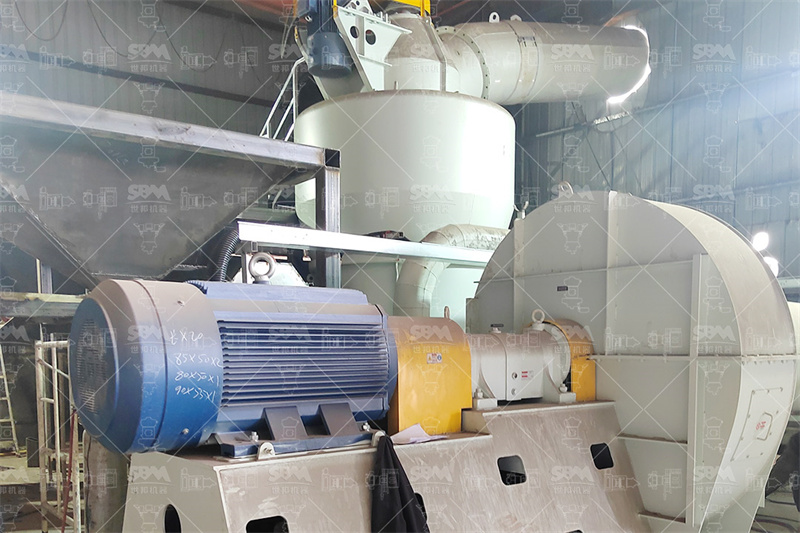
Understanding Spodumene Grinding Requirements
Spodumene (LiAlSi2O6) is a hard, abrasive mineral with a Mohs hardness of 6.5–7.0. After mining and primary crushing, the ore must be ground to liberate lithium-bearing crystals from gangue minerals and to prepare the material for the decrepitation or acid-roasting step. Typical target fineness for spodumene concentrate grinding ranges from 150 to 300 mesh (approximately 45–100 μm), although some flowsheets require ultrafine grinding down to 10–20 μm for enhanced leaching kinetics. The grinding circuit must therefore deliver:
- High reduction ratio to handle feed sizes up to 50 mm and produce fine powders.
- Precise particle size control to avoid over-grinding (which wastes energy) and under-grinding (which reduces recovery).
- Contamination-free operation to prevent iron and other impurities from degrading final lithium product purity.
- Energy efficiency because grinding typically accounts for 30–50% of the total power consumption in a lithium concentrator.
- Reliability and low maintenance to ensure continuous operation in remote mining locations.
Key Criteria for Grinding Mill Selection
When evaluating grinding mills for spodumene powder production, consider the following technical and economic factors:
1. Fineness and Particle Size Distribution
The required product fineness dictates the mill type. For coarse grinding (down to 325 mesh / 45 μm), trapezium mills or ball mills may suffice. For ultrafine grinding (325–2500 mesh / 45–5 μm), specialized ultrafine mills or vertical roller mills are necessary. Spodumene beneficiation often benefits from a steep particle size distribution curve with minimal coarse particles, which improves downstream flotation or leaching efficiency.
2. Capacity and Scalability
Throughput requirements vary from small pilot plants (0.5–5 t/h) to large-scale operations (25–250 t/h). The selected mill must match your production profile and allow for future expansion. Modular designs with multiple grinding rollers or table diameters offer scalable capacity.
3. Energy Consumption
Grinding efficiency is paramount. Traditional ball mills consume 30–40% more energy than modern vertical roller mills or ultrafine mills for the same fineness. High-pressure grinding and optimized airflow systems can further reduce specific power consumption (kWh/t).
4. Wear Parts and Maintenance
Spodumene’s abrasiveness accelerates wear on grinding rollers, rings, and liners. Mills featuring wear-resistant materials (e.g., special alloy rollers, ceramic liners) and easy maintenance access (e.g., hydraulic roller changes) minimize downtime and operating costs.
5. Classification Accuracy
An integral or external classifier must efficiently separate fine product from coarse particles. Dynamic classifiers with variable speed control allow precise adjustment of cut size (e.g., 45–5 μm). Poor classification leads to over-grinding and reduced mill capacity.
6. Environmental and Safety Features
Dust emissions must be controlled via pulse-jet baghouses or cartridge filters to meet occupational health and environmental standards. Noise levels should be mitigated through soundproof enclosures or damping systems. Negative-pressure operation prevents dust leakage.
7. Capital and Operating Costs
Beyond the initial purchase price, evaluate installation costs (footprint, foundation), energy costs, wear-part consumption, and labor for maintenance. Integrated systems that combine crushing, grinding, and classification can reduce auxiliary equipment and civil works.
Recommended Grinding Mill Solutions
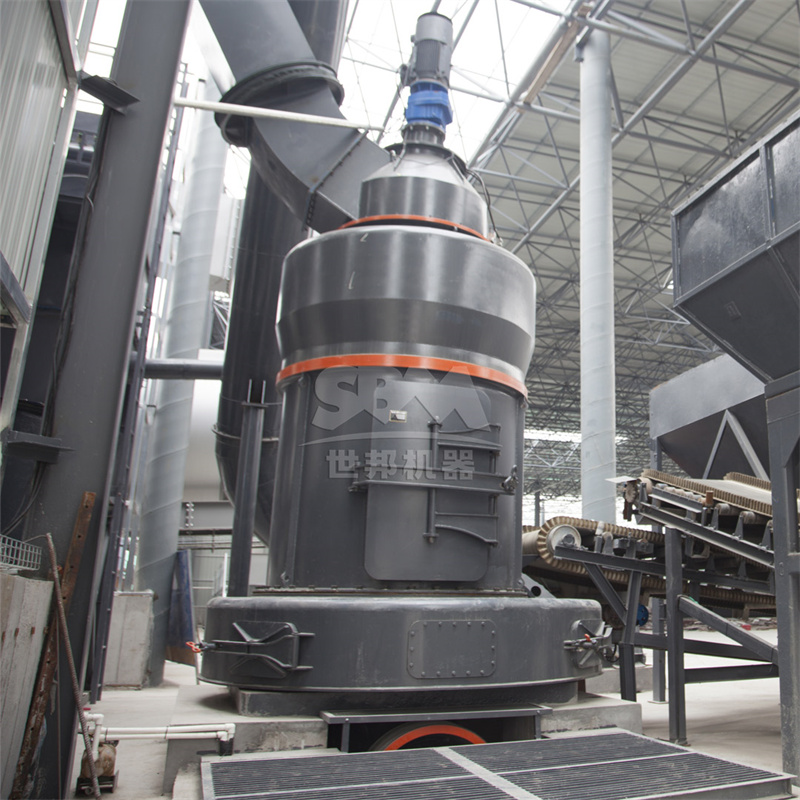
Based on the above criteria, two mill types stand out for spodumene powder production: the SCM Series Ultrafine Mill and the LM Series Vertical Roller Mill. Both are engineered to deliver high efficiency, precise classification, and reliable performance.
SCM Series Ultrafine Mill (45–5 μm)
The SCM Series is a specialized ultrafine grinding mill designed for demanding applications requiring fineness down to 5 μm. Its key advantages for spodumene processing include:
- High efficiency and energy savings: Capacity is twice that of jet mills, with 30% lower energy consumption. Intelligent control with automatic finished-product granularity feedback ensures consistent quality.
- High-precision classification: A vertical turbine classifier achieves precise particle size cutting, preventing coarse powder mixing and guaranteeing uniform finished product—critical for downstream lithium extraction.
- Durable design: Special material rollers and rings extend service life several times over, reducing maintenance costs. The shaftless screw grinding chamber ensures stable operation even with abrasive spodumene.
- Eco-friendly and low noise: Pulse dust collection efficiency exceeds international standards, and soundproof room design keeps noise levels low.
With models from SCM800 (0.5–4.5 t/h) to SCM1680 (5–25 t/h), the SCM Series can accommodate pilot to medium-scale lithium plants. For a typical spodumene concentrate requiring 80% passing 20 μm, the SCM1250 model (2.5–14 t/h) offers an ideal balance of capacity and fineness.
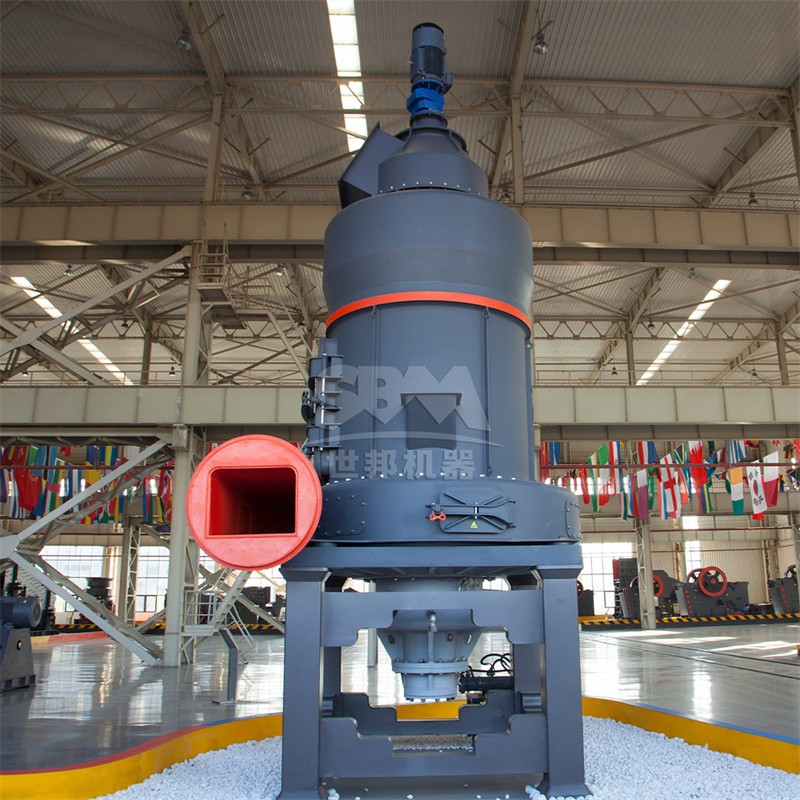
LM Series Vertical Roller Mill (600–45 μm)
The LM Series is a versatile vertical roller mill that integrates crushing, grinding, and classification into a single compact unit. For spodumene processing, it offers:
- Integrated design: System footprint is reduced by 50%, and outdoor installation is possible, cutting infrastructure costs by 40%—a significant advantage for remote lithium mines.
- Low operating cost: Non-contact design between rollers and table increases wear-part life by 3x. Energy consumption is 30–40% lower than ball mill systems.
- Intelligent control: Expert-level auto-control system supports remote/local switching and real-time monitoring, reducing manual intervention.
- Environmental compliance: Fully sealed negative-pressure operation ensures dust emission below 10 mg/m³ and operating noise below 75 dB.
The LM Series spans a wide capacity range: from LM130K (10–28 t/h) to LM280K (50–170 t/h), with fineness adjustable from 170 to 45 μm (and down to 600 mesh for special models). For large-scale spodumene concentrators (e.g., 100 t/h), the LM220K or LM280K provides exceptional throughput and energy efficiency. The LM Series also features patented modular grinding roller assemblies for quick changes and a hot-air circulation energy-saving system.
Comparative Selection Guide
To aid decision-making, consider the following scenarios:
- Small to medium plant (<10 t/h) requiring ultrafine product (5–20 μm): The SCM Series is the clear choice due to its jet-mill-level fineness at lower energy consumption. Its precise classifier ensures minimal oversize, which is vital for maximizing lithium recovery in acid roasting.
- Medium to large plant (10–100 t/h) with moderate fineness (45–100 μm): The LM Series vertical roller mill offers the best economy, with low specific power consumption and a compact footprint. Its integrated hot-air system can also handle minor moisture in the feed.
- Plant with variable product requirements: The LM Series’ multi-stage dynamic classifier allows quick switching between different fineness levels, providing operational flexibility.
- Plant with limited space or infrastructure: The LM Series’ outdoor installation capability and 50% smaller footprint reduce civil construction costs.
In practice, many lithium processing plants use a combination: a jaw crusher or hammer mill for primary size reduction, followed by an LM Series mill for coarse grinding to 100–200 mesh, and an SCM Series mill for ultrafine regrinding of the flotation concentrate. This staged approach optimizes energy use and product quality.
Operational Considerations and Best Practices
Beyond mill selection, ensure proper integration with upstream and downstream equipment:
- Feed preparation: Use a hammer mill or jaw crusher to reduce ore to <20–50 mm before grinding. Consistent feed size maximizes mill throughput.
- Dust collection: Install pulse-jet baghouses on mill vents and transfer points to capture fine silica dust and prevent health hazards.
- Material handling: Use enclosed conveyors and air slides to minimize dust and spillage. Spodumene powder is abrasive; select wear-resistant liners for chutes and hoppers.
- Process control: Implement online particle size analyzers (e.g., laser diffraction) to provide feedback to the mill classifier, ensuring consistent product fineness.
- Maintenance planning: Schedule regular inspection of grinding rollers, rings, and classifiers. Keep critical spare parts on site to minimize downtime.
Conclusion
Choosing the right grinding mill for spodumene powder production is a strategic decision that affects the entire lithium processing chain. By carefully assessing fineness requirements, capacity, energy efficiency, wear life, and classification accuracy, you can select equipment that maximizes return on investment. The SCM Series Ultrafine Mill and LM Series Vertical Roller Mill represent state-of-the-art solutions, each tailored to specific segments of the spodumene grinding spectrum. For ultrafine, high-purity applications, the SCM Series delivers unmatched precision and efficiency; for high-capacity, cost-sensitive operations, the LM Series offers integrated, low-energy grinding. Whichever you choose, partner with a supplier that provides robust technical support, genuine wear parts, and proven references in lithium processing. With the right mill, your lithium plant will achieve higher recovery, lower operating costs, and a competitive edge in the fast-growing battery materials market.