
Introduction to Metallurgical Bentonite and Its Role in Foundry Applications
Metallurgical bentonite, also known as foundry-grade bentonite, is a critical raw material in the metal casting industry. Its unique properties—including high swelling capacity, excellent binding strength, and superior thermal stability—make it indispensable for sand molding processes. In foundry operations, bentonite serves as the primary binder in green sand molds, providing the necessary plasticity and strength to withstand the rigors of molten metal pouring. The quality of the finished casting, including surface finish, dimensional accuracy, and defect rates, is directly influenced by the particle size distribution and purity of the bentonite used.
To achieve foundry-grade bentonite with optimal performance characteristics, manufacturers must carefully select their processing equipment, particularly the grinding mill. The grinding stage determines the final particle size distribution, which in turn affects the swelling index, water absorption, and bonding efficiency of the bentonite. This article explores the key considerations for choosing the right grinding mill for your metallurgical bentonite production line and highlights two industry-leading solutions from our company.
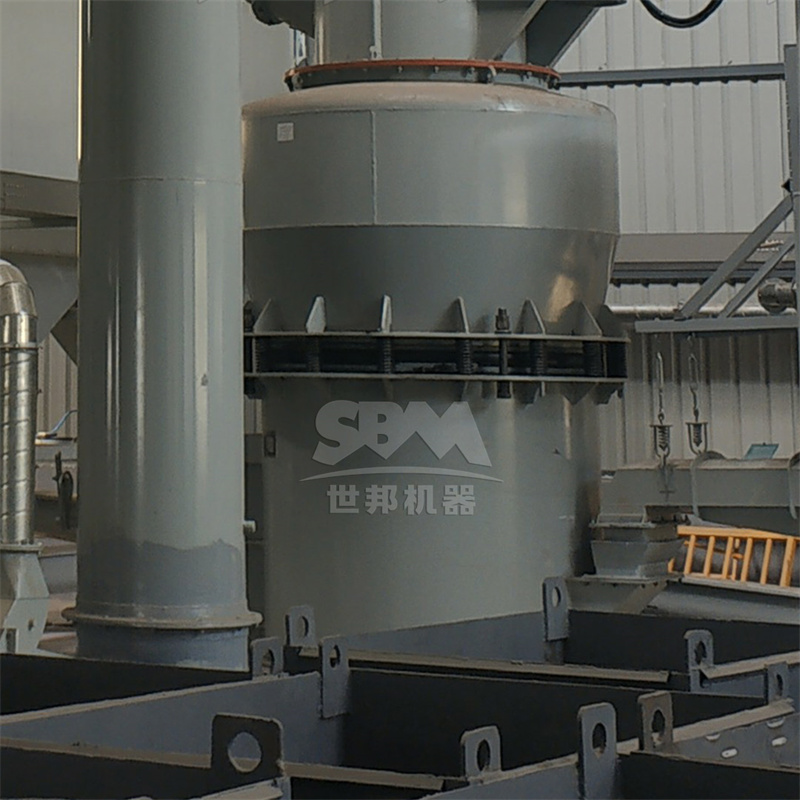
Key Characteristics of Foundry-Grade Bentonite
Before delving into equipment selection, it is essential to understand what makes bentonite suitable for foundry applications. Foundry-grade bentonite typically requires a specific particle size distribution, usually in the range of 200 to 325 mesh, to ensure proper dispersion and activation in sand mixtures. The sodium-based bentonite variety is preferred for foundry use due to its higher swelling capacity and thermal durability. However, calcium-based bentonite can also be processed and activated for foundry applications.
The grinding process must preserve the inherent properties of the bentonite while achieving the desired fineness. Over-grinding can damage the layered structure of montmorillonite, the primary mineral in bentonite, reducing its swelling capacity. Under-grinding results in coarse particles that do not disperse uniformly in the sand mixture, leading to weak mold strengths and casting defects. Therefore, precise control over particle size and minimizing structural damage during grinding are paramount.
Factors to Consider When Choosing a Grinding Mill for Bentonite Processing
1. Fineness Requirements and Particle Size Distribution
The target fineness for foundry-grade bentonite is typically between 200 and 325 mesh, although some specialized applications may require finer or coarser grades. The grinding mill must be capable of delivering a consistent particle size distribution with minimal oversize or undersize fractions. A narrow particle size distribution ensures uniform performance in sand molding.
2. Capacity and Throughput
Production scale is a critical factor in mill selection. Foundries and bentonite processing plants operate at varying scales, from small batch operations to large continuous production lines. The mill must be matched to the required throughput to avoid bottlenecks and ensure economic efficiency. Capacity requirements can range from a few tons per hour to over 50 tons per hour, depending on the plant size.
3. Energy Efficiency and Operating Costs
Grinding is an energy-intensive process, and the cost of power can significantly impact the overall profitability of a bentonite processing line. Choosing a mill with high energy efficiency and low wear rates can substantially reduce operating costs over the equipment’s lifespan. Advanced designs that optimize grinding pressure and material flow can achieve significant energy savings.
4. Preservation of Material Properties
Bentonite is a soft mineral with a Mohs hardness of 1-2, but its layered structure is sensitive to excessive mechanical stress. Grinding equipment should be designed to minimize heat generation and mechanical damage, preserving the swelling and bonding properties of the final product. Mills that use gentle grinding forces and efficient classification can achieve this balance.
5. Dust Control and Environmental Compliance
Bentonite processing generates fine dust, which poses health hazards and environmental concerns. Modern grinding mills should be equipped with efficient dust collection systems, such as pulse jet dust collectors, to meet stringent emission standards. Negative pressure operation and sealed systems are preferred to prevent dust leakage.
6. Maintenance and Wear Part Life
Bentonite is abrasive to a certain degree, and wear parts such as rollers, rings, and liners require periodic replacement. Mills with durable wear parts and easy maintenance access can reduce downtime and lower maintenance costs. The use of advanced materials, such as high-chrome alloys or ceramic composites, can extend wear part life.
7. Automation and Control
Modern processing lines benefit from intelligent control systems that monitor and adjust grinding parameters in real time. Automated control of classifier speed, grinding pressure, and feed rate ensures consistent product quality and optimal energy consumption. Remote monitoring and diagnostic capabilities further enhance operational efficiency.
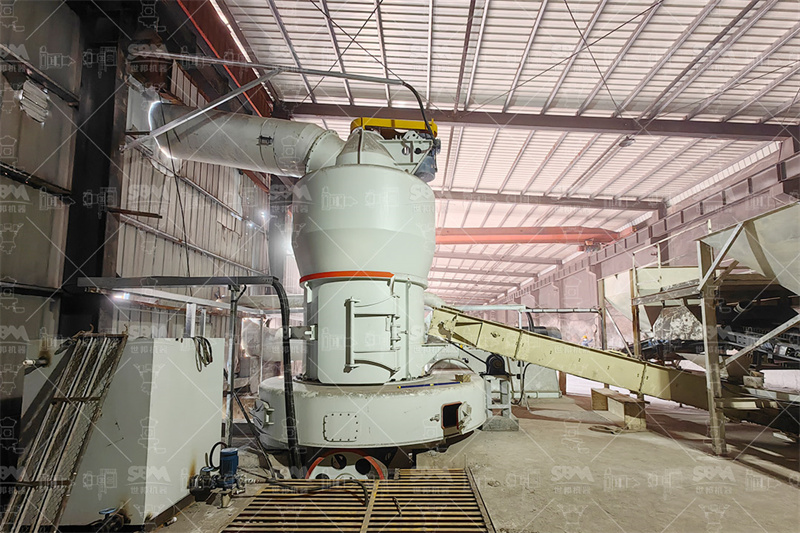
Recommended Equipment: SCM Series Ultrafine Mill and MTW Series European Trapezium Mill
Our company offers two outstanding grinding mill solutions that are particularly well-suited for metallurgical bentonite processing: the SCM Series Ultrafine Mill and the MTW Series European Trapezium Mill. Each brings distinct advantages depending on your production requirements.
SCM Series Ultrafine Mill: Precision Grinding for High-Grade Bentonite
The SCM Series Ultrafine Mill is engineered for applications requiring fine to ultrafine grinding, with an output fineness range of 325 to 2500 mesh. For foundry-grade bentonite, this mill can produce material with a precisely controlled particle size distribution, ensuring optimal performance in sand molds.
Technical Advantages for Bentonite Processing
- High Efficiency and Energy Saving: The SCM mill delivers twice the capacity of jet mills while consuming 30% less energy. This translates to significant cost savings in large-scale bentonite production.
- High-Precision Classification: The vertical turbine classifier provides precise particle size cutting, eliminating coarse powder mixing and ensuring uniform finished products. This is crucial for maintaining consistent bentonite quality.
- Durable Design: Special material rollers and rings extend service life several times over, reducing maintenance frequency and costs. The shaftless screw grinding chamber ensures stable operation even under continuous heavy loads.
- Eco-friendly and Low Noise: The pulse dust collection system exceeds international standards, capturing fine bentonite particles and preventing dust emissions. The soundproof room design ensures noise levels are kept within acceptable limits.
Working Principle
The main motor drives three layers of grinding rings to rotate. Materials are dispersed into the grinding path by centrifugal force, crushed by roller pressure, and ground layer by layer. Finally, powder collection is completed by a cyclone collector and a pulse dust removal system. This gentle grinding action preserves the layered structure of bentonite, maintaining its swelling and bonding properties.
Models and Specifications
- SCM800: Capacity 0.5-4.5t/h | Main Power 75kW | Fineness 325-2500 mesh
- SCM900: Capacity 0.8-6.5t/h | Main Power 90kW | Fineness 325-2500 mesh
- SCM1000: Capacity 1.0-8.5t/h | Main Power 132kW | Fineness 325-2500 mesh
- SCM1250: Capacity 2.5-14t/h | Main Power 185kW | Fineness 325-2500 mesh
- SCM1680: Capacity 5.0-25t/h | Main Power 315kW | Fineness 325-2500 mesh
For foundry-grade bentonite production, models SCM1000 through SCM1680 are particularly recommended, offering capacities that match medium to large-scale foundry requirements while delivering the precise fineness needed for high-performance sand molds.
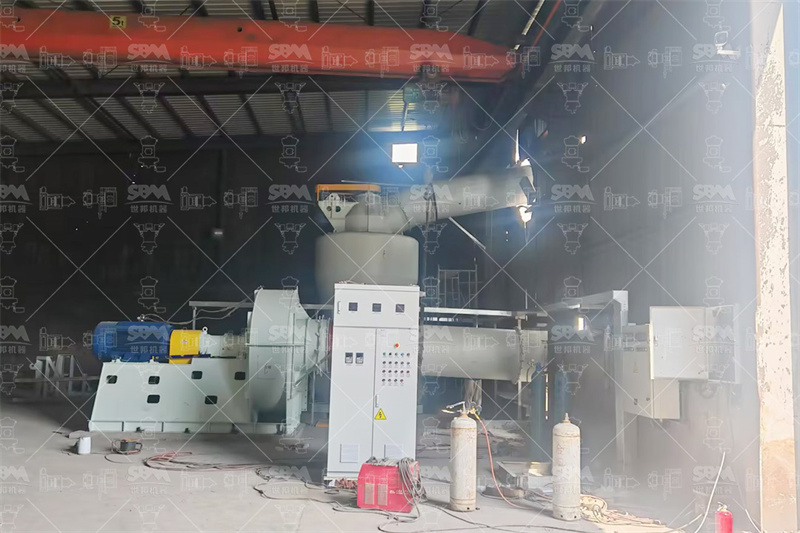
MTW Series European Trapezium Mill: Versatile and Cost-Effective for Bentonite Grinding
The MTW Series European Trapezium Mill is a versatile grinding solution suitable for a wide range of materials, including bentonite. With an output fineness range of 30 to 325 mesh and capacities from 3 to 45 tons per hour, the MTW mill is an excellent choice for foundry-grade bentonite production lines requiring medium to high throughput.
Technical Advantages for Bentonite Processing
- Anti-wear Shovel Design: Combined shovel blades reduce maintenance costs, while the curved design extends grinding roller life. This is particularly beneficial when processing abrasive bentonite ores.
- Optimized Arc Air Duct: Reduces airflow energy loss and improves transmission efficiency. High-strength guard plates protect the air duct working surface, ensuring long-term reliability.
- Integral Bevel Gear Drive: Transmission efficiency up to 98%, saving space and reducing installation costs. This efficient drive system contributes to lower overall energy consumption.
- Wear-resistant Volute Structure: Non-resistance flow design improves air selection efficiency, reducing maintenance costs by 30%. The volute structure ensures smooth material flow and efficient classification.
Working Principle
The main motor drives the grinding rollers to revolve around the central axis while self-rotating to generate centrifugal force. Shovels throw materials between the ring and rollers to form a material layer, achieving efficient crushing through extrusion. The classification system precisely controls the finished product size. This grinding method is gentle yet effective, preserving the natural properties of bentonite.
Models and Specifications
- MTW110: Capacity 3-9t/h | Main Power 55kW | Fineness 10-325 mesh
- MTW110Z: Capacity 3-10t/h | Main Power 55kW | Fineness 10-325 mesh
- MTW138Z: Capacity 6-17t/h | Main Power 90kW | Fineness 10-325 mesh
- MTW175G: Capacity 9.5-25t/h | Main Power 160kW | Fineness 10-325 mesh
- MTW215G: Capacity 15-45t/h | Main Power 280kW | Fineness 10-325 mesh
- MRN158: Capacity 7-21t/h | Main Power 132kW | Fineness 10-325 mesh
- MRN198: Capacity 12-33t/h | Main Power 220kW | Fineness 10-325 mesh
- MRN218: Capacity 15-45t/h | Main Power 280kW | Fineness 10-325 mesh
For foundry-grade bentonite, models MTW138Z through MTW215G offer an excellent balance of capacity, fineness control, and operating cost. The MRN series models are also suitable, providing additional options for specific production layouts.
Patented Technology and Innovation
Our grinding mills incorporate several patented technologies that enhance performance and reliability:
- Independent intellectual property rights ensuring cutting-edge design.
- Internal suction oil lubrication system for extended bearing life.
- Internationally advanced pulse dust removal technology for environmental compliance.
These innovations ensure that our equipment meets the demanding requirements of metallurgical bentonite processing while maintaining low operating costs and minimal environmental impact.
Conclusion: Selecting the Right Mill for Your Bentonite Production Line
Choosing the right grinding mill for your foundry-grade bentonite production line requires careful consideration of fineness requirements, capacity, energy efficiency, material preservation, dust control, maintenance, and automation. The SCM Series Ultrafine Mill and MTW Series European Trapezium Mill from our company offer two excellent solutions, each with distinct advantages.
For operations requiring ultrafine bentonite with precise particle size control and high capacity, the SCM Series Ultrafine Mill is the ideal choice. Its high-precision classification and gentle grinding action preserve the critical properties of bentonite while delivering exceptional energy efficiency.
For operations seeking a versatile, cost-effective solution with medium to high capacity, the MTW Series European Trapezium Mill provides reliable performance, low maintenance costs, and excellent fineness control. Its robust design and efficient drive system make it a dependable workhorse for bentonite processing.
By selecting the appropriate mill and leveraging our advanced technology, you can optimize your metallurgical bentonite production line, ensuring high-quality foundry-grade bentonite that meets the stringent demands of the metal casting industry. Contact our technical team today to discuss your specific requirements and receive a customized recommendation for your production line.