
Introduction: The Critical Role of Barite in Petroleum Drilling
Barite (barium sulfate, BaSO₄) is an indispensable mineral in the petroleum industry. Its high specific gravity (4.2–4.5 g/cm³), chemical inertness, and low solubility make it the primary weighting agent in drilling fluids. In offshore and onshore drilling operations, barite is mixed into drilling mud to counteract high formation pressures, prevent blowouts, and stabilize the borehole wall. According to the American Petroleum Institute (API) specification API 13A, drilling-grade barite must meet strict requirements: specific gravity ≥4.20, fineness such that at least 97% passes a 200-mesh sieve (75 μm) and at least 90% passes a 325-mesh sieve (45 μm). These stringent standards demand not only high-quality raw barite ore but also advanced processing equipment—particularly grinding mills—to achieve the desired particle size distribution and maintain consistent product quality.
Choosing the right grinding mill for barite processing is a multifaceted decision that impacts product quality, operational efficiency, energy consumption, and overall profitability. This article provides a comprehensive guide to selecting the optimal grinding equipment for drilling-grade barite, covering key selection criteria, an overview of mill technologies, and a detailed analysis of how different mills match specific production requirements. We also highlight two of our company’s flagship products—the SCM Series Ultrafine Mill and the MTW Series European Trapezium Mill—which are ideally suited for barite processing.
Key Selection Criteria for Barite Grinding Mills
Before evaluating specific mill types, it is essential to understand the critical factors that influence the choice of grinding equipment for barite:
1. Fineness Requirements
Drilling-grade barite typically requires a fineness between 200 and 325 mesh (75–45 μm). However, some applications demand even finer particles, down to 2500 mesh (5 μm) for specialized high-density muds or for use in composite materials. The mill must be capable of achieving the target particle size distribution with high classification precision to avoid coarse particles that can settle in the borehole.
2. Capacity and Throughput
Barite processing plants vary from small-scale operations (a few tons per hour) to large-scale industrial facilities (up to 250 t/h). The mill’s capacity must align with the mine’s output and market demand. Over-sizing leads to unnecessary capital expenditure, while under-sizing bottlenecks production.
3. Energy Efficiency
Grinding is highly energy-intensive. The specific energy consumption (kWh per ton of product) directly affects operating costs. Mills with advanced classification and grinding mechanisms, such as vertical roller mills and pendulum mills, can reduce energy consumption by 30–50% compared to traditional ball mills.
4. Wear Resistance and Maintenance
Barite is moderately abrasive (Mohs hardness 3–3.5), but the presence of associated minerals like quartz and iron oxides can accelerate wear. Grinding rollers, rings, and liners must be made from high-chrome or ceramic materials to extend service life and minimize downtime.
5. Environmental Compliance
Dust emissions, noise, and vibration are major environmental concerns. Modern mills incorporate pulse-jet dust collectors, soundproof enclosures, and negative-pressure operation to meet stringent environmental regulations.
6. Product Purity and Contamination
Barite for drilling fluids must be free of contaminants that could affect mud properties. Mills with closed-loop systems and efficient dust collection prevent cross-contamination and ensure product purity.
7. Investment and Operating Costs
Capital cost, installation complexity, and ongoing maintenance expenses must be balanced against performance. Vertical mills and trapezium mills often offer a lower total cost of ownership due to their compact design and high efficiency.
Overview of Grinding Mill Technologies for Barite
Several types of grinding mills are used in barite processing, each with distinct advantages and limitations:
Ball Mills
Ball mills are traditional workhorses capable of grinding barite to 200–325 mesh. They are robust and can handle large feed sizes, but they are energy-inefficient, noisy, and require significant floor space. Ball mills are best suited for very large capacity plants where capital cost is less critical and energy is cheap.
Raymond Mills (Pendulum Mills)
Raymond mills, also known as pendulum mills, are widely used for barite grinding. They offer good fineness control (up to 325 mesh) and moderate capacity. However, conventional Raymond mills have limitations in terms of wear life and energy efficiency. Advanced models like the MRN Pendulum Mill from our company feature thin oil lubrication, efficient collectors, and pulse dust removal, making them a reliable choice for medium-scale barite processing.
Vertical Roller Mills
Vertical roller mills (VRMs) are increasingly popular for barite grinding due to their high efficiency, low energy consumption, and ability to handle high moisture content. They integrate crushing, grinding, and classification in a single unit, reducing footprint and infrastructure costs. The LM Series Vertical Roller Mill from our company is a prime example, offering capacities up to 250 t/h and fineness up to 600 mesh. VRMs are ideal for large-scale barite operations.
Ultrafine Mills
For ultra-fine barite powders (e.g., for specialty drilling fluids or fillers), ultrafine mills such as the SCM Series Ultrafine Mill are essential. These mills use high-speed rotation and multi-layer grinding rings to achieve fineness up to 2500 mesh with precise particle size distribution.
Trapezium Mills
European trapezium mills, like the MTW Series, combine advanced grinding roller and ring designs with efficient classifiers. They offer a good balance between capacity, fineness, and energy consumption, making them suitable for medium to large barite processing plants.
Detailed Product Recommendations
Based on our extensive experience in mineral processing, we recommend the following two products for drilling-grade barite grinding:
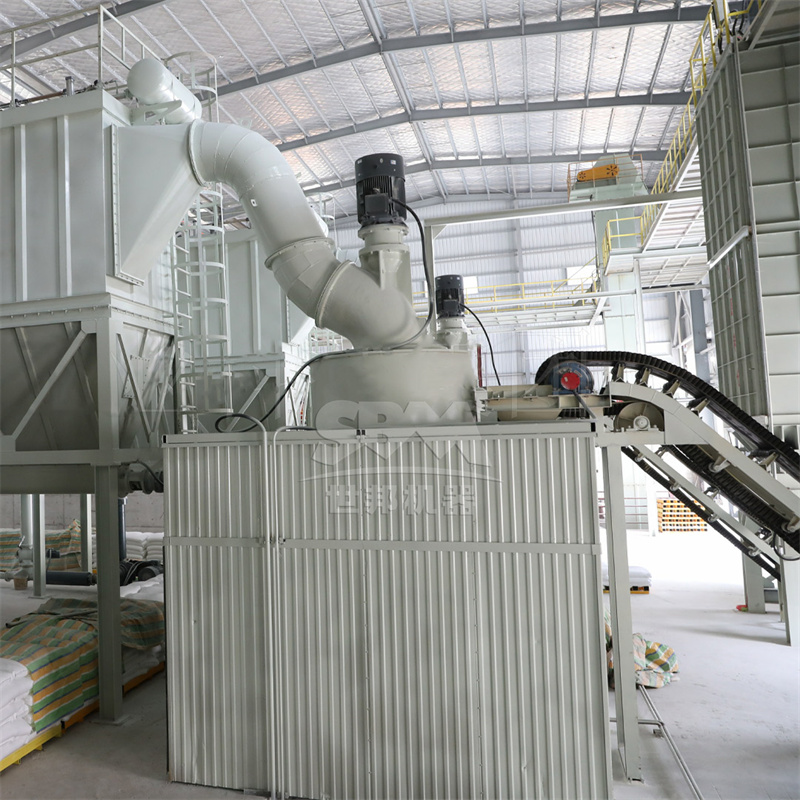
SCM Series Ultrafine Mill (45-5μm)
The SCM Series Ultrafine Mill is a state-of-the-art solution for producing ultra-fine barite powders. With an output fineness ranging from 325 to 2500 mesh (45–5 μm), it exceeds API 13A requirements and is capable of producing high-density drilling fluid additives. The mill’s capacity ranges from 0.5 to 25 t/h, depending on the model, making it scalable for various production scales.
Technical Advantages:
- High Efficiency & Energy Saving: Capacity is twice that of jet mills, with 30% lower energy consumption. Intelligent control with automatic finished product granularity feedback ensures consistent quality.
- High-Precision Classification: A vertical turbine classifier achieves precise particle size cutting, eliminating coarse powder mixing and ensuring uniform finished products.
- Durable Design: Special material rollers and rings extend service life several times over. The shaftless screw grinding chamber ensures stable operation.
- Eco-friendly & Low Noise: Pulse dust collection efficiency exceeds international standards, and a soundproof room design keeps noise levels low.
Working Principle: The main motor drives three layers of grinding rings to rotate. Materials are dispersed into the grinding path by centrifugal force, crushed by roller pressure, and ground layer by layer. Finally, powder collection is completed by a cyclone collector and a pulse dust removal system.
Models & Specifications: The SCM800 (0.5–4.5 t/h, 75 kW), SCM900 (0.8–6.5 t/h, 90 kW), SCM1000 (1.0–8.5 t/h, 132 kW), SCM1250 (2.5–14 t/h, 185 kW), and SCM1680 (5.0–25 t/h, 315 kW) cover a wide range of production needs.
MTW Series European Trapezium Mill (600-45μm)
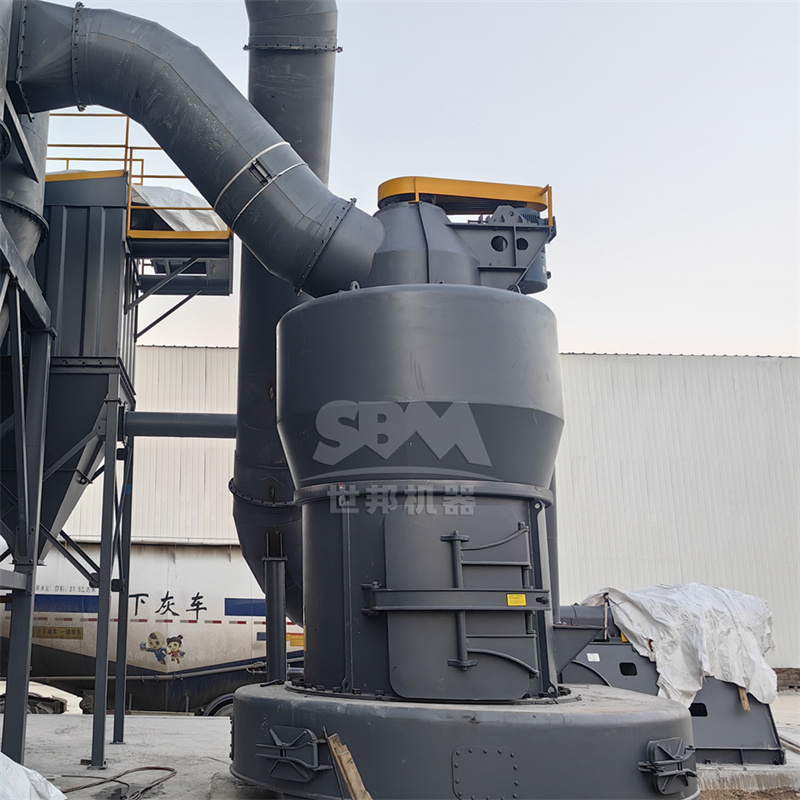
The MTW Series European Trapezium Mill is another excellent choice for barite processing, particularly for medium to large-scale operations. With an output fineness of 30–325 mesh (down to 0.038 mm) and a capacity of 3–45 t/h, it is well-suited for producing drilling-grade barite that meets API specifications.
Technical Advantages:
- Anti-wear Shovel Design: Combined shovel blades reduce maintenance costs, and the curved design extends grinding roller life.
- Optimized Arc Air Duct: Reduces airflow energy loss and improves transmission efficiency. High-strength guard plates protect the air duct working surface.
- Integral Bevel Gear Drive: Transmission efficiency up to 98%, saving space and reducing installation costs.
- Wear-resistant Volute Structure: Non-resistance flow design improves air selection efficiency, reducing maintenance costs by 30%.
Working Principle: The main motor drives the grinding rollers to revolve around the central axis while self-rotating to generate centrifugal force. Shovels throw materials between the ring and rollers to form a material layer, achieving efficient crushing through extrusion. The classification system precisely controls the finished product size.
Models & Specifications: The MTW Series includes models from MTW110 (3–9 t/h, 55 kW) to MTW215G (15–45 t/h, 280 kW), as well as MRN models like MRN158 (7–21 t/h, 132 kW) and MRN218 (15–45 t/h, 280 kW).
Comparative Analysis: SCM vs. MTW for Barite
| Feature | SCM Ultrafine Mill | MTW Trapezium Mill |
|---|---|---|
| Fineness Range | 325–2500 mesh | 30–325 mesh |
| Capacity Range | 0.5–25 t/h | 3–45 t/h |
| Best For | Ultra-fine barite powders | Standard drilling-grade barite |
| Energy Efficiency | Very high (30% lower than jet mills) | High (optimized airflow) |
| Footprint | Compact | Moderate |
| Wear Parts Life | Extended (special materials) | Extended (curved rollers) |
For a typical drilling-grade barite plant requiring 200–325 mesh product, the MTW Series is often the most cost-effective choice, offering high capacity and low maintenance. However, if the market demands ultra-fine barite (e.g., for high-performance drilling fluids or specialty chemicals), the SCM Series provides superior fineness and product consistency.
Installation and Operational Considerations
Proper installation and operation are critical to maximizing mill performance and longevity. Key considerations include:
- Feed Preparation: Barite ore should be crushed to ≤20 mm (for SCM) or ≤50 mm (for MTW) before grinding. A jaw crusher or hammer mill can be used for primary crushing.
- Feeding System: Consistent and controlled feeding is essential. Use a vibrating feeder or belt feeder with variable speed drive to match mill capacity.
- Classification Adjustment: The classifier speed and airflow should be optimized to achieve the target particle size distribution. Regular sampling and sieve analysis are recommended.
- Dust Collection: Ensure the pulse dust collector is properly sized and maintained to prevent emissions and product loss.
- Maintenance Schedule: Establish a preventive maintenance program for roller/ring replacement, lubrication, and inspection of wear parts.
Case Study: Barite Processing Plant in the Middle East
A prominent drilling fluids supplier in the Middle East required a grinding mill to produce 200 mesh barite at a rate of 15 t/h. After evaluating multiple options, they selected an MTW175G European Trapezium Mill. The mill was installed in a closed-loop system with a pulse dust collector and a cyclone. Within three months, the plant achieved stable production with a specific energy consumption of 18 kWh/t, significantly lower than the 28 kWh/t of their old ball mill. The product consistently met API 13A specifications, and maintenance costs were reduced by 40% due to the wear-resistant roller and ring design.
Conclusion
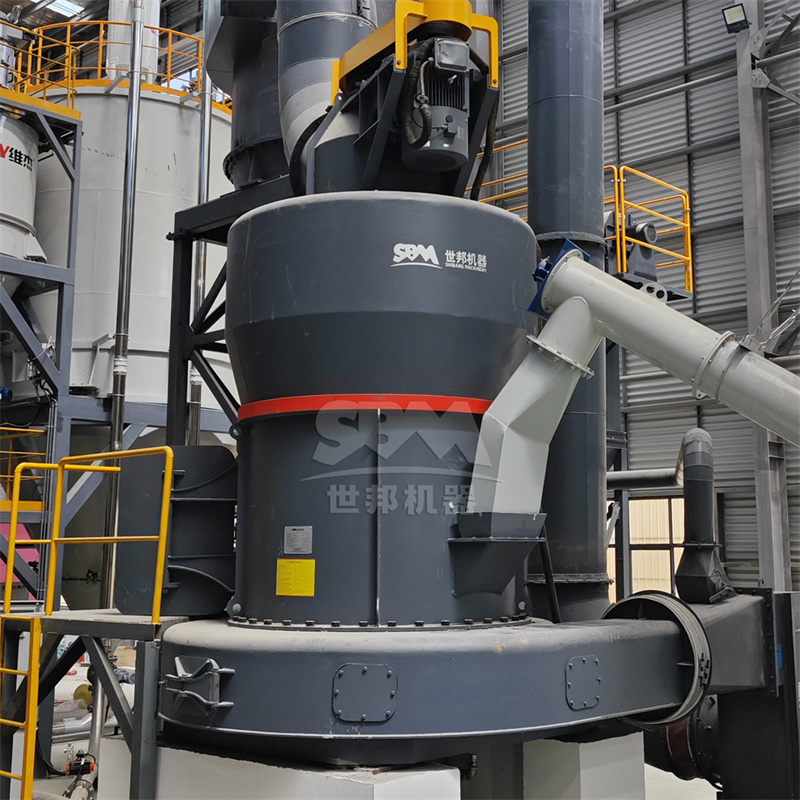
Selecting the right grinding mill for drilling-grade barite is a strategic decision that affects product quality, operational efficiency, and profitability. The SCM Series Ultrafine Mill and MTW Series European Trapezium Mill from our company offer advanced solutions that meet the stringent requirements of the petroleum industry. Whether you need ultra-fine barite or standard 200–325 mesh product, our mills deliver high efficiency, durability, and environmental compliance. By considering the selection criteria outlined in this article and leveraging our technical expertise, you can optimize your barite processing operation and gain a competitive edge in the market.
For more information on our barite grinding solutions or to request a quote, please contact our sales team. We are committed to providing tailored solutions that drive your success.