
Introduction: The Critical Role of Talc in Textile Lubricants
In the textile industry, talc serves as an indispensable functional filler and lubricant. Its unique lamellar crystal structure, low hardness (Mohs 1), chemical inertness, and excellent slip characteristics make it ideal for reducing friction between fibers during spinning, weaving, and finishing processes. When incorporated into textile lubricant formulations, talc not only improves the gliding properties of yarns but also prevents fiber breakage, reduces static electricity, and enhances the overall efficiency of high-speed textile machinery.
However, the performance of talc in textile lubricants depends overwhelmingly on its particle size distribution, particle shape, and purity. Coarse or improperly classified talc particles can cause surface defects, clog spinnerets, and compromise yarn quality. Therefore, selecting the right grinding mill for producing ultrafine talc powder is not merely an equipment purchasing decision—it is a strategic manufacturing choice that directly impacts product quality, production efficiency, and operational cost.
This article examines the key technical considerations for choosing grinding equipment in textile talc lubricant production lines and highlights two proven solutions from our company that address the specific demands of this application.
Understanding the Specifications of Talc for Textile Lubricants
Before selecting a grinding mill, manufacturers must first define the target product specifications. For textile lubricant applications, talc typically needs to meet the following criteria:
- Fineness: Generally between 325 mesh and 2500 mesh (approximately 45 μm to 5 μm), depending on the specific lubricant formulation and application method (dry or wet).
- Particle Size Distribution: Narrow distribution with no coarse particle contamination is essential for preventing surface scratches on yarns and fabrics.
- Purity: High talc content with minimal quartz and carbonate impurities to avoid abrasive wear on textile machinery.
- Bulk Density and Flowability: Controlled to ensure uniform mixing with other lubricant components.
- Moisture Content: Low and consistent to prevent agglomeration and ensure stable dispersion.
These requirements place significant demands on the grinding mill’s classification precision, temperature control during grinding, and ability to process talc without contamination.
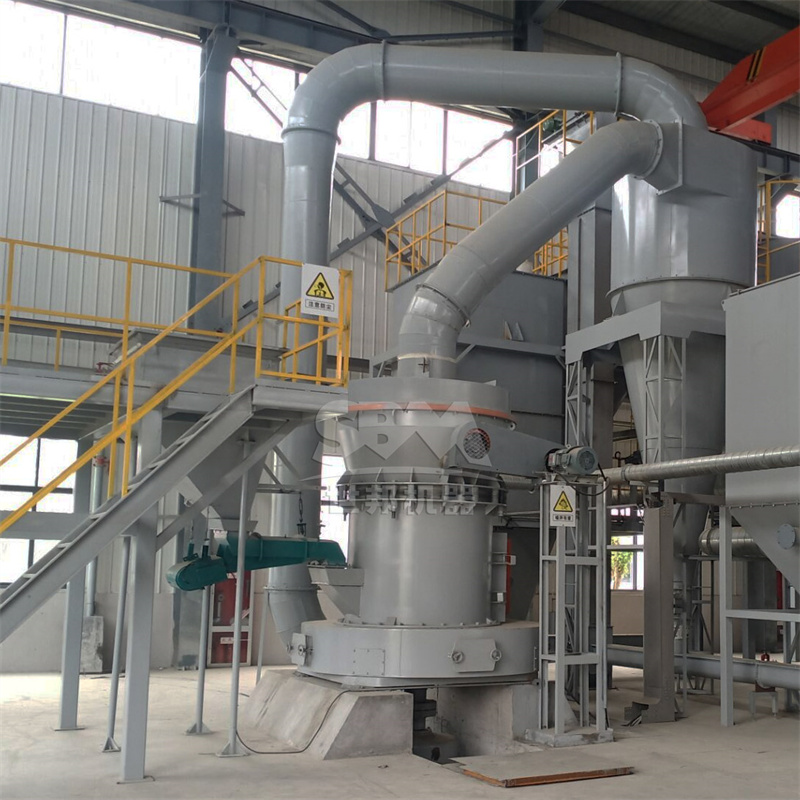
Key Criteria for Selecting a Grinding Mill for Talc Processing
1. Output Fineness and Precision
Not all grinding mills can achieve the ultrafine range required for premium textile lubricants. While ball mills can grind talc to moderate fineness, they are inherently inefficient for producing particles below 45 μm with a narrow distribution. Ultrafine grinding mills equipped with high-precision classifiers—such as turbine or multi-rotor classifiers—are necessary for producing 800–2500 mesh talc powder consistently.
2. Capacity Matching
Production scale varies widely among textile lubricant manufacturers, from specialty batch producers requiring less than 1 ton per hour to large-scale continuous operations demanding 20 tons per hour or more. The grinding mill must be selected to match the required throughput without sacrificing fineness or requiring excessive energy input.
3. Energy Efficiency
Grinding is one of the most energy-intensive operations in mineral processing. For talc, which is relatively soft, the energy consumption should be significantly lower than for hard minerals. However, inefficient mill designs can still result in excessive power draw. Mills that combine efficient grinding mechanisms with intelligent process control can reduce energy consumption by 30% or more compared to conventional systems.
4. Contamination Control
Textile lubricant grade talc must be free from metallic contamination that could introduce abrasive particles or discoloration. Grinding mills with wear-resistant liners and grinding elements made from materials that do not react with talc are essential. Additionally, the grinding chamber should be designed to prevent oil or grease from the drive system from entering the product stream.
5. Thermal Management
Talc can undergo structural changes if subjected to excessive temperatures during grinding. Mills that generate less heat and incorporate effective cooling or temperature monitoring are preferable. This is particularly important when producing very fine powders where the surface area is high and heat generation is more concentrated.
6. Dust Collection and Environmental Compliance
Talc dust is a respiratory hazard and must be controlled rigorously. Modern grinding systems should include high-efficiency pulse dust collectors that exceed environmental standards. The entire system should operate under negative pressure to prevent dust leakage.
7. Automation and Process Control
Consistency is critical in textile lubricant production. Mills with intelligent control systems that automatically adjust grinding parameters to maintain target fineness reduce operator intervention and ensure batch-to-batch uniformity.
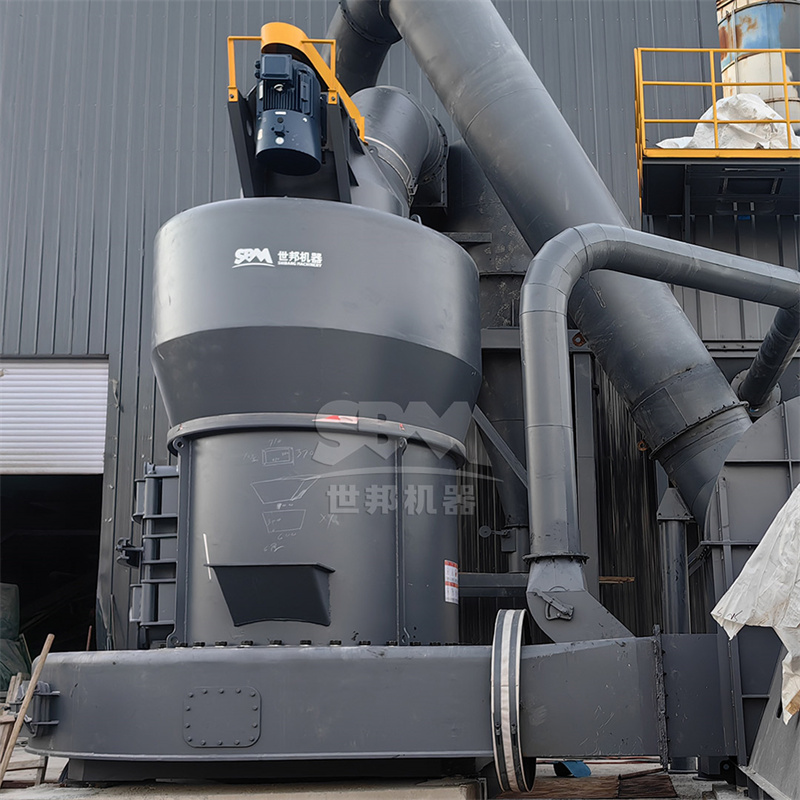
Recommended Equipment for Textile Talc Lubricant Production
Based on the criteria outlined above, we recommend two of our company’s grinding mill series that are particularly well-suited for producing talc powder for textile lubricants: the SCM Series Ultrafine Mill and the MTW Series European Trapezium Mill.
SCM Series Ultrafine Mill: Precision Grinding for Premium Talc
The SCM Series Ultrafine Mill is specifically engineered for producing ultrafine powders in the 325–2500 mesh range, making it an ideal choice for high-grade textile lubricant applications.
Core Parameters:
- Input Size: ≤20mm
- Output Fineness: 325–2500 mesh (45–5 μm)
- Capacity: 0.5–25 ton/h (depending on model)
Why It Works for Talc Lubricants:
The SCM Series employs a vertical turbine classifier that achieves precise particle size cutting, ensuring no coarse powder mixing and delivering a uniform finished product—a critical requirement for textile lubricants. Its high-precision classification system allows manufacturers to target specific particle size distributions, which directly influences the lubricity and dispersion characteristics of the final talc product.
The mill’s capacity is twice that of jet mills, with 30% lower energy consumption. Given the relatively soft nature of talc, this translates into significant operational cost savings over time. The intelligent control system with automatic finished product granularity feedback ensures that the mill maintains optimal performance even as grinding elements wear.
Durability is another key advantage. The SCM Series uses special material rollers and rings that extend service life several times over conventional components. The shaftless screw grinding chamber ensures stable operation and reduces the risk of mechanical failure. For talc processing, where contamination must be minimized, the wear-resistant materials also reduce the introduction of metal particles into the product.
Environmental compliance is addressed through a pulse dust collection system that exceeds international standards, and a soundproof room design that keeps noise levels low. This is particularly important for talc processing, as talc dust is a known respiratory irritant.
Available Models:
- SCM800: 0.5–4.5 t/h, 75 kW
- SCM900: 0.8–6.5 t/h, 90 kW
- SCM1000: 1.0–8.5 t/h, 132 kW
- SCM1250: 2.5–14 t/h, 185 kW
- SCM1680: 5.0–25 t/h, 315 kW
For most textile lubricant producers requiring ultrafine talc, the SCM1000 or SCM1250 models offer an excellent balance of capacity and fineness.
MTW Series European Trapezium Mill: Versatile and Cost-Effective
For manufacturers who require a broader range of fineness or who produce multiple grades of talc for different textile applications, the MTW Series European Trapezium Mill offers exceptional flexibility.
Core Parameters:
- Input Size: ≤50mm
- Output Fineness: 30–325 mesh (down to 0.038mm)
- Capacity: 3–45 ton/h (depending on model)
Why It Works for Talc Lubricants:
The MTW Series features an anti-wear shovel design with combined shovel blades that reduce maintenance costs and a curved design that extends grinding roller life. For talc processing, this means less downtime and more consistent product quality.
The optimized arc air duct reduces airflow energy loss and improves transmission efficiency. High-strength guard plates protect the air duct working surface, ensuring long-term reliability. The integral bevel gear drive achieves transmission efficiency up to 98%, saving space and reducing installation costs.
The wear-resistant volute structure uses a non-resistance flow design that improves air selection efficiency and reduces maintenance costs by 30%. This is particularly beneficial when switching between different talc grades, as the classifier can be adjusted quickly without extensive downtime.
With models ranging from 3 t/h to 45 t/h, the MTW Series can accommodate both small-scale specialty production and large-scale continuous manufacturing. The MTW138Z or MTW175G models are particularly well-suited for textile lubricant production, offering capacities of 6–17 t/h and 9.5–25 t/h respectively.
Available Models (Selected):
- MTW110: 3–9 t/h, 55 kW
- MTW138Z: 6–17 t/h, 90 kW
- MTW175G: 9.5–25 t/h, 160 kW
- MTW215G: 15–45 t/h, 280 kW
Comparison and Selection Guidance
The choice between the SCM Series and the MTW Series depends on several factors:
- Target Fineness: If the textile lubricant requires talc finer than 325 mesh (45 μm), the SCM Series is the clear choice. If the requirement is 325 mesh or coarser, the MTW Series offers higher capacity at lower cost.
- Production Scale: For capacities above 25 t/h, the MTW215G or larger SCM models should be considered. For capacities below 5 t/h, the SCM800 or MTW110 are appropriate.
- Product Portfolio: If the manufacturer produces multiple talc grades for different textile applications, the MTW Series offers greater flexibility in adjusting fineness without equipment changes.
- Energy Costs: For very fine grinding, the SCM Series is more energy-efficient per ton of product. For coarser grinding, the MTW Series is more economical.
Conclusion
Selecting the right grinding mill for textile talc lubricant production is a decision that affects product quality, operational efficiency, and long-term profitability. The ideal mill must deliver precise fineness, consistent particle size distribution, minimal contamination, and reliable operation—all while controlling energy consumption and environmental impact.
Our SCM Series Ultrafine Mill and MTW Series European Trapezium Mill represent two proven solutions that address these requirements. The SCM Series excels in ultrafine grinding with high precision and energy efficiency, making it ideal for premium textile lubricant grades. The MTW Series offers versatility, high capacity, and low maintenance costs, making it suitable for a wide range of talc products.
For manufacturers planning a new textile talc lubricant production line or upgrading existing equipment, we invite you to contact our technical team to discuss your specific requirements. With our extensive experience in mineral processing and our comprehensive range of grinding solutions, we can help you configure the optimal system for your production needs.