
Introduction: The Critical Role of Kaolin in Rubber Compounding
Kaolin, also known as china clay, is one of the most widely used non-black mineral fillers in the rubber industry. Its unique plate-like particle structure, chemical inertness, and abundant availability make it indispensable in rubber compounds for tires, hoses, belts, footwear, gaskets, and a wide range of molded and extruded rubber products. When properly processed and incorporated into rubber formulations, kaolin can significantly enhance tensile strength, tear resistance, abrasion resistance, and electrical insulation properties. It also reduces cost by partially replacing more expensive reinforcing fillers such as carbon black and precipitated silica.
However, the performance of kaolin in rubber compounds depends heavily on its particle size distribution, particle morphology, surface treatment, and purity. To achieve the desired reinforcing effect, calcined kaolin or water-washed kaolin must be ground to precisely controlled fineness — typically ranging from 325 mesh to 2500 mesh, depending on the application. This is where the selection of the right grinding mill becomes a decisive factor in the success of your rubber compounding line.
Understanding Kaolin’s Requirements in Rubber Applications
Before selecting grinding equipment, it is essential to understand the specific requirements that rubber-grade kaolin imposes on the milling process:
1. Particle Size and Distribution
For semi-reinforcing applications, kaolin is typically ground to 325–600 mesh. For high-performance reinforcing grades used in tire sidewalls and engine mounts, fineness must reach 1250–2500 mesh. A narrow particle size distribution is crucial because coarse particles act as stress concentrators and degrade mechanical properties, while excessively fine particles tend to agglomerate and are difficult to disperse.
2. Particle Morphology Preservation
The plate-like (platy) structure of kaolin provides its reinforcing characteristics. The grinding process must preserve this morphology as much as possible. Mills that rely on impact and attrition — such as jet mills — tend to destroy the platelet structure, whereas roller-based mills that apply compressive and shear forces are more gentle and preserve the desirable aspect ratio.
3. Contamination Control
Iron contamination is a serious concern in rubber applications, particularly for white and light-colored compounds. Grinding equipment must be designed with wear-resistant materials that minimize metal contamination. The grinding chamber, rollers, and liners should be made from high-chrome alloys or ceramic materials.
4. Moisture and Surface Treatment
Kaolin used in rubber is often surface-treated with silane coupling agents to improve compatibility with the rubber matrix. The grinding process should be compatible with downstream surface treatment operations, and the mill should be able to handle feed material with varying moisture content.
5. Energy Efficiency and Throughput
Rubber manufacturers and compounders need a reliable, continuous supply of kaolin powder. The grinding mill must deliver consistent throughput at the required fineness while minimizing energy consumption per ton of product.
Key Criteria for Selecting a Grinding Mill for Kaolin in Rubber Compounding
When evaluating grinding mills for your rubber compounding line, consider the following criteria:
1. Fineness Capability
The mill must be capable of producing the target fineness — whether 325 mesh for standard filler grades or 2500 mesh for premium reinforcing grades. The ability to adjust fineness without major equipment modification is a significant advantage.
2. Capacity Match
The mill’s capacity should match the production rate of your rubber compounding line. Under-sizing leads to bottlenecks; over-sizing wastes capital and energy. Consider future expansion needs as well.
3. Energy Consumption
Grinding is an energy-intensive process. The specific energy consumption (kWh per ton of product) directly affects production costs. Mills with higher grinding efficiency and optimized airflow design offer significant long-term savings.
4. Wear Parts Life and Maintenance
Kaolin is abrasive. The grinding rollers, rings, and liners must be made from wear-resistant materials. Quick-change designs for wear parts reduce downtime and maintenance costs.
5. Classification Precision
The classifier is as important as the grinding mechanism. A high-precision classifier ensures that no coarse particles contaminate the finished product, which is critical for consistent rubber compound quality.
6. Environmental Compliance
Dust emissions and noise levels must comply with local regulations. Modern mills should feature pulse dust collection systems and soundproof designs.
7. Automation and Control
Intelligent control systems that provide real-time feedback on particle size, motor load, and system pressure reduce operator intervention and ensure consistent product quality.
Recommended Equipment: SCM Series Ultrafine Mill for Premium Kaolin Processing
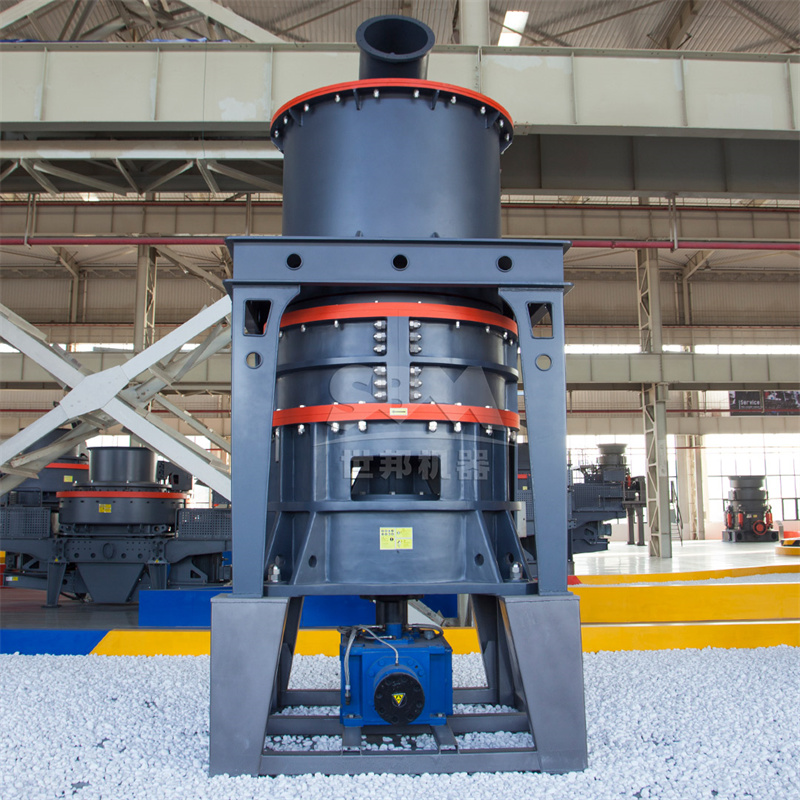
For rubber compounders requiring ultrafine kaolin in the 325–2500 mesh range, we strongly recommend the SCM Series Ultrafine Mill. This state-of-the-art mill is specifically engineered to meet the demanding requirements of ultrafine mineral processing and has been successfully deployed in numerous kaolin processing lines worldwide.
Why the SCM Series Excels in Kaolin Grinding for Rubber
High Efficiency and Energy Savings:The SCM Series delivers twice the capacity of conventional jet mills while consuming 30% less energy. This translates directly to lower production costs per ton of rubber-grade kaolin. The intelligent control system provides automatic finished product granularity feedback, ensuring consistent quality.
Precision Classification:The vertical turbine classifier achieves precise particle size cutting with no coarse powder mixing. For rubber applications, this means every batch of kaolin meets the exact particle size specification, resulting in predictable and reproducible rubber compound properties.
Durable and Reliable Design:Special material rollers and rings extend service life several times over compared to standard components. The shaftless screw grinding chamber ensures stable operation even under continuous heavy-duty cycling.
Eco-friendly Operation:The pulse dust collection system exceeds international emission standards, and the soundproof room design ensures noise levels are well within regulatory limits.
SCM Series Models Suitable for Rubber Compounding Lines
- SCM800: 0.5–4.5 t/h | 75 kW | ideal for small to medium compounding operations
- SCM900: 0.8–6.5 t/h | 90 kW | balanced capacity for growing production
- SCM1000: 1.0–8.5 t/h | 132 kW | versatile mid-range model
- SCM1250: 2.5–14 t/h | 185 kW | high-capacity for large rubber factories
- SCM1680: 5.0–25 t/h | 315 kW | maximum throughput for industrial-scale operations
All models accept feed sizes up to 20 mm and deliver fineness from 325 to 2500 mesh, making them suitable for producing both standard semi-reinforcing kaolin and premium ultrafine reinforcing grades.
Alternative Recommendation: MTW Series European Trapezium Mill for Medium-Fineness Kaolin
For rubber compounders whose applications require kaolin in the 30–325 mesh range — such as semi-reinforcing filler for general-purpose rubber products, footwear, and low-cost compounds — the MTW Series European Trapezium Mill is an excellent choice.
Key Advantages of the MTW Series for Kaolin Processing
Anti-wear Shovel Design:Combined shovel blades with a curved design reduce maintenance costs and extend grinding roller life, which is essential when processing abrasive kaolin.
Optimized Arc Air Duct:The aerodynamic design reduces airflow energy loss and improves transmission efficiency. High-strength guard plates protect the air duct working surface from wear.
Integral Bevel Gear Drive:With transmission efficiency up to 98%, this design saves space and reduces installation costs — an important consideration for retrofitting existing compounding lines.
Wear-resistant Volute Structure:The non-resistance flow design improves air selection efficiency and reduces maintenance costs by 30%.
MTW Series Models for Rubber-Grade Kaolin
- MTW110: 3–9 t/h | 55 kW | compact and efficient
- MTW138Z: 6–17 t/h | 90 kW | mid-range workhorse
- MTW175G: 9.5–25 t/h | 160 kW | high-capacity production
- MTW215G: 15–45 t/h | 280 kW | maximum output for large-scale lines
All MTW models accept feed sizes up to 50 mm and deliver fineness from 10 to 325 mesh, with the ability to reach down to 0.038 mm. The patented internal suction oil lubrication system and internationally advanced pulse dust removal technology ensure reliable, clean operation.
Comparing Grinding Mill Technologies for Kaolin in Rubber Compounding
Ultrafine Mills (SCM Series, LUM Series)
Best suited for producing premium reinforcing kaolin at 1250–2500 mesh. These mills preserve the plate-like structure better than jet mills and offer superior energy efficiency. Ideal for tire manufacturers and high-performance rubber product producers.
European Trapezium Mills (MTW Series, MTM Series)
Versatile workhorses for medium-fineness kaolin production (325–600 mesh). They offer high throughput, low maintenance costs, and excellent adaptability to varying feed conditions. Suitable for general-purpose rubber filler production.
Vertical Roller Mills (LM Series, LUM Series)
Integrate crushing, grinding, and classification into a single unit, reducing floor space by up to 50%. Their non-contact roller-table design reduces wear and extends component life. Ideal for large-scale, continuous kaolin processing.
Ball Mills
Traditional and reliable, ball mills can handle large capacities and a wide range of feedstock. However, they consume significantly more energy than modern roller mills and tend to produce a broader particle size distribution. They remain a viable option for coarse grinding or when the required fineness is relatively low.
Integrating the Grinding Mill into Your Rubber Compounding Line
The grinding mill should not be viewed in isolation. It must integrate seamlessly with the rest of your compounding line, including:
- Feed preparation: Hammer mills or jaw crushers to reduce raw kaolin to the mill’s feed size
- Drying: Rotary dryers or flash dryers to reduce moisture content before grinding
- Classification: Air classifiers or vibrating screens to ensure final product quality
- Surface treatment: High-speed mixers for applying silane coupling agents
- Pneumatic conveying: Dilute-phase or dense-phase systems for transferring powder to storage or mixing
- Dust collection: Baghouse filters or cartridge collectors to maintain a clean working environment
Conclusion: Choosing the Right Mill for Your Rubber Compounding Line
Selecting the right grinding mill for kaolin processing in your rubber compounding line is a strategic decision that affects product quality, production efficiency, and operating costs. The ideal choice depends on your target fineness, required capacity, energy budget, and the specific performance requirements of your rubber products.
For premium ultrafine kaolin in the 325–2500 mesh range, the SCM Series Ultrafine Mill offers unmatched efficiency, precision, and durability. It is the preferred choice for manufacturers of high-performance rubber products who demand consistent, high-quality kaolin powder.
For medium-fineness applications in the 30–325 mesh range, the MTW Series European Trapezium Mill delivers reliable, cost-effective performance with low maintenance requirements.
We invite you to contact our technical team to discuss your specific kaolin processing requirements. Our engineers can help you select the optimal mill configuration, design the complete production line, and provide ongoing support to ensure your rubber compounding operation achieves maximum productivity and profitability.