
Introduction: The Strategic Importance of Titanium Powder in Titanium Steel Production
Titanium steel, an alloy that combines the exceptional strength-to-weight ratio and corrosion resistance of titanium with the structural integrity of steel, has become indispensable in aerospace, medical implants, marine engineering, and high-performance automotive applications. The production of titanium steel relies heavily on the quality and consistency of titanium powder, which serves as a critical alloying agent and sometimes as a primary matrix component. Consequently, selecting the right titanium powder production equipment is not merely a procurement decision—it is a strategic investment that directly influences product quality, operational efficiency, and long-term profitability.
This comprehensive buyer’s guide examines the key factors that drive equipment selection for titanium powder production, compares different mill technologies, and highlights specific systems that deliver superior performance for titanium steel applications. Whether you are establishing a new production line or upgrading an existing facility, understanding the nuances of grinding, classification, and system integration will empower you to make an informed choice.
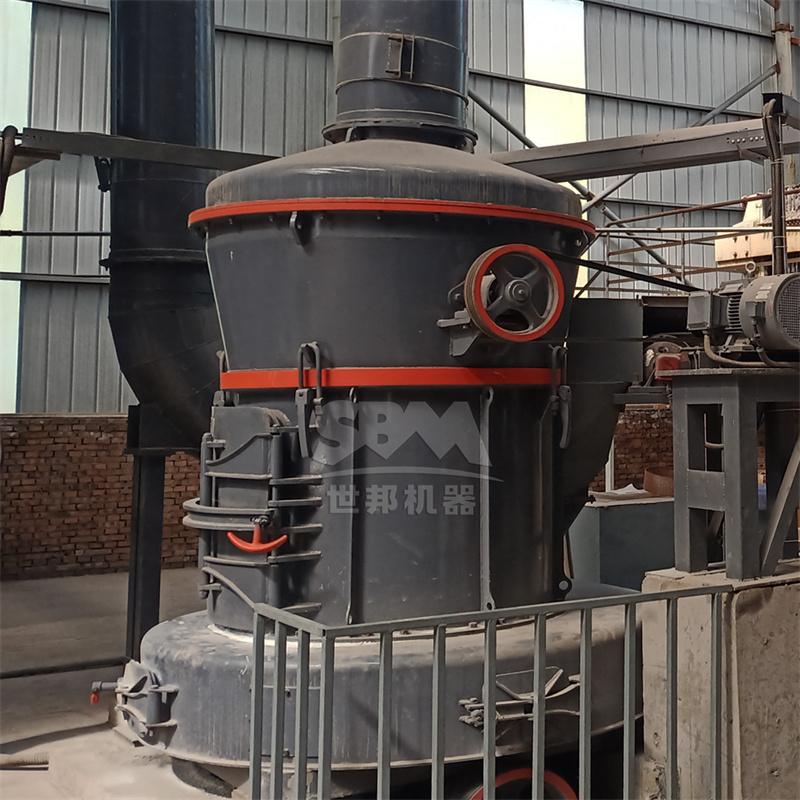
Key Characteristics of Titanium Powder for Titanium Steel
Titanium powder destined for titanium steel must meet stringent specifications. Particle size distribution (PSD) typically ranges from 45 microns down to sub-micron levels, depending on the intended alloy and final application. The powder must be free from contamination, particularly from iron, oxygen, and moisture, which can degrade mechanical properties. Morphology also matters: spherical or irregular particles influence flowability, compaction behavior, and sintering kinetics.
Moreover, titanium is a reactive metal. Grinding processes must avoid excessive heat generation that could cause oxidation or even combustion. Therefore, equipment must incorporate inert gas protection, efficient cooling, and dust collection systems that prevent any risk of explosion. These requirements narrow the field to advanced mills capable of precise control over particle size, temperature, and atmosphere.
Core Equipment Categories for Titanium Powder Production
The market offers several types of mills for titanium powder production, each with distinct advantages and limitations. The most common include:
- Jet mills: Offer high purity but limited capacity and high energy consumption.
- Ball mills: Simple and robust but inefficient for fine grinding and prone to contamination.
- Hammer mills: Suitable for coarse crushing but unable to achieve fine particle sizes.
- Vertical roller mills: Combine grinding and classification, offering high capacity and energy efficiency.
- Ultrafine mills: Specialized for fine and ultrafine grinding with precise top-size control.
For titanium steel applications, ultrafine mills and vertical roller mills are often the preferred choices due to their ability to produce consistent PSDs while minimizing contamination and energy use. In the following sections, we will examine two flagship products from our portfolio that excel in titanium powder production: the SCM Series Ultrafine Mill and the LUM Ultrafine Vertical Roller Mill.
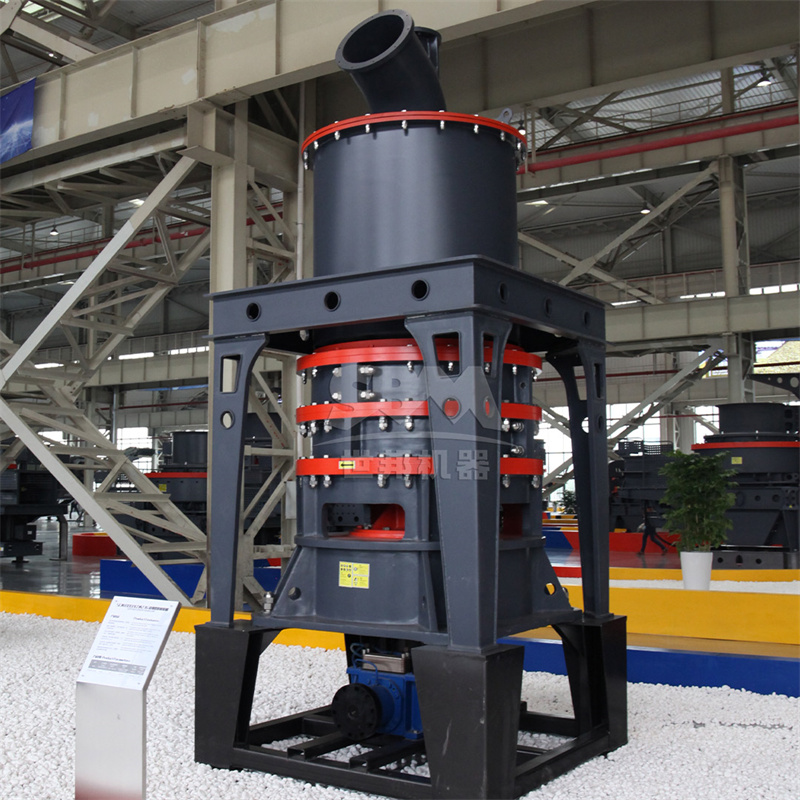
SCM Series Ultrafine Mill: Precision Grinding for High-Quality Titanium Powder
The SCM Series Ultrafine Mill is a mechanical impact mill designed for fine and ultrafine grinding of brittle materials. It is particularly well-suited for titanium powder production because it achieves tight particle size distributions without the risk of excessive heat generation. With an input size of ≤20mm and output fineness adjustable from 325 to 2500 mesh (45 to 5 microns), it delivers the flexibility needed for various titanium steel grades.
Core parameters:
- Input Size: ≤20mm
- Output Fineness: 325–2500 mesh (45–5μm)
- Capacity: 0.5–25 ton/h (depending on model)
Technical advantages that matter for titanium:
- High Efficiency & Energy Saving: Capacity is twice that of jet mills, with 30% lower energy consumption. Intelligent control with automatic finished product granularity feedback ensures stable operation.
- High-Precision Classification: A vertical turbine classifier achieves precise particle size cutting, preventing coarse powder mixing and ensuring uniform finished products.
- Durable Design: Special material rollers and rings extend service life several times over. The shaftless screw grinding chamber ensures stable operation even with reactive titanium powders.
- Eco-friendly & Low Noise: Pulse dust collection efficiency exceeds international standards, and the soundproof room design keeps noise levels low.
The SCM mill’s working principle involves a main motor driving three layers of grinding rings to rotate. Materials are dispersed into the grinding path by centrifugal force, crushed by roller pressure, and ground layer by layer. Finally, powder collection is completed by a cyclone collector and a pulse dust removal system. This closed-loop system minimizes dust emissions and product loss, which is critical when handling expensive titanium powders.
Available models:
- SCM800: Capacity 0.5–4.5 t/h, Main Power 75kW
- SCM900: Capacity 0.8–6.5 t/h, Main Power 90kW
- SCM1000: Capacity 1.0–8.5 t/h, Main Power 132kW
- SCM1250: Capacity 2.5–14 t/h, Main Power 185kW
- SCM1680: Capacity 5.0–25 t/h, Main Power 315kW
LUM Ultrafine Vertical Roller Mill: High-Capacity Solution for Titanium Steel Production
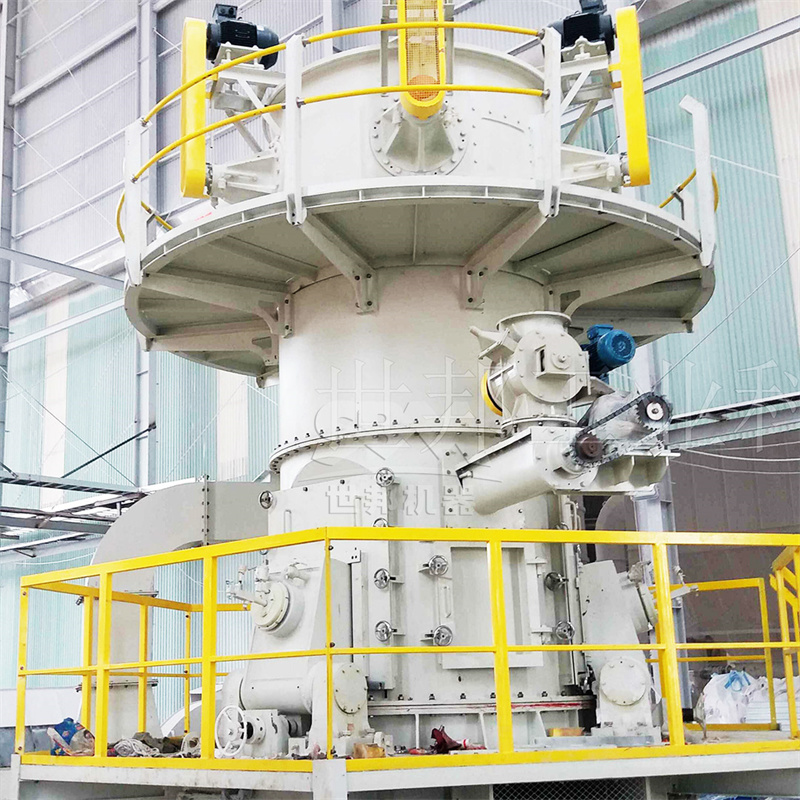
For larger-scale titanium powder production, the LUM Ultrafine Vertical Roller Mill offers an ideal combination of capacity, efficiency, and precision. With a feed size of 0–20mm and output fineness from 325 to 2500 mesh, it can process significant volumes while maintaining the strict quality standards required for titanium steel.
Core parameters:
- Feed Size: 0–20mm
- Output Fineness: 325–2500 mesh
- Models: LUM1525, LUM1632, LUM1836
Technical advantages:
- Efficient Grinding: Unique roller and liner curves improve grinding efficiency, reducing specific energy consumption.
- Precise Classifying: Multi-rotor technology ensures no coarse particles escape, resulting in a narrow PSD.
- Smart Control: PLC automation for stable running, with real-time monitoring of key parameters.
- Environmental: Negative pressure operation prevents dust leakage, safeguarding both workers and the environment.
Model specifications:
- LUM1525: 220–250kW, 1.6–11.5 t/h, fineness 5–30μm
- LUM1632: 280–315kW, 2–13.5 t/h, fineness 5–30μm
- LUM1836: 355–400kW, 2.3–15 t/h, fineness 5–30μm
The LUM mill’s working principle is similar to other vertical roller mills: the grinding table rotates, and rollers apply pressure to crush the material bed. Hot air carries fine particles to the classifier, while coarse particles return to the table. This design is particularly effective for titanium because it minimizes wear and avoids excessive heat buildup.
Comparing Technologies: SCM vs. LUM for Titanium Powder
When deciding between the SCM Ultrafine Mill and the LUM Ultrafine Vertical Roller Mill, consider your production scale, target fineness, and capital budget. The SCM series is more compact and offers finer top-size control, making it ideal for small to medium-scale production of high-value titanium powders. The LUM series, on the other hand, excels in high-capacity operations where energy efficiency and automation are paramount. Both systems can be configured with inert gas inerting and explosion-proof features to handle reactive titanium safely.
Other Equipment in the Titanium Powder Production Line
A complete titanium powder production line typically includes feeding, grinding, classification, collection, and packaging stages. Depending on the raw material and desired end-product, you may also need:
- Hammer Mills: For initial crushing of titanium sponge or scrap. Our PC4008-75, PC4012-90, and PC4015-132 models offer capacities from 8 to 70 t/h.
- Ball Mills: For coarse grinding or mixing. Our GMQG and GMQY series cover capacities from 0.65 to 450 t/h.
- MTW European Trapezium Mills: For medium-fine grinding with capacities up to 45 t/h.
- LM Vertical Roller Mills: For large-scale grinding with capacities up to 250 t/h.
Each of these products can be integrated with dust collection, inert gas systems, and automated controls to create a seamless, safe, and efficient production line.
Key Selection Criteria for Titanium Powder Equipment
To choose the right system, evaluate the following factors:
- Target Particle Size Distribution: Define your required D50 and D90. Ultrafine mills like the SCM and LUM can achieve D90 < 10μm, while other mills may only reach 45μm.
- Production Capacity: Match the mill’s capacity to your expected demand. Consider future expansion.
- Material Properties: Titanium’s reactivity demands explosion-proof design, inert gas purging, and temperature control.
- Energy Consumption: Ultrafine grinding is energy-intensive. Choose equipment with high efficiency to reduce operating costs.
- Contamination Control: Avoid iron contamination by selecting mills with ceramic or special alloy liners and wear parts.
- Automation and Control: Advanced PLC systems ensure consistent product quality and reduce manual intervention.
- Maintenance and Service: Easy access to wear parts and responsive technical support minimize downtime.
Why Our Equipment Stands Out for Titanium Steel Production
Our SCM and LUM mills are engineered with the specific challenges of titanium grinding in mind. They feature:
- Wear-resistant materials that extend service life.
- Precise classifiers that eliminate coarse particles.
- Efficient dust collection that meets strict environmental standards.
- Intelligent control systems that optimize performance.
- Modular designs that simplify maintenance.
By choosing our equipment, you gain a partner dedicated to your success in the titanium steel market.
Conclusion: Making the Right Choice
The production of titanium powder for titanium steel is a demanding application that requires robust, efficient, and precise equipment. The SCM Series Ultrafine Mill and LUM Ultrafine Vertical Roller Mill represent the state of the art in fine and ultrafine grinding, offering the performance and reliability needed to compete in this specialized field. We invite you to consult with our engineers to determine the optimal configuration for your specific requirements. With the right system, you can achieve superior product quality, lower operating costs, and a strong return on investment.