
Introduction: The Critical Role of Calcite Powder in Building Materials
In the modern construction and coatings industries, calcite powder (calcium carbonate, CaCO₃) serves as a fundamental functional filler and extender. Its applications range from improving the opacity and brightness of paints and coatings to enhancing the impact strength and dimensional stability of PVC pipes, profiles, and flooring. However, not all calcite powders are created equal. The quality of the final product—its particle size distribution, brightness, oil absorption, and chemical purity—is directly determined by the efficiency and precision of the milling equipment used. For manufacturers targeting high-end filler and coating applications, selecting the right building material grade calcite powder production equipment is not merely a purchasing decision; it is a strategic investment that dictates product competitiveness and operational profitability.
This article provides an in-depth guide to the key equipment options available for producing high-quality calcite powder, focusing on essential performance criteria such as fineness control, energy efficiency, and system reliability. We will explore the specific challenges of grinding this semi-hard mineral and recommend proven solutions from our extensive product portfolio.
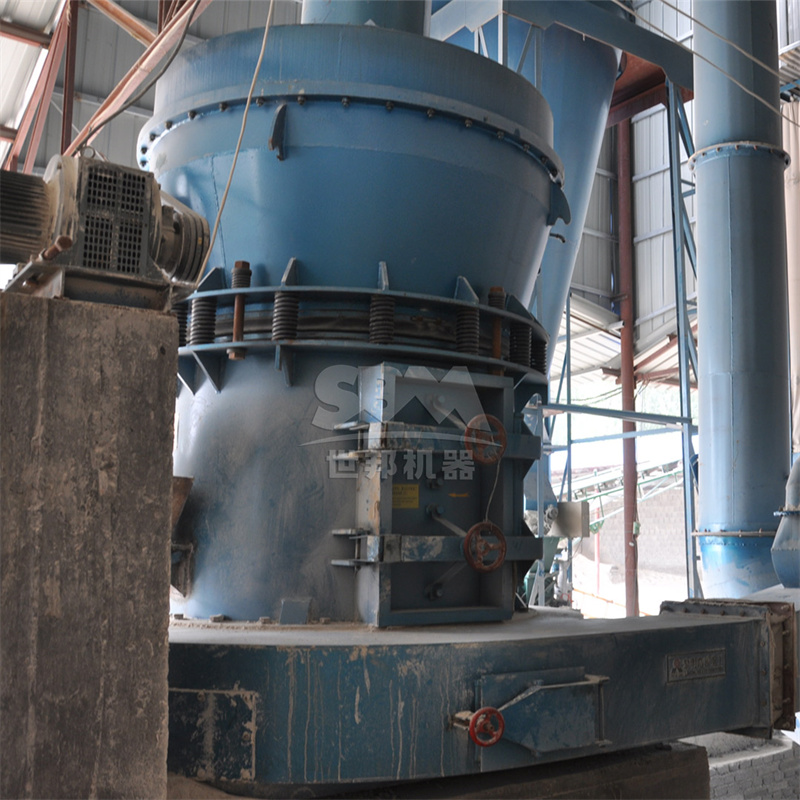
Defining High-Quality Calcite for Fillers and Coatings
Before examining the machinery, it is crucial to define what constitutes ‘high-quality’ in this context. For applications like interior wall putty, powder coatings, and masterbatch, the calcite powder must meet stringent specifications. Typically, this means a fineness ranging from 325 mesh (45 μm) for general fillers to an ultra-fine 1250 mesh (10 μm) or even 2500 mesh (5 μm) for high-gloss coatings and thin-film applications. The particle size distribution (PSD) must be extremely narrow, with no coarse oversize particles that could cause surface defects like scratches or dull spots in coatings. Furthermore, consistent brightness (ISO brightness > 95%) is non-negotiable for white paints, and low oil absorption is required to maintain high pigment loading without compromising viscosity.
To meet these rigorous demands, the grinding equipment must offer more than just brute force. It requires precise classification, minimal iron contamination (which can cause discoloration), and the ability to handle moisture without clogging. Traditional ball mills often struggle to achieve ultra-fine fineness economically, while jet mills, despite producing fine particles, suffer from high energy consumption and lower throughput. This is where advanced roller mill technologies, such as the ones we manufacture, provide a distinct advantage.
Key Equipment Considerations for Calcite Grinding
When assessing production equipment for building material grade calcite, plant operators should evaluate several critical features:
- Output Fineness and Classification Precision: The machine must incorporate a high-performance classifier capable of separating particles at the desired cut point. A vertical turbine classifier is often preferred for its ability to achieve precise cuts without coarse particle leakage, ensuring superior product uniformity.
- Energy Consumption and Throughput: Given the high cost of electricity, energy efficiency is paramount. Equipment that uses a ‘bed of material’ grinding principle, where rollers crush material against a rotating table or ring, is significantly more energy-efficient than impact-based methods. For instance, production capacity must be balanced against power consumption to ensure a low cost per ton.
- Wear Part Durability and Maintenance: Calcite, while not as abrasive as quartz, still causes significant wear on grinding elements. Look for mills with rollers and rings made from high-chromium or special alloy materials. A design that allows for easy replacement of wear parts, such as segmented rollers or anti-wear shovels, will minimize downtime and maintenance costs.
- System Integration and Environmental Compliance: A modern mill should be part of a fully integrated system including feeding, grinding, classifying, and dust collection. Pulse jet bag filters are essential to capture ultra-fine particles, ensuring environmental compliance and maximizing product yield.
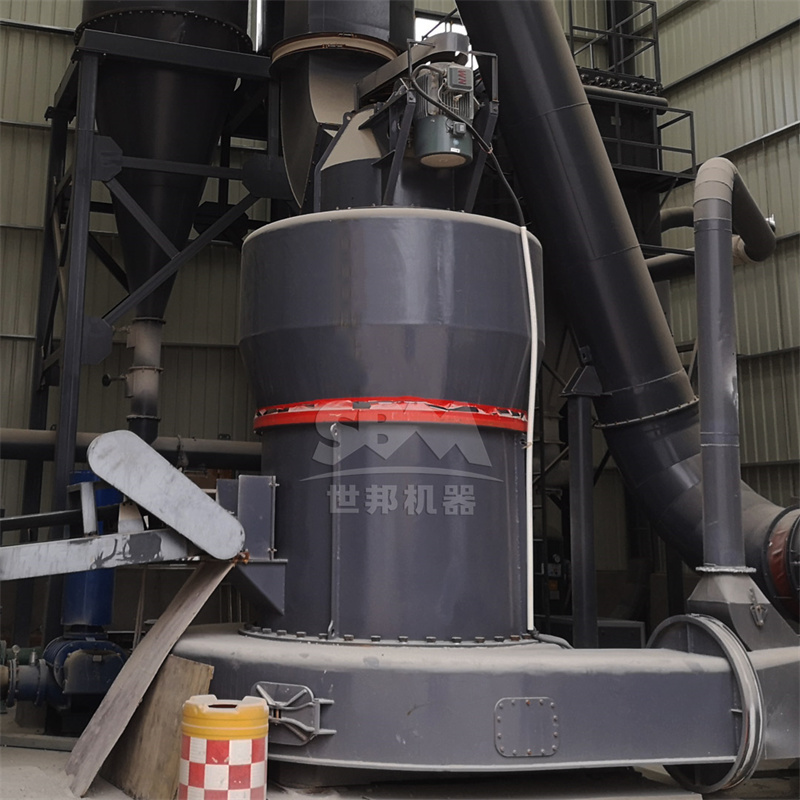
Case Study: The Superiority of SCM Ultrafine Mills
For manufacturers focused on the premium market segment requiring fine and ultra-fine calcite (D97 = 5-45 μm / 325-2500 mesh), the SCM Series Ultrafine Mill is an industry benchmark. This equipment was specifically designed to overcome the limitations of traditional fine-grinding mills. Let’s examine why it represents the optimal cost-performance solution for high-quality filler and coating applications.
The SCM mill’s working principle is based on a three-layer grinding ring that rotates at high speed. Material is dispersed by centrifugal force into the grinding path, where it is crushed and ground layer-by-layer between the rollers and the ring. This ‘layer grinding’ mechanism improves the efficiency of particle fracture, resulting in a more uniform particle shape—a key factor for achieving low oil absorption and high packing density in coatings.
From a technical perspective, our SCM series offers a capacity that is up to 2 times higher than that of jet mills while consuming 30% less energy. This remarkable efficiency is complemented by an intelligent control system that features automatic finished product granularity feedback. This ensures that even with slight variations in feed material, the output remains consistently within the specified micron range. The inclusion of a vertical turbine classifier guarantees high-precision particle size cutting, ensuring no coarse powder is mixed into the final product, which is a fatal flaw when producing thin-film coatings.
Recommended Product: SCM1250 Ultrafine Mill
Based on our comprehensive range, we highly recommend the SCM1250 Ultrafine Mill for medium to large scale producers of premium building fillers. This model perfectly balances throughput and finesse.
- Model: SCM1250
- Capacity: 2.5 – 14 tons per hour (depending on target fineness)
- Main Power: 185 kW
- Input Size: ≤20 mm
- Output Fineness: 325 – 2500 mesh (45-5 μm)
Why choose the SCM1250? Its power configuration allows for consistent operation even when grinding to 800-1250 mesh for high-end powder coatings. The shaftless screw grinding chamber ensures stable operation under high load, while the pulse dust collection system achieves emission standards that far exceed international norms. If your project demands massive scale, the SCM1680 (up to 25 t/h) is the ultimate solution for continuous industrial application.
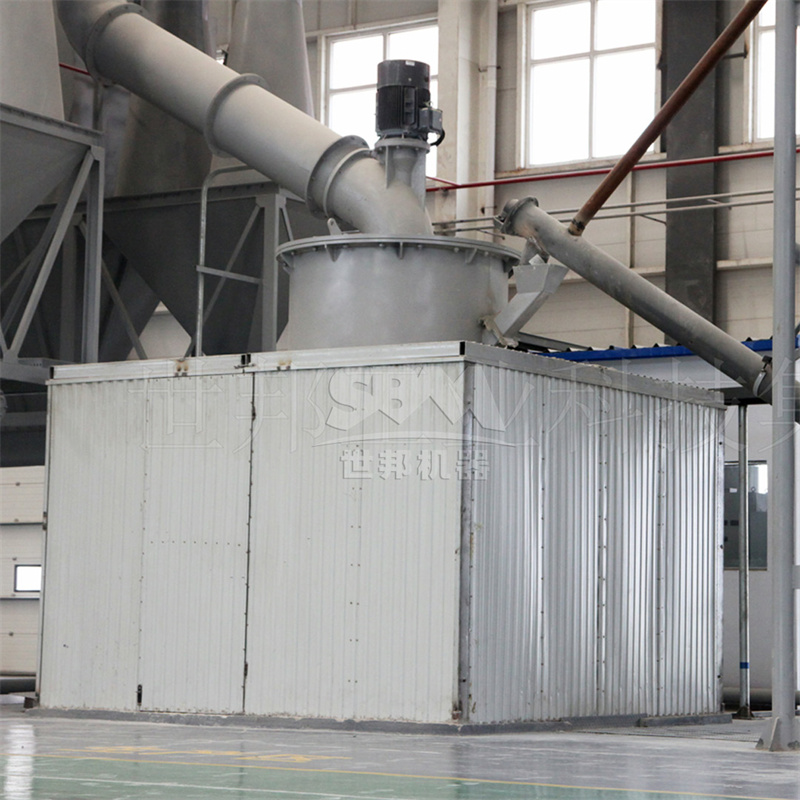
Alternative Solution: MTW European Trapezium Mill for Standard Applications
While the SCM is ideal for ultra-fine, high-spec markets, many applications in the building materials sector—such as simple putty powders, cement admixtures, and board fillers—only require a fineness of 325-600 mesh (45-23 μm). For these applications with a focus on maximum throughput and lower investment, our MTW Series European Trapezium Mill is the goto choice.
The MTW mill is renowned for its integral bevel gear drive, which boasts a transmission efficiency of up to 98%. This precision engineering translates directly into lower electricity bills. The innovative anti-wear shovel design and curved air duct reduce airflow energy loss, while high-strength guard plates protect the working surface. Models like the MTW138Z or the massive MTW215G (with a capacity up to 45 t/h) are perfect for baseline production, ensuring a steady supply of fine power for mainstream construction chemicals.
The key difference lies in the classification speed. The MTW uses a traditional impeller classifier suitable for 80-325 mesh, whereas the SCM utilizes a multi-layer turbine system for sub-sieve cuts. Therefore, choosing between them depends entirely on your target application. If ‘premium’ and ‘ultrafine’ define your brand, the SCM is the answer. If you are a high-volume producer of standard-grade fillers, the MTW offers the best return on investment. Both series are available in a range of models to fit any production footprint.
Conclusion: Selecting the Right Partner for Your Production Goals
Producing building material grade calcite powder that meets the exacting standards of modern coatings and plastics is a challenging but rewarding endeavor. The choice of grinding equipment directly impacts product quality, operational energy costs, and environmental footprint. While the market offers various options, equipment based on the principle of layer grinding combined with precise dynamic classification represents the current zenith of milling technology.
We understand that every operation is unique, requiring tailored solutions. Whether you require the high-precision, energy-saving operation of the SCM Ultrafine Mill for ultra-fine filler applications, or the robust, high-capacity performance of the MTW Trapezium Mill for standard building additives, our range is designed to meet your technical and economic requirements. We invite you to contact our engineering team to analyze your specific material characteristics and target product specifications. With our intelligent control systems and rugged mechanical designs, we ensure your plant operates at peak efficiency, producing calcite powder of uncompromising quality for the global construction industry.