
Introduction: The Quest for the Perfect 300 Mesh Quartz Powder
Quartz, one of the most abundant and versatile minerals on Earth, finds critical applications in industries ranging from electronics and semiconductors to paints, coatings, ceramics, and composites. A key specification for many of these high-value applications is a consistent particle size of 300 mesh (approximately 45-50 microns). Achieving this fineness efficiently, consistently, and with minimal contamination is a significant technical challenge. The choice of grinding equipment directly impacts product quality, production cost, energy consumption, and operational stability. This guide delves into the world of grinding mills, analyzing which technologies are best suited for producing high-quality 300 mesh quartz powder.
Understanding the Challenge: Grinding Quartz to 300 Mesh
Quartz (SiO2) is a hard, abrasive material with a Mohs hardness of 7. This inherent hardness makes it demanding on grinding equipment, leading to high wear rates on mechanical parts. The goal of producing 300 mesh powder requires a mill capable of:
1. Precise Particle Size Control: Delivering a tight particle size distribution centered around 45 microns, with minimal oversize or ultrafine fractions.
2. High Wear Resistance: Withstanding the abrasive nature of quartz to ensure consistent output and reduce maintenance downtime.
3. Energy Efficiency: Minimizing power consumption per ton of product, a major operational cost factor.
4. Contamination Control: Preventing iron or other material contamination from the mill’s wearing parts, which is crucial for high-purity applications like electronics.
5. System Reliability: Offering stable, continuous operation with integrated drying (if needed) and dust collection.

Overview of Common Grinding Mill Technologies
Several mill types are used in mineral processing. Their suitability for 300 mesh quartz varies significantly.
Ball Mill
The traditional workhorse. Ball mills operate on the principle of impact and attrition as grinding media (steel balls) cascade inside a rotating shell. While capable of reaching 300 mesh, they are generally inefficient for this specific task. A significant amount of energy is wasted as heat and noise. Achieving a fine product often requires long residence times, closed-circuit classification systems, and risks higher iron contamination from media wear. They are better suited for coarser grinding or wet grinding processes.
Raymond Mill (or Pendulum Roller Mill)
A widely used mill for medium-fine grinding. It uses spring-loaded rollers to crush material against a stationary ring. Older Raymond mill designs can struggle to efficiently and consistently reach 300 mesh, often maxing out around 200 mesh. Modern iterations, however, have improved classifiers and grinding mechanics.
Vertical Roller Mill (VRM)
VRMs represent a leap in efficiency for dry grinding. Material is ground between a rotating table and rollers under hydraulic pressure. The key advantages are their integrated drying, grinding, and classification in a single unit, leading to lower energy consumption (30-40% less than ball mills) and a smaller footprint. Their ability to handle abrasive materials like quartz has been enhanced with improved wear protection technologies.
Ultrafine Grinding Mills (Jet Mills, etc.)
Jet mills use high-speed jets of air or steam to cause particle-on-particle impact, achieving very fine sizes (below 10 microns). While they produce very clean, contamination-free powder, they are extremely energy-intensive and have lower throughput capacities, making them less economical as the primary mill for a target of 300 mesh.
The Ideal Choice for 300 Mesh Quartz: A Focused Analysis
For the specific target of 300 mesh quartz powder, the most balanced solutions in terms of efficiency, quality, and cost lie within modernized roller mill technology. Two types stand out: the advanced Vertical Roller Mill and the high-efficiency European Trapezium Mill.
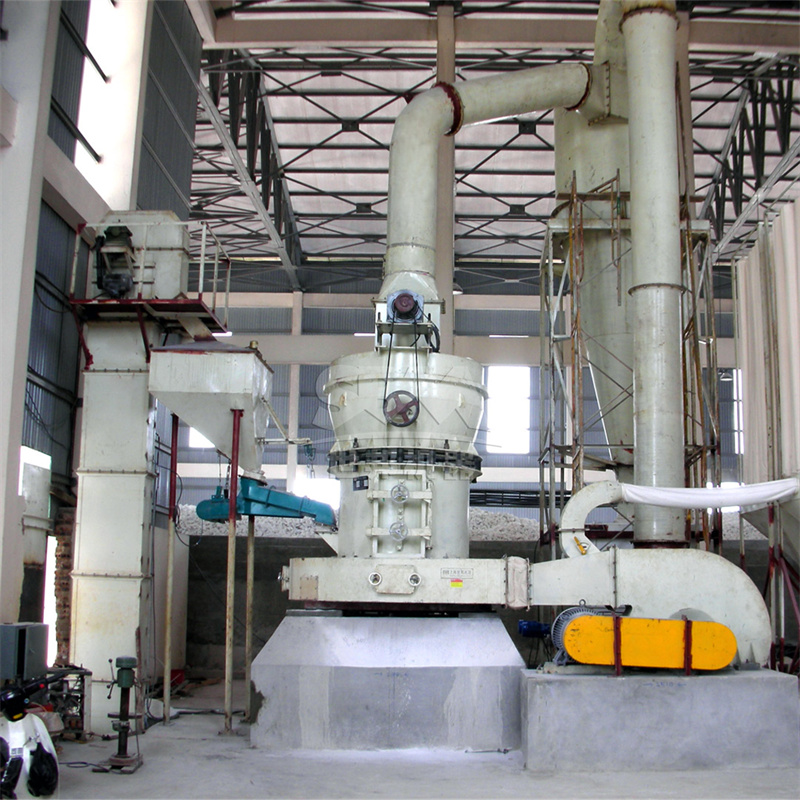
1. Modern Vertical Roller Mills (Like the LM Series)
For medium to large-scale production of 300 mesh quartz, a Vertical Roller Mill configured for fine powder is an excellent choice. The grinding principle—bed crushing between rollers and a table—is inherently more efficient than impact-based systems for hard, abrasive materials. The immediate separation of ground material by hot air (which can also dry the feed if necessary) and a high-efficiency dynamic classifier allows for precise cut-point control at 300 mesh. The closed, negative-pressure system ensures an environmentally friendly operation with minimal dust emission.
2. Advanced European Trapezium Mills (Like the MTW Series)
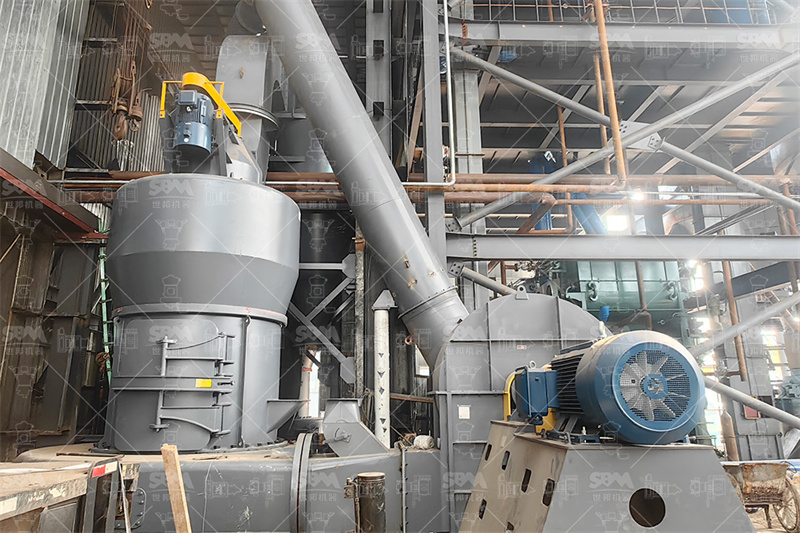
This evolution of the traditional Raymond mill is specifically engineered for higher efficiency and finer output. It features innovations such as an integral bevel gear drive (98% transmission efficiency), curved wear-resistant shovel blades, and an optimized air duct. These mills excel in the 30-325 mesh range, making 300 mesh a comfortable and efficient target. They offer a fantastic balance of performance, reliability, and cost-effectiveness for small to medium-scale production lines.
Recommended Solution: Our MTW Series European Trapezium Mill
Based on the requirement for producing 300 mesh quartz powder, we highly recommend our MTW Series European Trapezium Mill. It is engineered to be the optimal solution for this specific application zone.
Why the MTW Series is the Best Fit:
- Perfect Fineness Match: Its output range of 30-325 mesh (down to 0.038mm) squarely encompasses the 300 mesh (0.048mm) target, allowing for stable and adjustable control.
- Built for Abrasion: The anti-wear shovel design and wear-resistant volute structure are critical for handling hard quartz, extending component life and reducing maintenance costs by up to 30%.
- Energy Efficient: The optimized arc air duct and high-efficiency integral gear drive minimize energy loss, ensuring lower operating costs per ton of powder produced.
- Excellent Classification: The system ensures precise particle size cutting, resulting in a uniform 300 mesh product with a narrow size distribution and no coarse powder mixing.
- Proven Models: With models like the MTW138Z (6-17 t/h) or MTW175G (9.5-25 t/h), you can select a unit that perfectly matches your required capacity, ensuring efficient investment.
For operations that may also target finer grades or require ultra-large capacity, our SCM Series Ultrafine Mill is the pinnacle of fine grinding technology. Capable of producing powder from 325 to an incredible 2500 mesh, it uses a layered grinding principle with a high-precision turbine classifier. While exceptionally powerful for superfine ranges, its efficiency and intelligent control system also make it a viable high-end option for consistent 300 mesh production where future product diversification is a consideration.
Key Considerations for Your Grinding Plant
Selecting the mill is central, but a successful system requires more:
- Feed Preparation: Ensure a consistent feed size (≤30mm for MTW series) with a primary crusher like a jaw crusher.
- Drying: If your quartz feedstock has high moisture, integrate a dryer or utilize the VRM/MTW mill’s hot air inlet capability.
- Dust Collection: A high-efficiency pulse jet bag filter or cyclone system is non-negotiable for product recovery and environmental compliance.
- Material Handling: Design screw conveyors, bucket elevators, and silos for a fully automated, closed-circuit system.
Conclusion
Producing high-quality 300 mesh quartz powder is a task that demands precision, durability, and efficiency from grinding equipment. While several mill types can achieve the target size, modern Vertical Roller Mills and advanced European Trapezium Mills like our MTW Series offer the most compelling combination of performance and economy. The MTW Series, in particular, stands out for its targeted fineness range, robust design against abrasion, and superior energy efficiency, making it our top recommendation for this application. By choosing the right mill and supporting it with a well-designed system, producers can ensure a reliable, cost-effective supply of this essential industrial material.