
Introduction
Coal gangue, a by-product of coal mining and washing, presents both an environmental challenge and a valuable resource opportunity. When processed into fine powder, typically around 40 mesh (approximately 425 microns), it finds extensive applications in construction materials (like bricks, cement additives, and lightweight aggregates), roadbed filling, soil improvement, and even as a raw material for extracting valuable elements. The key to unlocking this value lies in efficient and cost-effective grinding technology. Selecting the optimal grinding mill is paramount, as it directly impacts product quality, production efficiency, energy consumption, and overall operational costs. This guide provides a professional analysis of the best equipment and production line configurations for producing high-quality 40-mesh coal gangue powder.
Understanding the 40-Mesh Specification and Coal Gangue Characteristics
A 40-mesh powder corresponds to a particle size where 95% or more of the material passes through a sieve with 40 openings per linear inch, equating to an average particle diameter of about 425μm (0.425mm). This fineness is ideal for many secondary applications, offering a good balance between reactivity, binding properties, and bulk density.
Coal gangue is a heterogeneous material primarily composed of clay minerals (like kaolinite and illite), sandstone, shale, and carbonaceous matter. Its characteristics—including variable hardness (often 3-5 on Mohs scale), abrasiveness, and occasional moisture—demand robust and adaptable grinding equipment. The chosen mill must handle these variations while consistently delivering the target particle size distribution.
Key Considerations for Mill Selection
Choosing the right mill involves evaluating several critical factors beyond just the target fineness:
- Feed Size: Coal gangue often requires primary crushing (e.g., with a jaw crusher or hammer mill) before fine grinding. The mill’s maximum allowable feed size must align with your pre-crushed material.
- Capacity (TPH): The required hourly output determines the model size.
- Energy Efficiency: Grinding is energy-intensive. Mills with higher grinding efficiency and lower specific power consumption (kWh/ton) significantly reduce operating costs.
- Wear and Maintenance: The abrasive nature of gangue accelerates wear on grinding elements. Mills with durable, wear-resistant designs and easy maintenance features lower long-term costs.
- System Integration & Footprint: A compact, integrated system saves space and simplifies material handling.
- Environmental Compliance: Effective dust collection and low noise operation are essential for modern plants.
Grinding Mill Options for 40-Mesh Coal Gangue
Several types of grinding mills can achieve a 40-mesh product. Here’s a comparative analysis:
1. Raymond Mill (MTW Series European Trapezium Mill)
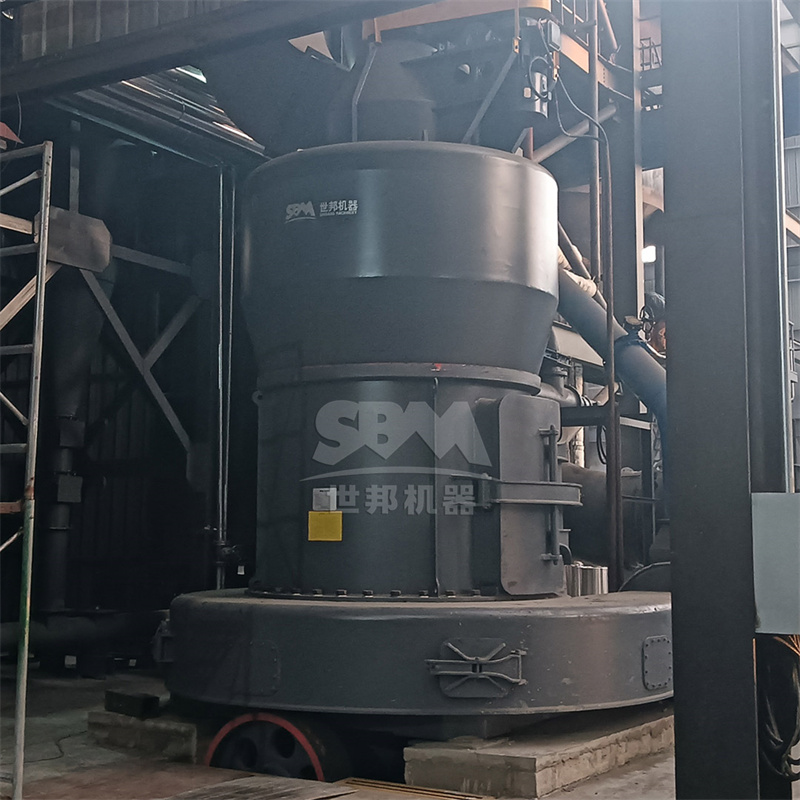
This is a classic and highly recommended choice for producing powders in the 30-325 mesh range, making it perfectly suited for 40-mesh gangue. Modern iterations like the MTW Series offer significant advancements.
Why it’s a strong contender:
- Perfect Fineness Match: It operates optimally within our target range.
- High Efficiency & Stability: Features like the integral bevel gear drive (up to 98% transmission efficiency) and optimized air duct design ensure smooth, high-output operation.
- Excellent Wear Resistance: The anti-wear shovel design and wear-resistant volute structure are specifically engineered to handle abrasive materials, extending component life and reducing maintenance frequency.
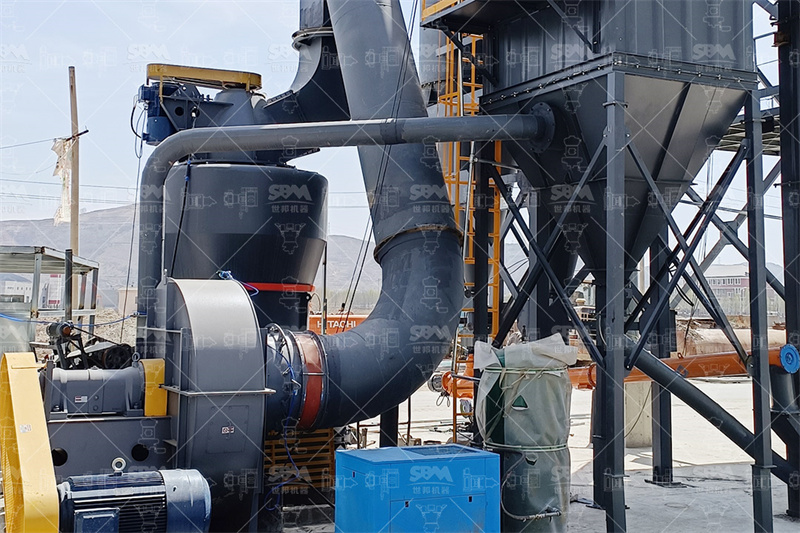
For operations prioritizing reliability, high capacity, and low operating costs for 40-mesh production, the MTW Series European Trapezium Mill is an outstanding solution. Its robust construction tackles abrasive gangue effectively, while its efficient classification system ensures a consistent and on-spec product. Models like the MTW175G (9.5-25 TPH capacity) or MTW215G (15-45 TPH capacity) are particularly well-suited for medium to large-scale gangue powder production lines.
2. Vertical Roller Mill (LM Series)
Vertical Roller Mills (VRMs) represent a more advanced, integrated grinding system. They are exceptionally efficient for medium to large-scale production.
Advantages for coal gangue:
- Superior Energy Efficiency: The bed grinding principle consumes 30-40% less energy than traditional ball mills.
- Integrated System: Combines drying, grinding, and classification in one unit, reducing footprint by 50%.
- Excellent Drying Capability: Can handle gangue with moderate moisture by utilizing hot air.
- Low Noise and Dust: Fully sealed negative pressure operation ensures an environmentally friendly workspace.
3. Ball Mill
A versatile and traditional workhorse, ball mills can produce 40-mesh powder but are generally less efficient for this specific application compared to Raymond or VRM systems.
Considerations:
- Wider Fineness Range: Better suited for very fine grinding (below 200 mesh) or when the process requires wet grinding.
- Higher Energy Consumption: Typically have a higher specific energy consumption for achieving 40 mesh.
- Simple Operation: Well-understood technology with stable operation.
Ball mills are often chosen for their flexibility or in existing plant configurations but may not be the most cost-optimal primary choice for dedicated 40-mesh dry grinding of gangue.
4. Ultrafine Mills (SCM/LUM Series)
While capable, ultrafine mills like the SCM or LUM series are technologically over-specified for 40-mesh production. They are engineered for fineness from 325 to over 2500 mesh. Using them for 40 mesh would be inefficient from a capital and potentially operational cost perspective, as their advanced classification and grinding mechanics are designed for much finer outputs.
Recommended Production Line Configuration
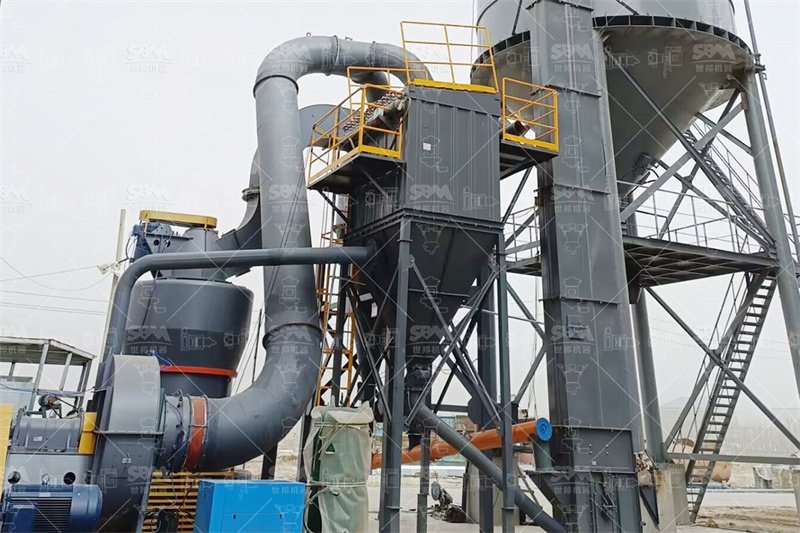
A complete, efficient production line involves more than just the grinding mill. Here is a typical configuration for producing 40-mesh coal gangue powder using an MTW Series Mill as the core:
- Feeding & Primary Crushing: A vibrating feeder evenly supplies raw coal gangue (≤200mm) to a jaw crusher or hammer mill for primary size reduction to below 30-50mm.
- Intermediate Storage & Conveying: A bucket elevator or belt conveyor transfers the crushed material to a raw material silo.
- Grinding & Classification (Core Stage): An electromagnetic vibrating feeder under the silo meters the material into the MTW European Trapezium Mill. Inside, the material is ground and simultaneously dried (if a hot air furnace is integrated). The built-in classifier immediately separates particles, allowing fine powder meeting the 40-mesh specification to proceed.
- Product Collection: The fine powder is carried by airflow into a high-efficiency cyclone collector for primary separation. The remaining ultra-fine powder is then captured by a pulse bag dust collector, ensuring emission standards are met and product yield is maximized.
- Packaging & Storage: The collected final product is conveyed to a finished product silo and can be packaged via an automatic packing machine or loaded in bulk.
Why the MTW Series Mill is a Top Recommendation
Based on the specific requirement for 40-mesh coal gangue powder, the MTW Series European Trapezium Mill stands out for its targeted advantages:
- Precision Engineering for the Range: It is not a compromise; it is engineered to excel in the 30-325 mesh spectrum, ensuring optimal efficiency and product control at 40 mesh.
- Cost-Effectiveness: It offers an ideal balance between initial investment, energy costs (thanks to its efficient drive and aerodynamic design), and maintenance expenses (due to its wear-resistant features).
- Proven Reliability: The design is based on decades of Raymond mill evolution, offering robust and stable operation critical for continuous industrial production.
- Environmental Design: The system is designed to work seamlessly with high-efficiency dust collectors, making the entire production line clean and compliant.
Conclusion
Producing high-quality 40-mesh coal gangue powder requires a mill that is efficient, durable, and precisely matched to the fineness target. While several options exist, the MTW Series European Trapezium Mill emerges as a premier choice due to its perfect operational range, superior wear resistance for abrasive materials, high energy efficiency, and system reliability. For very large-scale operations where integrated drying-grinding is a priority, the LM Series Vertical Roller Mill presents a powerful, albeit typically higher-investment, alternative. A well-designed production line, centered on the correct grinding equipment, transforms coal gangue from an industrial waste into a valuable commodity, promoting both economic benefit and sustainable development.