
Introduction
Producing high-quality 80-mesh gypsum powder (approximately 180 microns) is a cornerstone process in numerous industries, including construction, agriculture, food, and pharmaceuticals. Achieving the precise particle size, consistent quality, and high production efficiency required for this specification demands a carefully selected and configured production line. This comprehensive guide will walk you through the essential equipment needed, from raw material preparation to final packaging, and highlight the critical role of the grinding mill as the heart of the operation. We will also explore how selecting the right technology can optimize your investment and operational costs.
Understanding the 80-Mesh Specification
An 80-mesh powder refers to material that passes through a screen with 80 openings per linear inch. This corresponds to a particle size of roughly 180 microns (0.180 mm). Gypsum powder at this fineness is versatile: it is fine enough for use in joint compounds, plaster, soil conditioners, and as a food additive, yet coarse enough to be produced efficiently without requiring ultra-fine grinding equipment. The target is to achieve a narrow particle size distribution centered on 180μm, minimizing both oversize and ultrafine fractions for optimal product performance.
The Complete Production Line: Essential Equipment
A typical gypsum powder production line for 80-mesh output consists of several interconnected stages. Each piece of equipment plays a vital role in ensuring final product quality and line efficiency.
1. Raw Material Handling & Crushing
This initial stage prepares the gypsum rock (calcium sulfate dihydrate) for grinding.
- Vibrating Feeder: Ensures a steady, controlled flow of raw gypsum lumps from the storage hopper to the crusher, preventing choke-feeding and optimizing crusher performance.
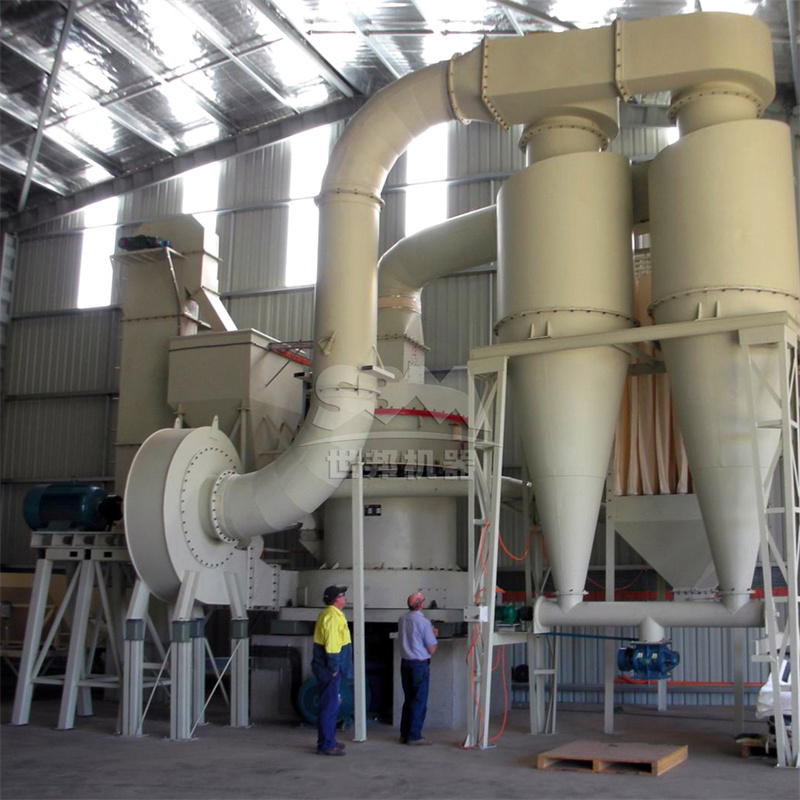
- Jaw Crusher / Hammer Crusher: Primary crushing equipment reduces large gypsum rocks (often 0-300mm) to a smaller, more uniform size suitable for the grinding mill’s feed. A hammer crusher is often preferred for gypsum due to its high reduction ratio and ability to handle material with some moisture.
2. Drying (If Required)
Natural gypsum (CaSO₄·2H₂O) contains crystalline water. For producing stucco (plaster of Paris, CaSO₄·0.5H₂O) or anhydrite, a calcination process is needed. However, for simple grinding to 80-mesh, if the raw material surface moisture is high (>1-2%), a dryer may be necessary to prevent clogging in the grinding and classification system. A rotary dryer or vertical flash dryer can be integrated.
3. Grinding & Classification – The Core of the Process
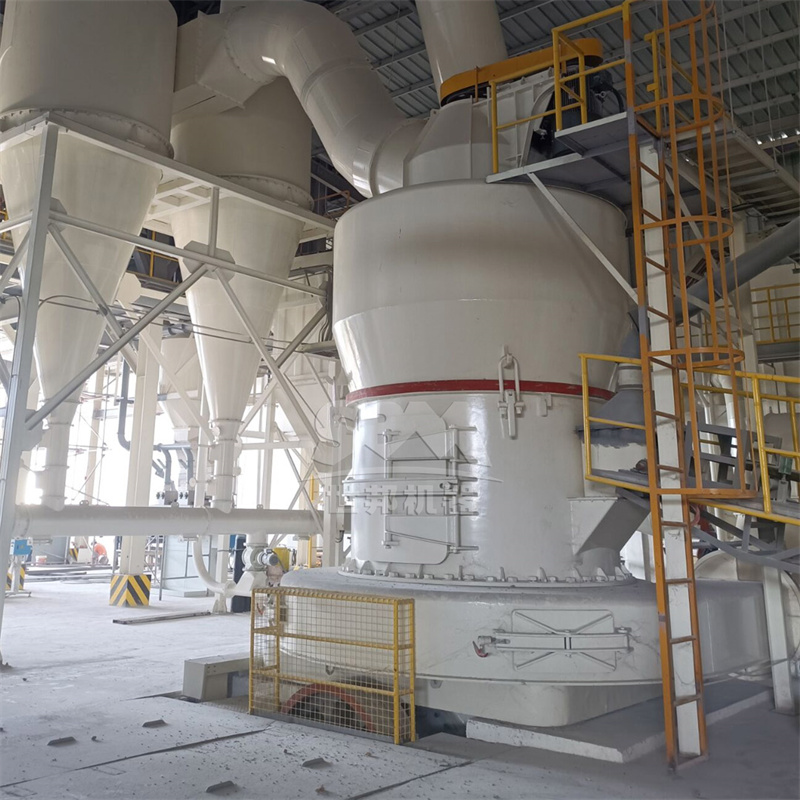
This is the most critical stage where the gypsum is reduced to the target 80-mesh fineness. The choice of grinding mill is paramount. The system must efficiently grind the material while precisely classifying it to ensure the finished product meets the 80-mesh specification without excessive energy spent on over-grinding.
For 80-mesh (180μm) production, several mill types are suitable, but they differ significantly in efficiency, footprint, and operating cost.
4. Product Collection & Dust Removal
After classification, the fine powder must be efficiently separated from the air stream.
- Cyclone Collector: Captures the majority of the product powder via centrifugal force, providing primary product recovery.
- Pulse Jet Baghouse Dust Collector: This is an essential, non-negotiable component for modern plants. It captures the fine fraction that escapes the cyclone, ensuring production yield exceeds 99.9% and meeting stringent environmental emission standards. It protects both the environment and worker health.
5. Conveying, Storage & Packaging
- Screw Conveyors / Bucket Elevators: Transport the finished powder between stages (e.g., from collector to silo).
- Storage Silo: Provides buffer capacity for the finished product, allowing for continuous mill operation despite batch packaging.
- Automatic Packing Machine: Weighs and packs the powder into bags (e.g., 25kg, 50kg) or bulk bags (FIBCs) for shipment.
Selecting the Optimal Grinding Mill for 80-Mesh Gypsum
The grinding mill is the centerpiece of your investment. For 80-mesh output, the key is balancing high capacity with precise particle size control and energy efficiency. While traditional options like Raymond Mills (pendulum roller mills) have been used, modern vertical roller mills and advanced trapezium mills offer superior performance.
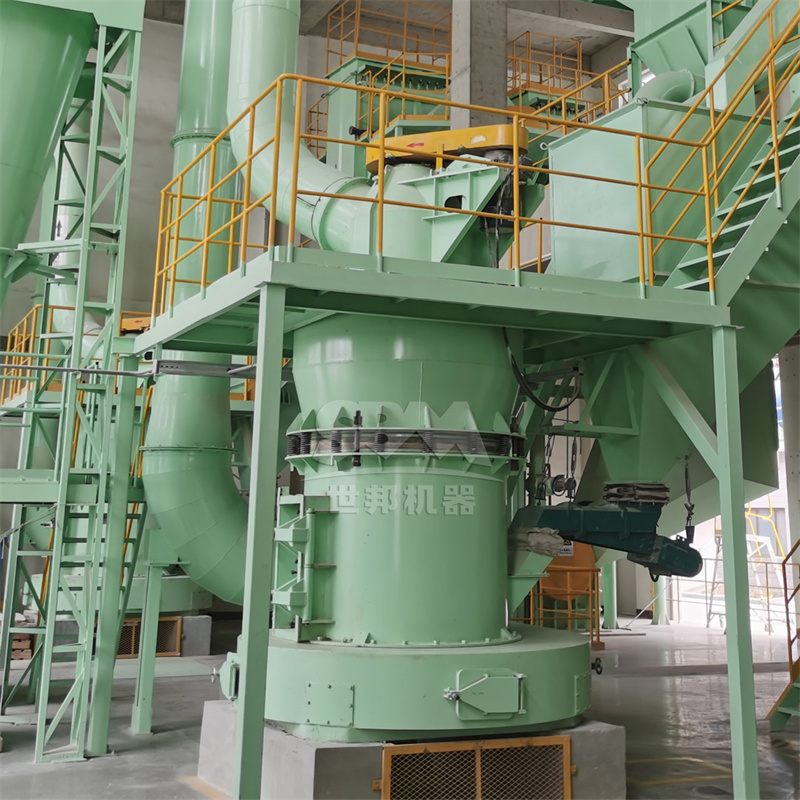
We highly recommend considering our MTW Series European Trapezium Mill for your 80-mesh gypsum production. It is exceptionally well-suited for this application range (30-325 mesh) and offers distinct advantages:
- Perfect Fineness Match: Its output range of 30-325 mesh aligns perfectly with your 80-mesh target, allowing for easy and precise adjustment.
- High Efficiency & Capacity: With capacities from 3-45 tons per hour, it can handle medium to large-scale production. Its integral bevel gear drive boasts 98% transmission efficiency, directly saving energy.
- Durable & Low-Wear Design: The curved shovel blade and wear-resistant volute structure are specifically designed to handle abrasive materials like gypsum, significantly reducing maintenance costs and downtime.
- Excellent Classification: The system includes an efficient classifier that ensures a sharp particle cut at 80 mesh, producing a uniform product with minimal oversize or wasteful fines.
For operations that may also require producing finer gypsum products in the future or demand the utmost in system integration and space savings, our LM Series Vertical Roller Mill is another premier choice. Its integrated design crushes, grinds, dries, and classifies in a single unit, reducing floor space by 50% and infrastructure costs by 40%. It is renowned for its low operating cost, with energy consumption 30-40% lower than ball mill systems, and its intelligent control system allows for stable, automated operation.
Key Considerations for Equipment Selection
- Raw Material Characteristics: Hardness, moisture content, and feed size will influence crusher and dryer selection.
- Production Capacity: Define your required tons per hour to properly size the entire line, especially the mill and classifier.
- Energy Consumption: Grinding is energy-intensive. Opting for efficient mills like the MTW or LM series can drastically reduce long-term operating costs.
- Space & Layout: Consider the footprint of the equipment. Vertical mills offer significant space advantages.
- Automation Level: Modern mills with PLC controls improve consistency, reduce labor, and enhance safety.
- Environmental Regulations: Ensure the dust collection system (cyclone + baghouse) is designed to meet local emission standards.
Conclusion
Establishing a successful 80-mesh gypsum powder production line requires a holistic view of the process, from raw lump to packaged powder. While every component from the feeder to the packer is important, the selection of the grinding and classification system is the most critical decision impacting product quality, throughput, and profitability.
For producers aiming for reliable, efficient, and high-quality output at 80 mesh, investing in advanced grinding technology is non-negotiable. Our MTW Series European Trapezium Mill stands out as an ideal, purpose-built solution for this application, offering the perfect blend of precision, durability, and energy savings. For those seeking maximum integration and future flexibility, the LM Series Vertical Roller Mill presents a state-of-the-art alternative. By carefully selecting equipment like this for the core of your process, you can build a gypsum powder production line that is not only productive but also competitive and sustainable for the long term.